Katharina Copony
Directing
Known For
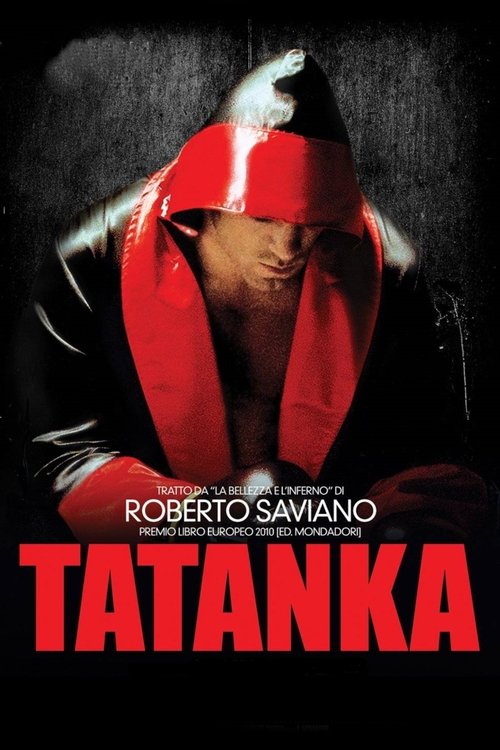
Michele and Rosario, childhood friends, grow up in Marcianise, a town in Campania where the laws of the Camorra prevail over those of the state. However, the two men have different destinies: Rosario becomes a crime boss, while Michele, after being arrested for murder and released from prison, discovers the world of boxing thanks to his trainer Sabatino (Giorgio Colangeli). Seeking a definitive change of life and emancipation, Michele moves to Berlin, where he is introduced to the underground boxing circuit.
Tatanka
At a school in Vienna, blind and visually impaired children and teens learn through hearing and touch. With particular attention to sound, Katharina Copony explores its world in her last film, opening up the film to a space of sensory experience. When writing, composing poems, playing soccer, and walking through the institute and public space, sounds, music, rhythms, and materialities move to the center of awareness.
Mit Ästen bis zum Himmel
Documentary about a festival in Italy.
Moghen Paris – und sie ziehen mit
For over twenty years, the grandmother of filmmaker Katharina Copony ran a military canteen in southern Styria. She, too, spent part of her childhood among soldiers preparing for war—just as her mother and her mother’s siblings had done before her. *In the Barracks* sketches a multigenerational portrait from a female perspective through brief fragments of memory. Personal experiences, narrated off-screen, and reenactments featuring child actors reconstruct, within the present-day context of barracks life, an extended family history spanning from the postwar period to the late 1970s. A film of memory narrated by a collective voice.
In der Kaserne
An unlikely tourist group on a seaside vacation. A holiday spot in the low season as a backdrop for the stories, the protagonists’ inner journeys: once a year the Graz Advisory Centre for Mental and Social Concerns travels for one week to Kanegra, a resort in the north of Croatia. An unusual view on a holiday setting, on strangeness and on being a stranger.
Kanegra
“I don't want to paint a picture of life,” says H. C. Artmann at one point in this film, which his daughter Emily Artmann and his niece Katharina Copony shot in his apartment in Vienna in the fall of 2000. A few weeks before his death, we can listen to the great poet and writer in this deeply empathetic final portrait as he reflects on art and his understanding of literary work in a small, sparsely furnished room. “At the beginning of writing there is absolute silence.”
der wackelatlas – sammeln und jagen mit H. C. Artmann
Documentary about chinese people living in Romania.
Oceanul Mare
Tu Harimau, shot on coarse-grained black-and-white film during a trip to Malaysia, is a portrait of Edi Purnomo. Copony accompanies the local rubber tapper at work, a task in the jungle that essentially involves listening to the surroundings. We see him exploring the forest, collecting, waiting, and smoking. As he leans against a tree trunk and the shadows of the fan-like foliage cast tiger stripes across his face, the camouflage blends with the beginning of a transformation.