Acting
Polizeiruf 110 is a long-running German language detective television series. The first episode was broadcast 27 June 1971 in the German Democratic Republic, and after the dissolution of Fernsehen der DDR the series was picked up by ARD. It was originally created as a counterpart to the West German series Tatort, and quickly became a public favorite.
Chronicle of the fictional village of Liebesau, located in the district of Halle, from 1953 to 1989.
Frenchman Abel Tiffauges is a naive man who lives a simple life working as a mechanic. Falsely accused of being a child abuser, he is recruited as a soldier when World War II begins, but is captured soon and taken to the heart of Nazi Germany.
200 years ago, innkeepers Jette and August Deibelschmidt led a rapacious life. Out of greed, they repeatedly got their guests drunk in order to steal from them. When police commissioner Friedrich Wilhelm Licht tried to put them out of action, the house caught fire and all three died. In his last words, he curses the pair of thieves, saying that they will not find peace until they have done seven good deeds after 200 years.
Twenty-year-old electronics technician Liane, desperate to escape her broken home, resists a demotion at work and falls for research student Jürgen. Fiercely defending colleague Kalle against unfair accusations, she overshadows her own troubles, including an unplanned pregnancy. When Jürgen betrays her, Liane collapses, and she wonders if a new beginning with steadfast Kalle is possible.
Vera is Secretary at NATO Headquarters in Brussels. During a business trip to the USA, she learns that US nuclear missiles are to be stationed in Western Europe.
Edith and Wolfgang have led a fairly harmonious family life for many years, together with their son Danilo. Edith has long since got over Wolfgang's infidelity twelve years ago, which resulted in a daughter. Every now and then he visits 12-year-old Sandra, simply fulfilling his fatherly duties. But suddenly the girl appears at the door.
The film concentrates on the last days of the German navy during World War II.
Sunny is the singer of a band trying to establish itself in the East Berlin music scene. They play regular gigs in small towns, but Sunny feels out of touch with the audience and with her life as a whole. She begins a relationship with Ralph, an amateur saxophonist and philosophy student, who writes her a very personal song—but his obsession with death and unfaithful lifestyle are not for her. After getting into a quarrel with a band member who harasses her and telling off a show host, she is thrown out of the band. Abandoned, she struggles to regain control over her life.
Berlin at the end of the 1940s. Anneliese Weyher is working as a switchboard operator. She is living with her aunt after losing her parents in the war – a stroke of fate that has thrown the young woman off course emotionally. Indifferently, she is doing her work; her private life consists of an affair with a black-marketeer. Even when Anneliese witnesses an armed robbery, committed by infamous Wollnick and his gang, she stays lethargic and apathetic – she keeps silent instead of helping the inspector who is a friend of her aunt. It is not until Anneliese by coincidence meets her former lover, the watchmaker Kurt, that her life seems to take a positive turn.
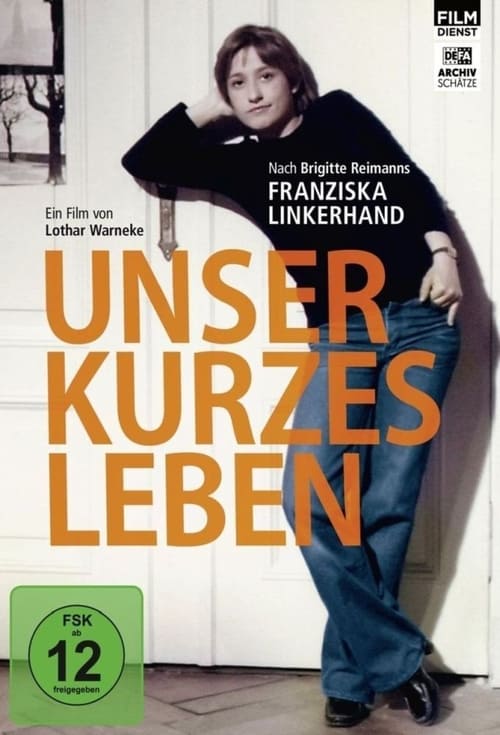
The fun-loving, 26-year-old architect Franziska Linkerhand (Simone Frost) works for a famous professor. Yet, she feels restrained by her dependence on him and longs to take risks. When her marriage falls apart, she moves to a small town for a fresh start. Franziska approaches her new life with vigor and idealism. Many of her colleagues have given in to the dictates of economic restrictions and prefabricated apartment blocks; but Franziska hangs onto her ideals and, as in her private life, is not willing to compromise…
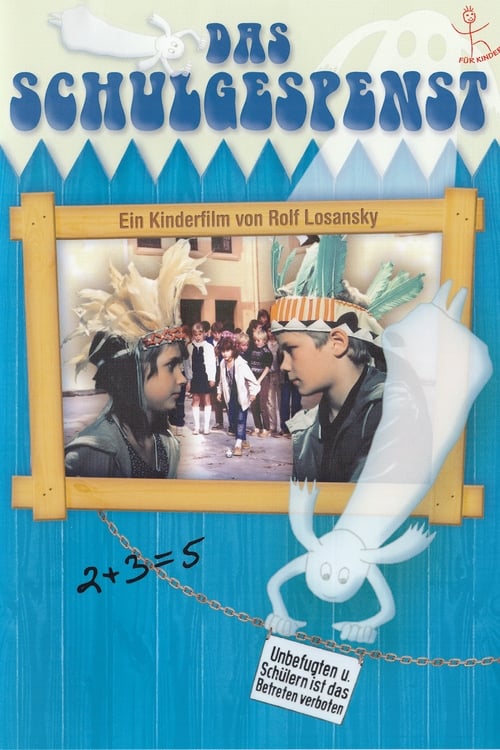
Carola is a mischievous girl who doesn't care much for school- except for sports and recess, of course. Without her good friend Willi to keep her on the straight and narrow, she would really be in trouble. One day at school, Carola has an idea. She invents what she calls "International Ghosts' Day" and a ghost named "Buh" to go with it. When Buh turns out to be less-than-imaginary the two decide to switch places, with Buh taking on all the schoolwork, and Carola taking the opportunity to play practical jokes on all her friends...
As American settlers encroach on the lands of the Lakota people, Tokei-ihto witnesses the murder of his father at the hands of Red Fox, who wanted information on where the tribe finds its gold. Two years later, at the height of the Great Sioux War, Tokei-ihto and Red Fox meet again.
The marriage of Katrin and Richard Lot has become a routine. She has a career and he, as a Marine officer, comes home only once every fourteen days. The children greet him with joy, but she greets him only with anxiety because their marriage is missing its key ingredient: love. She wants a divorce, but he refuses mainly out of comfort as well as due to pressure from the party. Katrin finds a strange solution: she shoplifts and is put on probation for three months. This is enough to force Richard into a divorce because he is concerned about the "moral liability" of his wife.
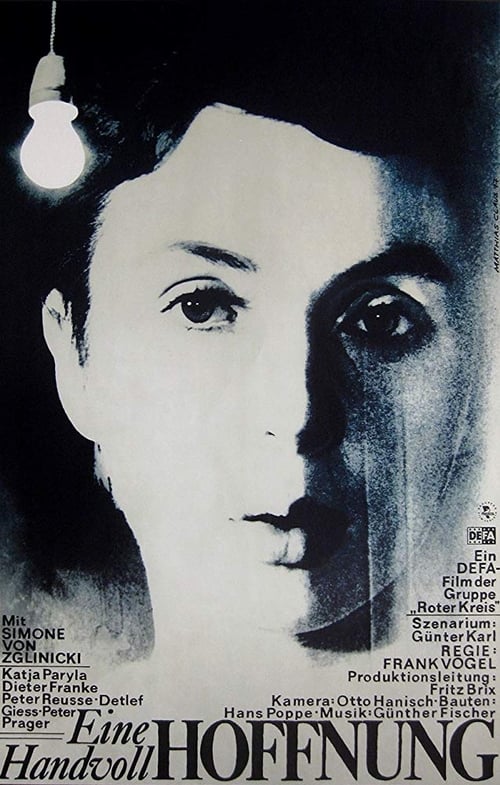
Dr. Gisa Tonius, a physicist in her thirties who has a nearly adult stepdaughter, cherishes the desire to have her own child. Suddenly, a big interdisciplinary research project threatens to significantly change Gisa′s life. Uncertain whether to look for professional or private fulfillment she asks her family and friends for their opinions. They all have different views on the point at issue. While her husband is afraid of losing her to her profession, her professor thinks that because of her talent she has an obligation towards science. In the end, Gisa reaches a decision: She wants to have a baby as well as take on the research project.
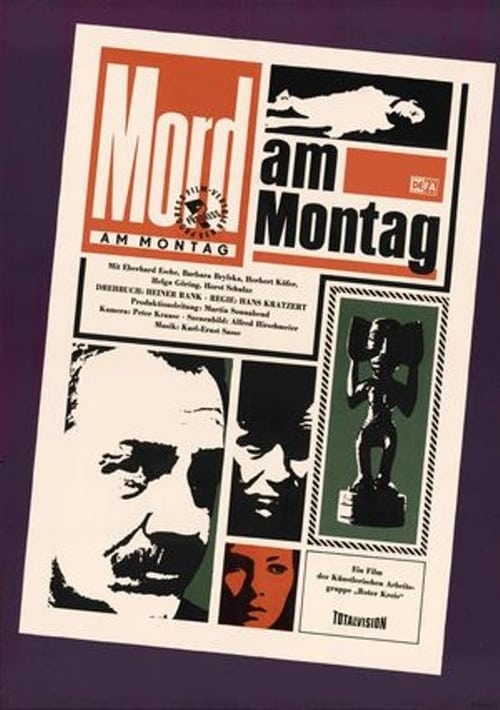
Photo model Monika Stange is found murdered in her apartment in a major West German city. Detectives Bentheim and Laube find rough diamonds hidden in the apartment. The trail leads to a racketeering ring and the influential industrialist Dr. Vogelsang. The latter is not prepared to get involved in the murder case under any circumstances and refuses to testify. Inspector Laube tries to solve the case without his colleague.
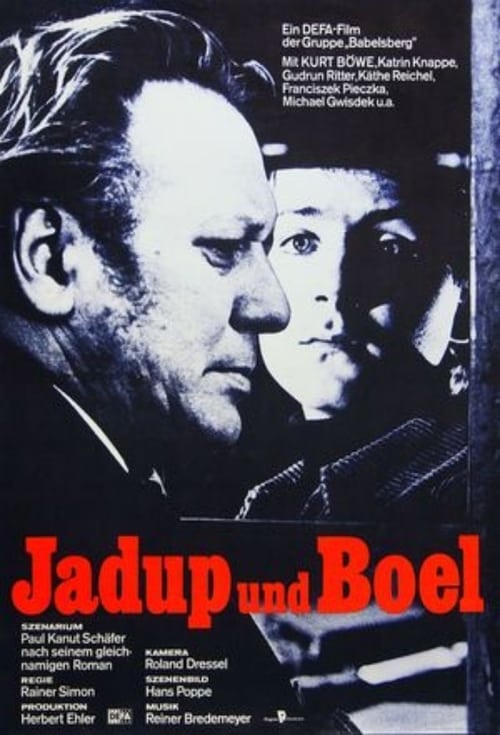
In a small town, everyone has tried to forget what happened shortly after WWII. That is, until a stranger finds a book that Jadup (Kurt Böwe) gave to the young refugee Boel (Katrin Knappe), who resettled in the town over 30 years ago. Painful memories about Boel and the post-war period begin to surface and shake up the whole town. Boel vanished back then and nobody knew why. Word spread about a rape and some tried to blame a Russian soldier. Jadup, the town's respected and popular mayor, remembers, though, how he mistrusted Boel and did not help her through this difficult time; HE didn't even notice THAT Boel loved him. Jadup's confrontation with the past gives him a new, critical view of his current situation and surroundings.
The nurses and friends Anna and Annette grow desperate over men and love. At the hospital, Anna has fallen in love with Markus, whom she lovingly calls "moose", but they only meet twice a year, when Markus has time for her. In the meantime, she keeps afloat with flights of fancy. Meanwhile, Annette clings to the painter Ludwig who cannot stand such a close relationship. Through Annette and Ludwig, Anna meets an attractive married man but her high spirits do not last long.
On the occasion of their daughter's birth, the king and queen give a lavish feast. Among the guests are twelve fairies who endow the infant in the cradle with all good qualities. As the king loathes diligence, he does not invite the thirteenth fairy - the fairy of diligence. A captain lets her slip into the castle and she casts a spell on Sleeping Beauty, wishing death upon her. The twelfth fairy transforms and mitigates the spell. On the day she turns fifteen, the princess is to sink into a hundred-year sleep after pricking her finger on a spindle.
Josef Neumann has always been an outsider to society, and at the age of 30, he has already lived an adventurous life when he comes to the GDR. He was raised as a foundling by nuns, made an apprenticeship as a construction worker, went to the Foreign Legion, and was a seaman and a tramp. Now, he is working at the Warnow shipyard. Brigadier Bruno has a lot of sympathy and patience with the unconventional Josef, but Josef cannot fall in line with strict orders and again and again acts against the rules.