Abraham Ravett
Directing
Biography
Abraham Ravett was born in Poland in 1947, raised in Israel, and emigrated to the United States in 1955. He holds a Bachelor of Fine Arts and Master of Fine Arts in Filmmaking and Photography and has been an independent filmmaker for the past forty years.
Known For

Filmmaker Abraham Ravett attempts to reconcile issues in his life as the child of a Holocaust survivor in this experimental non-narrative film. Ravett reflects upon his relationships with his family, from his now-deceased father (who survived both the Lodz Ghetto and Auschwitz) to his own young children. He utilizes family photographs and film footage, archival film footage from the Ghetto Fighters' House in Israel, cell animation by Emily Hubley, and computer graphics to create a film about memory, death, and what critic Bruce Jenkins calls "the power of the photographic image and sound to resurrect the past."
Everything's for You
Footage shot in 1976 of a performance by the legendary blues musician Furry Lewis, who was 83 years old at the time. Originally shot on a Sony 1/2" Porta Pak, the footage was transferred to Mini DV and edited to maintain the integrity of that solo performance. Included is a ten minute interview conducted with Furry Lewis during intermission.
Furry's Gift
In this non-narrative, meditative, and poignant film, footage of life from the Lodz Ghetto is juxtaposed with the chanting of "Kel Maleh Rachamim," a plea to God to let the souls of those "slaughtered and burned" find peace.
In Memory

Iwate Prefecture in northeastern Japan is the setting for "The Legends of Tono," a unique collection of regional folktales, gathered in the early 20th century by Yanagita Kunio. The tales manifest and explain invisible forces and malevolent events which shape the psycho-cultural dimensions of Japanese indigenous beliefs and folk faith. Inspired by "The Legends of Tono," HORSE/KAPPA/HOUSE records the surrounding landscape in a number of small villages throughout Iwate Prefecture in order to create a cinematic space which echoes, by implication and association, the external and unseen world in the environment.
Horse/Kappa/House

The Brighton Beach-Coney Island boardwalk is a long, winding, ocean front walkway adjacent to the Atlantic Ocean. Photographed over a three year period, the landscape rendered reflects the seasonal changes, daily activities and the filmmaker's projected future.
The Boardwalk
Sixty years after his family's departure, the filmmaker returns to the city where he was born.
From Prague to Poland
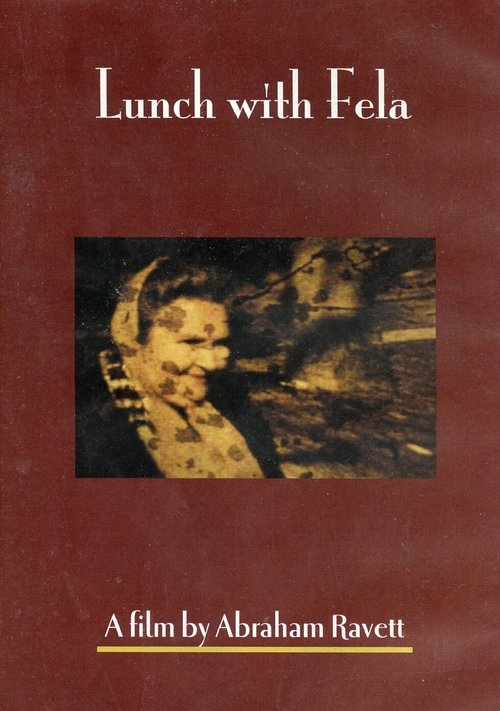
A film director visits his old mother in the hospital, evocating various kinds of memories.
Lunch with Fela
A tribute to film critic, writer and filmmaker, Donald Richie who from the early 1980's was a friend and mentor. The images utilized are post cards I received on a yearly basis.
24 Cards
The lives of people are observed within the confines of one, twenty-two story high rise apartment complex and its adjacent courtyard in Trump Village, Brooklyn, New York. Shot from one vantage point over a period of fifteen months, THE BALCONY, speculates on the evanescence of all our lives.
The Balcony
Garden is a film collaboration with dancer/choreographer Bill T. Jones. It is included as part of his solo performance The Breathing Show.
Garden
Forgotten Tenor pays tribute to Wardell Gray, considered by many one of the greatest and most unheralded tenor saxophonists in American Black Classical Music. Utilizing a combination of rare archival footage, family photographs, memorabilia, and conversations with family and colleagues, the film attemps to resurrect the presence of this great musician and pay tribute to his accomplishments.
Forgotten Tenor
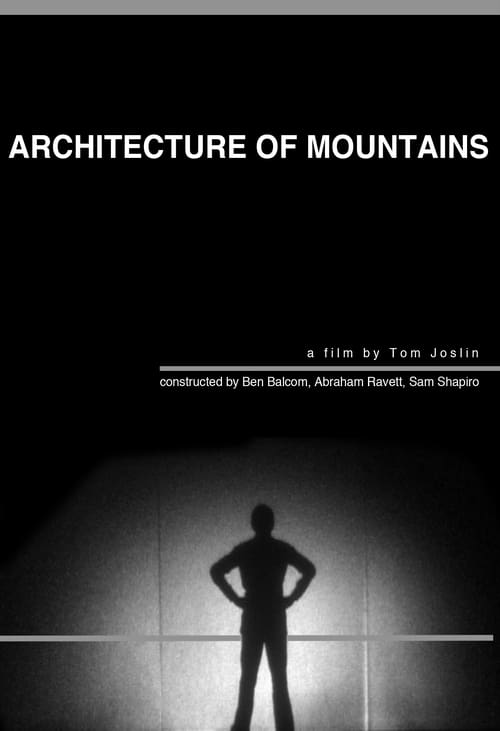
Prior to leaving Hampshire College in 1980, Tom was working on a 16mm film inspired by Jose Arguelles' book, The Transformative Vision: Reflections on the Nature and History of Human Expression. Shot in sync and MOS, the footage reflects Tom's interest in perception, human consciousness, and signaled his evolving interest in fusing non-fiction, experimental and dramatic genres. All the original materials for this unfinished film were stored at the LA home of Ken Levin, another Hampshire College alum who along with several other students, worked with Tom on this project, which he called the Architecture of Mountains.
Architecture Of Mountains
A recent article in the New York Times revealed that during the 1930's and 1940's administrators at Columbia University restricted the hiring of refugee, Jewish medical doctors by severely limiting the number of "non-Aryans" on their staff. Inspired by that revelation, the following is a cinematic tribute, a portait of another "non-Aryan" who was not a physician and arrived in the USA in 1955.
non-Aryan
Documentary about photographs shot inside of the Lodz ghetto.
Lodz:22592
Mokum is a film that explores the feeling of home experienced walking through the streets of Amsterdam during the filmmaker’s multiple trips to Holland. Utilizing 16mm and digital footage filmed over the past twenty years plus recently acquired, early 20th century, silent, b/w archival footage of Amsterdam, Mokum is response to that feeling of a home experienced in the present and perhaps, experienced by the filmmaker’s "“Crypto-Jewish” ancestors that found refuge in Amsterdam from the Spanish and Portuguese inquisitions.
Mokum
Landscapes observed in Poland and the USA.
Sosna

After the Unveiling is a film about change. It is a personal documentary done in diary format of my mother's life immediately following my father's death. It begins with cultural rites proceeding death, that of sitting "shiva," and goes on to record the many daily acts my mother once shared with her husband and now must face alone. Delineated, is the integral place that my mother's religion and culture holds for her, the inevitable influence it has on me, and the resulting conflict that is created for my mother and myself by me selecting a mate from a different religious background.
After the Unveiling
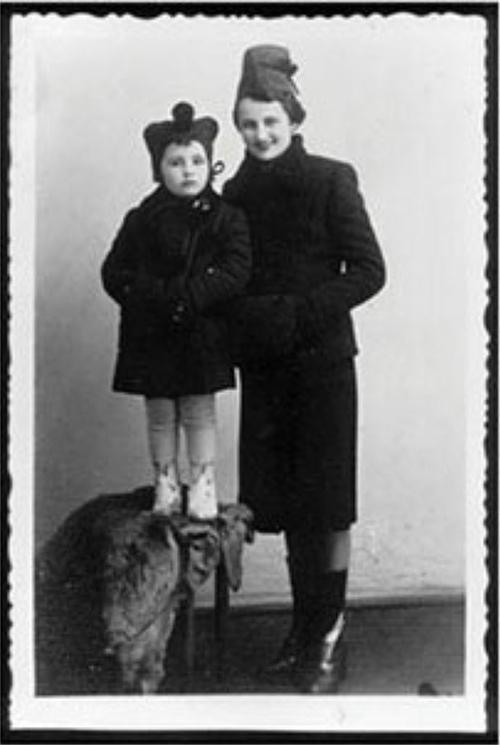
At 26, Abraham Ravett learned that his mother had previously been married and lost her family at Auschwitz, including his 6-year-old half-sister, Toncia. Half Sister is a cinematic amalgam of memory and imagination, inspired by Ravett's conception of a life that would have been.
Half-sister

If his father had lived beyond the age of seventy-four, the following may have been the cinematic response to the city where in 1944, he last saw his family. Filmed in the mid-1980's, Lodz, Poland. Constructed in 2012, Florence, Massachusetts.
Notes for a Polish Jew
"In the process of making The March, my mother spoke about the wooden shoes she and other inmates wore on their forced march out of Auschwitz. She called them "trepches." Utilizing one of the optically printed segments from The March, I've re-visited that filmmaking experience and our exchange."