Gary Marcuse
Sound
Known For
Beginning with Noam Chomsky's response to a college student who role-plays "Jane U.S.A."--someone who naively believes she lives in a democratic society in which she can create her own destiny--the viewer is presented with a cross-section of typically lively Chomsky encounters. Central to a functioning democracy is the necessity of free access to information, ideas and opinions. But what should be our democratic right turns out to be limited and shaped by the biases of insitutions and ideologies within the mass media. Chomsky shows how governments, corporations and other elites manufacture the consent of the public to serve their interests.
A Propaganda Model of the Media Plus Exploring Alternative Media

A solo show whose subject - the controversial Scottish psychiatrist Ronald David Laing - has largely faded from public view, starring an actor who doesn't impersonate him. Scottish actor explores Laing's life and work from the perspective of an unnamed genial ad mirer who says he has just come from Laing's funeral in 1989.
Did You Used to Be R.D. Laing?
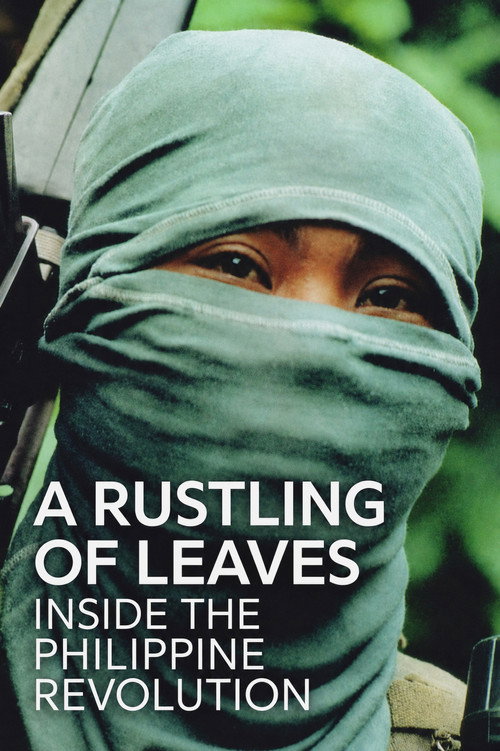
A chronicle of the three points of a political triangle — the legal left, the illegal (armed) revolution, and the enemy which threatens them both: the armed reactionary right. It is 1987. The dictatorship of Ferdinand Marcos has just been overthrown. Newly elected President Corazon Aquino struggles to wrench control of the country from her own military. A Rustling of Leaves poses the key question facing the revolutionaries and the Filipino Left: Should the People’s Movement continue the guerilla war, or do they dare enter legal politics and reveal the hidden face of the revolution?
A Rustling of Leaves: Inside the Philippine Revolution
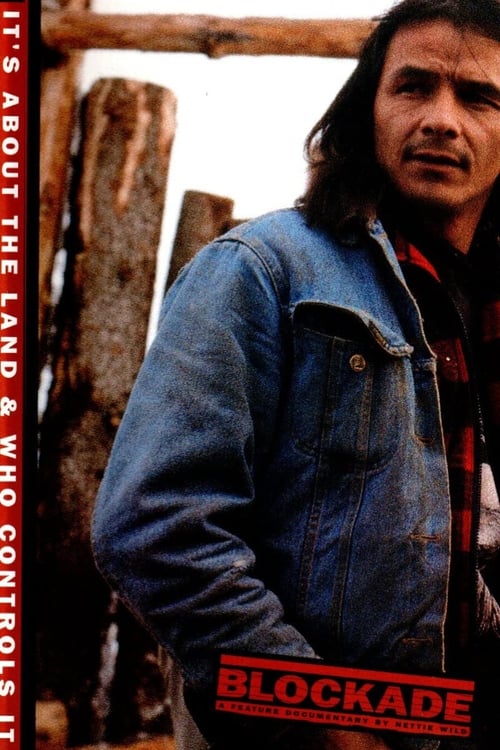
"Blockade" takes place in the mountains and valleys of northern British Columbia, at the heart of the boldest aboriginal land claims case to challenge the white history of Canada. The Gitksan and Wet'suwet'en hereditary chiefs claim that everything within 22,000 square miles, including the trees, is rightfully theirs.
Blockade
This video focuses primarily on the implications of the structure and format of television, especially the consequences of concision, and how these factors can shape the messages of the medium. In addition, other issues, such as how democracies handle dissenters, and how the mainstream media have treated the challenges of Noam Chomsky's media critiques are explored. The media construct reality, and in the conclusion we see the author participating in that very process.
Concision: No Time for New Ideas
No description available.
A Case Study: Cambodia and East Timor

Seen through the eyes of activist, farmers and journalists, Waking the Green Tiger follows an extraordinary campaign to stop a huge dam project on the Upper Yangtze river in southwestern China. Featuring astonishing archival footage never seen outside China, and interviews with a government insider and witnesses, the documentary also tell the history of Chairman Mao's campaigns to conquer nature in the name of progress. An environmental movement takes root when a new environmental law is passed, and for the first time in China's history, ordinary citizens have the democratic right to speak out and take part in government decisions. Activist test this new freedom and save a river. The movement they trigger has the potential to transform China.
Waking the Green Tiger
Dean Wilson may be Canada’s most powerful junkie. He shoots heroin in Vancouver’s downtown Eastside and strategizes with federal health policy advisors. He is the president of a network of street-level drug users demanding that Vancouver open North America’s first safe injection site – the most controversial step of a daring new drug strategy. Users, residents, activists and police clash while Dean struggles to shake his addiction and discovers an unlikely ally in Vancouver’s conservative mayor.
Fix: The Story of an Addicted City
The enormous destructive power of nuclear explosions can be used, not just in theory, for peaceful purposes. In the second half of the 1950s, scientists from both nuclear superpowers began experimenting with smaller underground nuclear explosions, which were to be used to move large amounts of soil in the construction of canals, canals, and mining.