Eduard Šimáček
Acting
Known For
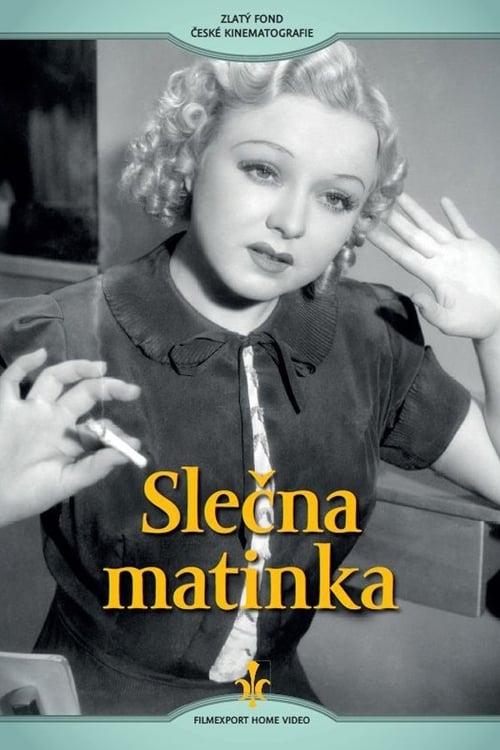
The owner of a fashion factory, Rafael Klučina, is desperately looking for an imaginative advertising campaign that would attract the public and raise the profile of his business. However, the head of his advertising department, Filip Muška, seems unable to come up with one. In the end, they are helped by the model Boženka Smolíková and her talent for perfect disguises and masks. The unusual advertising campaign involves Boženka traveling around the country for fourteen days in model clothes, and whoever recognizes her will win a prize of fifty thousand crowns...
Slečna matinka
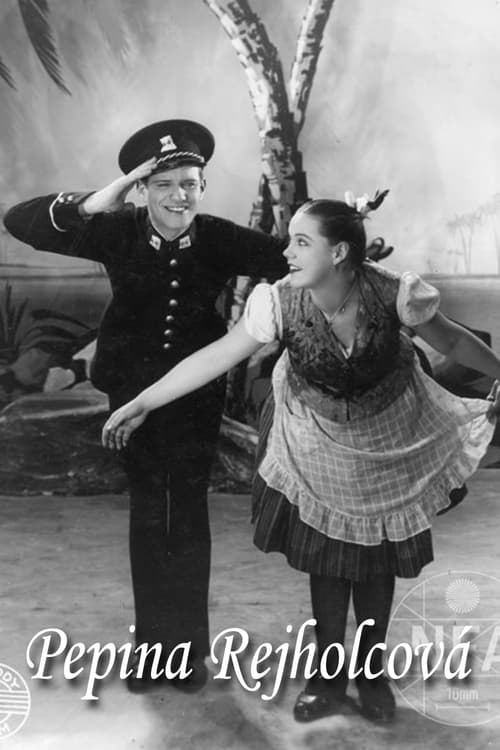
Country girl Pepina sometimes misses her boyfriend Ferd. He works for the detective company "Bdělá soůva" in Prague. Pepina takes the opportunity to visit Ferd when the filmmakers offer her to go with them. However, they accidentally run her over on the outskirts of Prague. Pepina is unfamiliar with Prague and just by chance gets lost in the theater where Ferd is on duty...
Pepina Rejholcová
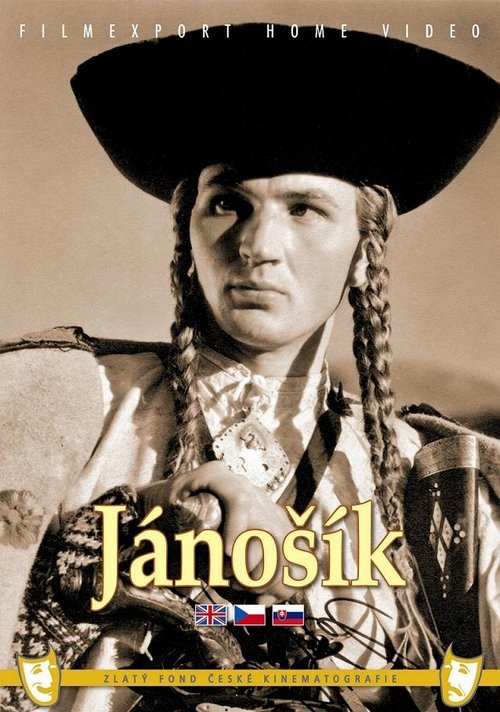
Jánošík has been topic of many Slovak and Polish legends, books and films. According to the legend, he robbed nobles and gave the loot to the poor. The legend were also known in neighboring Silesia, the Margraviate of Moravia and later spread to the Kingdom of Bohemia. The actual robber had little to do with the modern legend, whose content partly reflects the ubiquitous folk myths of a hero taking from the rich and giving to the poor. However, the legend was also shaped in important ways by the activists and writers in the 19th century when Jánošík became the key highwayman character in stories that spread in the north counties of the Kingdom of Hungary (present Slovakia) and among the local Gorals and Polish tourists in the Podhale region north of the Tatras.
Jánošík
Directed by Svatopluk Innemann.
Schweik in Russian Captivity
No description available.
Druhá směna
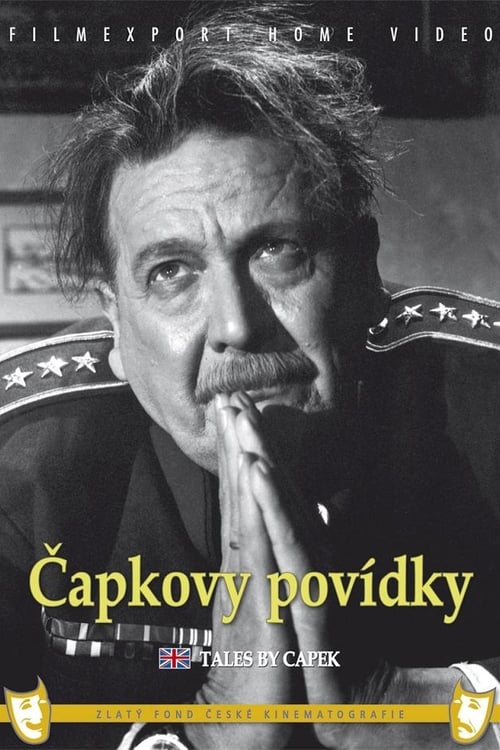
Five crime stories connected by the narration of police superintendent Bartosek.
Capek's Tales
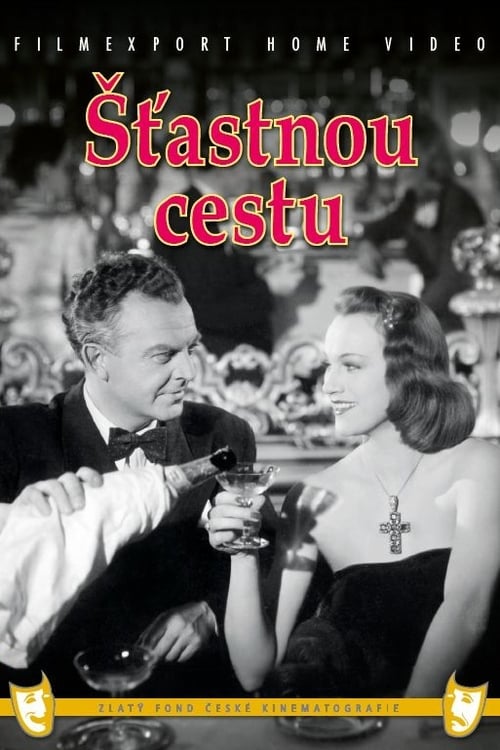
Filmed during the Nazi occupation, this panoramic drama set in a Prague department store follows the divergent destinies of four female coworkers, each of whom seeks happiness in a different way.
Happy Journey
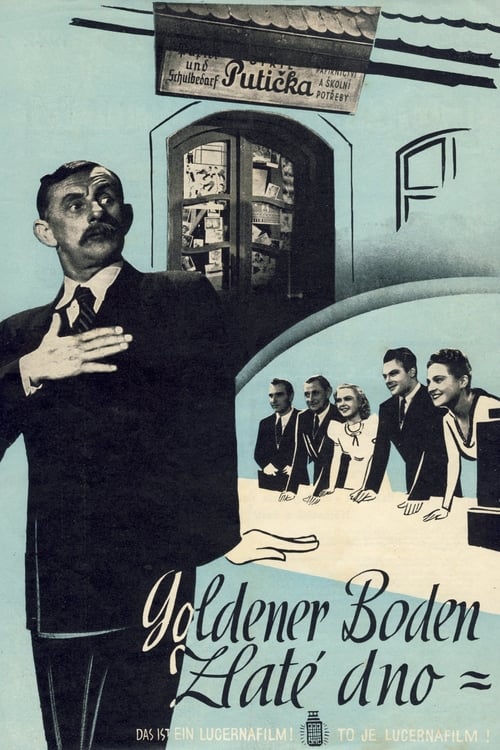
A village shop owner is convinced by his children to move to Prague, where they say he'll be able to enjoy a fine retirement in a modern furnished apartment. Bored by life in Prague with nothing to do, the old man takes to helping a young widow in her stationery shop.
Skill of Gold
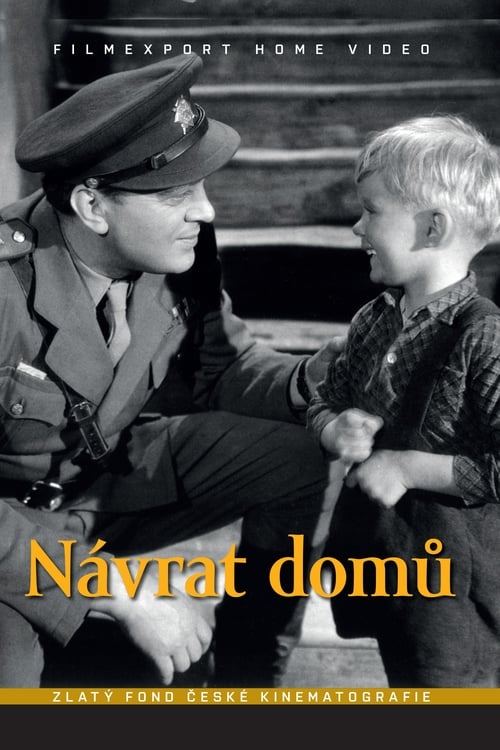
Czechoslovak drama film about soldiers returning from World War II
Lost in the Suburbs
Věra Donátová has graduated from law school and wants to open a law firm. However, she is financially dependent on her parents. Her emancipated mother supports her efforts, but her father gives Věra money on the condition that if her practice is not successful within a year, she will marry the son of Consul Raboch. Věra has no clients. The first case is assigned to her ex officio. Věra visits her client Petr Kučera, known as Tygr, in a prison cell and achieves his release against his will. In an attempt to reform him, she offers him a position as a butler in his office. Tygr invites her to a pub to get acquainted with the mentality of the underworld. Věra likes his sovereign behavior. The one-year deadline has passed and Father Donát is throwing a feast. He wants Věra to choose from several invited suitors. Věra ridicules all the suitors, including Consul Raboch's son...
Advokátka Věra
Oldřich Nový was and will forever remain the embodiment of charm, elegance and personal charm for Czech cinema, to which all women, regardless of age, were subject. In his unforgettable lover roles, he was not only a romantic who was able to fall in love with a girl from an ancient painting, succumb to the chocolate-brown eyes of the minister's girlfriend, but also a seducer for whom infidelity was a regularly practiced sport, or, conversely, a newlywed obsessed with jealousy. This was exactly Viktorin, the main character of a crazy Art Nouveau comedy, where everything revolves around a massive deer antler. Its involuntary owner becomes the jealous Viktorin, and it is certainly not difficult to guess what such a "right" gift can cause.
Parohy
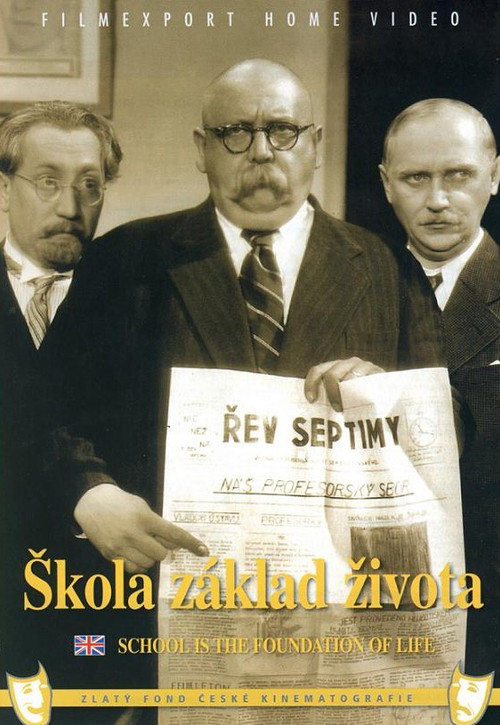
Seventh form pupils at a grammar school in Přívlaky are preparing for a secondary school sports competition. Class creep Krhounek gives the class teacher Lejsal a copy of the seventh form’s magazine Roar. Most of the teachers insist on severe punishing the culprit. The author does not own up and consequently the whole class is punished by being banned from taking part in the schools competition. The most gifted pupil, Benetka, rather sharply criticises the school in a homework essay on a subject of his choice. The strict Czech language teacher is convinced Benetka is the author of the school magazine. Benetka denies the charge but his expulsion from school is proposed anyway on account the views he expounded in his essay. Eventually, Boukal, the author of the school magazine comes forward and admits to writing it. The pupils are allowed to take part in the contest and thanks to Benetka they win. In the meantime however the teachers vote to expell him.
School Is the Foundation of Life
No description available.
DS-70 nevyjíždí
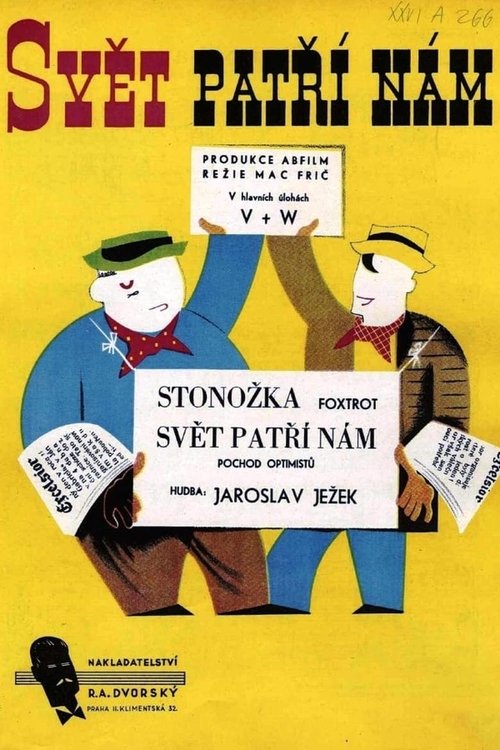
One of the few European films of the 30s to criticize the Nazis, even if they couldn't be directly named due to censorship: Gangsters with gray hats stir up trouble in what is obviously the Sudetenland.
The World Belongs to Us

Elén, a girl living with her mother and stepfather in a secluded forest, has a great singing talent. On her twenty-first birthday, she runs away from home and on the train, millionaire René falls in love with her. Their paths soon diverge, only to be reunited soon after. Violinist Pavel Sedloň falls in love with Elén, and although Elén does not love him, she is determined to marry him. At that time, René dies, exhausted from working on the operetta Srdce v delirium. However, he is saved at the last moment and everything comes to a happy ending when Oldřich Nový explains how the authors actually meant it all.
The Poacher's Foster Daughter or Noble Millionaire
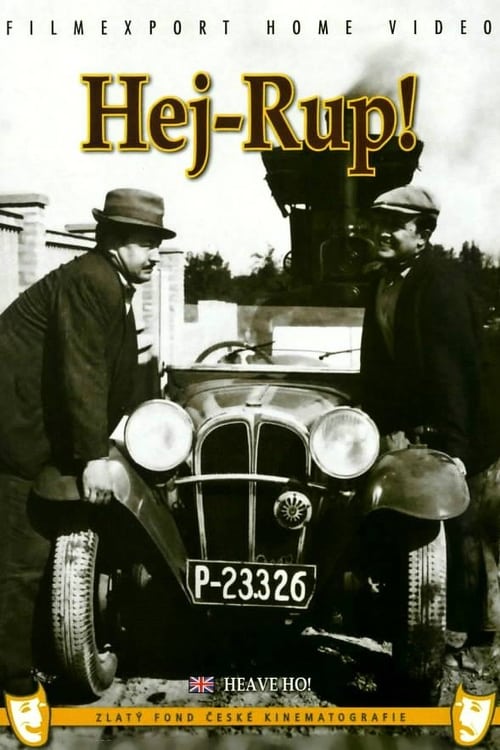
A Milk-Cannery baron, Jakub Simonides, is broken by the Canned Milk-Trust and, in his wanderings with a worker, Filip Kornet, he discovers he still owns a half-finished apartment-house. They rally the workers and complete the building for use as a collectivist dairy. The cooperative flourishes and after a chase/pursuit with the police, pratfalls, slapstick and various crashes, the workers buy out the Milk-Trust.
Heave-Ho!
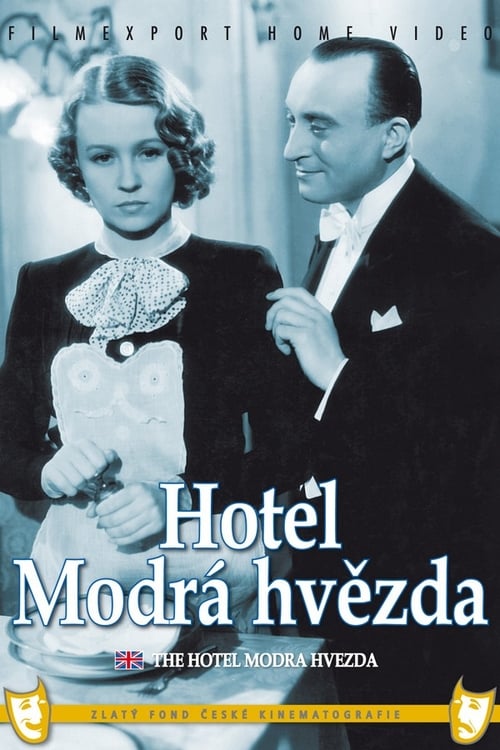
It all begins when Zuzanka, the new young owner, arrives at the dilapidated Blue Star Hotel. Determined to put the declining inheritance back on its feet, she starts chasing three young men, including the composer Jirka, who, dressed in a waiter's tailcoat, is to work off his debt to the new owner. Like his two friends, Jirka succumbs to the charms of his new boss and, with some confidence, hopes that he is the one who has the best chance of becoming her chosen one. At that moment, however, a guest arrives, intent on carrying out the family tradition and throwing an engagement party at the Blue Star Hotel, regardless of his condition. This, however, is not to the liking of his wilful fiancée. Fortunately, there is the sympathetic Zuzanka, who charms the unusual guest so much that he resolutely breaks off his engagement to the rich girl and prefers to marry the cute hotelier.
The Blue Star Hotel
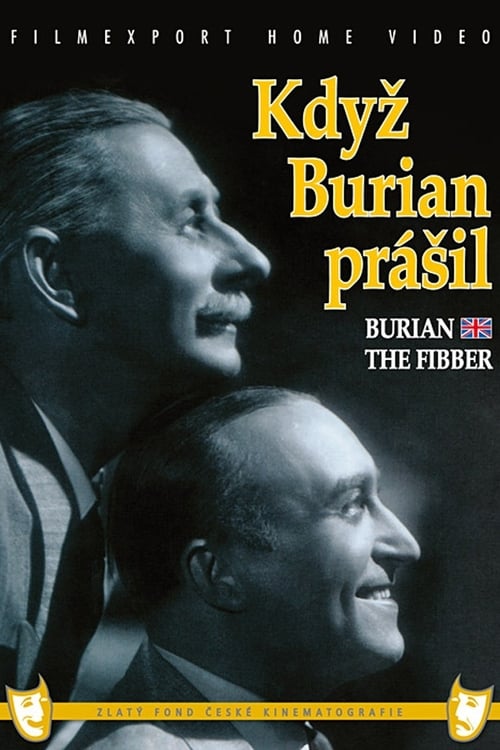
Fifty years old Baron von Fibberg lives at The Fibberg Castle with his wife Olga and daughter Charley. Besides the delight in hunting, Baron is very enthusiastic about truth. Although he can't withstand any falsehood of others, he keeps his own intimate secrets from his wife. Charley seems to be an innocent girl at first glance, but she has a little secret too. She fell in love with a young fop Ernest Benda and married him in secret. Her only concern is the way, how to let her strict father know about the marriage. Together with her husband they prepare a plan how to do it, but it turns out to be a catastrophe for the whole family.
Burian the Liar
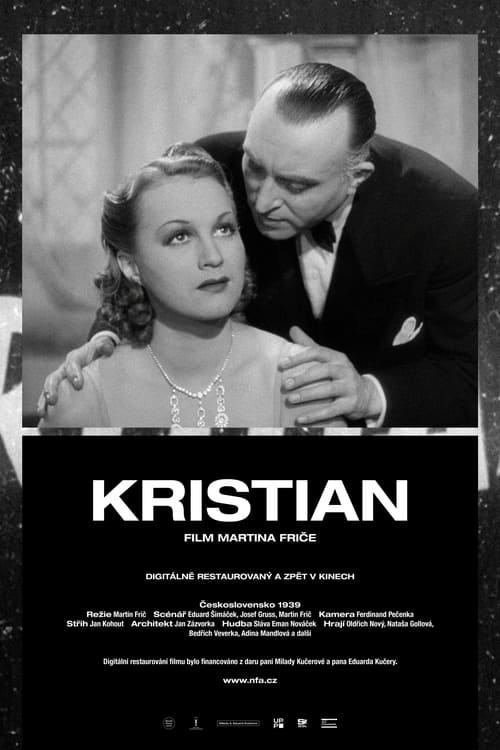
Alois Novák (Oldrich Nový), a minor clerk in a travel agency and the husband of a dowdy housewife Marenka (Natasa Gollová), lives a run-of-the-mill, dull life. In his soul, however, there resides an inextinguishable desire for adventure. And so once a month he poses as a playboy. As the mysterious and wealthy Mr. Kristian he goes to the exclusive Orient Bar where he does not skimp on generous tips and where he platonic-ally seduces beautiful and elegant women. In the salon he speaks of love and the magnificence of exotic lands, which he has supposedly come to know on his wanderings abroad. In reality he has read all of this in the travel agency's brochures.
Kristian

The main hero of the story is the editor Viktor Bláha, who likes to invent crazy mystifications, during which he has a good time at the expense of those around him. Not only friends pay for his jokes, especially his roommate Jan Valtera, but also completely unknown people who "get involved in his wound" and have no idea that the slightest mistake on their part will trigger an avalanche of Bláh's eloquence. But as they say, everything takes time... The film was shown for the first time at the Film Festival in Zlín on July 30, 1941.