FEEL IT.STREAM
?

Eduard Šimáček

Acting

Known For

The Blue Star Hotel
8.4

It all begins when Zuzanka, the new young owner, arrives at the dilapidated Blue Star Hotel. Determined to put the declining inheritance back on its feet, she starts chasing three young men, including the composer Jirka, who, dressed in a waiter's tailcoat, is to work off his debt to the new owner. Like his two friends, Jirka succumbs to the charms of his new boss and, with some confidence, hopes that he is the one who has the best chance of becoming her chosen one. At that moment, however, a guest arrives, intent on carrying out the family tradition and throwing an engagement party at the Blue Star Hotel, regardless of his condition. This, however, is not to the liking of his wilful fiancée. Fortunately, there is the sympathetic Zuzanka, who charms the unusual guest so much that he resolutely breaks off his engagement to the rich girl and prefers to marry the cute hotelier.

The Blue Star Hotel

1941
Happy Journey
6.7

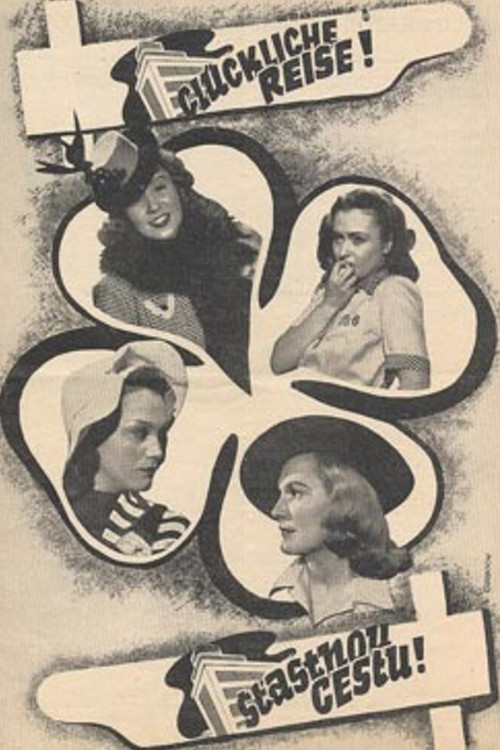
Filmed during the Nazi occupation, this panoramic drama set in a Prague department store follows the divergent destinies of four female coworkers, each of whom seeks happiness in a different way.

Happy Journey

1943
Father Vojtech
7.0

Vojtěch's beloved Frantina is leaving for Prague to work. Vojtěch promises his dying mother that he will become a priest. His brother Karel is to inherit the mill. However, during the feast, he attacks the weak Josífek and then flees the village. He hides in a quarry with an unknown vagrant. While blasting a stone in the quarry, the vagrant dies, and Karel exchanges his documents for his own. Vojtěch is still thinking about Frantina in the seminary.

Father Vojtech

1936
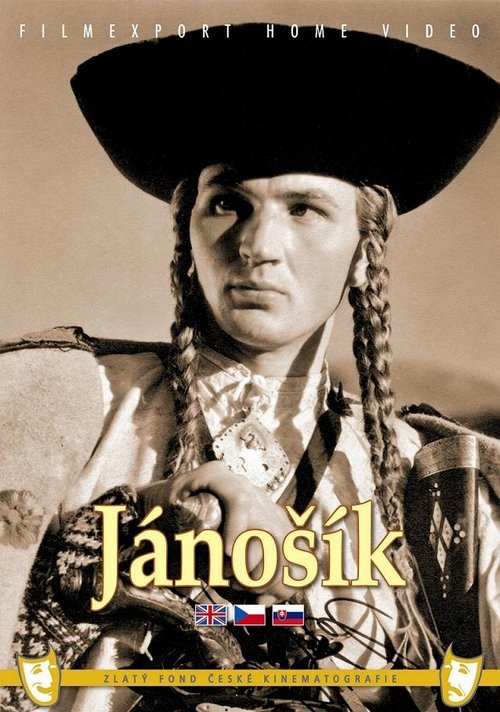
Jánošík
5.5

Jánošík has been topic of many Slovak and Polish legends, books and films. According to the legend, he robbed nobles and gave the loot to the poor. The legend were also known in neighboring Silesia, the Margraviate of Moravia and later spread to the Kingdom of Bohemia. The actual robber had little to do with the modern legend, whose content partly reflects the ubiquitous folk myths of a hero taking from the rich and giving to the poor. However, the legend was also shaped in important ways by the activists and writers in the 19th century when Jánošík became the key highwayman character in stories that spread in the north counties of the Kingdom of Hungary (present Slovakia) and among the local Gorals and Polish tourists in the Podhale region north of the Tatras.

Jánošík

1936
No image
7.0

Czechoslovak historical film about Saint Wenceslas. It was the most expensive Czech film to date, with the largest set constructed in Europe to accommodate an all-star cast of over a hundred, together with 1,000 extras for the lavish battle scenes.

St. Wenceslas

1930
Three Eggs in a Glass
6.9

Vincenc Babočka, an insignificant employee of the police station, plays detective in private, convinced of his exceptional abilities. However, a vacation in Karlovy Vary unexpectedly gives him the opportunity to prove what he is really capable of. He is mistakenly considered to be the international adventurer Leon Weber, who is being pursued by the police. He decides to take advantage of the confusion and expose Weber's accomplices, who are planning to steal diamonds belonging to the Maharaja of Yohir. According to Weber's plan, he meets the Maharaja disguised as General Naryshkin, but everything only works out until the real Weber appears in town...

Three Eggs in a Glass

1937
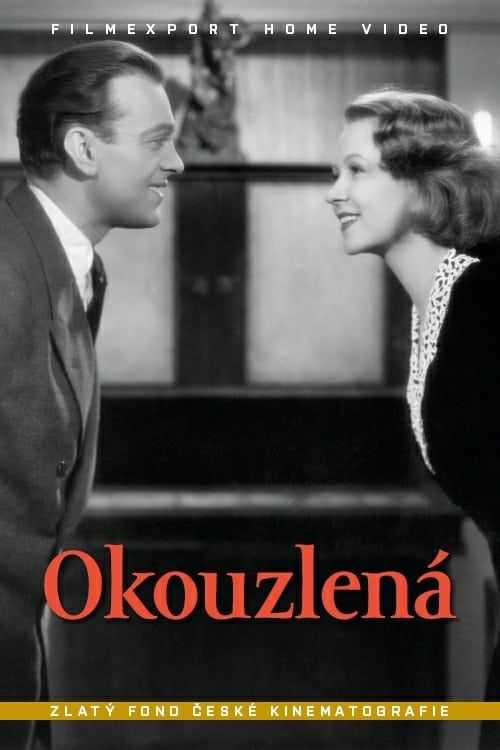
Okouzlená
6.0

In the garden of Hojtaš's estate, local dignitaries gather to watch a theatrical performance starring the author of the play, Dr. Pavel Chvojka, the landowner's granddaughter Olga, and Lenka, her ward. Lenka is intoxicated by the theater and Pavel, but he prefers the more experienced Olga. Lenka runs away to Prague to become a real actress. However, the beginnings are difficult and the girl is forced to work in a fashion salon. Here she meets the warm-hearted Milada, with whom she also shares a sublet. In the salon, Lenka meets Pavel again after some time...

Okouzlená

1942
Zítra se bude tančit všude
5.1

A group of union members, impressed by the First World Festival of Democratic Youth, held in Prague in 1947, decide to found a dance troupe. However, they are looking for someone who can teach them everything they need...

Zítra se bude tančit všude

1952
Don't Make Grandpa Angry
8.0

Eman Vovísek drinks away his unrequited love for Liduška, who married his cousin, the factory owner Danek. Because Eman is aggressive when drunk, he is taken to a mental health facility, where he meets his uncle Hanibal. Hanibal has a breakdown after his wife Matylda broke up with him. Matylda wanted to be free so she could marry her first love, Uncle Jonathan, who is due to arrive from America. Jonathan sends a telegram saying he will stay in Paris. Such a situation does not suit Danek. He assumed that Liduška would be visiting from America and that he himself would go to his mistress in the meantime. He therefore visits Vovísek and persuades him to play the role of Jonathan.

Don't Make Grandpa Angry

1934
The Poacher's Foster Daughter or Noble Millionaire
6.6

Elén, a girl living with her mother and stepfather in a secluded forest, has a great singing talent. On her twenty-first birthday, she runs away from home and on the train, millionaire René falls in love with her. Their paths soon diverge, only to be reunited soon after. Violinist Pavel Sedloň falls in love with Elén, and although Elén does not love him, she is determined to marry him. At that time, René dies, exhausted from working on the operetta Srdce v delirium. However, he is saved at the last moment and everything comes to a happy ending when Oldřich Nový explains how the authors actually meant it all.

The Poacher's Foster Daughter or Noble Millionaire

1949
School Is the Foundation of Life
8.3

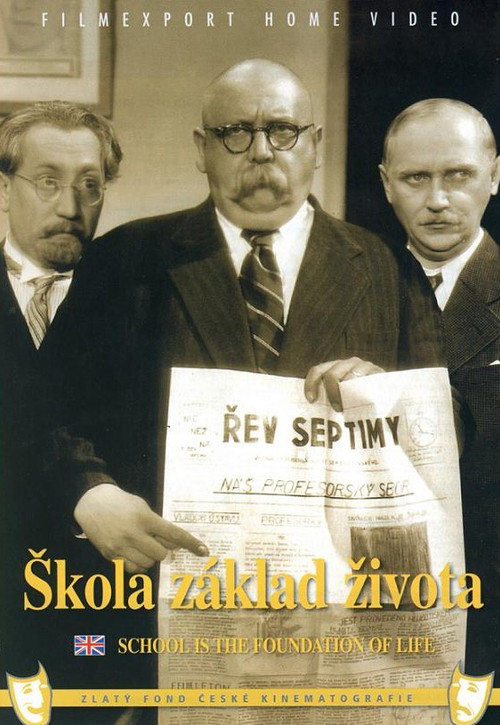
Seventh form pupils at a grammar school in Přívlaky are preparing for a secondary school sports competition. Class creep Krhounek gives the class teacher Lejsal a copy of the seventh form’s magazine Roar. Most of the teachers insist on severe punishing the culprit. The author does not own up and consequently the whole class is punished by being banned from taking part in the schools competition. The most gifted pupil, Benetka, rather sharply criticises the school in a homework essay on a subject of his choice. The strict Czech language teacher is convinced Benetka is the author of the school magazine. Benetka denies the charge but his expulsion from school is proposed anyway on account the views he expounded in his essay. Eventually, Boukal, the author of the school magazine comes forward and admits to writing it. The pupils are allowed to take part in the contest and thanks to Benetka they win. In the meantime however the teachers vote to expell him.

School Is the Foundation of Life

1938
No image
7.0

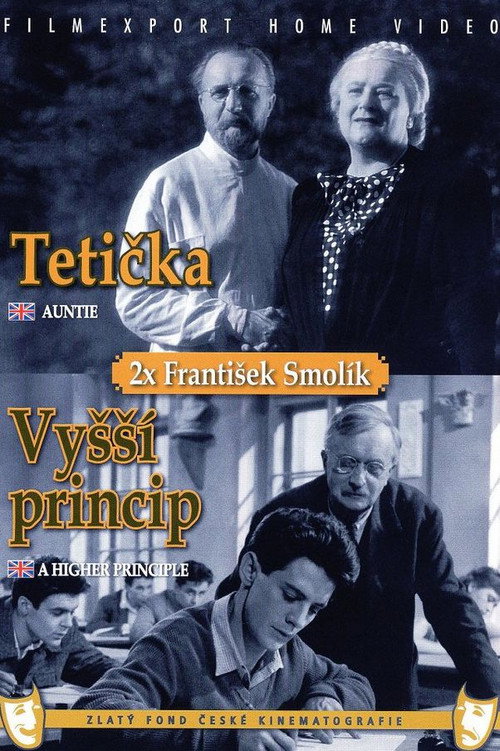
Rich spinster Berta celebrates her sixtieth birthday. Her faithful admirer Dr. Jelinek proposes. But Berta can not forget Edward, the great love of her life, and refuses the offer…

Tetička

1941
Raging Barbora
5.7

The determined Mrs. Barbora Čápová, the owner of a goose farm in Brousilov, is trying to get her daughter married. The advertisement receives a whole box of responses, so the caring mother has plenty to choose from. Pavel Stehlík appears to be the most suitable candidate, and since her daughter also likes him, a famous party is held. The newlywed is not proud of the fact that he is literally drowning in debt. Moreover, he gets along suspiciously well with his father-in-law, and the two have all sorts of falling out. After some time, they set off on a trip to Prague together. As if by chance, Mrs. Barbora is on the same trip that same day - and meets her husband at a variety show, where she went with an old acquaintance. She promises cruel revenge on the unfaithful man, but her plans are thwarted by a completely unexpected event...

Raging Barbora

1935
No image
4.0

Oldřich Nový was and will forever remain the embodiment of charm, elegance and personal charm for Czech cinema, to which all women, regardless of age, were subject. In his unforgettable lover roles, he was not only a romantic who was able to fall in love with a girl from an ancient painting, succumb to the chocolate-brown eyes of the minister's girlfriend, but also a seducer for whom infidelity was a regularly practiced sport, or, conversely, a newlywed obsessed with jealousy. This was exactly Viktorin, the main character of a crazy Art Nouveau comedy, where everything revolves around a massive deer antler. Its involuntary owner becomes the jealous Viktorin, and it is certainly not difficult to guess what such a "right" gift can cause.

Parohy

1947
Heave-Ho!
6.8

A Milk-Cannery baron, Jakub Simonides, is broken by the Canned Milk-Trust and, in his wanderings with a worker, Filip Kornet, he discovers he still owns a half-finished apartment-house. They rally the workers and complete the building for use as a collectivist dairy. The cooperative flourishes and after a chase/pursuit with the police, pratfalls, slapstick and various crashes, the workers buy out the Milk-Trust.

Heave-Ho!

1934
A Charming Man
6.8

The main hero of the story is the editor Viktor Bláha, who likes to invent crazy mystifications, during which he has a good time at the expense of those around him. Not only friends pay for his jokes, especially his roommate Jan Valtera, but also completely unknown people who "get involved in his wound" and have no idea that the slightest mistake on their part will trigger an avalanche of Bláh's eloquence. But as they say, everything takes time... The film was shown for the first time at the Film Festival in Zlín on July 30, 1941.

A Charming Man

1941
Chalk and Cheese
9.0

Rudolf Bartoš, the owner of a farm, quarry and factory, is extremely rich, however, he is unapproachable and irritable, and the dread of his employees. One day he falls down a steep slope by a river and hurts himself. The quarryman Fábera finds him groaning in pain and takes him to his cottage.

Chalk and Cheese

1941
Muzikantská Liduška
6.0

It all started when the family of a rich farmer, Stanek, moved to a small village and his daughter Liduška fell in love with a poor violinist, Toník. However, her parents did not approve of her love and decided to marry her to the son of the landowner Krejzová, even though the girl rejected the unsympathetic man. When her parents did not back down, Liduška was determined to run away with Toník, but when she learned that her beloved had been called up for military service, in despair she gave in to her parents' pressure and agreed to the wedding...

Muzikantská Liduška

1940
No image
6.3

Věra Donátová has graduated from law school and wants to open a law firm. However, she is financially dependent on her parents. Her emancipated mother supports her efforts, but her father gives Věra money on the condition that if her practice is not successful within a year, she will marry the son of Consul Raboch. Věra has no clients. The first case is assigned to her ex officio. Věra visits her client Petr Kučera, known as Tygr, in a prison cell and achieves his release against his will. In an attempt to reform him, she offers him a position as a butler in his office. Tygr invites her to a pub to get acquainted with the mentality of the underworld. Věra likes his sovereign behavior. The one-year deadline has passed and Father Donát is throwing a feast. He wants Věra to choose from several invited suitors. Věra ridicules all the suitors, including Consul Raboch's son...

Advokátka Věra

1937
The Catacombs
8.0

The title refers to the office of records in the basement of a large company... sort of the place where a troublesome employee may be dumped in a dead end job. If fact, the story is a simple romantic comedy, with Burian as the kindly old stick-in-the-mud who helps the young man to sort out his romance with the daughter of the company's owner.

The Catacombs

1940