Karl Gass
Directing
Known For
Presentation of the economic upswing in the GDR, emphasizing the discovery of the process for the production of high-temperature lignite coke and the commissioning of the Lauchhammer large-scale coking plant.
1952 - Das entscheidende Jahr

Started in the summer of 1961, even before the Wall was built, the film becomes an explanation after this historical event as to why things can no longer go on as they were before. Unmistakably, as in almost all of Karl Gass' films, the passion with which he treats his subject is unmistakable. If you want to get to know the zeitgeist of the historically significant year 1961, which on both sides knew more the Cold War vocabulary than factual arguments, you can see the Eastern variant in this propaganda film.
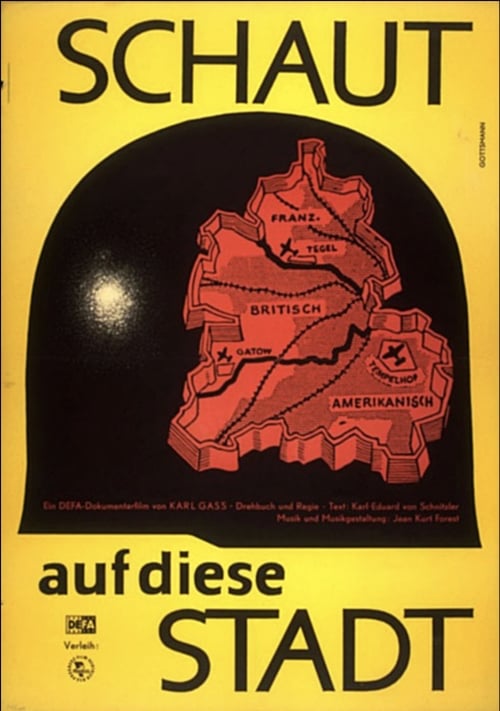
Look at this City
No description available.
Asse
This documentary is the first co-production between the GDR and the CSR, showing Czech pioneers exploring the island of Rügen and the "Ernst Thälmann Pioneers" climbing through the High Tatras. Motivated and full of curiosity, the children from the CSR experience the beauty of the sea, sail on the training ship "Wilhelm Pieck" and enjoy swimming on the island of Rügen. The parallel visit of the GDR pioneers gives them exciting and unforgettable experiences on a cable car ride to the peaks of the High Tatras, where they learn a lot about the flora and fauna and recognize the overwhelming beauty of the mountain world with a good view.
Gebirge und Meer

Documentary about documentarian Winfried Junge.
Vielleicht bin ich ein Don Quichotte - Winfried Junge und die Kinder von Golzow
No description available.
Allons enfants... pour l'Algérie
Under Soviet management after the Second World War, the so-called SAG companies were converted into state-owned companies (VEB) in 1953/54, including the Leuna and Buna factories.
Factories in Germany

Portrait of Hans Globke, jurist at the ministry of interior during the Third Reich and co-author of an official commentary to the Nuremberg Laws of 1935, the Nazi Racial Legislation. While Adenauer appointed him Secretary of State in 1953, he was sentenced to lifelong imprisonment in absentia by a GDR court in 1963.
Globke heute

The economic and cultural improvements of the Soviet Occupied Sector are documented with scenes from the years 1945 to 1950. The film deals with the land reform, the founding of the Socialist Unity Party, the expropriation of war criminals, the founding of the GDR and the first Five Year Plan in July 1950. Special attention is dedicated to the setup of the steel industry. All this is shown in contrast to the new Federal Republic of Germany, where unemployment, slums and the West Berlin airlift prevail. The Cold War of those years is reflected in the film as well as a part of the development of post-war Germany.
The Ascending Path
Karl Gass compiles film material to document the Pogromnacht in 1938.
Jeder konnte es sehen
A man, born in 1889 - the year Hitler and Chaplin were born, the Second International and the Eiffel Tower - died in 1954, kept a diary from 1919 and 1953, three and a half decades. The man was a principal, so the diary is a school chronicle. During this long period, he always worked in the same small Altmark village. So his notes are also a piece of village history. In a time of new life corrections and lies, ruptures and repressions, the film follows the teacher through "great" and bad years of German history: Inflation, Hindenburg, the Zeppelin, the Harz Mountains and Hamburg, the Day of Potsdam and Greater Germany, storms and collecting old materials in peace and war, post-war worries and school reform. One man educated generations of children in his one-class school and released them into the world. Not a German career like that of a grand admiral or captain of industry. German history from below...
Nationalität: Deutsch

East German documentary about the 20 July plot.
Revolution am Telefon - Eine Dokumentation zum 20. Juli 1944

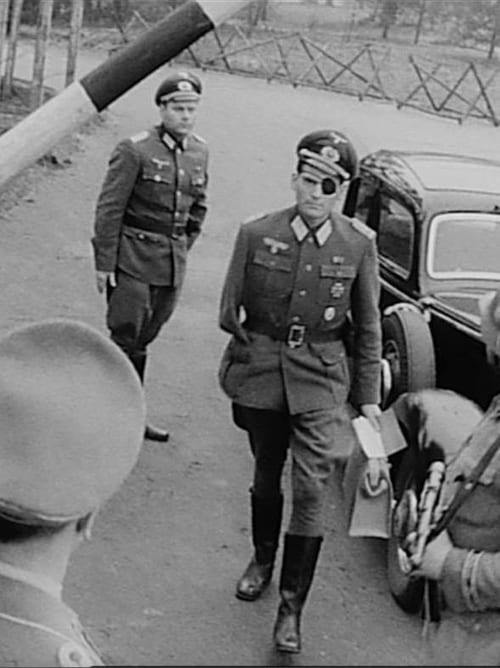
"Das Jahr 1945" is a documentary which describes the last 128 days of World War II in Europe. The film covers the course of the war in chronological order, and discusses military tactics and the Nazi ideology.
Das Jahr 1945
70 days after the government decision to build the Schwarze Pumpe combine, the foundation stone is laid. Trick explains the project and its individual construction stages.
...unter anderem Schwarze Pumpe

Von Hamburg bis Stralsund (From Hamburg to Stralsund) (1950) is an East German documentary directed by Andrew Thorndike. Running at approximately 35 minutes, the film contrasts the rebuilding of shipyards in East Germany with the dismantling of shipbuilding industries in West Germany. It highlights the economic recovery and industrial efforts in both regions following World War II, focusing on cities such as Stralsund and Hamburg. Produced by DEFA, the film reflects the divided post-war state of Germany and serves as a historical document of the era's political and industrial climate.
From Hamburg to Stralsund

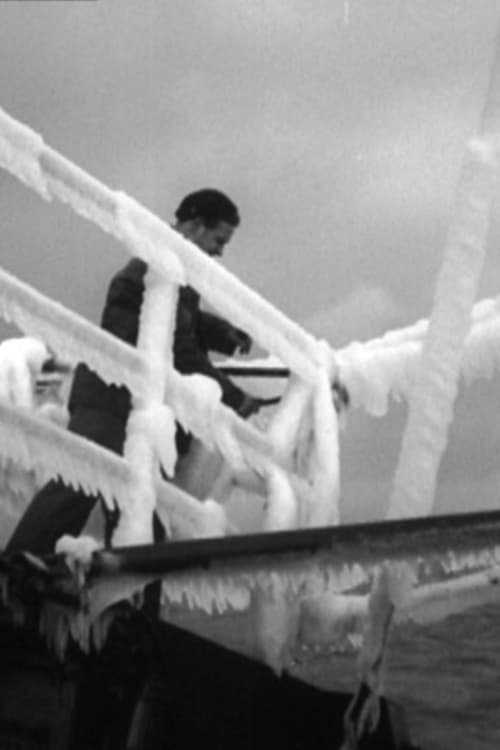
Five cameramen of the DEFA travel with the trawler ROS 206 to its fishing grounds in the Arctic Ocean. The journey to the grounds takes 5,5 days. Day and night the nets are thrown out and pulled aboard again when they are full. After three weeks of hard work the trawler returns to its home port. Here the fish are loaded into refrigerator cars, and the sailors enjoy some days of wll-earned rest.
Vom Alex zum Eismeer
Actions in West Germany against the occupation statute and the general war treaties.
Ami go home
Palermo, pearl of the Mediterranean, is one of the most popular holiday resorts for European and American tourists. What they do not see, however, are the narrow lanes in the city centre, where thousands upon thousands crowd together in damp and dark holes. The fate of the children is especially moving. Only half of the children in Palermo go to school. Their life is nothing but work and misery. But when they grow up, unemployment awaits them.
Licht fĂĽr Palermo

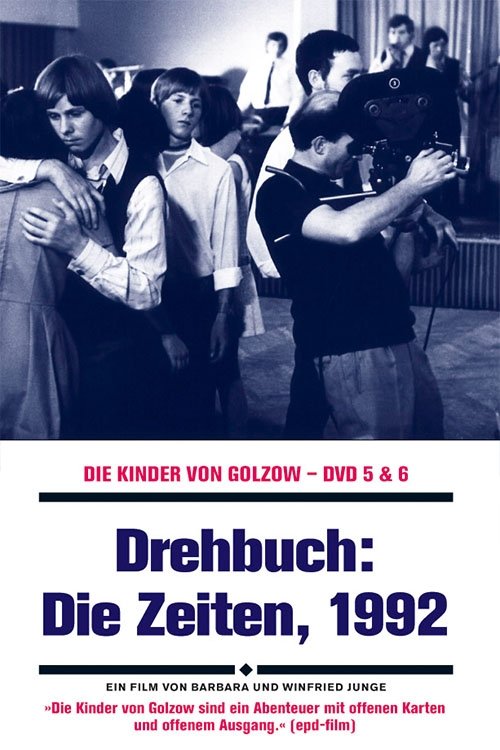
The first cinematic review after the fall of the Wall and the end of the GDR. In the context of a reunion of the "children of Golzow" on the 1st anniversary of German unity and their joint trip to Hamburg also a workshop report documenting the thirty-year history of the Golzow Chronicle from the new German situation as well as the thoughts and feelings, hopes, fears and objective changes in the lives of now already 13 portrayed.
Drehbuch - Die Zeiten
The enjoyment of life between the construction site and the caravans is not as cultured, as the officially ordered leisure time was supposed to be.