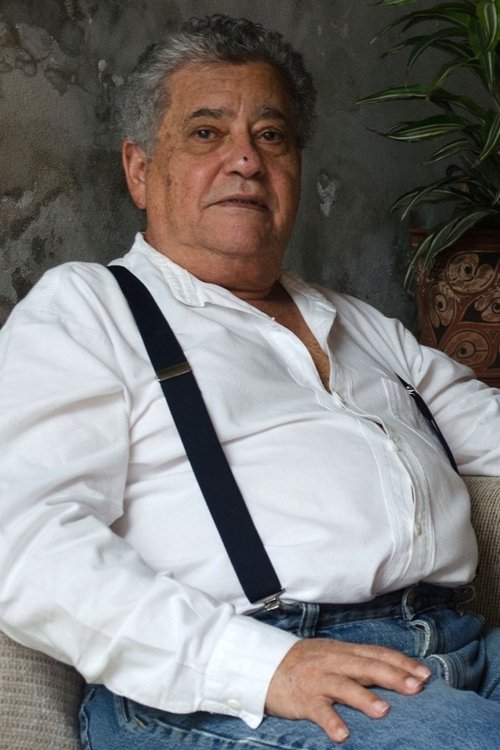
Donald Myerston
Directing
Biography
Director, screenwriter, editor and producer of radio, film, video, theater and TV since 1965. Founding member of the Department of Film at the University of Los Andes, and a key figure of the New Latin American Cinema movement.
Known For

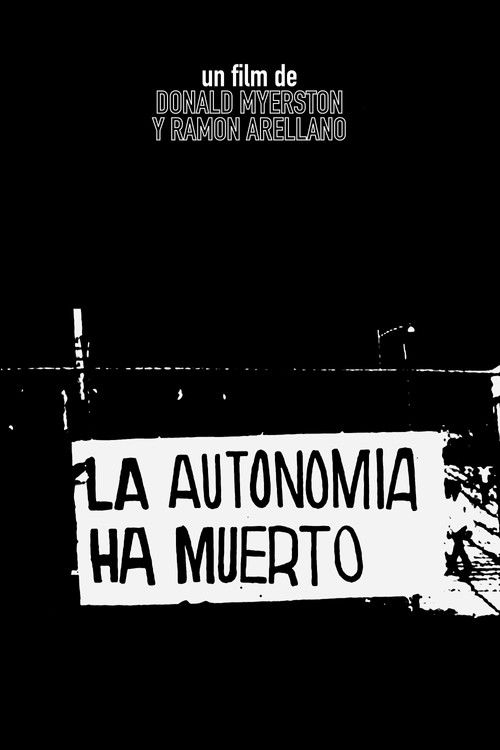
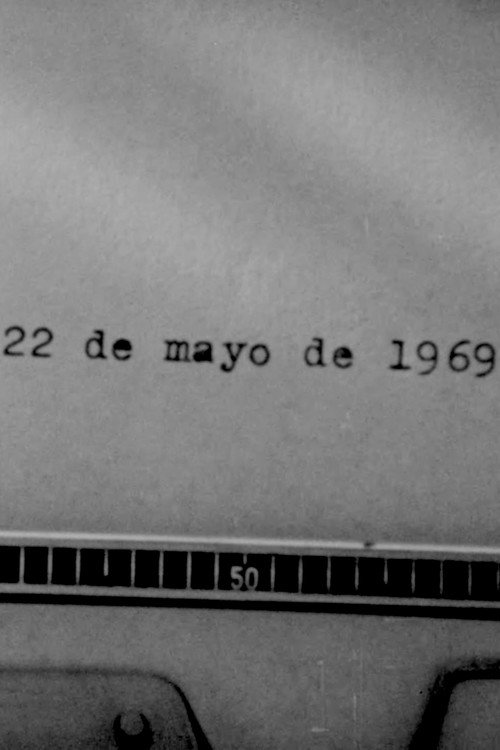
In 1969, the Renovación Universitaria movement and the subsequent raid on the Central University of Venezuela by the government of Rafael Caldera, triggered a strong wave of protest in the Institutes of Higher Education in Venezuela. This documentary collects part of the events that took place in the city of Mérida, Mérida State, where the University of the Andes is located.
La autonomía ha muerto

During a police round-up, Mercedes witnesses the unjust murder of her son, a working-class man, by a police captain. Refusing to accept the official version of the story - that her son was a criminal - she launches a campaign for justice. Santiago, a young journalist moved by Mercedes's passion and determination, begins to investigate the story of the police cover-up at the risk of his own life. As the investigation develops, the film exposes the depth of Venezuela's corruption.
Shoot to kill

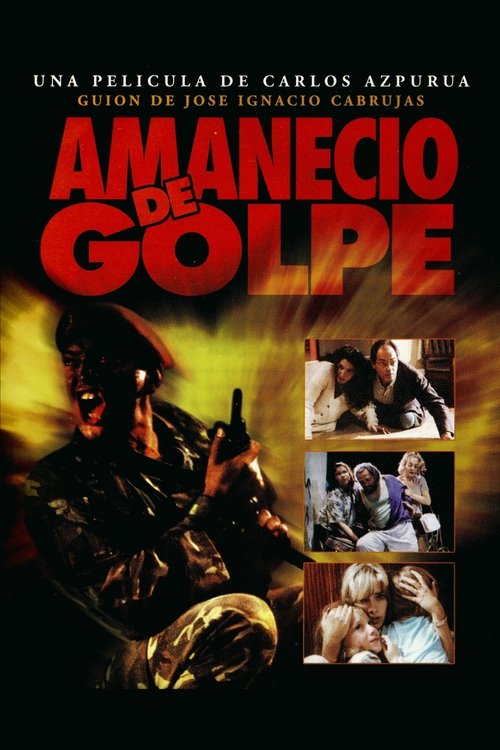
The film follows the events of the night of February 4, 1992 in Caracas, Venezuela. That night a group of military rebels staged a coup d'etat. Venezuelans found themselves as virtual prisoners. As the coup starts and fighting takes place from a military base which is in the center of the city's most affluent areas, with both luxury high rises and palatial mansions. The area of La Carlota provides a wealth of very interesting, often flamboyant and typical characters of the Latin America upper middle and upper classes. They are among the most affected. Various vignettes in these different characters' homes are developed. These people's reactions, lifestyles, vices, and humanity come out in a very honest fashion under duress.
Coup at Daybreak

Tierna es la Noche is a film without bullets nor sea, without mosquitoes, without peasants nor flowers. It only contains a barman, a man and a beautiful woman who lives in a bathroom. For commercial reasons, we have included two policemen, a drop of blood and a multilingual nymphomaniac. For aesthetic reasons, a tear and a black man. For both reasons, the film takes place anachronically, during the fifties and nineties in a make-believe city called Caracas. It's a story of histerics, like all stories, unfinished.
Tierna es la Noche
Three youngsters whose imaginations have run amok are hanging around an island searching for pirate treasure. Reality hits them in the face when some Haitians, trying to escape the terrible social and economic conditions in their country, land on the island.
Tesoro

In 1969, a wave of discontent swept through Latin American universities. In Venezuela, students set out to fundamentally renew the concept and criteria of teaching. This is their story.
Renovación

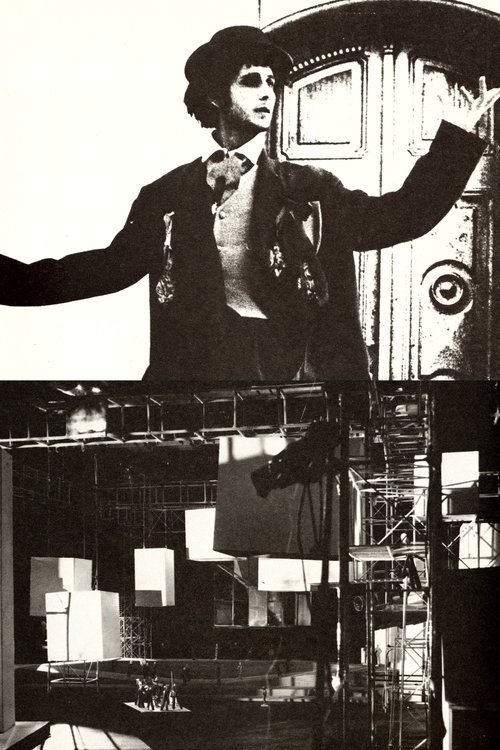
Imagen de Caracas was an experimental film spectacle, directed by Jacobo Borges and Mario Robles in 1968 for the 400 anniversary of the foundation of Caracas. It needed more than 48768 meters of film and 5000 actors.
Imagen de Caracas

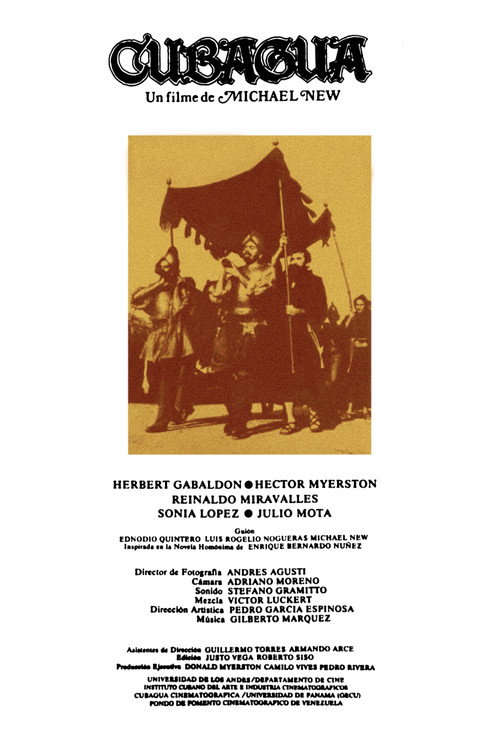
Based on the novel by Venezuelan writer Enrique Bernardo Núñez, the film tells the story of engineer Leiziaga discovering his historical doubles in the context of the colonization of the island of Cubagua in Venezuela. In this way, two stories are intertwined: one that takes place in the 16th century and another in the 20th century. The first story focuses on the life of the Spanish settlers who arrived in Cubagua and the exploitation of the indigenous peoples for pearl extraction; the second story, set in the 1920s, tells of Leiziaga's archaeological expedition, financed by a multinational oil company, in which he visits the island to study the ruins of the Spanish settlement, which leads him to reflect on the passage of time and the destruction caused by human exploitation, and through a game of mirrors, to realize the relationships between the past, present and future.
Cubagua

Diamantes, short produced by the ULA, registered the birth of a new town: San Salvador de Paul, the arrival of new residents, farmers who ventured in search of riches, merchants, gamblers, prostitutes, all trying to snatch the momentary wealth of those who discovered the mineral, typical image of underdevelopment.
Diamantes

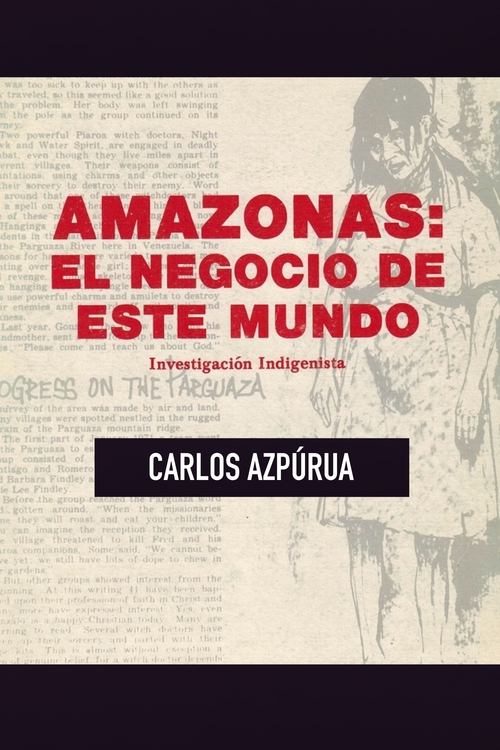
Documentary about multiple the denouncement of military, religious and science sectors, in relation to the violation of the indigenous tribes of the Venezuelan Amazon by the american evangelical mission New Tribes
Amazonas, el negocio de este mundo

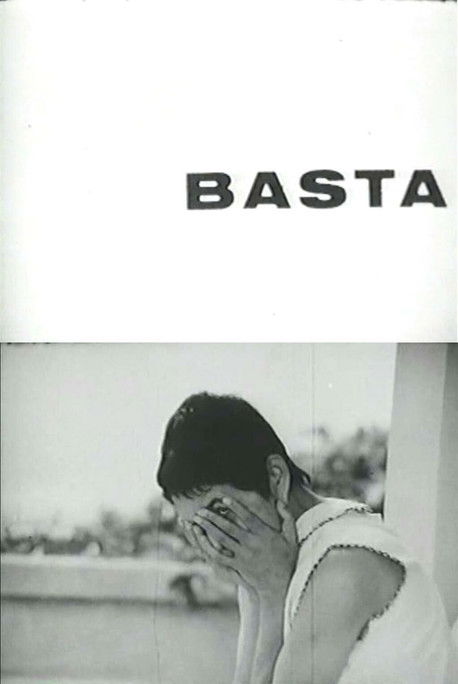
“Through the use of violent symbols (loosely associated with Artaud’s notion of cruelty), some of the consequences of the current social organization in Latin-America are exposed: the alienation, marginalization and reification of men, and the continuous presence of imperialism, considered as rape.” (UU)
Enough!

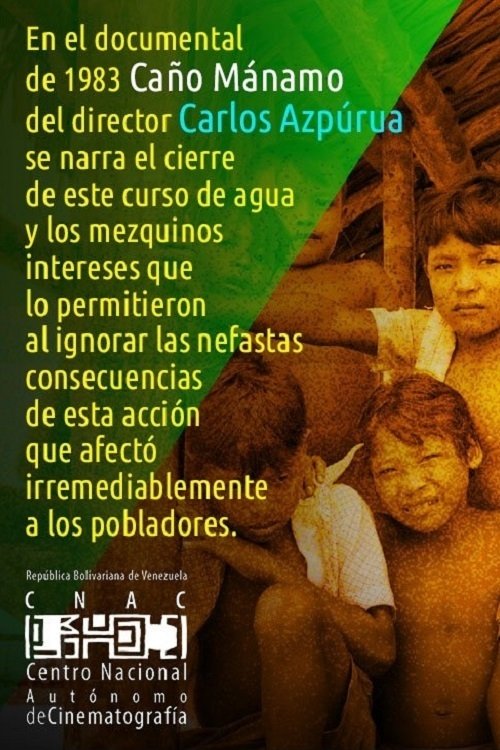
A documentary about the building of a damn near Caño Mánamo and the effects it has on the environment.
Caño Mánamo

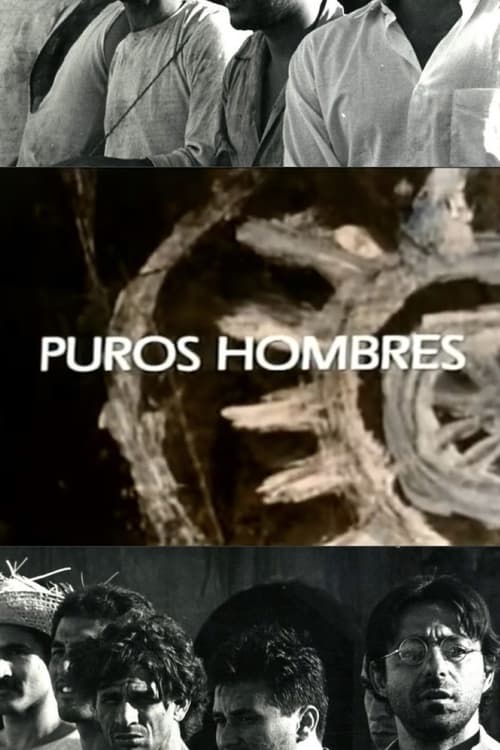
During the dictatorial regime of Juan Vicente Gómez, the bachelor Ibarra is imprisoned for political conspiracy. In prison, the inmates live together remembering the events that led to their imprisonment. Finally, a group, led by the bachelor Ibarra, manages to carry out a plan to escape from the prison.
Puros hombres

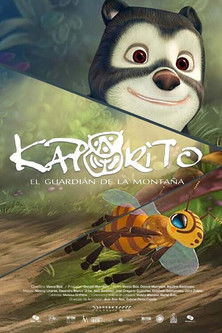
In an area of the Andes, some peasants who hunt for pleasure kill a Frontinian bear and its partner, orphaning a little bear (Kaporito) that faces persecution by hunters. Kaporito is protected by the rest of the animals and other characters in nature. Animals wage a kind of guerilla warfare to defend themselves and their habitat.
Kaporito
The story of San Fernando de Atabapo, a small, remote town in the Amazon region, where the borders of Brazil, Colombia, and Venezuela meet. A town where more than 20 different nationalities coexist and almost as many languages are spoken. The film explores the relationships that develop among its inhabitants and the reasons that lead them to live in this area despite its difficult economic and political conditions.
Atabapo

Based on a story by Julio Garmendia. Animation about the inferiority complex suffered by the native apple when faced to imported apples.