
Rosa Barba
Directing
Biography
Rosa Barba is an artist with a particular interest in film and the ways it articulates space, placing the work and the viewer in a new relationship. Questions of composition, physicality of form and plasticity play an important role in the perception of her work. She interrogates the industry of cinema with respect to various forms of staging, such as gesture, genre, information and documents, taking them out of the context in which they are normally seen and reshaping and representing them anew. Her film works are situated between experimental documentary and fictional narrative, and are indeterminately situated in time. They often focus on natural landscapes and man-made interventions into the environment and probe into the relationship of historical record, personal anecdote, and filmic representation, creating spaces of memory and uncertainty, more legible as reassuring myth than the unstable reality they represent. She has had solo exhibitions at prestigious institutions worldwide (including Museo Nacional Centro de Arte Reina Sofia, Madrid; Pirelli HangarBicocca, Milan; Malmö Konsthall; CAPC Bordeaux; Schirn Kunsthalle, Frankfurt; MIT List Visual Arts Center, Cambridge MA; MAXXI, Rome; Tate Modern, London) and she has participated in numerous group exhibitions and biennials (including the 32nd Bienal de São Paulo, Brazil and the 53rd and 56th Venice Biennale). Her work is part of numerous international collections and has been widely published. Barba’s work has been awarded numerous prizes, such as the 46th International Prize for Contemporary Art, Fondation Prince Pierre de Monaco (2015).
Known For
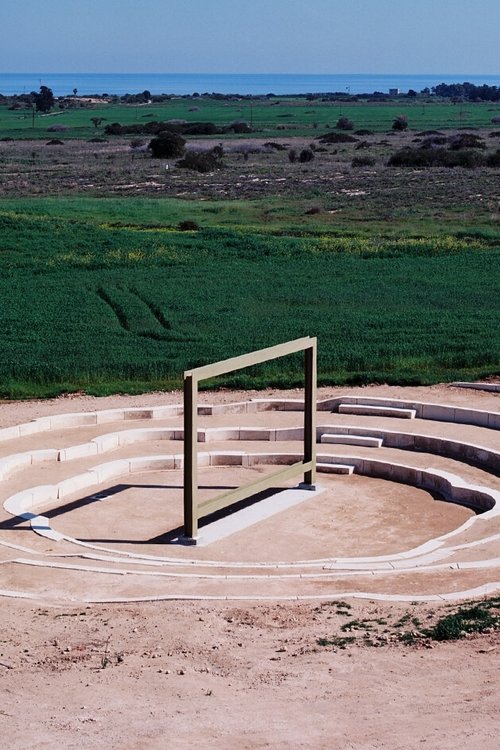
It is an investigation into the loaded, transforming topography that is already palpable in the landscape, before we actually understand what language it creates for our society.
Inside the Outset: Evoking a Space of Passage
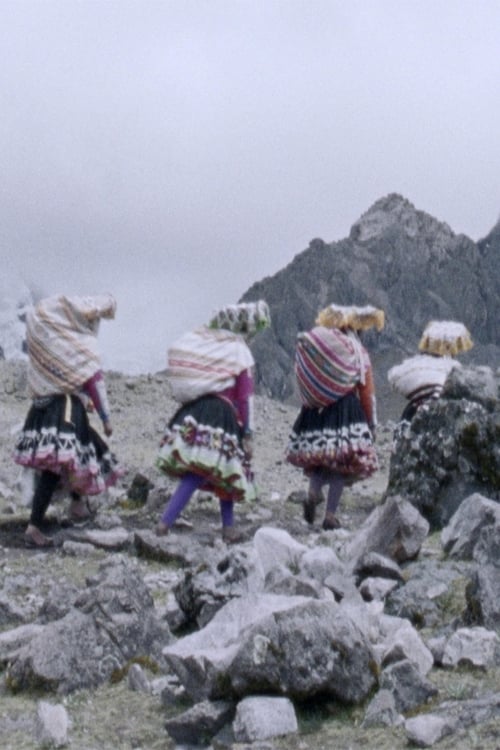
Aggregate States of Matters highlights the ambiguous relationship between humans and nature. For her new 35mm film shot in Peru, Rosa Barba worked with communities that are affected by the melting of a glacier and geological time becoming exposed. Barba shows the slow disappearance of the glacier and the perception of this fact within the Quechuan population in the Andes. While exploring different local myths, she outlines the possibility of translating ancient knowledge into the present time.
Aggregate States of Matters
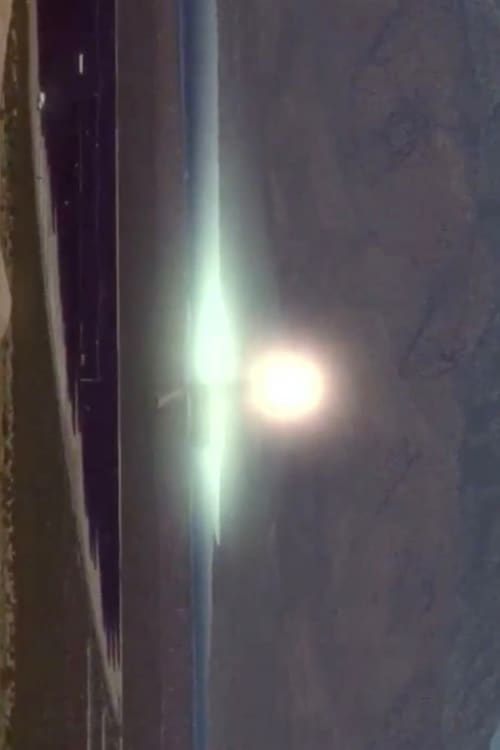
Rosa Barba's 35mm epic From Source to Poem is an audio-visual investigation into the nature of cultural heritage, shot in the Library of Congress' space-like preservation campus in Culpepper, Virginia, where advanced technology co-mingles with nitrate film and magnetic tape.
From Source to Poem
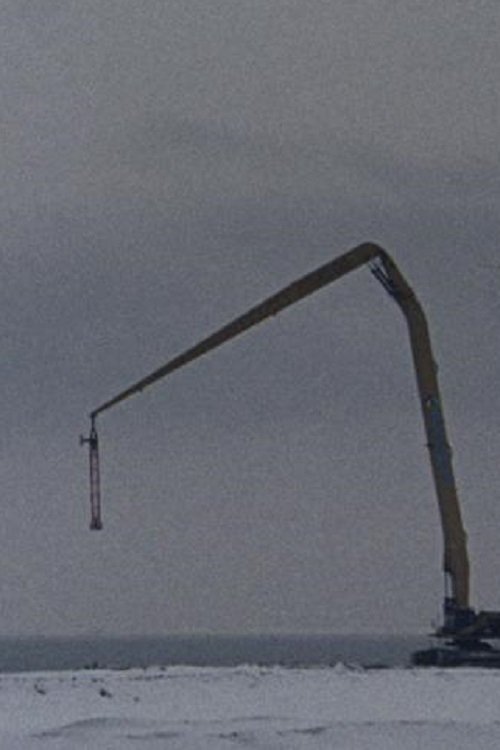
A movie about things.
Somnium

Charge is ultimately an investigation of light as a source to transform the future.
Charge
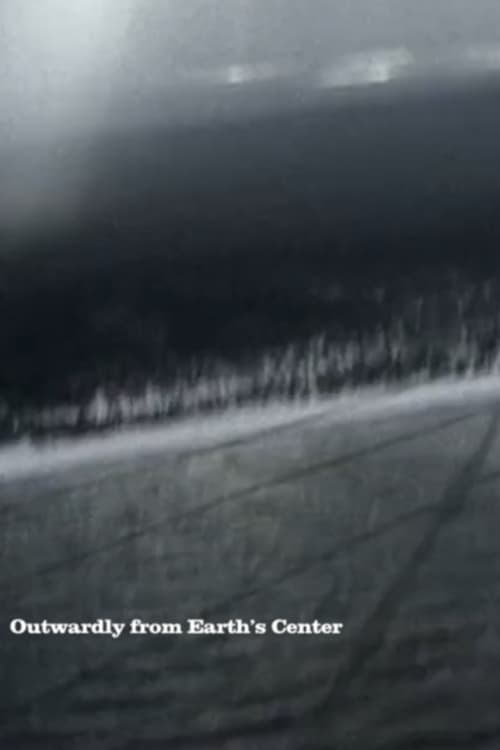
A fictitious narrative about a society on an unstable piece of land that is in danger of disappearing. The situation requires the population’s collective initiative in order to secure their survival both as a society and as individuals.
Outwardly from Earth's Center
In Voice Engine, 2021, Rosa Barba further explores ideas that undergo perpetual transformation of images and their translation through sound. The work destabilizes the old hierarchy of cinema components, freeing them up from their original use and letting them interact in new and unforeseen ways. Voice Engine resonates with Barba’s sculptural approach to film and the relation between the work and the viewer. At Kunsthal, the voices of choristers from Rotterdam power a set of projectors. Their song is a new, unique composition closely aligned to the film material. The choristers activate the 16mm and 35mm projectors with the various frequencies of their voices. Here, light and sound can respond unexpectedly to one another using the analogue footage and the timbre and power of analogue voices.
Voice Engine
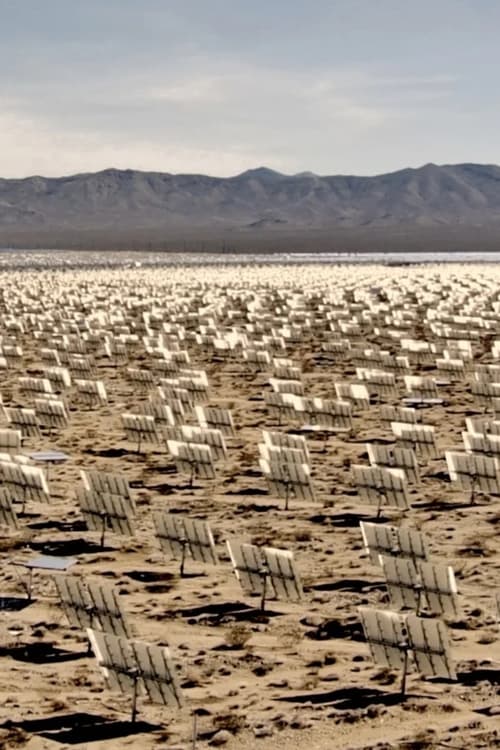
The new 16mm film Radiant Exposures—Facts Run on Light Beams These Days (the latter part of the title quotes from Donna Haraway) returns to Rosa Barba’s long-standing motif of the desert and its exploration of modern archives as a manifestation of human’s desire for progress. As in previous films, Radiant Exposures—Facts Run on Light Beams These Days appears to portray a site out of time and space—ethereal, timeless and unearthly. The predominant motif of the film is the human-made landscape with large expanses of rectangular panels reflecting the sun light. These reflective panels are in fact concentrating sunlight, creating and collecting energy. The presence of the sun is made palpable by the shimmering light and the and the blurring of the imagery.
Radiant Exposures—Facts Run on Light Beams These Days

The film Bending to Earth is a further investigation into inscriptions and transformations of society manifested in the landscape. Several radioactive fields are circled by a hand camera in a helicopter, while a recorded voice-over which appears through several—often distorted—world radio stations describes the materials of those constructions and opens up a mediation of order systems and landscape archives. The fields represent a sort of alphabet of an image engineered in the earth; the camera is an observer of this document and its relation to reality, not just as a pre-existent form but as a potential or imagined object—the part that remains behind the scene, the break within the narrative.
Bending to Earth
The topographical starting point of the film "The Empirical Effect" is the area around Mount Vesuvius in Southern Italy. The protagonists of the film, which was shot in the summer of 2009, are all survivors of the last active eruption of the volcano in 1944, and live in the so-called “Red Zone” in the immediate danger zone of the volcano. The recordings were made in a disused observatory near to the crater, and also include the staging of a trial evacuation. Fact and fiction in "The Empirical Effect" are blurring, with the volcano Vesuvius as a protagonist and metaphor for the complex relationships between society and politics in Italy: unpredictable, powerful, destructive, and based in the middle of a densely populated area alongside the Mediterranean coast. No one is able to control this immense force of nature and yet it connects the inhabitants and their environments with an invisible tie.
Empirical Effect
Subconscious Society is about the end of the industrial era and the transition to the digital age, in which computer code and the clone or copy are in the process of replacing material objects and analogue technology. In the film, this paradigm shift is represented in the form of a social community, whose protagonists make a final attempt at assigning and archiving objects from the past.
Subconscious Society
The Hidden Conference is a film in three parts. Each projection investigates the storage facilities of a European museum, where artworks are kept while not on display. About the Discontinuous History of Things We See and Don’t See, projected in the first room, was filmed at the stores of the Neue Nationalgalerie in Berlin in 2010. About the Shelf and Mantel, shown in the following gallery, was shot in 2015 at Tate Stores in London. It is displayed alongside A Fractured Play, on the left as you enter, which documents the stores of the Musei Capitolini in Rome in 2011.
The Hidden Conference
Beyond the cinematographic flow of succeeding and overlaying images each group refers to a specific position of the sun which is reached only once during the exhibition period: represented by the specific orientation of the inclined glass panels and designated by a metal plaque on the floor, the sculptures become recordings of this performative event. A system and its diagram at the same time, Solar Flux Recordings, returns us to the world we inhabit and underlines the bonds which link us to the environment and its technologies.
Solar Flux Recordings
Embarking on an evocative journey through the film and video collection of Museum Boijmans Van Beuningen, artist Rosa Barba introduces Drawing Probable Conclusions / Conclude with Probable Drawings.
Drawing Probable Conclusions / Conclude with Probable Drawings
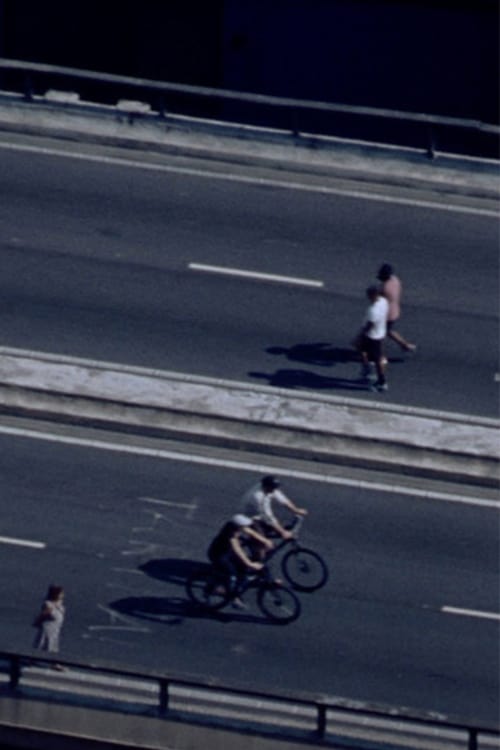
Experimental documentary about urbanism.
Disseminate and Hold
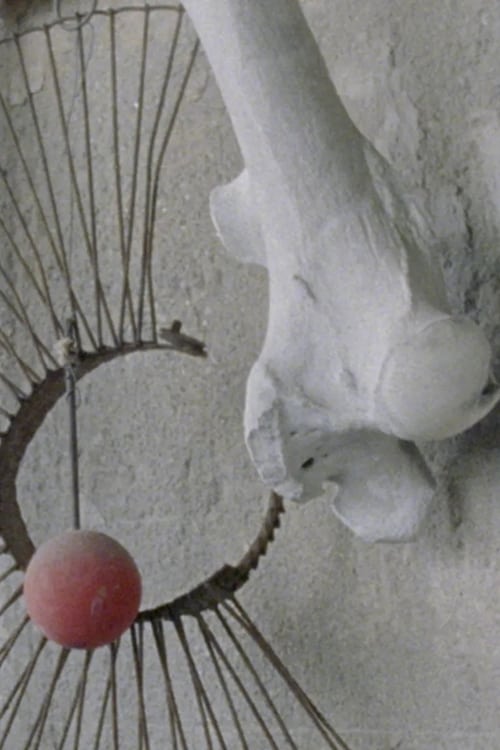
Shot in 16mm inside the studio of artist Alexander Calder (1898–1976) in Roxbury, Connecticut, the film draws a filmic portrait of one of the protagonists of twentieth-century art: through images of tools and work materials, still conserved as Calder left them, as well as the natural external context. (Rosa Barba)
Enigmatic Whisper
On one hand, intergalactic particles or grains meeting a community’s fireworks—the explosions’ lights–momentary glows against the night sky. On the other hand, extracts from Gramsci’s life in prison, memories of a revolutionary thinker as he approaches death, alongside the inner workings of the planet, bubbling scenes, and volcanic land. While the film’s pace is slow, its stories carry millions of years, myths, stellar imagery, high-tech machinery, and also realities of life, especially in Sicily. Myth and Mercury’s ending segment offering a vision of scientific futures comes all of a sudden. Ultra-high energy neutrino detected in the Mediterranean, it has been declared. Records have been broken. Pulverised, even.