Mariah Garnett
Directing
Biography
Mariah Garnett is an editor and director, known for Trouble (2019), Full Burn (2014) and You Will Never Ever Be a Woman. You Must Live the Rest of Your Days Entirely as a Man, and You Will Only Grow More Masculine with Each Passing Year. There Is No Way Out. (2008).
Known For
Mariah Garnett’s intimate and inventive biographical portrait of her artist father recounts in his own words his past as a political activist in Belfast and his daughter’s unlikely influence on his life. Through a combination of letters, interviews, archival footage, and uncanny reenactments of the period (featuring Garnett herself in the role of her father), this slyly self-reflexive yet deeply felt film provides crucial insights into his largely forgotten accomplishments and Ireland’s history of sociopolitical unrest, while also documenting the father and daughter’s belated reunion.
Trouble
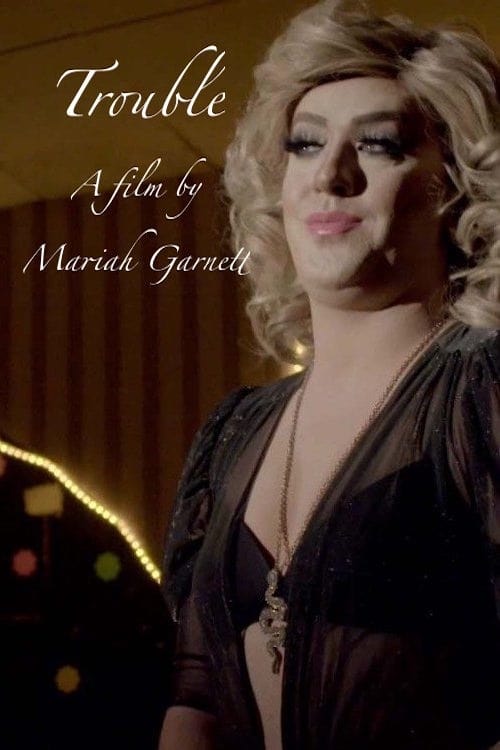
Two trans women share moments of love, insult, and masochism, exchanging both kiki and kai kai languages. Their syncopated exchanges oscillate from hateful to loving, blurring the distinction between lover and enemy - a position that both women seem to share.
You Will Never Ever Be a Woman. You Must Live the Rest of Your Days Entirely as a Man, and You Will Only Grow More Masculine with Each Passing Year. There Is No Way Out.

Sanctuary explores queer spirituality and utopian sexualities through the figure of Purusha Androgyne Larkin (1934–1988), a monk, pioneering gay filmmaker, and self-proclaimed cosmic-erotic mystic. Larkin’s 1981 book, 'The Divine Androgyne According to Purusha', challenged repression with a spiritual vision rooted in eroticism and presented a radical path to cosmic-erotic consciousness through ‘extreme’ forms of sexual pleasure. Sanctuary explores Larkin's attempt to form a utopian, pleasure-based spiritual community, and considers the complex legacies of his ideas in queer culture. Shot on 16mm, the film weaves together the voices of Larkin’s friends and followers, creating a portrait in absentia of a figure ahead of his time.
Sanctuary

The film guides the viewer through the process of making contact with a figure who exists only in his own photographs—70’s gay sex icon Peter Berlin. The film is structured in three parts, which were made chronologically. In the first part, the filmmaker appropriates Peter Berlin’s outfits and poses, playfully attempting to embody Peter Berlin’s artistic persona. Each frame of the original 16mm film was then hand-painted to distort the image, producing an animated effect that prevents the viewer from seeing the full performing body. In the second part, a voice over relates a story riddled with anxiety about a potential meeting with Peter Berlin that is paired with images of mansions and window displays. The third and final section is an interview with Peter Berlin in his apartment, describing a moment of exchange that crosses lines of gender and generation, a moment where the identities of two filmmakers briefly coalesce.
Encounters I May or May Not Have Had with Peter Berlin
A culmination of a body of work Mariah Garnett began in 2020, dealing with an archive of diaries and operatic score written by her great-great aunt.
Songbook
Garbage, The City, And Death is an eight-minute, single-channel video. It consists of three scenes from a Fassbinder play of the same title, which was banned from the stage in Germany in 1985. Garnett's adaptation consists of the scenes between Roma, the prostitute and Franz, her boyfriend/pimp. Garnett plays Franz and her half-sister, Joanna Coleman, plays Roma. The couple bickers over money problems, her undying love for him, and his general disgust with her (produced by his latent homosexuality). The film moves from the city, where they are living in their car, to the Salton Sea, to a hot tub in the night. This project was born out of a month-long visit between long-lost sisters who did not grow up together. Garnett uses Fassbinder’s text as a means of exploring concepts relating to sibling-hood that do not exist in her actual relationship with her sister – it is an illustration of how Garnett imagines sisters might fight. Sibling rivalry is warped here into a lovers’ quarrel.
Garbage, The City, and Death
Sebastian (b. Milton Miron), a 90-year-old accountant and tax preparer in Los Angeles, reflects on his pursuit of a creative life as an underground filmmaker and impresario during San Francisco's counter-cultural heyday.