FEEL IT.STREAM
Woody Vasulka

Woody Vasulka

Directing

Biography

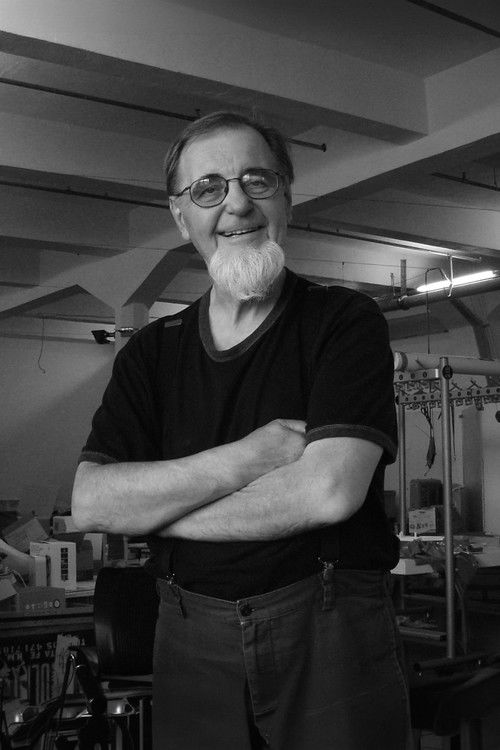
Woody Vasulka was a Professor at the Center for Media Study at SUNY Buffalo from 1973 to 1979. With his wife Steina, he founded The Kitchen, a New York City electronic media theater in 1971.
Known For

Homemade TV: The Electronic Image
7.0

A broadcast presentation of Steina and Woody Vasulka's experiments with the electronic image. Featuring a 15-minute "jam session" of improvised video feedback art.

Homemade TV: The Electronic Image

1975
Participation
N/A

This period compilation of documentaries shot with a Portapak camera from the early era of video experimentation offers an immediate view of the independent New York art scene (concerts and theater perfomances on the streets and in the clubs of downtown). It is a sort of summary of Steina and Woody Vasulka's first creative period, a period of fascination with the more bizarre aspects of "new American decadence". Thanks to the video camera and its revolutionary implications, the creators were able to penetrate into spheres where the documentarians of more classical media were neither allowed nor interested to enter, thereby helping to expand the ideas of documentary possibilities. Steina has remarked that she learned the craft of camerawork as documentarian thanks to these celebratory, countercultural scenes of the "sexual avant-garde"-- Participation also features a pulsing light show projection at the Fillmore East, and a scene from Off-Broadway drag theater.

Participation

1971
The Vasulka Effect
2.3

The opening of The Vasulka Effect couldn’t be more apt: Steina Vasulka addresses her husband Woody through various TV screens. He does the same and replies. A perfect image of the relationship between the free-spirited, groundbreaking pioneers of video art. After meeting in Prague in the early 1960s, they relocated from Czechoslovakia to New York, where they later founded The Kitchen, their legendary art and performance gallery.

The Vasulka Effect

2020
Reminiscence
N/A

This tape was created when Woody visited his native Moravia with a Portapak camera. In the course of signal modulation an alteration in the field of raster lines is taking place, in which the lines are being vertically deformed and gain the contours of objects (with the use of a Rutt/Etra synthesizer).

Reminiscence

1974
Tissues
N/A

In Studies cycle, abstract studies are assembled, which document the Vasulka's early work with electronic material. The visual aspect of Tissues is the work of Steina, whereas Woody engineered the sound.

Tissues

1970
In Search of the Castle
N/A

This symbolic journey evokes the personal creative wandering of the Vasulkas. The landscape, shot from a car window while driving in the Santa Fe area, is gradually transformed with more and more complicated imagery techniques.

In Search of the Castle

1981
No image
N/A

No description available.

Sexmachine

1970
No image
N/A

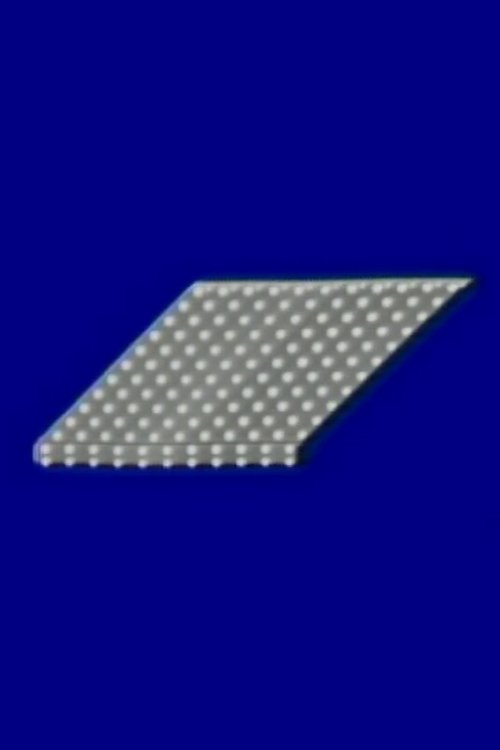
Soundsize continues the Vasulkas' investigation into the relationship of sound and image. Here a pattern of dots is modulated by sounds generated from a synthesizer, changing size and shape in a visual manifestation of electronic sound.

Soundsize

1974
No image
N/A

Cantaloup is an informal documentary on the Vasulkas' Digital Image Articulator, an imaging device they designed with Jeffrey Schier. Using a cantaloup and the three artist/designers as source material, Steina explains the capabilities of the machine, including its real-time imaging ability and the articulation of images in a digital code. She describes the varying sizes of pixels (picture elements), the layers (or slices) of color and tone that can be derived from one image, and techniques such as "grabbing" the image and multiplying it. This document offers an informative demonstration of a complex imaging device.

Cantaloup

1980
Discs
N/A

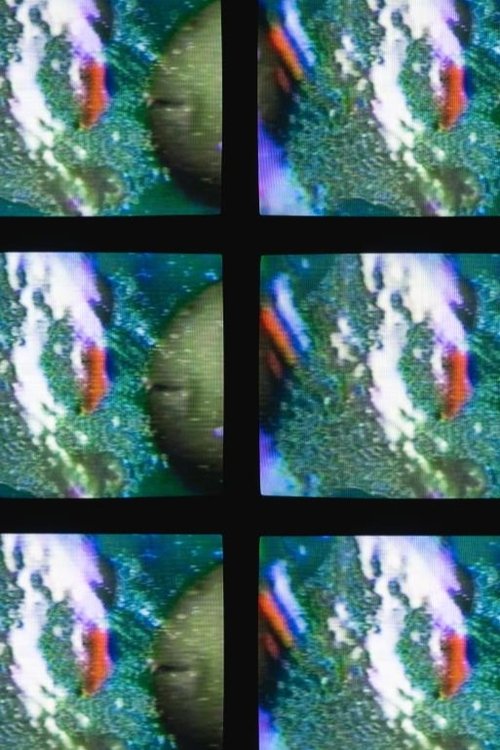
In Discs, originally made as installation for a set of monitors, the creators experiment with the phenomenon of horizontal drift trhough the indtroduction of purposeful time error. The result is the repetitive abstract pattern of a distorted magnetic field. Furthermore, this horizontal stream also travels thorugh a set of TV screens stacked on top of each other, giving the work a vertical dimension as well. The image thus demonstrates the flexibility of the frame in video.

Discs

1970
No image
N/A

No description available.

Artifacts

1980
Thierry
N/A

One of the works assembled in the series Sketches. These early sketches, created not without the irony, examine ways of manipulating the video image. They indicate that the documentary trend in the Vasulkas' work was from the beginning mingled with free experimentation. These short tapes were modified from the early documentary tapes.

Thierry

1970
Distant Activities
6.0

Real time development of a video feedback, processed and controlled through a video keyer. Sound results from video signals, interfaced with audio synthesizer.

Distant Activities

1972
No image
N/A

No description available.

Telc

1974
Heraldic View
N/A

Short experimental film by Steina, Woody Vasulka

Heraldic View

1974
Scan Processor Studies
N/A

The SCAN PROCESSOR STUDIES are a collection of works by Woody Vasulka & Brian O'Reilly. The full work is of total approximate duration of 45 minutes, with sections of various lengths, textures, and dynamic qualities.

Scan Processor Studies

1973
Matrix II
N/A

Matrix II explores the properties of images and sounds in the medium of video. Geometric shapes travel across a ‘matrix’ (grid) of cathode ray tube (CRT) screens. CRT televisions, which use manipulated electron beams to display images on a fluorescent screen, remained in widespread use until the early 2000s. The Vasulkas sought to test the limits of each monitor, creating a fluid motion resembling the behaviour of electronic signals. Matrix II is an early example of video art, which first developed in the late 1960s and 1970s as artists came into contact with new consumer technologies for capturing moving images.

Matrix II

1974
C-Trend
5.0

No description available.

C-Trend

1974
Progeny
N/A

Progeny is a collaboration with sculptor Bradford Smith. Smith's organic and sensual sculptural forms are transformed by the merging of one of Steina's Machine Vision devices — a rotating, mirrored sphere with pre-programmed camera movements and optical transpositions — with Woody's digital processing.

Progeny

1981
Interface
N/A

An Interface not only between two continually switched over images but also between documentary tape, imagery taken from "reality", and its transformation in the electronic sphere.

Interface

1970