Acting
No description available.
Sanitka was a Czech television, drama series, first broadcast in 1984 and eleven episodes were made. It starred Jaromír Hanzlík, Tomáš Juricka and Zlata Adamovská among others.
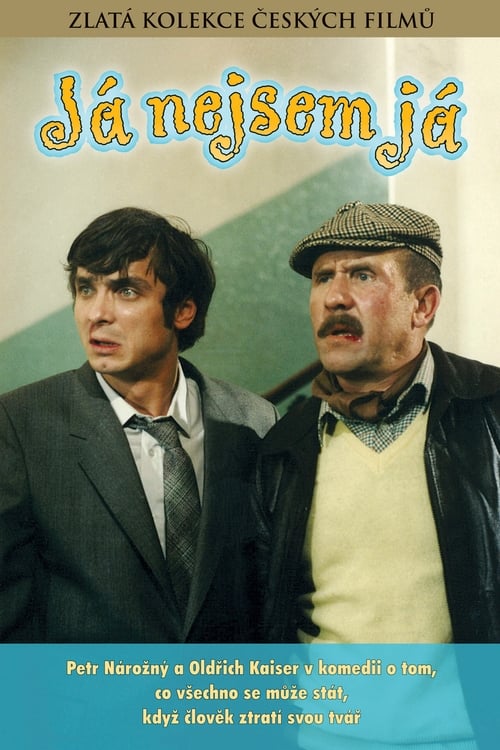
The two heroes of the film's story - the decent but dry engineer Zárub and the marriage swindler Majer - are granted this wish by the mysterious forces of the moon. The two men change their appearance, which, however, contrasts sharply with their unchanged characters and voices. The incomprehensible swap naturally becomes the source of many comic plots and situations.
Tóna Bohácek has been a great worry to his mother, Mrs Bohácková. All his friends equal in age are already married and some of them even have children - only Tóna still has nothing. Mother Bohácková thus publishes an ad in the Lonely Hearts column on behalf of her son. From among the girls who responded, she picks out Janicka, a girl from the neighboring village, and then forces Tóna to go to have a look at her and bring her home. The date of the two young people, however, does not turn out well due to the embarrassment on both sides, and Tóna returns home drowning in the feeling of ridiculousness. On the way, he picks up hitchhiker Kveta from Prague. Only then, he realizes that the mother with her festive dinner is waiting for him and Janicka at home and thus asks Kveta to substitute for the girl from the ad.
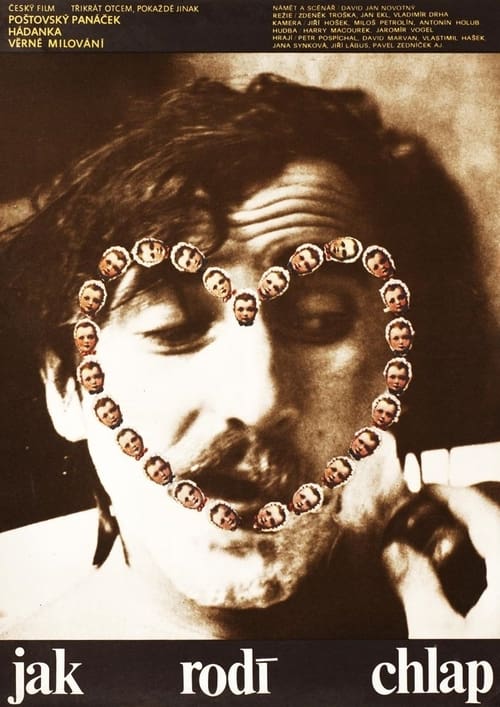
The hero of the opening story, the Postman Puppet (directed by Zdeněk Troška), works as a postman in the mountains. When his wife is taken to the maternity ward, he goes on his usual hike through the solitudes. Little Libor goes after the father of two girls (Petr Pospíchal), who longs for a son. Meanwhile, the weather on the ridges worsens sharply. An experienced mountaineer and his little friend spend the night in a makeshift shelter... The second episode of Hádanka (directed by Jan Ekl) has a criminal plot. A new father (Vlastimil Hašek) gets drunk with friends in a wine bar and the next day becomes a suspect in a murder. He doesn't remember the critical moments, but his testimony leads to the capture of the real perpetrator... The main character of the final short story True Love (directed by Vladimír Drha) is a frat boy (Pavel Zedníček) who spends whole days in pubs. He gets a harsh lesson from his wife, who refuses to let him see the baby...
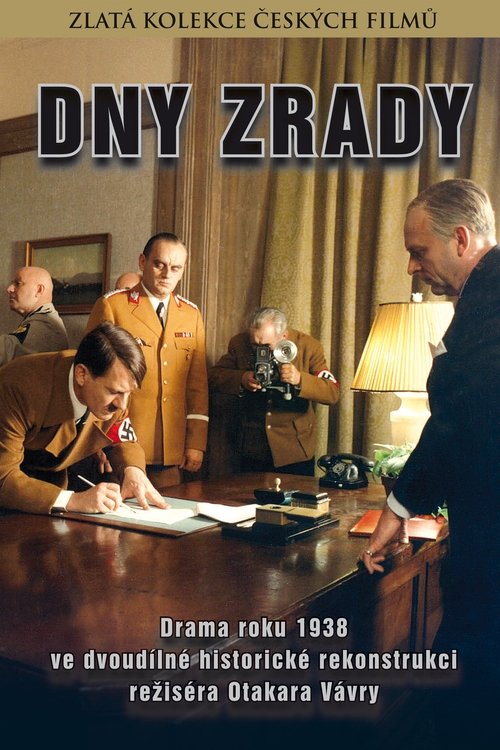
This feature film based on the events of 1938 is a chronicle of the futile efforts of the Czechoslovak president Edvard Benes (Jirí Pleskot), politicians and ordinary citizens, to save the independence and the territorial integrity of the state from the advance of Hitler's Germany. On the 29th of March 1938 the leader of the Sudeten Germans Henlein (Werner Ehrlicher) has a meeting with Hitler (Gunnar Möller). Hitler orders him to intensify pressure on the Czechoslovak government. On the 24th of April in Carlsbad, the Sudetendeutsche Partei (Sudeten German Party) decides upon eight demands that are unacceptable to the Czechoslovak President, since they would ultimately lead to the break-up of the Republic. Benes still shows a certain willingness to negotiate, and Henlein resents this. The Germans are determined to make further negotiations impossible through incidents and violence.
Loosely inspired by a real criminal court case. It took place in Prague and the Tatra Mountains between 1926 and 1928 and was later described as one of the biggest, if not the biggest, cases the pre-Munich Republic had ever seen. Nevertheless, the police and judiciary at the time failed to clarify and close the case in such a way that it would not raise legitimate questions long after the trial had ended. Even though the court handed down its verdicts, the case remained open in a way, and this is also reflected in the script, which remained faithful to the facts in its basic outline," says screenwriter Václav Šašek, author of the two-part television production The Trial of the Martyn Murderers...
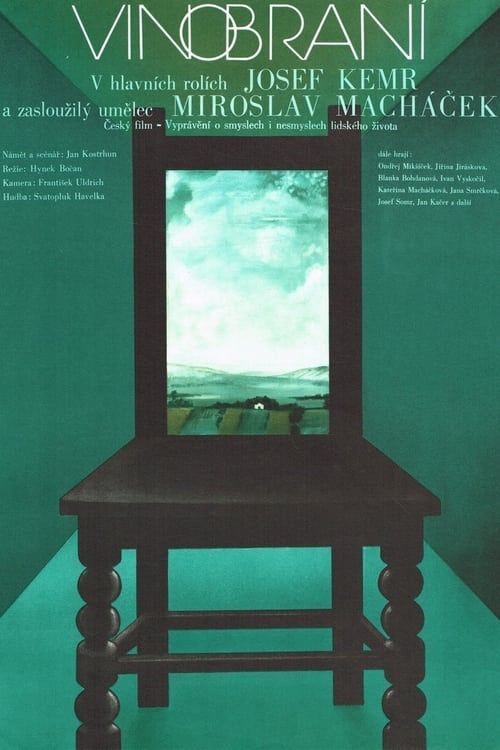
In a South Moravian wine-growing village in the early 1970s lives an old man who cannot accept the attitude of the younger generation towards nature and agriculture. Director Hynek Bočan made a number of films based on Jan Kostrhun's drafts, mostly set in the South Moravian environment (including The Face Behind the Glass), but the portraits were very flat. Relationships between people were often depicted in predictable schemes. The hero this time is an old villager who is struggling to cope with the changes in his attitude to nature and to agricultural work in general. He sees his only hope in his grandson, to whom he tries to pass on his life experience.
Marie, an active modern woman at work, has resigned herself to everything after a disappointment in life and allows herself to be completely used by her own family. The moment she comes home, she becomes a passive servant for the entire family, a good daughter and aunt. By the age of thirty-six, she has not managed to find her own happiness. Some time ago, her mother ruined Marie's wedding to architect Honza, who therefore preferred to leave the city. But Marie is determined to try to live her own life again and not let others drag her down. However, she only finds support in her father, who once betrayed his own young dreams for the good of the family. Will she find enough strength in herself to do it?
The story of a music academy student Zdenek, who meets a charming girl, and without realizing also gets a son with her. Dealing with such a situation is not easy, especially when one day the child's mother disappears. Twenty year old Zdenek faces a serious decision. Although he is aware that a child may endanger his studies and perhaps even future career, he refuses to entrust him to the care of the state institution.
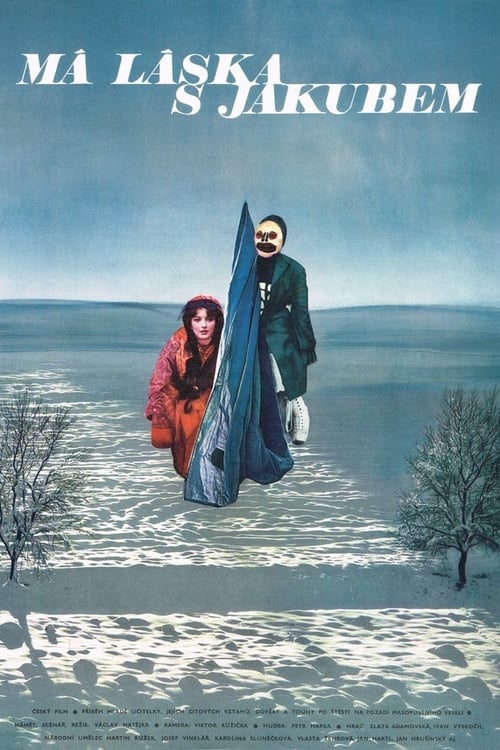
A budding teacher comes from Prague to the South Bohemian district town where her fiancé Jakub, a young promising engineer at the local paper mill, lives. Petra is getting to know her new colleagues at school and the children in her new class, and is practicing hard with the Komenium music group, whose members she has known since her studies. She also gets to know Jakub's colleagues and the director of the paper mill, to whose position Jakub would like to be appointed after his retirement. It is this desire for a high position that leads Jakub to behave and act in a way that Petra cannot approve of.