Shaul Goskind
Directing
Biography
Shaul Goskind was one of the pioneers of Jewish cinema in Poland. He was born in Warsaw. In 1932, together with his brother Izaak, he established the Sektor film laboratory. Building upon this foundation, he founded the Kinor film studio in 1936. During World War II, he resided in the Soviet Union. In 1945, he returned to Poland and, that same year, established the Kinor film cooperative, which produced films in Yiddish. In 1951, he emigrated to Israel, where he continued his work in film production. He died in Bnei Brak.
Known For

This semi-documentary film (and Poland’s last Yiddish feature) features the comedy duo Shimon Dzigan and Israel Shumacher who had recently returned from the Soviet Union, and Jewish children who had survived the Holocaust. Directed on location by Nathan Gross and Shaul Goskind at at the JDC-supported Helenowek Colony, an orphanage and school near Lodz, this film includes Dzigan and Shumacher's virtuoso turn as all the characters in Sholem Aleichem's Kasrilevke Brent (Kasrilevke is Burning), and an exchange of roles where they become the children's audience. Reversals continue during the performers' visit to the children's residence, as the children teach adults about the healing possibilities of music, dance and storytelling.
Our Children
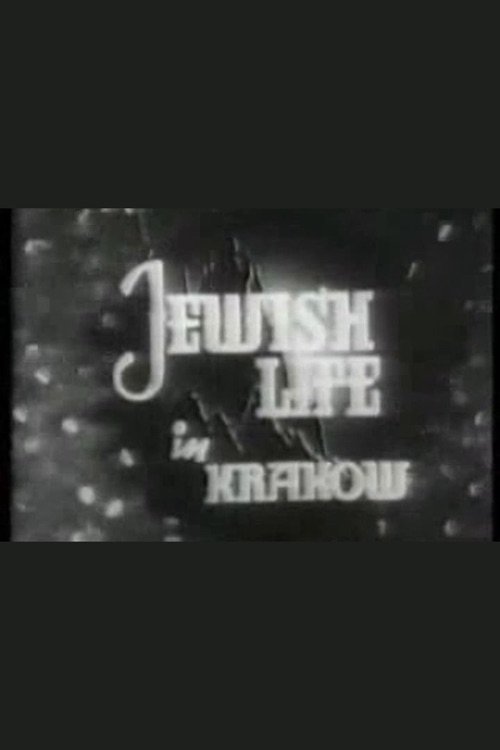
Focusing on Cracow's Jewish quarter, this film intermingles old and new, using music to enhance the images. Streetcars share tree-lined streets with horse-drawn carriages; people conduct business under umbrella-covered markets and arcaded market halls; parks and schoolyards host sports, games and animated discussions. Scenes of the famous Remu Synagogue and the Alte Shul, an orphanage, a hospital, the Jewish Community Council, and several schools convey the vitality of this age-old Jewish community.
Jewish Life in Krakow
Stylish women promenade through modern Lwow's thriving market squares to a piano-and-violin accompaniment suggesting urban rhythms. Also known as Lemberg and home to an old, well-established Jewish community, this city nestled in a valley projects an aura of prosperity. Parks and pavilions punctuate its public spaces as trucks, pushcarts and bicycles ply its busy streets. Among the Jewish community landmarks shown are the Yad Haruzim Trade Union Building, the Old Ghetto, the softly curving exterior of the Modern Temple, the orthodox school, the Moorish-looking Lazarus Hospital and the grave of the "Golden Rose"-filmed in warm, dappled light-and the Nowosci Theater.
Lwów
Wilno was one of the most important Polish cities, especially in culture. Here, a university where noblists like Czesław Miłosz learned is located.