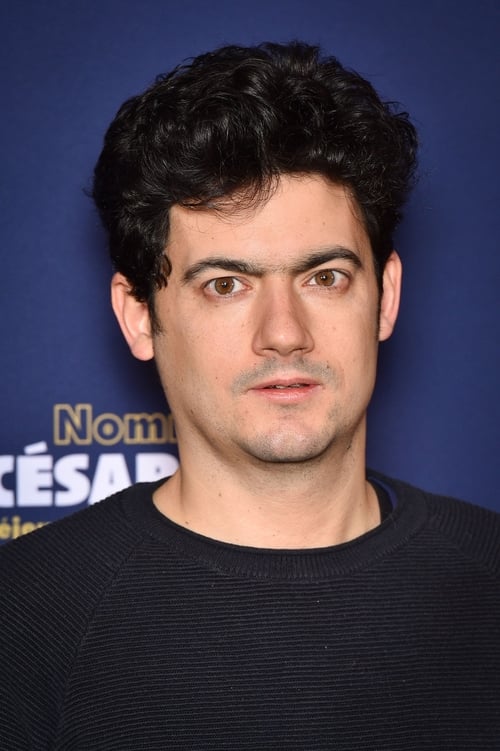
Clément Cogitore
Directing
Known For
As long as there is cinema, LE CERCLE will be there. It is the only television program of critical debates 100% devoted to cinema. Each week, it offers fiery, joyful and non-condescending jousts on the films on the bill; and invites with "Le questionnaire du CERCLE" directors to come and share their passion for cinema.
Le Cercle

No description available.
Cannes Festival
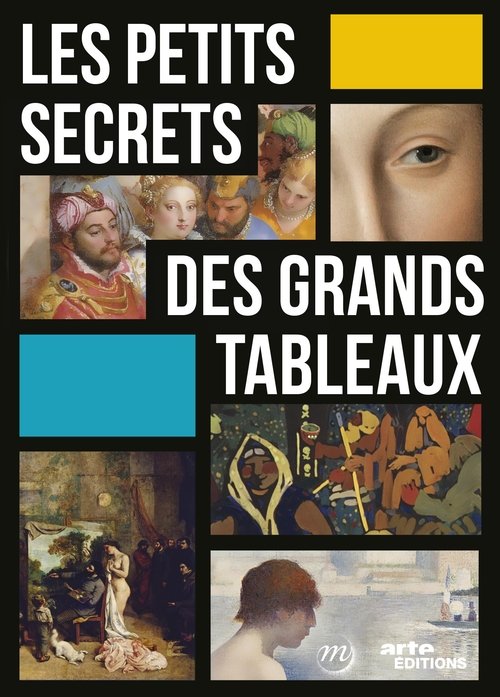
The great works of the past portray abundant testimonies, and are imbued with secrets and are teeming with mysteries. Beneath the surface of the painting, details awaken, to recount the spirit of the times and the vagaries of History, such as wars, revolutions, economic transformation, scientific discovery, beliefs and schools of thought.
Smart Secrets of Great Paintings
In 1982, Wim Wenders asked 16 of his fellow directors to speak on the future of cinema, resulting in the film Room 666. Now, 40 years later, in Cannes, director Lubna Playoust asks Wim Wenders himself and a new generation of filmmakers (James Gray, Rebecca Zlotowski, Claire Denis, Olivier Assayas, Nadav Lapid, Asghar Farhadi, Alice Rohrwacher and more) the same question: “is cinema a language about to get lost, an art about to die?”
Room 999

Afghanistan, 2014. As the withdrawal of troops approaches, Captain Antarès Bonassieu and his squad have been assigned a surveillance mission in a remote valley of Wakhan, on the border of Pakistan. Despite Antarès and his men’s determination, control of the secluded valley will slowly fall out of their hands. One dark night, soldiers begin to mysteriously disappear in the valley.
The Wakhan Front

Thirty-four year old Ramsès has established himself as a clairvoyant in La Goutte d’Or, Paris. A shrewd manipulator and something of a poet, he built a sound business consoling people. Elusive and dangerous youths, freshly arrived from the streets of Tangier, disrupt his business and the whole neighbourhood. Until the day Ramses has an actual vision.
Sons of Ramses

In the middle of the Siberian taiga, 450 miles from the nearest village, live two families : the Braguines and the Kilines. Not a single road leads there. A long trip on the Ienissei River, first by boat, then by helicopter, is the only way to reach Braguino. Self-sufficient, both families live there according to their own rules and principles. In the middle of the village: a barrier. The two families refuse to speak. In the river sits an island, where another community is being built : that of the children. Free, unpredictable, wild. Stemming from the fear of the other, that of wild beasts, and the joy procured by the immensity of the forest, unravels a cruel tale in which tensions and fear give shape to the geography of an ancestral conflict.
Braguino
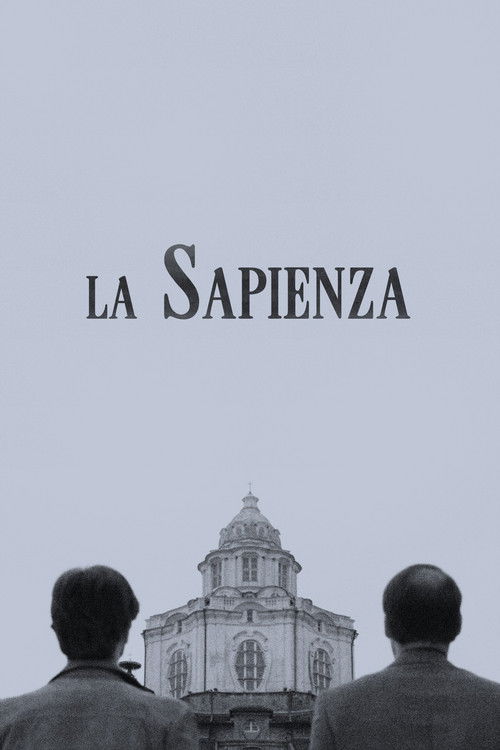
The story is one of an architect that has lost his inspiration and goes looking for those motivations that pushed him as a youngster to take up the profession. Inspiring him was the baroque movement and all of its artifices: the Guarini in Turin and the Borromini in Rome. The film’s central story ends up being the love story that develops between architecture, artistic inspiration and feelings.
La Sapienza
A filmic essay/poem blending fictional images and archival footage from the Pathé and Gaumont collections from the early XXth century. Based on two figures/characters and paced by their interior monologues, Chroniques explores the mythologies of exile and exodus. From the grain of stock footage to the pixel of digital image, this film peruses the history of Europe the way we peruse a family photo album : between personal account and fictionalization.
Chroniques
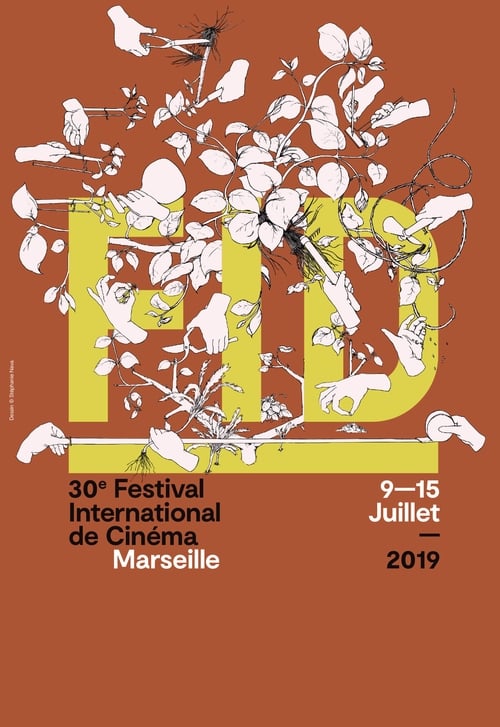
For the 30th anniversaire of FIDMarseille about thirty directors have done us the honor of offering us some very beautiful short films.
30th anniversaire of FIDMarseille
No description available.
Rivo Alto
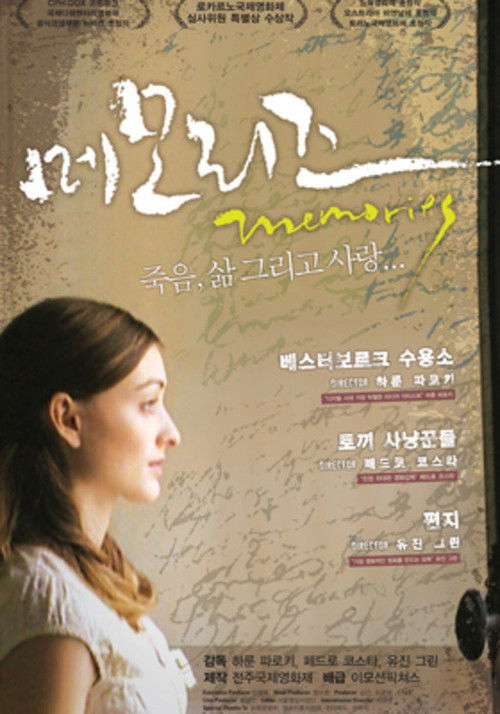
Previously focused on Asian directors, “Jeonju Digital Project 2007” takes a look at Europe. The Portuguese filmmaker Pedro Costa, the German filmmaker Harun Farocki, and the French filmmaker Eugène Green participated in this project.
Memories
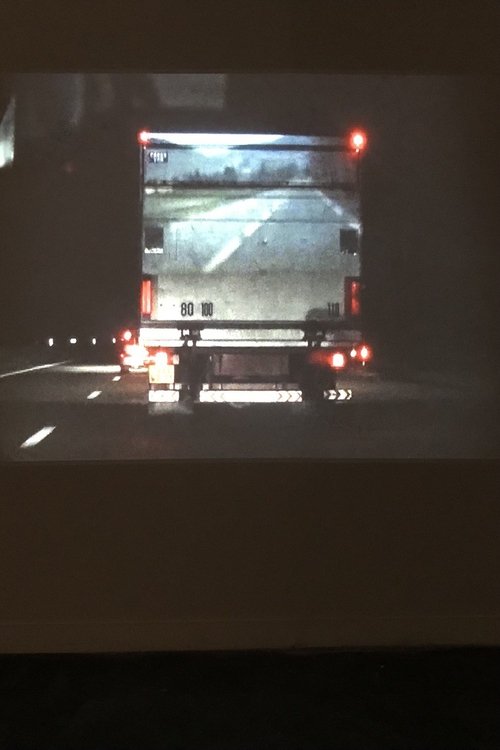
Video performance made using a lorry, a generator and a 16mm projector, Travel(ing) compares the reality of an experience with its representation in film.
Travel(ing)
Stéphane Lissner, director of the Paris Opera, entrusts the staging of the opera-ballet Les Indes galantes to the visual artist Clément Cogitore. Based on the experience of his short film Les Indes galantes, the artist updates Jean-Philippe Rameau's baroque masterpiece (1735) by bringing together lyric song and urban dance. The choreography is entrusted to Bintou Dembélé who supervises dancers from krump, popping, voguing or even experimental hip hop. From rehearsals to the Premiere, Philippe Béziat films the meeting of urban dancers with the lyric institution and invites the spectator to share a human and artistic experience.
Gallant Indies
Virgile and Blanche, both aged 17, correspond by e-mail. Virgile loves Blanche, but Blanche loves a boy named Eustache. Nobody knows the other's thoughts. Virgile talks about life and death and Blanche listens acceptingly. Eustache enters the room in a blue cap. He sees Virgile first, then Blanche. Then Blanche remembers having danced with Virgile and leves the room to join him.
Correspondances
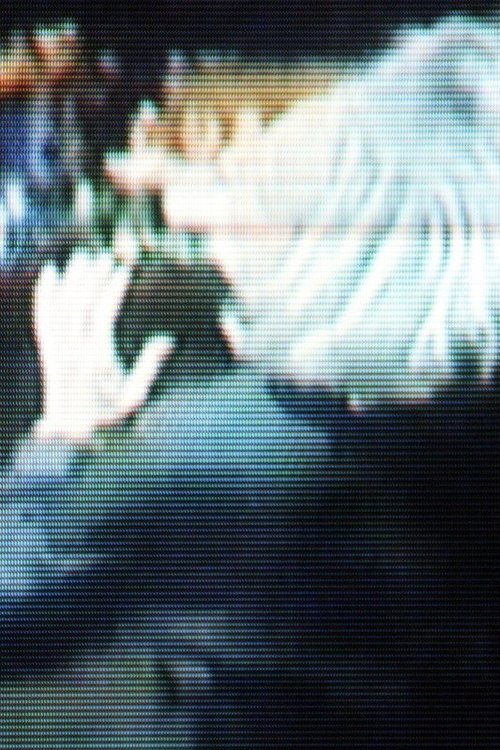
For the making of "Assange Dancing", Cogitore used an amateur video shot and published online by the DJ of a club in Reykjavik in 2011. It shows the activist and Wikileaks founder dancing on a semi-deserted dancefloor.
Assange Dancing
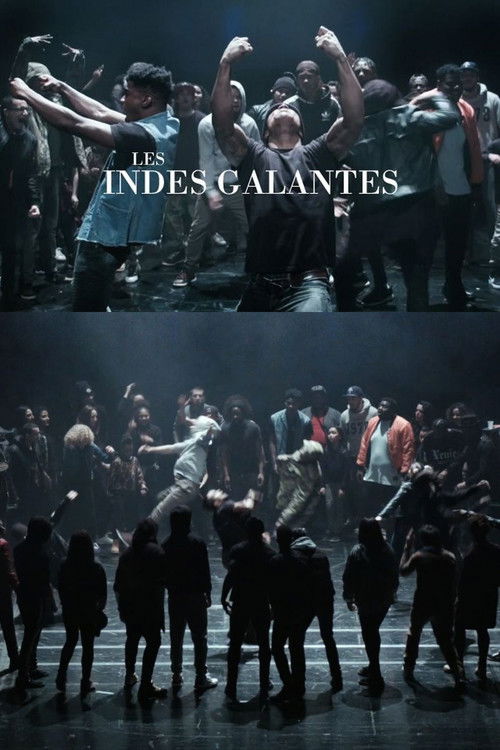
Les Indes Galantes (The amorous indies), is an opera-ballet created by Jean Philippe Rameau in 1735. He was inspired for one of the dance by tribal Indian dances of Louisiana performed by Metchigaema chiefs, in Paris in 1723. Clément Cogitore adapts a short part of the ballet by mobilizing a group of Krump dancers, an art form born in Los Angeles black ghetto in the 1990s. Its birth occurred in the aftermath of the beating up of Rodney King and the riots, as well as police repression it triggered. Amidst this coercive atmosphere, young dancers started to embody the violent tensions of the physical, social and political body. Both the tribal dance performed in Paris in 1723, and the rebelious Krump dancers of the 1990s shape a reenactment of Rameau’s original libretto, staging young people dancing on the verge of a volcano.
The Amorous Indies
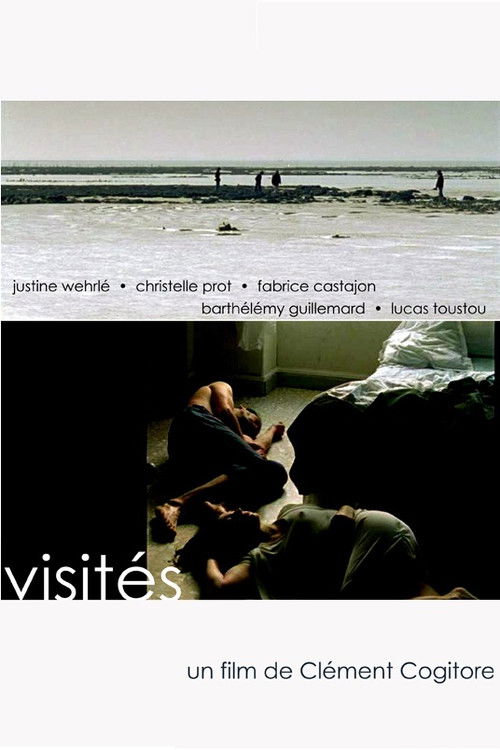
She losses her sight. Once back among friends and family: blindness, isolation and a strange perception of the bodies around her. Rejection of this changes and an abrupt decision to put an end to it all. In the peacefulness of early morning, the terms of a new shared existence take shape.
Visités
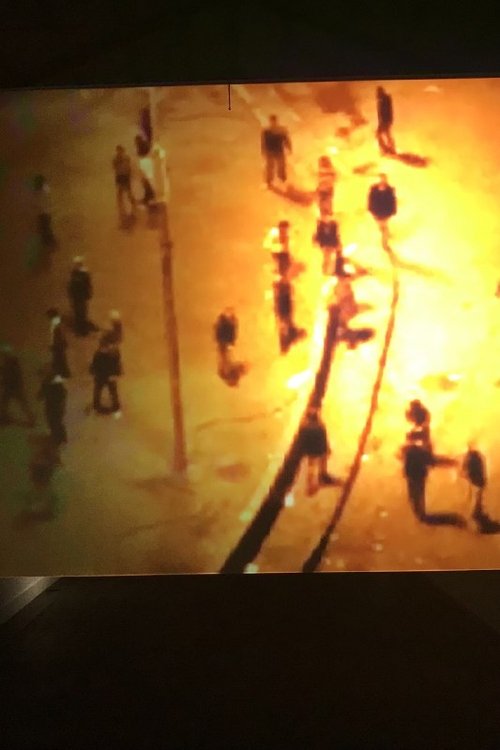
This work is conceived around the reuse of television footage of one of the protest demonstrations against the Mubarak regime during the second revolution in 2011, in Cairo's Tahrir square.
Tahrir
Clément Cogitore adapts a short ballet excerpt from Jean-Philippe Rameau's Les Indes galantes, with the help of a group of Krump dancers and three choreographers on the 3rd Stage of the Paris Opera: Bintou Dembele, Igor Caruge, and Brahim Rachiki. Krump is a dance style that originated in the ghettos of Los Angeles in the 1990s. It emerged as a result of the riots and brutal police repression that followed the beating of Rodney King.