Camera
A truck driver who makes interprovincial trips decided to pose as a wealthy man in order to seduce a rich heiress. But the woman soon discovers the truth. Heartbroken at becoming pregnant by the imposter, she begins a relationship with a gambler. Repentant of his actions, the driver sets out to succeed as a singer. He succeeds, becoming a television star. Years pass, and the woman cannot forget the father of her child. She decides to find him, forgive him, and reconcile.
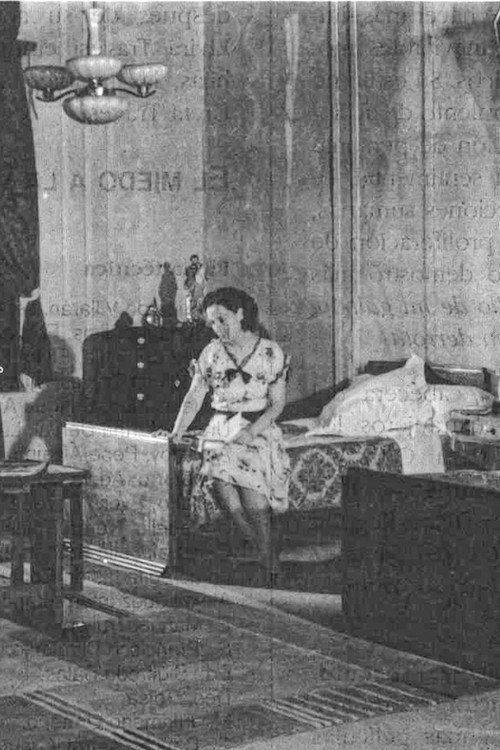
In a wealthy bourgeois home live Doña Trinidad, her children Carlos, Pedro, and Graciela, and three grandchildren. The elderly woman is accustomed to ruling the lives of her family, but also to overlooking their faults. She loves her granddaughter Inés, who is an orphan. She must listen to the complaints and worries of her grandson Carlos, who is a businessman in crisis. Her grandson Raúl, a medical student, is in love with a young woman who doesn't notice him and prefers other companions. His disappointments lead him to seek compensation in morphine injections. The grandson Pedro, who was fired from his job, receives a lottery ticket as payment for a debt, which wins a prize of fifty thousand soles. In turn, another of Doña Trinidad's luxuries, Enrique, comes to his mother's house to lament his weakness of character, which causes him marital problems.
Don Manuel, an old and wealthy landowner residing in Lima, is an uncompromising father. He has married off his eldest daughter, Victoria, to a diplomat who is actually a cynic who exploits her. Victoria's affection for Toledo, a friend of the family, is rekindled. Fernando, the second son, is forced to study law. Don Manuel wants to marry off the youngest, Clara, who is in love with Pedro, the administrator of a hacienda, to a lawyer. Toledo is blackmailed by Victoria's husband, who knows about their relationship. Fernando fails his exams, and Clara confesses to her sister that she cannot marry the lawyer because she is in love with Pedro. Victoria confronts her father, putting him in a dilemma: either her sister marries Pedro or she runs away with Toledo. The fear of scandal makes the landowner give in, and Clara marries the administrator, Don Manuel.
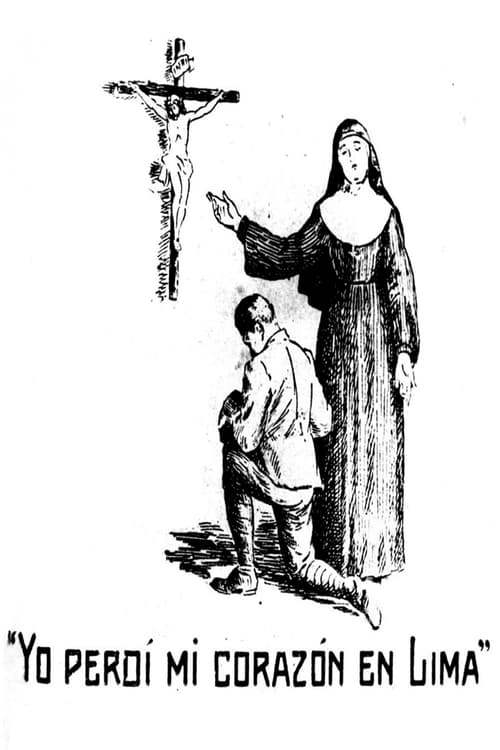
Young Carmen arrives in Lima, dreaming of falling in love and finding happiness. She goes to live with her cousins and aunt, in the elegant Miraflores district. Soon she falls in love with Oscar, but he must leave her to go to the war. After a long time waiting for him to return, she learns he has died. Desperate, she decides to join a convent.
David, an engineer hired to build an industrial facility, arrives at a traditional hacienda on the Peruvian coast. He travels with Ramón, a scatterbrained assistant. The hacienda belongs to the Herrera family. Among its residents are Doña Rosario, the founder's widow, and her daughter, Marta. The foreman is courting Marta. She is carefree and vain, which leads her to mock David's reserved and fastidious nature. But little by little, Marta finds herself drawn to him. The foreman frowns upon the romance, and his jealousy drives him to seek ways to discredit David.
Julio leaves prison after serving time for a fraud he didn't commit. He seeks to win back the love of the woman from whom he was separated. Reintegrating into daily life proves difficult, but two friends who know his singing talent get him an audition on the radio. He is hired and begins a successful musical career. Very soon, Julio Campos becomes a famous singer who tours Peru accompanied by his friends and protectors. The police finally capture all the criminals who acted to harm Julio. This is enough to clear his name and reestablish his former romantic relationship. The couple's final reunion takes place during a musical tribute presented by Radio Lima.
A wealthy man from the provinces dies, leaving a will. He bequeaths his fortune to Pepe, a nephew from Lima who lives a very comfortable life. But the will contains a condition: Pepe must marry a cousin of his, living in Huancayo, whom he doesn't know. Pepe, a staunch Limean, imagines his cousin is a mountain girl, "with a face as round as the moon." Since the inheritance consists of a hacienda valued at over a million soles, accepting the legacy means residing in Huancayo, which Pepe is also unwilling to do. He decides to renounce the inheritance.
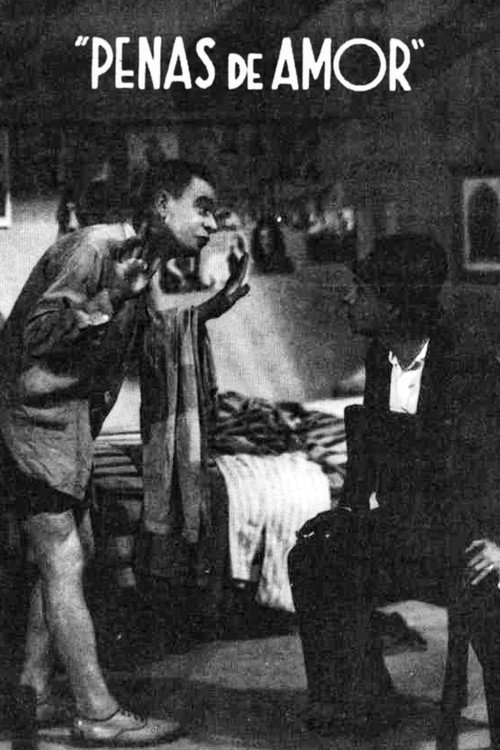
A Rio Reuelto, directed by the Chilean Luis A. Morales from a story by Ricardo Villarán, was shown to the indifference of the public and critics, and few testimonies about it survive. It is known, however, that he wanted to combine the formula of Creole comedy, which had been the heritage of Amauta Films productions, with ingredients and characters drawn from the social milieu, following the model that had achieved relative success in Penas de Amor, the previous film by the Huascarán company.
Short film.
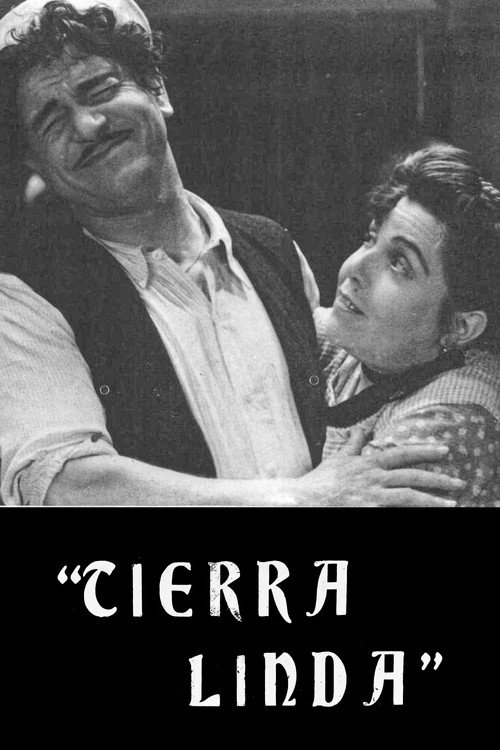
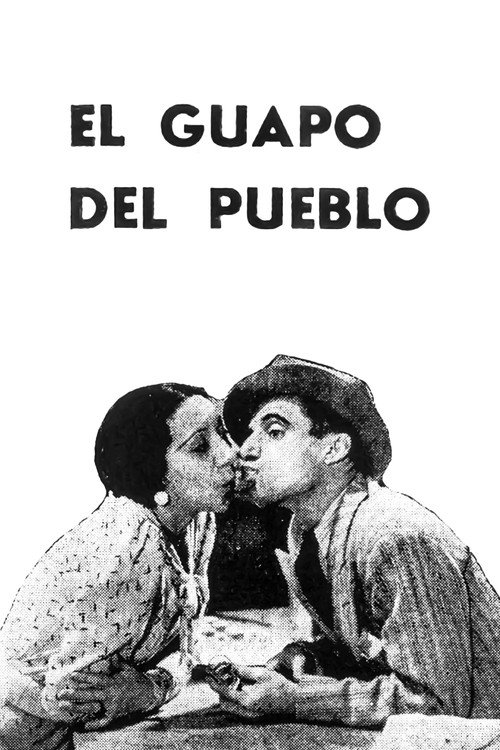
After winning the lottery, a man from one of the poor districts moves to a rich area, but nostalgia and the problems he encounters make him return home.
Produced by Manuel Trullen.
One of the oldest comedies in Peruvian cinema, it tells the story of Esther, a young woman with a troubled life who tries her luck in show business, though things don't go as planned. Directed by Ricardo Villarán and produced by Amauta Films, the film was well-received by critics and audiences at the time, as it was a lighthearted story that allowed actress Carmen Pradillo to showcase her talent as a professional singer. An interesting fact about this feature film is that it took the opportunity to critique the Lima entertainment industry.
On a hacienda on the northern coast of Peru, cotton is harvested and celebrated with lively pachamancas. Miguel, the foreman, is in love with Isabel, a young peasant woman. The hacienda is run by Don Francisco, a kind and understanding landowner who supports Miguel's work, but also that of Andrés, the administrator. Andrés is also courting Isabel. One day, Andrés goes to Isabel's room and tries to force himself on her. At that moment, Miguel arrives. They get into a fight, which Miguel wins. Furious, Andrés plots to get rid of his rival. In collaboration with an accomplice, he steals money from the landowner that Miguel had been entrusted to take to the train station for transport to another location. Miguel is blamed for the theft. However, those responsible fail to notice that two hacienda employees witnessed the crime. Their testimony allows the plot to be uncovered and the foreman's name to be cleared.
Documentary about the National Stadium of Lima. Directed by Franklin Urteaga. Produced by the Administrative Board of the National Stadium and Miguel Dasso. Photography by Manuel Trullen.
Documentary. Directed by Manuel Trullen. Produced by Peru Films (Roberto Cruzalegui, Carlos Venine).
Luis Pardo is a bandit who robs travelers on the roads and has a talent for singing. He is the terror of the local landowners. After his raids cease, Pardo takes refuge in a cabin where he meets a peasant woman who treats him gently. Attracted to her, he swears to abandon his past life and turn away from crime. As a couple, they live a happy time and the beginning of the former bandit's rehabilitation. But it is too late, since shortly after discovering love, the prefect's troops kill Luis Pardo.
In the Neumann shirt factory, the female workers cut, sew, and sing. A bell marks the end of the workday. Two workers go out into the street, where their partners await them. One of the couples is about to get married. The other spends her time arguing, as the enamored man has the irresistible tendency to look at the girls who walk by. The couple goes to see what will be their marital home. They tour it with excitement, making plans about the decoration and furniture for this or that room. Soon after, the couple, now married, gazes at their son asleep in the room they chose for him. On their fifth wedding anniversary, the couple invites their old friends to dinner. At the gathering, the husband feels unwell. They are suffering from headaches caused by a hereditary tumor. Enrique, the husband, is paralyzed and confined to a wheelchair. His wife and son are with him. The medical prognosis is discouraging
The plot draws inspiration from crime films of the early 1930s, showing scenes of chases and shootouts between smugglers and police in Callao.
Views of the military training and learning activities given to cadets at the Chorrillos Military School during the 1942 academic year.
An only child, Renugío enjoys the ranch, but also the comforts and possessions he shares with his father. Fond of revelry, alcohol gives him a euphoria that translates into aggression. He's a tough guy who fights anyone who crosses him. In love with the niece of a wealthy landowner, Juan Manuel Castillo, who owns land neighboring his family's, Renugío must face the hatred of a foreman who, years before, robbed his father. Imprisoned for four years, the foreman, Eustaquio, nurtured the idea of taking revenge on the one who denounced him. Upon his release, he goes to the ranch to fulfill his promise and separate the lovers. Meanwhile, the tough guy learns that he is actually Juan Manuel Castillo's son. In the end, Renugío and Eustaquio confront each other, but the avenger only manages to wound his victim, who, with various injuries, is comforted by the woman who loves him.