Directing
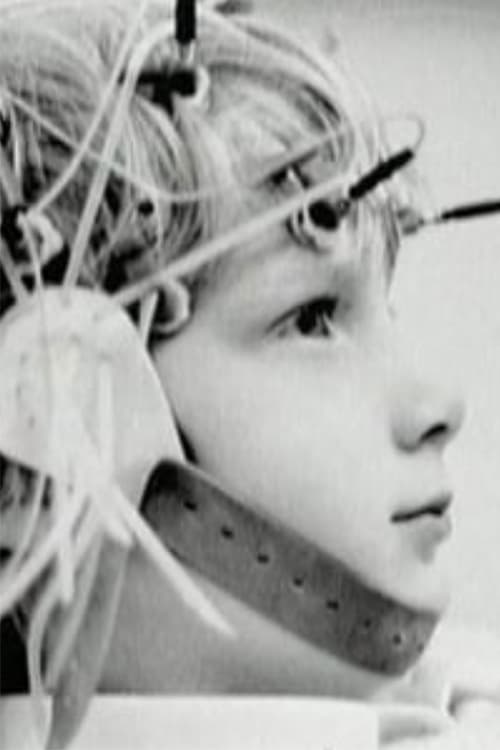
In ROPE - A DEAD MAN’S DREAM there is an exploration of the history and development of the photographic media. The reconstruction of the short story An Occurrence at Owl Creek Bridge by Ambrose Bierce is the basis for the adaptation, supplemented with the research work on chronophotography by Étienne-Jules Marey. The principle of chronophotography, which permitted the recording of movement sequences in phase images and made processes visible that had remained hidden to the human eye up to then, was transferred to the digital image-in-image montage in the enacted photo work Rope.
"The photonovel FIASKO is based on and named after Kertész’ novel. He describes his absurd attempt of a new beginning – after Auschwitz and Buchenwald – in the Budapest of the Stalin area. Our photonovel transfers Kertész’ literary method into a visual language: the joining of fragmentary elements of the past and of the present, finding a trace that links experience and remembrance. From 2008 to 2010 approximately 800 colored medium-format photos were taken. The sequential photos have been taken on the original locations. The remainders of the past systems are rendered via multiple exposures, pictures shown in their ambivalence, mirroring etc. The literary text and the photographies remain independent from one another, however they enter into a dialog and open up space for associations. The course of movement caused by the juxtaposition of multiple still images is continued when one turns the pages (see chronophotography)."
It is shortly after the fall of the Wall and Kadir is released from an East Berlin psychiatric clinic. Resolved to begin life over again in Germany, he soon has to accept that there is no longer a place for him.
"The theme of the film HIDDEN CITIES is personal urban perceptions, which we call 'the city'. The city, as a living organism, reflecting social processes and interactions, economic relations, political conditions and private matters. In the city, human memories, desires and tragedies find expression in the form of designations and marks engraved in house walls and paving slabs. But what the city really is under this thick layer of signs, what it contains or conceals, is what we are researching in the HIDDEN CITIES project. The source material for the film are 9 sequential photo works created by Gusztáv Hámos between 1975 and 2010. Each of these 'city perceptions' depicts essential situations of urban experiences containing human and inhuman acts in a compact form. The cities in which the photo sequences have been made are Berlin, Budapest and New York – places with a traumatised past: Wars, dictatorships, terrorist catastrophes."
Rien ne va plus is a photofilm, a love story between the souls of two people who died at the same time: Igor, a refugee from Azerbaijan, and Kah, the murdered wife of a diplomat. A film about geographical, physical and spectral borders.
Cities (Territories & Occupation) thematize "the city" divided into districts, neighborhoods, zones and domains, marked by inner-city borderlines. The film investigates how cities emerge and change through migration, decay, destruction, demolition, relocation, displacement.
Transposed Bodies, a story about the shared love between two friends who lose their heads in an unfortunate accident.