Acting
Os Trapalhões was a Brazilian comedy group and also a Brazilian television series created by Wilton Franco. Its members were Dedé Santana, Zacarias, Mussum and their leader Didi Mocó, that was played by Renato Aragão. The name Trapalhões is derived from the Portuguese verb atrapalhar, which means the opposite of helping, to do something the wrong way or to Those that confuse. The name is translated "Tramps" in English DVD subtitles. It was aired by Rede Globo from 1977 to 1999. On March 18, 1990, Zacarias died due to respiratory failure, but the group and the series didn't come to an end until July 29, 1994, when Mussum died due to an unsuccessful heart transplant.
No description available.
The adventures of a man with amnesia who struggles to rediscover his past while learning to live in the present.
Diogo is an upright judge, professionally recognized, married to the submissive Antônia, with whom he maintains a relationship of appearances, only to preserve the family institution. Diogo falls madly in love with Bettina, and the two have an affair. Deciding to fully embrace their passion, Diogo and Bettina plan a trip together, but he ends up not having the courage to abandon Antônia and leaves his lover waiting at the airport. Upon realizing she is alone, Bettina despairs and suffers a serious car accident. Her brain death is diagnosed, and her heart is transplanted into Paloma. Upon learning of Bettina's death and the transplant of her heart, Diogo, feeling guilty, becomes obsessed with the idea of getting close to Paloma, believing that in doing so he would be close to the heart of the woman he loved. Paloma is a young woman who abandoned her fiancé Tavinho at the altar to marry Juca, her first boyfriend.
Renato Villar is an ambitious businessman. After discovering a brain tumor, his life takes a turn, and he decides to settle his debts and live his true love.
Sisters Cotinha, Das Graças, Rosário, and Dorzinha work as domestic servants in Rio de Janeiro and face difficulties in their struggle for a better life.
The young and rich Patricia, daughter of Ambassador André Dumont's first marriage, is in love with and reciprocated by Luiz Carlos, a poor boy, son of the family's maid, Isolda. Whoever doesn't like to see her with the maid's son is her stepmother, Renata Dumont, André's wife. Renata is an ambitious woman who hides her humble origins and a secret from the past that unites her with Isolda. Career, she married the diplomat André, from a traditional family, with whom she had a son, Lipe.
The miniseries portrays the greed for money, power and prestige through the rise and fall of Alex Torres, a consequence of the schemes of the unscrupulous banker Frederico Scorza.
Set in the 18th and 19th centuries, the miniseries draws on historical events to portray the behind-the-scenes story of Brazil's independence, blending humor and adventure.
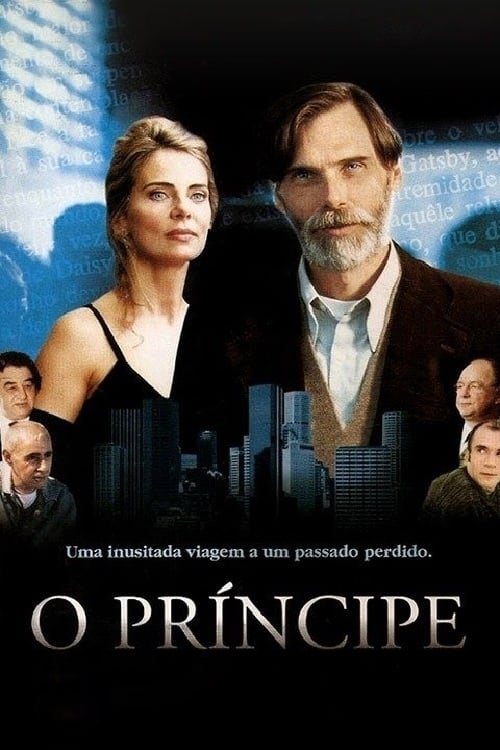
After 20 years of exile in Paris, Gustavo returns to his native city São Paulo. Back home, he encounters a place which no longer exists. His old friends and family members have changed, almost beyond recognition. He tries to recapture the past, and make some sense of his life, that of his friends and family, and the present state of his native country.
The seer Joãozinho de Dagmar predicts the end of the world, throwing the population of the fictional town of Tabacópolis into a panic. Everyone engages in crazy behavior in anticipation of the supposed apocalypse.
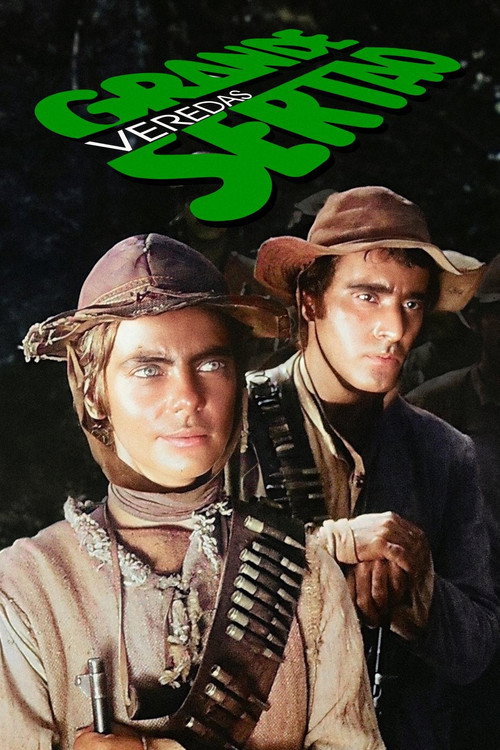
A cowboy narrates his 'jagunço' life of disputes, revenges, loves and deaths, through the years that he traveled central-east Brazil, in the first decades of the 20th century, while federal troops were in conflict with provincial forces.
Sexologist and therapist Sofia Prado, director of an institute of alternative therapies, has to deal with her own emotional disorders, which she hides from everyone. From the revelation of one of her patients, the specialist becomes involved in a dangerous network of corruption.
Cosmo is a taxi driver who loves traveling around São Paulo. One day, when he meets Mauro in a bar, he receives an unusual proposal: to record testimonials from passengers in his taxi, in which people would talk about what they like in São Paulo.
The story takes place in São Paulo, in the late 1920s, and has Mariano's memories as its starting point. Orphaned, he loses the aunt who raised him and ends up in Madame Iara's brothel, where he meets two people who transform his life: Esmeraldo, a gigolo who loves the good life who becomes his master; and the prostitute Guadalupe, known as Lu, a sweet and extremely sensual woman. Esmeraldo is Lu's boyfriend, whom he loves unconditionally. Mariano enters the couple's lives and ends up falling in love with her, thus forming the love triangle that drives the entire narrative.
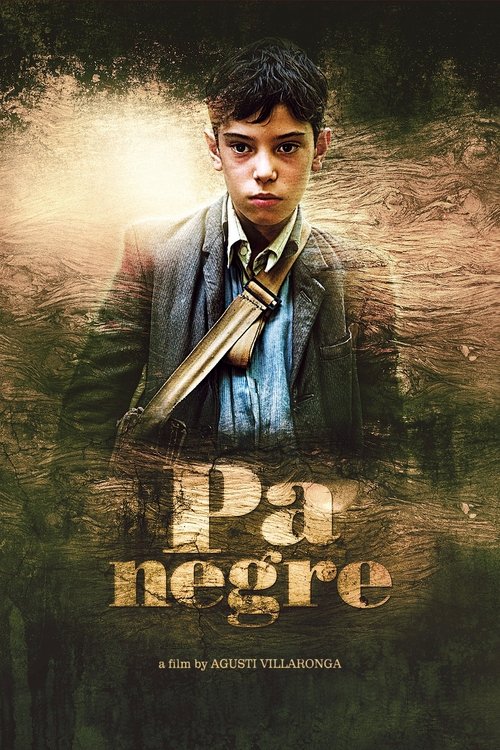
In the harsh post-war years' Catalan countryside, Andreu, a child that belongs to the losing side, finds the corpses of a man and his son in the forest. The authorities want his father to be made responsible of the deaths, but Andreu tries to help his father by finding out who truly killed them. In this search, Andreu develops a moral consciousness against a world of adults fed by lies. In order to survive, he betrays his own roots and ends up finding out the monster that lives within him.
Inspired by the book of the same name by Paula Dip, this is a biography of the Brazilian writer Caio Fernando Abreu. With a mixture of languages inherent to Caio F.'s work - cinema, theater, music and literature -, the narrative line is conducted through testimonies from family, friends, editors and scholars who maintained a relationship with the author. And actors who interpret their texts.