Egberto Gismonti
Sound
Known For

No description available.
Amazônia

This epic Brazilian film was based on the equally epic novel by Antonio Callado. Set between 1954 and 1964, the film's focus is the saga of Jesuit priest Nando. Fed up with civilization, he ventures deep into Amazon country to live with and work among the Xingu Indians.
Kuarup

A young man living in a cold southern village in South America, decides to start a trip looking for his father. By doing this he discovers unexpected facts about his Latin American essence.
The Journey

Rio de Janeiro, April 18, 1945. Brazil's foreign policy aligns closely with that of the United States and opens a brief period of democratic rule after the end of World War 2. For years, hundreds of people were arrested and tortured by the Vargas regime. But with the external pressure, several political prisoners gain freedom.
Peacetime
The picture brings interviews with the participants of the 1st São Paulo Jazz Festival that occurred in Anhembi Conventions Palace in September 1978 and reunited musicians, composers and singers from all around the world.
Música para Sempre
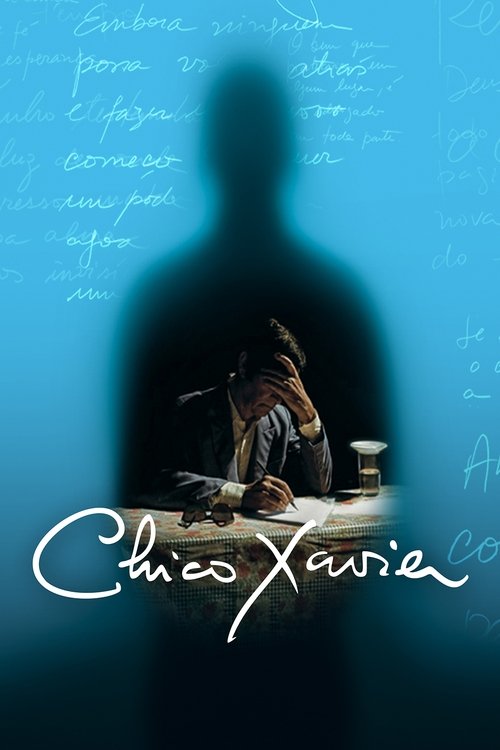
A biography of spiritual medium and author Francisco Candido Xavier.
Chico Xavier

Orestes, a rich factory owner, falls for the beautiful Fulvia. They communicate using pigeons, to avoid being discovered by her husband.
Fable of the Beautiful Pigeon-Fancier

The loving adventures of a priest disillusioned with religion and life.
As Confissões de Frei Abóbora

Brazilian writer Alberto Luppo has lived in Paris for years and does not want to return to his home country. But when a French anthropologist disappears in the interior of Brazil, Alberto is forced to return to his homeland to turn the story into a book. However, during the journey, between fear and enchantment, he surrenders to his destiny. Guided by Bethânea, he discovers in everything he despised, the beauty of his own identity.
Overman

Little Indian boy survives his tribe massacre, growing up together with his wish for revenge and his quest for his own identity. Based on a true story.
Avaete, Seed of Revenge
After a restless night he is awoken by his doorbell insistently ringing. Through the peephole, he sees a stranger. He doesn't know why that man is there but is immediately certain of one thing: he represents a terrible threat. He quickly dresses and manages to sneak away, no doubt in his mind that the stranger is pursuing him, and that the nightmare has only just begun.
Turbulence

Mid-1970s. When the military regime's "economic miracle" and the victory of the Brazilian football team on the World Cup serve as a distraction for the persecution of opposition leaders by the political police of the dictatorship. Under this context, Jofre Godoi da Fonseca, an alienated middle-class man, is mistaken for Sarmento, a political activist he met at an airport prior to his assassination. He is then arrested for being "subversive".
Go Ahead, Brazil!
A portrait of the leading female Bolshevik (and later Worker’s Opposition) revolutionary leader Alexandra Kollontai using her own words.
I Have Lived Many Lives

No description available.
O Senhor do Labirinto

Old couple are being evicted and turn to their five children for help. Since no one can accommodate the two of them, the children decide to separate the couple.
Em Família

The emotional story of an adulterous relationship between a journalist and a teacher.
Variation
The film “Angicos”, which deals with the story of Paulo Freire and his literacy program in the small town in the interior of Rio Grande do Norte, had the script completed by director Felipe Hirsch, according to journalist Mônica Bergamo.
Angicos
No description available.
The Memorious

The film is narrated by Riobaldo, who takes us into his life as a gunman and shares his experiences and conflicts. Throughout the plot, he becomes involved with several charismatic groups and leaders, including the feared Hermógenes. Riobaldo's heart is won by Diadorim, a brave and mysterious young man who becomes the love of his life. Through Riobaldo's narrative, the author explores the complexities of the human soul, delving into the duality between good and evil. Adaptation of the acclaimed masterpiece "Grande Sertão: Veredas", written by Guimarães Rosa.
The Devil to Pay in the Backlands

Antônio Nunes is sentenced to 30 years in jail, after having killed a woman, and becomes known as ripper of women. Infatuated Tânia begins to visit him frequently and hires a lawyer to try to take him out.