FEEL IT.STREAM
Chōko Iida

Chōko Iida

Acting

Biography

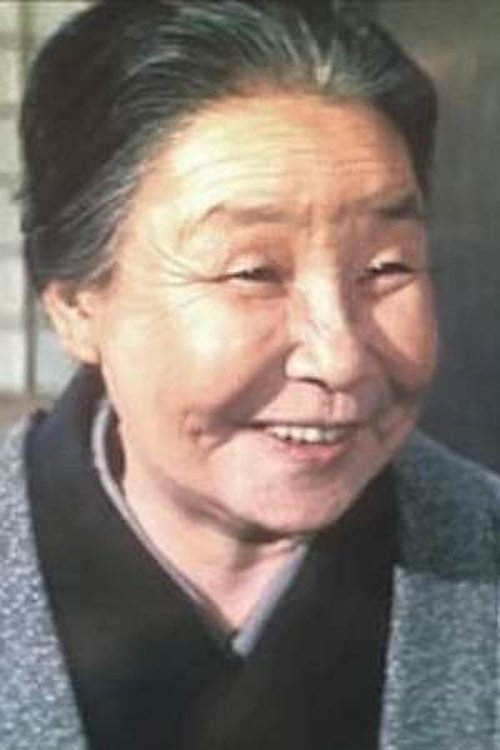
Chôko Iida (飯田 蝶子, 15 April 1897 - 26 December 1972) was a Japanese actress. Her real name was Shigehara Tefu. She played working class women and grandmothers, and appeared in more than 300 films. Her husband was cameraman Shigehara Hideo. Description above from the Wikipedia article lida Chōko, licensed under CC-BY-SA, full list of contributors on Wikipedia.
Known For

Stray Dog
7.6

A bad day gets worse for young detective Murakami when a pickpocket steals his gun on a hot, crowded bus. Desperate to right the wrong, he goes undercover, scavenging Tokyo’s sweltering streets for the stray dog whose desperation has led him to a life of crime. With each step, cop and criminal’s lives become more intertwined and the investigation becomes an examination of Murakami’s own dark side.

Stray Dog

1949
Drunken Angel
7.6

In postwar Tokyo, a blunt, alcohol-soaked doctor diagnoses a swaggering young yakuza with tuberculosis, forging an uneasy bond that’s tested when the gangster’s ruthless former boss returns and drags him back toward the swampy underworld he can’t escape.

Drunken Angel

1948
Summer Clouds
7.6

A war widow with a young boy manages a farm with her bossy mother-in-law. When a reporter comes to interview her, the two begin an affair. He turns out to be married and won't leave his wife. Her older brother tries to marry off his children and hang on to/ extend his farm through an advantageous marriage in the face of threatened land confiscation and the desire of his children to get comfortable urban jobs instead of the backbreaking work in the paddy fields under parental control.

Summer Clouds

1958
The Rickshaw Man
7.2

A poor rickshaw driver finds himself helping a young woman and her son after the woman's husband dies suddenly.

The Rickshaw Man

1958
College Is a Nice Place
9.0

In a Tokyo boarding house a group of students and recent graduates struggle to complete their studies and find jobs. Considered a lost film.

College Is a Nice Place

1936
New Third Class Executive: Husband Education
8.0

Amid management shakeups and arranged marriage plans at Sekai Electric, an executive couple tries to support a young woman’s relationship with an academic over a business heir.

New Third Class Executive: Husband Education

1960
What Did the Lady Forget?
6.3

A professor, Komiya, and his bossy wife, Tokiko, are to look after Setsuko, their high-spirited niece from Osaka. Despite being a minor, Setsuko is a liberated woman who does whatever she wants, including smoking. She even convinces Koyima to take her to a geisha house. When she gets rather tipsy, the professor calls Okada, one of his students, to take her home. The wife becomes suspicious of Setsuko when she sees Okada bringing her home.

What Did the Lady Forget?

1937
All is Well
10.0

No description available.

All is Well

1955
Las Vegas Free-For-All
10.0

The Crazy Cats, a Japanese musical-comedy group, were showcased a series of comic adventures throughout the 1960s. Las Vegas Free-For-All, one of their most popular movies, featured scenes filmed on location in Las Vegas, Los Angeles, and Hawaii. Appearing with the seven Cats were the lovely Mie Hama and such Japanese musical artists as The Peanuts, The Johnnys, The Drifters, and Jackie Yoshikawa & the Blue Comets.

Las Vegas Free-For-All

1967
A Story of Floating Weeds
7.2

An aging actor returns to a small town with his troupe and reunites with his former lover and illegitimate son, a scenario that enrages his current mistress and results in heartbreak for all.

A Story of Floating Weeds

1934
Maria of the Ant Village
8.0

Alongside Tokyo's Sumida River is a ragpickers' settlement known as Ant Village. One night, a young Catholic girl, Satoko Kitahara, who has been baptized under the name of Maria, comes to offer her services. However, Ant Village is not just an ordinary vagrants' community but a fine autonomous organization, and as the municipal authorities have long been demanding that the people of Ant Village leave the site, Satoko is utilized to publicize the Village and win public sympathy. While being utilized in this manner, Satoko is nevertheless glad to be able to help the people of Ant Village, especially the children, and when the summer vacation comes she decides to take the children on an excursion to Hakone. To raise funds for this purpose she becomes a rag-picker herself.

Maria of the Ant Village

1958
Sanshiro Sugata
7.1

Remake of Akira Kurosawa's films "Sanshiro Sugata and "Sanshiro Sugata Part II". A young man, Sanshiro Sugata, troubled by personal problems, takes up judo. His teacher, Shogoro Yano, is a devout man who has aroused the enmity of the local practitioners of jujitsu, the older and more accepted of the two sports. Sugata uses his newly learned prowess to gain a measure of respect from others; however, Shogoro insists that the sport has a spiritual side, a lesson Sugata has yet to learn. Eventually, in hand-to-hand combat with the father of a young woman he loves, he comes to understand the true meaning of judo.

Sanshiro Sugata

1965
The Eleventh Hour
7.4

Based on a 1956 television feature on Japan’s national network, NHK, this is one of Uchida’s rarest films. A socially conscious drama with a contemporary backdrop, Dotanba focuses on the attempts to rescue a group of trapped miners. The title is a figure of speech — (essentially “last minute” or “eleventh hour”) — that refers to a situation of peril. The film boasts a script co-written by Uchida and Akira Kurosawa’s frequent screenwriter, Shinobu Hashimoto, and stars Kurosawa’s frequent star Takashi Shimura.

The Eleventh Hour

1957
Detective Duel
6.0

A friendly rivalry turns into romance for Yukiko, an elite female detective, and a handsome private eye named Mitamura while both are investigating the missing person's case from a wealthy family.

Detective Duel

1958
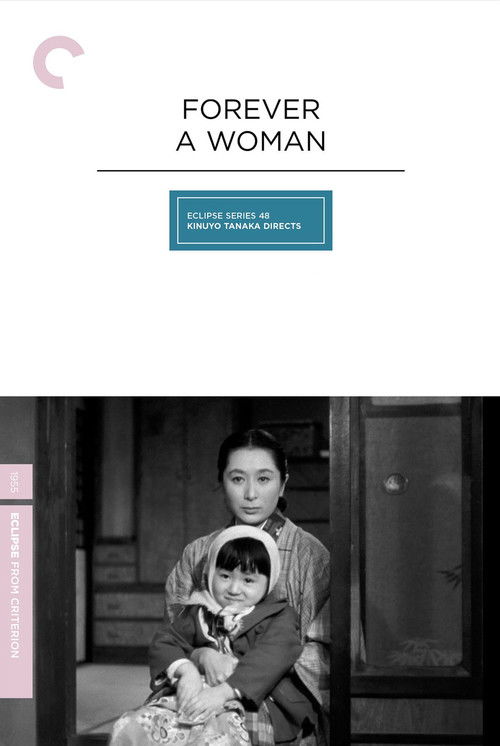
Forever a Woman
7.7

Fumiko, mother of two and wife to an unfaithful man, shares her family life with her budding vocation as a poet. The beginning of her successful literary career coincides with her divorce and her breast cancer diagnosis. In her final stages, Fumiko meets a young journalist from Tokyo who wants to write a story on her experiences.

Forever a Woman

1955
The Body
7.3

The sexual experiences of the passionate Sakiko, from her fling with her boss in her first job to her ending up as a prostitute.

The Body

1962
Dotanba
6.0

Based on a 1956 television feature on Japan’s national network, NHK, this is one of Uchida’s rarest films. A socially conscious drama with a contemporary backdrop, Dotanba focuses on the attempts to rescue a group of trapped miners. The title is a figure of speech — (essentially “last minute” or “eleventh hour”) — that refers to a situation of peril. The film boasts a script co-written by Uchida and Akira Kurosawa’s frequent screenwriter, Shinobu Hashimoto, and stars Kurosawa’s frequent star Takashi Shimura.

Dotanba

1956
A Wanderer's Notebook
7.2

Based on the life and career of novelist Fumiko Hayashi, she bitterly struggles for literary recognition in the first half of the 20th-century – her affairs with feckless men, the jobs she took to survive (peddler, waitress, bar maid), and her arduous, often humiliating attempts to get published in a male-dominated culture.

A Wanderer's Notebook

1962
Darkness at Noon
6.9

Police beat a murder confession out of four innocent men who are then sentenced to death. Based on a true story.

Darkness at Noon

1956
The Other Woman
6.3

The real mother of the two children of a respectable university professor is not his wife, but his mistress, the hostess of a Ginza bar the family frequents.

The Other Woman

1961