Dolores Costello
Acting
Biography
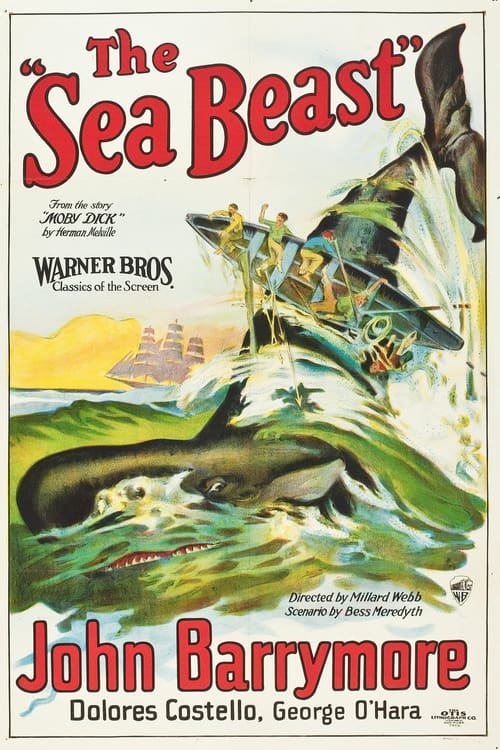
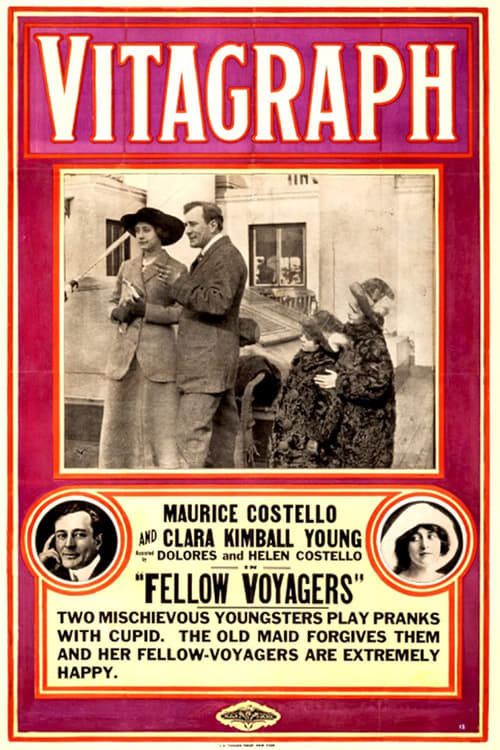
From Wikipedia, the free encyclopedia Dolores Costello (September 17, 1903 – March 1, 1979) was an American film actress who achieved her greatest success during the era of silent movies. She was nicknamed "The Goddess of the Silent Screen". She was stepmother of John Barrymore's daughter Diana by his second wife Blanche Oelrichs, the mother of John Drew Barrymore and Dolores (Dee Dee) Barrymore, and the grandmother of John Barrymore III, Blyth Dolores Barrymore, Brahma Blyth (Jessica) Barrymore, and Drew Barrymore. Dolores Costello was born in Pittsburgh, Pennsylvania, the daughter of actors Maurice Costello and Mae Costello (née Altschuk). She was of Irish and German descent. She had a younger sister, Helene, and the two made their first film appearances in the years 1909–1915 as child actresses for the Vitagraph Film Company. They played supporting roles in several films starring their father, who was a popular matinee idol at the time. The two sisters appeared on Broadway together as chlorines and their success resulted in contracts with Warner Brothers Studios. In 1926, following small parts in feature films, she was selected by John Barrymore to star opposite him in The Sea Beast, a loose adaptation of Herman Melville's Moby-Dick. Warner Bros. soon began starring her in her own vehicles. Meanwhile, she and Barrymore became romantically involved and married in 1928. Within a few years of achieving stardom, the delicately beautiful blonde-haired actress had become a successful and highly regarded film personality in her own right. As a young adult her career developed to the degree that in 1926 she was named a WAMPAS Baby Star, and had acquired the nickname "The Goddess of the Silver Screen". Warners alternated Costello between films with contemporary settings and elaborate costume dramas. In 1927 she was re-teamed with John Barrymore in When a Man Loves, an adaptation of Manon Lescaut. In 1928 she co-starred with George O'Brien in Noah's Ark, a part-talkie epic directed by Michael Curtiz. Costello spoke with a lisp and found it difficult to make the transition to talking pictures, but after two years of voice coaching she was comfortable speaking before a microphone. One of her early sound film appearances was with her sister Helene in Warner Bros.'s all-star extravaganza The Show of Shows (1929). Her acting career became less a priority for her following the birth of her first child, Dolores Ethel Mae "DeeDee" Barrymore, on April 8, 1930, and she retired from the screen in 1931 to devote time to her family. Her second child, John Drew Barrymore, was born on June 4, 1932, but the marriage proved difficult due to her husband's increasing alcoholism, and they divorced in 1935. She resumed her career a year later and achieved some successes, most notably in Little Lord Fauntleroy (1936) and The Magnificent Ambersons (1942). She retired permanently from acting following her appearance in This is the Army (1943), again under the direction of Michael Curtiz. In 1950 Costello divorced Dr. John Vruwink, whom she had married in 1939. She spent the remaining years of her life in semi-seclusion, managing an avocado farm. She died from emphysema in Fallbrook, California in 1979.
Known For

The spoiled young heir to the decaying Amberson fortune comes between his widowed mother and the man she has always loved.
The Magnificent Ambersons

The Biblical story of Noah and the Great Flood, with a parallel story of soldiers in the First World War.
Noah's Ark

An American boy turns out to be the heir of a wealthy British earl. He is sent to live with the irritable and unsentimental aristocrat, his grandfather.
Little Lord Fauntleroy

Vitaphone production reels #2471-2478; third Warner Bros. feature film - the first being The Jazz Singer and the second Tenderloin - to include talking sequences, along with the by now usual Vitaphone musical score and sound effects. A copy of this film survives at the Library of Congress in Washington, D.C., but the sound disks are lost.
Glorious Betsy

At the outbreak of the War Between the States, Maryland Calvert is loved by Maj. Alan Kendrick, son of a Virginia general, and Capt. Fulton Thorpe. Nancy, whom Thorpe has loved unwisely, follows him to Washington and commits suicide when she learns he will not marry her; as a result, Alan is forced to request his resignation. When Fort Sumter is fired upon, Alan, who admires Lincoln's principles, joins the Union Army though his father is among the Secessionist leaders; as a result, he is estranged from Maryland. Thorpe, who has joined the Confederacy as a spy, is responsible for Alan's arrest, but Maryland victoriously comes to his aid by ringing the alarm bell.
The Heart of Maryland

Now hear this. The studio that gave the cinema its voice offered 1929 audiences a chance to see and hear multiple silent-screen favorites for the first time in a gaudy, grandiose music-comedy-novelty revue that also included Talkie stars, Broadway luminaries and of course, Rin-Tin-Tin. Frank Fay hosts a jamboree that, among its 70+ stars, features bicyclers, boxing champ Georges Carpentier, chorines in terpsichore kickery, sister acts, Myrna Loy in two-strip Technicolor as an exotic Far East beauty, John Barrymore in a Shakespearean soliloquy (adding an on-screen voice to his legendary profile for the first time) and Winnie Lightner famously warbling the joys of Singing in the Bathtub. Watch, rinse, repeat!
The Show of Shows

Roberta Morgan is being raised in a wealthy home where her mother is occupied with her society-club activities and her father is immersed in his business activities. She also feels that the household staff is against her and that no one understands her needs and problems. Things spiral out of control.
The Beloved Brat

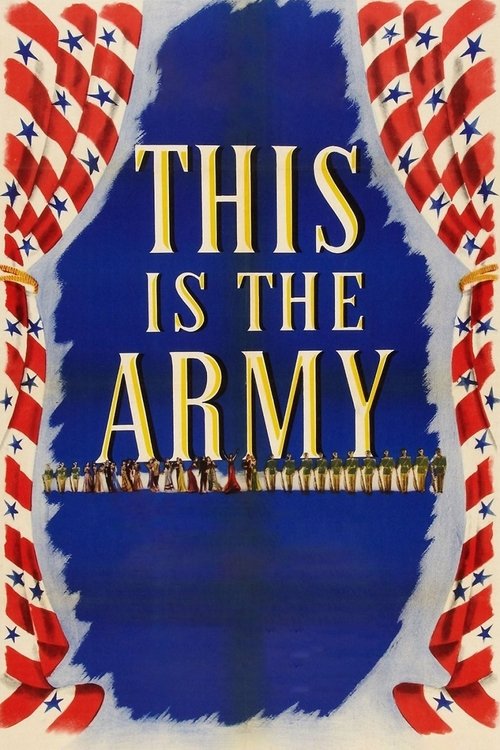
In WW I dancer Jerry Jones stages an all-soldier show on Broadway, called Yip Yip Yaphank. Wounded in the War, he becomes a producer. In WW II his son Johnny Jones, who was before his fathers assistant, gets the order to stage a knew all-soldier show, called THIS IS THE ARMY. But in his pesonal life he has problems, because he refuses to marry his fiancée until the war is over.
This Is the Army

This tribute to Myrna Loy is organized chronologically with a few photographs, many film clips, a handful of personal appearances, and a detailed commentary delivered on camera by Kathleen Turner. Turner walks us through Loy's career as a dancer and an actress miscast as an exotic. She comes into her own as a grown-up women: shrewd, funny, decorous, and sexy - in "Manhattan Melodrama" and "The Thin Man." Her volunteer work during World War II, later stage work, and progressive politics come in for admiration as well. It's her style - seen best in her roles as a wife of charm and independence - that's captured and celebrated here.
Myrna Loy: So Nice to Come Home To

Rose Shannon, a dancing girl at "Kelly's," in the 'Tenderloin' district of New York City, worships at a distance Chuck White, a younger member of the gang that uses the place as their hangout. Chuck's interest in her is only just as another toy to play with. Rose is unknowingly placed in a position in which she is implicated in a crime which she knows nothing about.
Tenderloin

In San Francisco, a villainous landowner with underworld connections seeks to steal the property of an old Spanish family.
Old San Francisco

Casino operator Johnny Lamb hires down-on-her-luck socialite Lucille Sutton as his casino hostess, in order to help her and to improve casino income. But Lamb's pals fear he may follow Lucille onto the straight-and-narrow path, which would not be good for business. So they hire Gert Malloy and Dictionary McKinney, a pair of con-artists, to manipulate Johnny back off the path of righteousness.
Yours for the Asking

Feature-length compilation of 1920s newsreel footage, with commentary about news, sports, lifestyles, and historical figures.
The Golden Twenties

The story begins while Tommy Martin and his mother, Martha Martin say goodbye to Henry and Reuben Johnson. After having stopped by the Mennonite farm, where Tommy and Martha stay with the William and Annie Decker, the Johnsons are headed back to their hometown of Goshen. The balance of the film is concerned with both trying to get the necessary train fare and with Tommy clearing his name over a misunderstanding.
Breaking the Ice

An early film adaptation of the Bard's comic fantasy-- and perhaps the first screen adaptation of a Shakespeare play.
A Midsummer Night's Dream

A nobleman studying for the priesthood abandons his vocation in 18th Century France when he falls in love with a beautiful, but reluctant, courtesan.
When a Man Loves

In this romance set in Russia, a fisherman's daughter is jilted by her true love and instead marries a baron. Time passes and the two men meet each other in Siberia where they have both been exiled. When the poorer man has the opportunity to come home, he changes places with the baron so that he can return to his wife. Unbeknownst to him, she has gone to the frozen wasteland to search for him.
Hearts in Exile

Tom Conway, a wealthy American from Yonkers, saves a girl from assailants while in London and, with the help of a friend, Tiger Bugg, finds her lodging for the night with Molly Montrose, their actress friend. The following day, Molly discovers that both her jewels and the girl are missing, and Tom supposes that the strange girl, who gave her name as Isabel Francis, is responsible for the theft. Tom later learns that Isabel is the Princess of Lividia, who has run away from her country rather than marry King Danilo (who has also run away and is in London, paying court to Molly Montrose). Danilo and Isabel are kidnapped by agents of Lividia and taken home to be forcibly wed. Tom and Molly follow them, and Tom prevents the marriage.
Greater Than a Crown

Footage from the premiere of Charlie Chaplin's 1928 film 'The Circus'.
The Circus: Premiere

She sought to conquer...but found Cupid her master! This is one of many lost films of the 1920s, no prints or Vitaphone discs survive, but the song with the same title and the trailer survives.