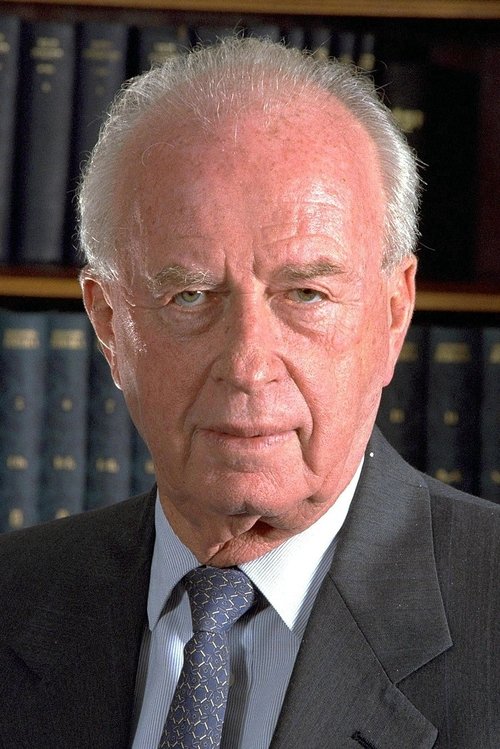
Yizhak Rabin
Acting
Biography
Yitzhak Rabin (/ˈrɑːbɪn/; Hebrew: יִצְחָק רַבִּין, IPA: [itsˈχak ˈʁabin]; 1 March 1922 – 4 November 1995) was an Israeli statesman and general. He was the prime minister of Israel, serving two terms in office, 1974–1977, and from 1992 until his assassination in 1995. He was the first prime minister to have been born in Mandatory Palestine.Rabin was born in Jerusalem to Jewish immigrants from Eastern Europe and was raised in a Labor Zionist household. He learned agriculture in school and excelled as a student. As a teenager, he joined the Palmach, the commando force of the Yishuv. He eventually rose through its ranks to become its chief of operations during the 1948 Arab–Israeli War. In late 1948, he joined the newly formed Israel Defense Forces and continued to rise as a promising officer, with a 27-year career as a professional soldier. He ultimately attained the rank of Rav Aluf, the most senior rank in the Israeli Defense Force (often translated as lieutenant general). In the 1950s, Rabin helped shape the training doctrine of the IDF and he led its Operations Directorate from 1959 to 1963. He was appointed chief of the general staff in 1964 and oversaw Israel's victory in the 1967 Six-Day War.Rabin served as Israel's ambassador to the United States from 1968 to 1973, during a period of deepening U.S.–Israel ties. He was appointed Prime Minister of Israel in 1974 after the resignation of Golda Meir. In his first term, Rabin signed the Sinai Interim Agreement and ordered the Entebbe raid. He resigned in 1977 in the wake of a financial scandal. Rabin was Israel's minister of defense for much of the 1980s, including during the outbreak of the First Intifada.In 1992, Rabin was re-elected as prime minister on a platform embracing the Israeli–Palestinian peace process. He signed several historic agreements with the Palestinian leadership as part of the Oslo Accords. In 1994, Rabin won the Nobel Peace Prize together with long-time political rival Shimon Peres and Palestinian leader Yasser Arafat. Rabin also signed a peace treaty with Jordan in 1994. In November 1995, he was assassinated by Yigal Amir, an extremist who opposed the terms of the Oslo Accords. Amir was convicted of Rabin's murder and sentenced to life imprisonment. Rabin was the first native-born prime minister of Israel, the only prime minister to be assassinated, and the second to die in office after Levi Eshkol. Rabin has become a symbol of the Israeli–Palestinian peace process.Description above from the Wikipedia article Yitzhak Rabin, licensed under CC-BY-SA, full list of contributors on Wikipedia.
Known For

Current affairs programme, featuring interviews and investigative reports on a wide variety of subjects.
Panorama

Long-running Channel 4 documentary series covering issues about British society, politics, health, religion, international current affairs and the environment. Known for featuring a mole inside organisations under journalistic investigation.
Dispatches

World in Action was Granada Television’s flagship ITV current affairs series, running from 7 Jan 1963 to 7 Dec 1998, and built a reputation for film-led investigative reporting and a forceful editorial stance. Its journalism produced major public and political repercussions—including investigations associated with miscarriages of justice such as the Birmingham Six—and it also served as a platform for landmark documentary projects, including the first broadcast of “Seven Up!” as part of the strand in 1964.
World in Action
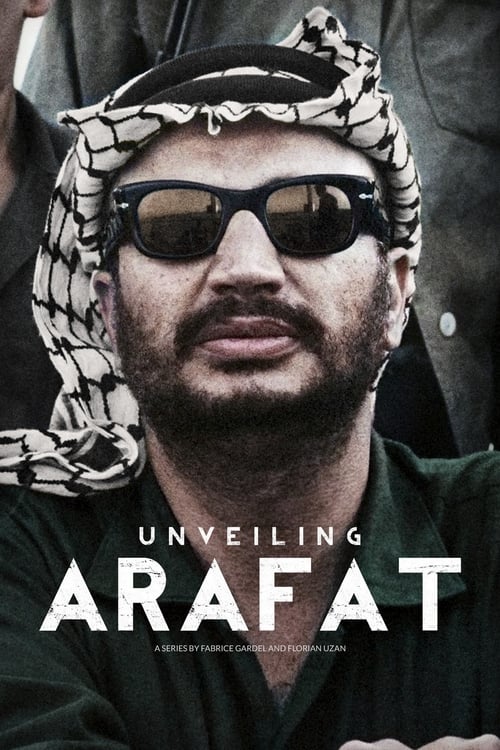
A portrait of Palestinian political leader Yasser Arafat (1929-2004).
Unveiling Arafat

In 1980, the black Falashas in Ethiopia are recognised as genuine Jews and are secretly carried to Israel. The day before the transport the son of a Jewish mother dies. In his place and with his name (Schlomo) she takes a Christian 9-year-old boy.
Live and Become

Decision-makers from Israel, the Arab states, Russia, and the U.S. tell the inside story of the Arab-Israel conflict. Charts the evolution of tensions, violence, and peace efforts from 1948 to 1998.
The 50 Years War: Israel and the Arabs
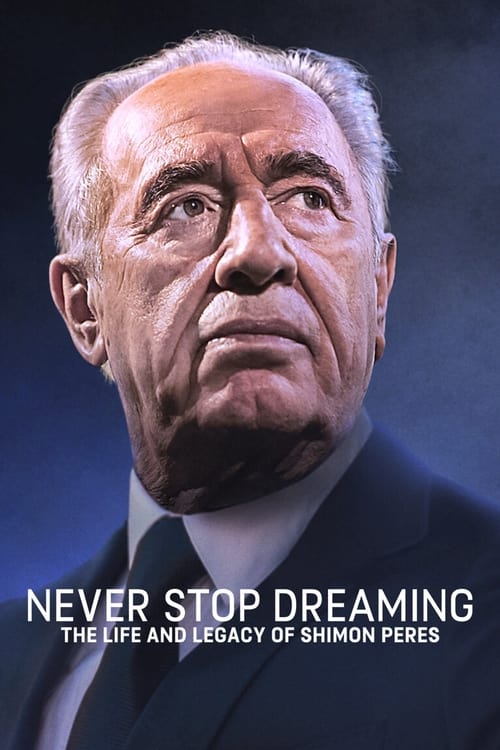
A look back on the life of Nobel Peace Prize winner, Shimon Peres, who served as prime minister of Israel twice and negotiated the 1994 Israel-Jordan peace treaty.
Never Stop Dreaming: The Life and Legacy of Shimon Peres

Dan Katzir's autobiographical film expresses the outcry of his generation, as it struggles to find love and privacy amidst the reality of daily terror and hate. Mr. Katzir, a former officer and paratrooper intimately reveals his loves story with Iris, a charming girl about to begin her army service. A truly poetic film filled with beauty innocence and wisdom. This film is also an important historic document with rare and shocking footage from the era of assassinated prime minister Yitzchak Rabin. Made with much love and humour, this brave film examines Israel's most painful scars.
Out for Love... Be Back Shortly
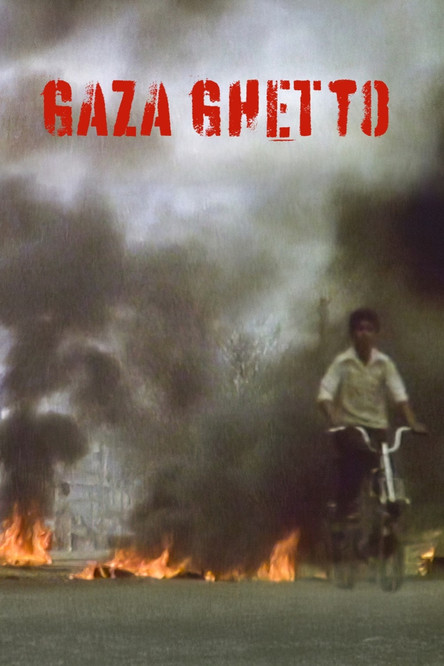
Gaza Ghetto: Portrait of a Family, 1948 – 1984 is a documentary film about the life of a Palestinian family living in the Jabalia refugee camp. The film, created by Joan Mandell, Pea Holmquist, and Pierre Bjorklund in 1984 is believed to be the first documentary ever made in Gaza. The film features Ariel Sharon, Binyamin Ben-Eliezer and soldiers on patrol "candidly discuss[ing] their responsibilities." The film follows a refugee family from the Gaza Strip who visit the site of their former village, now a Jewish town in Israel. As the grandfather and great-grandfather point out an orchard and sycamore fig that belonged to Muhammed Ayyub and Uncle Khalil, an Israeli resident appears and tells them to leave, claiming they need a permit to be there. The mother tells him that, "We work in Jaffa and Tel Aviv and that's not forbidden," to which he replies, "Here it's forbidden."
Gaza Ghetto
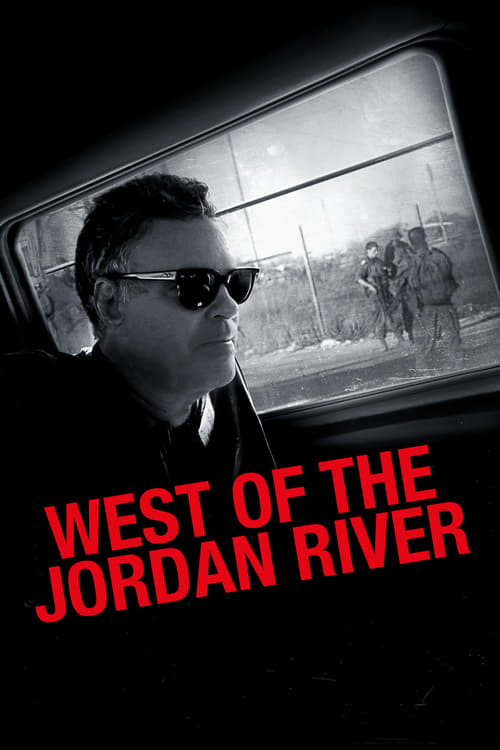
Amos Gitai returns to the occupied territories for the first time since his 1982 documentary FIELD DIARY. WEST OF THE JORDAN RIVER describes the efforts of citizens, Israelis and Palestinians, who are trying to overcome the consequences of occupation. Gitai's film shows the human ties woven by the military, human rights activists, journalists, mourning mothers and even Jewish settlers. Faced with the failure of politics to solve the occupation issue, these men and women rise and act in the name of their civic consciousness. This human energy is a proposal for long overdue change.
West of the Jordan River

Leila Khaled was the first woman to hijack a plane. In 1969, she showed her grenades to the terrified passengers by order of the Che Guevara commando unit of the Popular Front for the Liberation of Palestine. Through the ensuing media bombardment, she put the Palestinian nation on the global map. The pretty 24-year-old Leila became a hero to many Palestinians, including the Swedish/Palestinian teenager Lina Makboul, who is now a filmmaker. At least Leila dared to do something, Lina thought at the time. She visits Leila 35 years later with a camera, and finds a woman who does not regret anything.
Leila Khaled: Hijacker
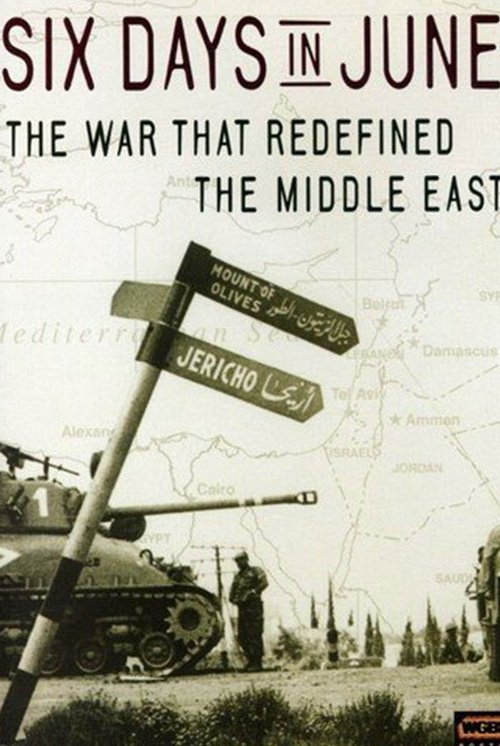
The shooting lasted on six tense days in June 1967, but the Six Day War has never really ended. Every crisis that has ripped through this region in the ensuing decades stems from those six fateful days.
Six Days in June
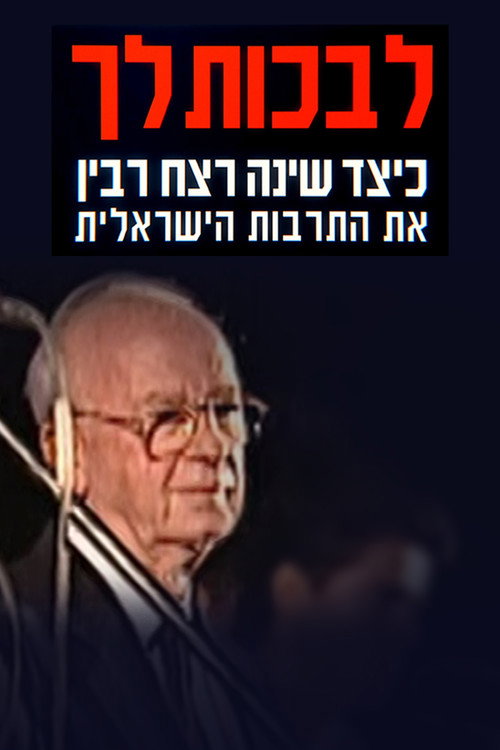
In a series of interviews with cultural and television figures, artists, and researchers, Shai Lahav attempts to deconstruct one of the most traumatic and formative moments in Israel's cultural and political history.