Xavier Baert
Directing
Biography
Xavier Baert has been making movies since 1999, mostly on silver-halide film. He is also a programmer at the Cinémathèque de la Danse and a member of the artist-run film laboratory Etna. His movies are caracterized by the image of a dreamed body, dancing, and lustful, and by the nakedness. His practice evolves from film to film, and combines different formal treatments in a never-ending quest of the sublime. Being a filmmaker with an eclectic knowledge, he claims the influence of «traditional filmmakers (Wong Kar Wai, Ferrara, De Palma) as much as experimental ones such as Soukaz, Lemaître, Almuro, whose common point would be the radicality of authorship. Xavier Baert and his danser Cyril Accorsi were recently greeted as residents at the Centre National de la Danse in order to extend their artistic collaboration.
Known For
Othello Vilgard, Xavier Baert and Lionel Soukaz filmed a performance by Tom from Beijing: one strips himself naked while the others veil and reveal the film.
Nu lacté
Founded in the second half of the 1990s, the experimental film association L'Etna witnessed the transition from film to digital cinema. Its premises, located in the heart of Paris, were unable to withstand gentrification.
Une certaine histoire du cinéma expérimental français
No description available.
Un film perdu du Lionel Soukaz
No description available.
Halloween Queen 1
No description available.
Contrechants, atlas
Footage of dancer Julien Touati in dramatic lighting.
Présence
A high angle shot of light, colours and rhythms in the darkness of a rave party. Freedom of Super 8 (main material of most of my films at this time), slow motion intensity (Hong-Kong cinema convinced me about the profoundness), a flash of a male body outline (colour metamorphosis on the outline of the dancer’s naked shoulder), developing dance.
Bal de la Tournelle
If it is films which reveal ‘the choreographic fatality of cinematographic intervention’(Dominique Paini) this one henceforth very much belongs-dance gestures, in slow motion, distorted, halted, impregnate the film procession in a commentary-magnificent-by its own unfolding (back and forth). In the tradition of the great Adebar (Peter Kubelka, 1957), Danseurs à la Gay Pride 2001 probe the origins of cinematographic movement from a photogrammatical treatment, based on the ecstatic effect that the repetition of a movement procures- hands, faces, hips- shown in slow motion.
Danseurs à la Gay Pride 2001
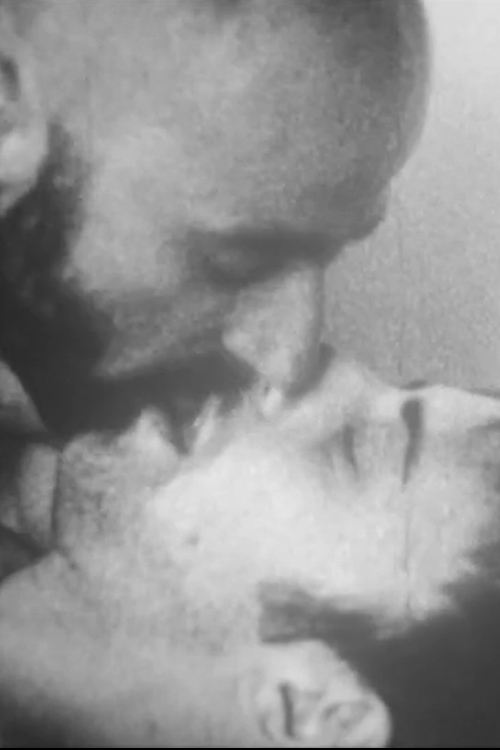
Two men making love. The question of the embrace (which encompasses the caress, the look, the kiss, the penetration, the speed of movement, the expression of ecstasy…) give to the film a scenario of examples of editing (disconnection, links, rhythm, interlaced films, alternate editing…). A sometimes figurative logic (make love, to be loving, to enjoy), choreographic (to caress, to interlace, to kiss, to lick, to penetrate), and cinematographic ( to link, to bring together, to move, to embrace…:to mount)
Extase
Film restored by Yves-Marie Mahé from several recordings made during past screenings, notably in the basement of the L’Etna laboratory. A car journey, then the bedroom. The naked body in bed, sleeping or smiling at the camera, splits in two and overlaps. Accompanied by Christophe’s melancholic pop songs, a raw tenderness emerges.
La vérité nue
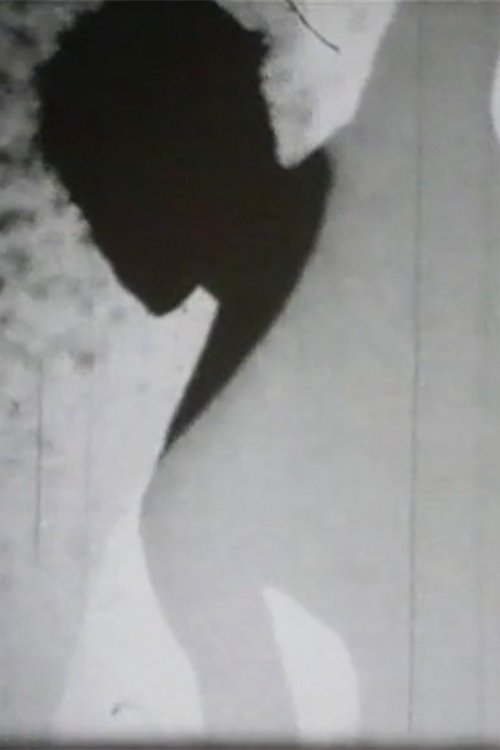
Xavier Baert works on the visual outline of the body. He creates cinematographic body states which according to the French filmmaker, only cinema can invent. Ghost plays on projection and light phenomenon, on the double exposure of a body on another. The narration which is essential through a slow temporal flood comes within a progression which plays on the working drawing and fading. A ‘ghostly’ fading as it is more a question of the appearance of a body without substance through shadow effects and light loops. The image cast in negative adds to this ethereal space the sensation of unreal space, which however, forms one body with the presence of this shadow in perpetual movement. Fantome reminds us that cinema’s main rights are ‘recording bodies.
Fantôme
Found footage movie from Wong Kar-wai's In the mood for love trailer.
Révélation
This birth of the human silhouette metonymically takes us back to the origins of cinema, to Marey or Muybridge’s pre-cinema. Baért with his model wanted to re-find the dancer Loie Fuller’s aerial movements such as one can see in Fire Dance (1901). This research for origins continues with the malleability of the ‘imprints’ of the dancer and the circulation of materials and lights.(…) Imprint plays, from the point of view of form, with the material, the identity, the hybridization between film and skin, material and light (…), towards the constitution of a new organism where skin and celluloid acquire an even esthetical status, a true melting pot of malleable images and thoughts.