
Mun Jeong-hyun
Directing
Known For
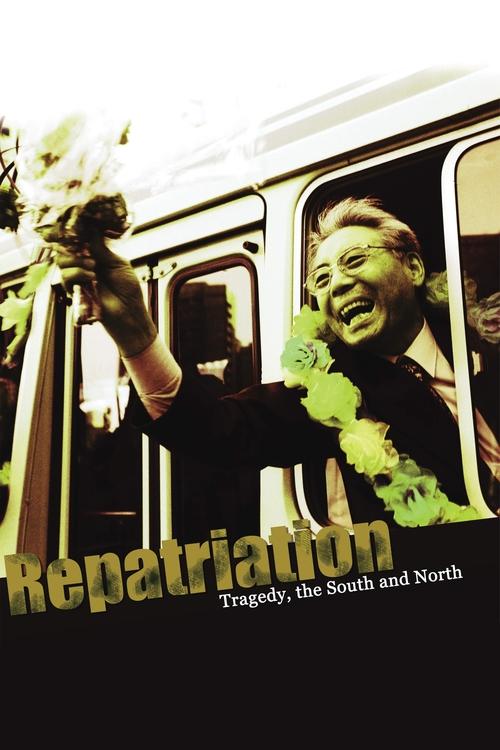
In 1992, political prisoners from North Korea settled in the South Korean town where filmmaker Dong-won Kim lived. Sent to South Korea as spies during the war, they spent 30 years in jail. How did they endure the many years of torture? What will become of them now that they have been released? Twelve years in the making, Repatriation is a very personal view of a country divided by an ongoing cold war.
Repatriation
Imman Kim wants to reconcile with his parents, who emigrated to Osaka after April 3 Jeju Uprising. Cheolwoong Park has supported his younger sister during his entire life, blaming his father who moved to Tokyo to avoid guilt-by association. Soonam Park has devoted her life to human rights movement for a second-generation Korean-Japanese and her daughter Mayi Park who also lives as a Korean-Japanese. This film tell us about meaning of a nation through their life stories.
After Chosun
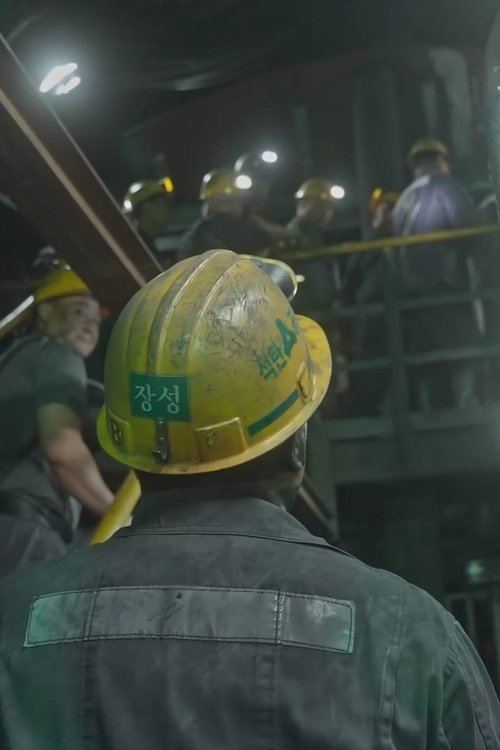
The film opens with the words of Taebaek's last miners: "I had to earn a living." These are the first words, spoken over the shot of a cage descending endlessly into a mine—the place that the miners of the soon-to-be-closed Jangseong Mining Station call hell. They began working out of poverty, needing to make a living somehow. Though they planned to quit after three days, they ended up staying for over 30 years, and in all that time, they saw nothing good.
Raining Dust

When director Mun accidentally discovered the diaries of his late granduncle, who was mentally ill, he unexpectedly learned about his family's secret history. The small mountain village in South Jeolla Province where Mun's family lived, was nursing the wounds from conflicts of class, ideology as well as from the displacement of family members in South and North Korea, and even in Japan. It turned out that the history of his family contained all the tragedies of modern Korean history, a history he had only known through textbooks. This interesting documentary investigates a complex history linking the repercussions of Japanese colonialism and the Korean War to the director's family memories.
Grandmother's Flower
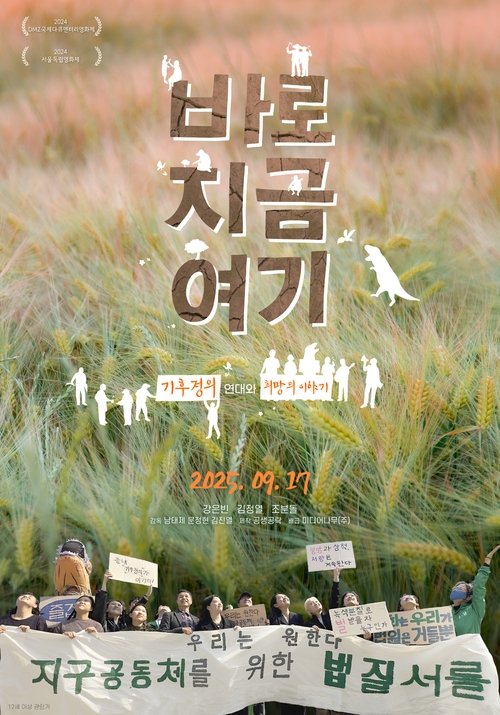
Eunbin, charged with protesting at the headquarters of a coal-fired power plant exporter, embarks on a legal battle that becomes a platform to expose the urgency of the climate crisis. In court, she shares firsthand accounts of climate disaster survivors. Her journey takes us to small towns and rural areas ravaged by these disasters, revealing communities fighting to protect their lives through care and solidarity in the face of climate catastrophe. Along the way, an unexpected alliance forms between young Eunbin and an elderly activist whom she met during a coal plant protest. As the fierce battle against climate change continues, Eunbin's case reaches its climax with a Supreme Court verdict.
All that saves us
The Seongdong area of Seoul has been home to many small and medium-sized manufacturers. The once iconic red brick factories have given way to redevelopment, making way for galleries, cafes, and upscale restaurants. As a result, Seongdong has seen the largest increase in land rental prices in South Korea. Regrettably, this transformation also reveals a harrowing story: for the past five decades, hundreds of shoemakers have worked tirelessly for up to 18 hours a day, making shoes for wages below the minimum standard. Each day, these workers leave their homes for work, not knowing if it will mark their final day in this relentless cycle.
Workers
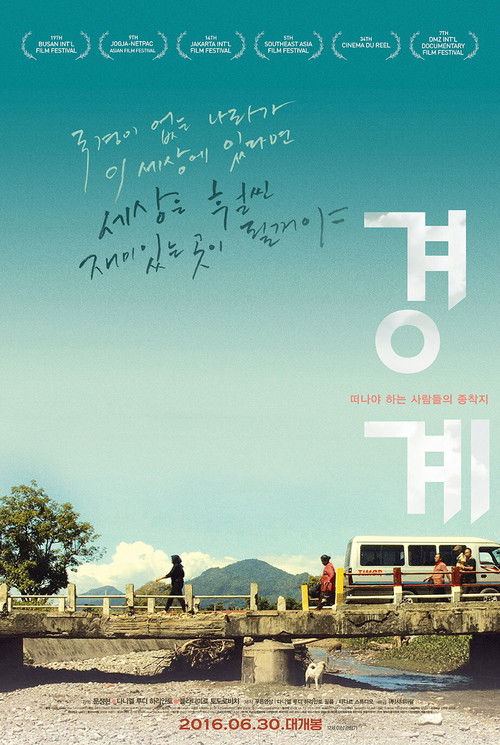
An exchange of filmed correspondence between three documentarists, respectively Indonesian, Serbian and South Korean. Attentive to cultures other than their own, each films zones with blurred or shifting borders.
Fluid Boundaries
After my grandfather 's Baek-su (age 99’s birthday party) banquet, asking me to write an autobiography for him. Two years later, he passed away and left his favor as homework to me. I discovered the history of the past that I could not associate with his name. As a filmmaker, I frequently attended burials that were far from my life. I have been living in the United States for a while, and I have often come to think about the country and nationality.
Optigraph
In 2009, five tenants of the Yongsan district, who were forcefully evicted from their homes staged a sit-in and were burned to death. This film by Mun Jeong-hyun recalls the many movements of Korean civil rights and activism and asks where all the idealism went, even as the atrocities return today.
Yongsan
Instability and fear in today's society is portrayed by incorporating the directors' personal story in this experimental piece. The film continually questions and reasons through the images and sounds of both the directors' personal accounts as well as actual records of Korean society.
Collapse
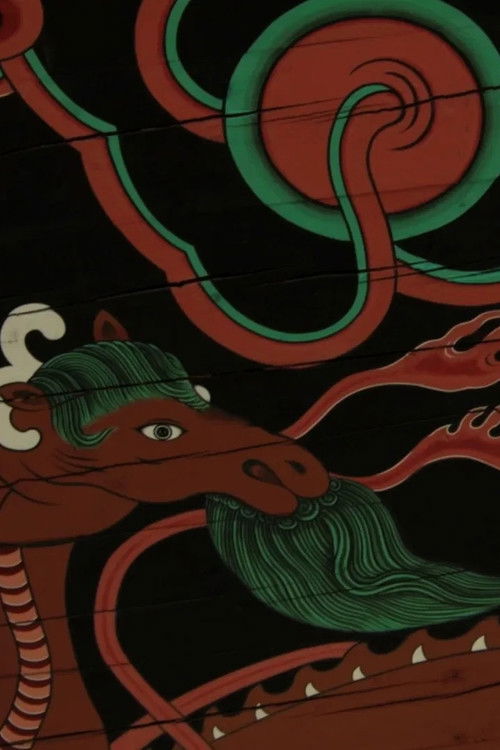
On the road of horses that erased horses, I remember the time of the horses. Use the horse's ears and mouth to feel it. Blurry but wide vision, distant and near passing conversations.
Colorful Lin
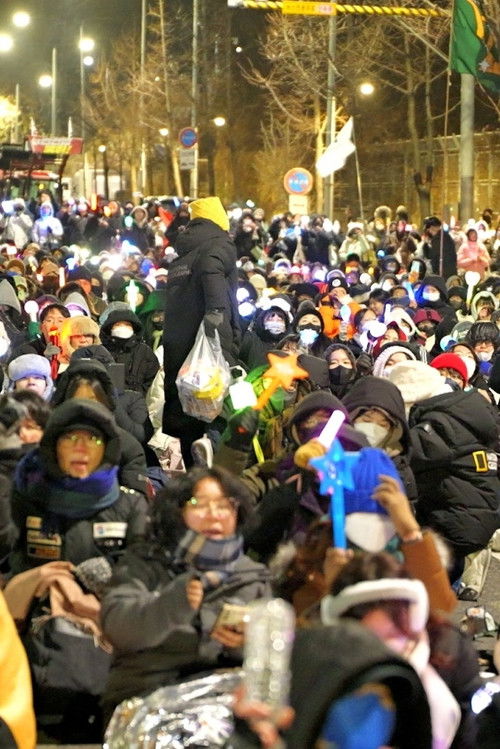
In December 2024, the 20th President of the Republic of Korea declared emergency martial law. Korean society has once again split into left and right, engaging in extreme hatred and violence. I wanted to explore this sentiment of hatred that is pervasive throughout our society.