FEEL IT.STREAM
Lynne Sachs

Lynne Sachs

Directing

Biography

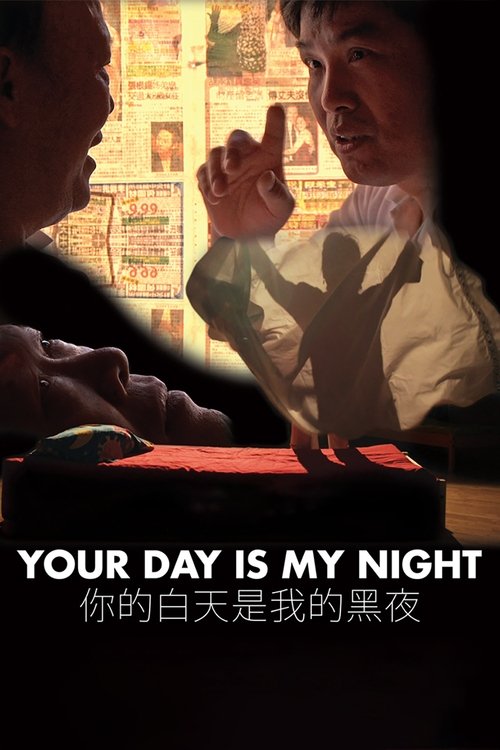
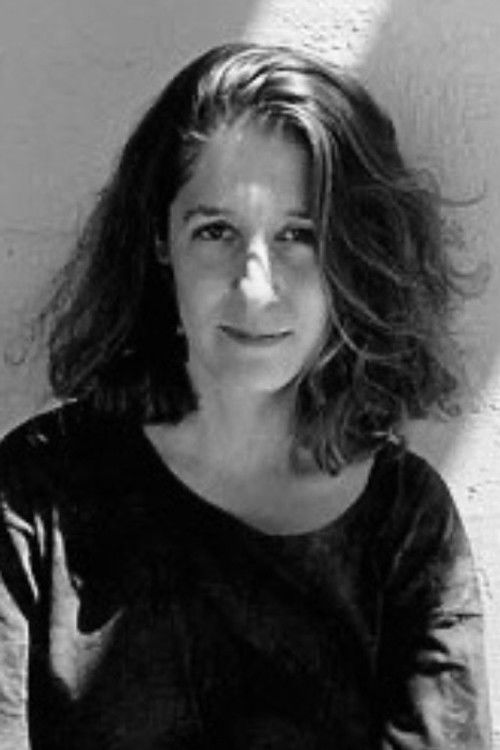
Lynne Sachs makes films, performances, installations and web projects that explore the intricate relationship between personal observations and broader historical experiences by weaving together poetry, collage, painting, politics and layered sound design. Since 1994, her five essay films have taken her to Vietnam, Bosnia, Israel and Germany — sites affected by international war–where she tries to work in the space between a community’s collective memory and her own subjective perceptions. Strongly committed to a dialogue between cinematic theory and practice, Lynne searches for a rigorous play between image and sound, pushing the visual and aural textures in her work with each and every new project.  Since 2006, she has collaborated with her partner Mark Street in a series of playful, mixed-media performance collaborations they call The XY Chromosome Project. In addition to her work with the moving image, Lynne co-edited the Millennium Film Journal issue on “Experiments in Documentary”. Supported by fellowships from the Guggenheim, Rockefeller and Jerome Foundations and the New York State Council on the Arts, Lynne’s films have screened at the New York Film Festival, the Sundance Film Festival and Toronto’s Images Festival as well as a five-film survey at the Buenos Aires Film Festival.  The San Francisco Cinematheque recently published a monograph with four original essays in conjunction with a full retrospective of Lynne’s work.  In 2012, Lynne began a series of live film performances of  Your Day is My Night at St. Nick’s Alliance in Greenpoint, at Proteus Gowanus in Brooklyn, at Maysles Cinema and at the University Settlement. She then screened the completed hour-long hybrid video at the Museum of Modern Art, the Vancouver Film Fest, Union Docs, the New Orleans Film Fest and other venues in Mexico, Argentina and Ecuador.  Lynne teaches experimental film and video at New York University and The New School and lives in Brooklyn.
Known For

No image
4.4

What do filmmakers as disparate as Kevin Smith, Ed Burns, Rob Epstein, and Barbara Hammer have in common? A secret weapon known as Bob Hawk. As a veteran of the American independent film scene since its inception, the cinephile and consultant has been a regular, cherished presence at film festivals and markets for over three decades. Hawk saw promise in scrappy, independently produced films like Clerks and The Brothers McMullen when no one else even knew to look, and he brought these films to the attention of the Sundance Film Festival, thereby launching multiple careers in the process. An unsung champion of new voices, he has discovered innovative work, nurtured new talents, and brokered relationships with film festivals and critics alike, while staying out of the spotlight—until now. At 75, Bob Hawk looks back on a still-vibrant life in independent film, exploring how the rebellious gay son of a preacher found his calling as a behind-the-scenes film impresario.

Film Hawk

2016Movie
The House of Science: A Museum of False Facts

The winner of numerous festival prizes, this early work by Lynne Sachs is a provocative film essay on women's perspectives on their bodies in a "man's world." It touches on everything from the female form's depiction in Renaissance art to the school of 19th century "scientific" thought equating "abnormal" physiognomy with criminality. This adventurous collage also features the filmmaker's own diaristic recollections (notably of being fitted for a diaphragm by a cold, intimidating doctor), poetical staged sequences, other women's audio testimonies, an old classroom instructional reel about menstruation, prose by Gertrude Stein and feminine "ideals" like the undulating young woman performing in fish-tail costumes at Florida's kitschy Weeki-Wachee Springs "Underwater Mermaid Theater." - Dennis Harvey

The House of Science: A Museum of False Facts

1991Movie
Drift and Bough

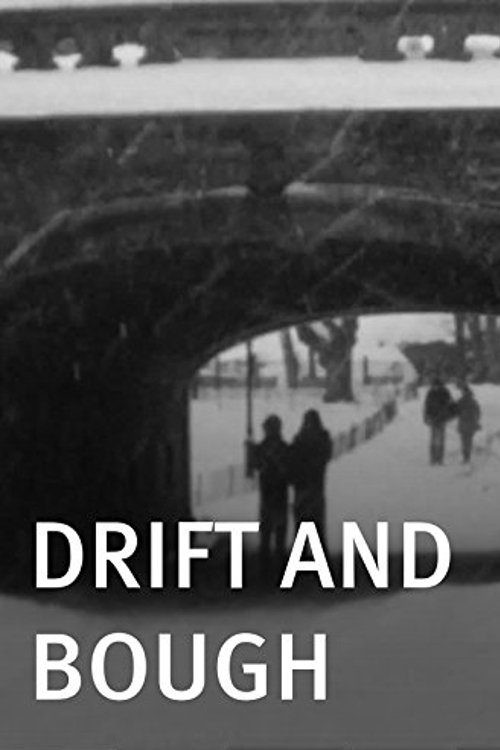
Lynne Sachs spends a winter morning in Central Park shooting film in the snow. Holding her Super 8mm camera, she takes note of graphic explosions of dark and light and an occasional skyscraper. The stark black lines of the trees against the whiteness create the sensation of a painter's chiaroscuro. Woven into this cinematic landscape, we hear sound artist Stephen Vitiello's delicate yet soaring musical track which seems to wind its way across the frozen ground, up the tree trunks to the sky. — “I spent a morning this winter in Central Park shooting film in the snow. The stark black lines of the trees against the whiteness creates the sensation of a painter’s chiaroscuro, or a monochromatic ‘tableau-vivant.’ When I am holding my super 8mm camera, I am able to see these graphic explosions of dark and light” (Lynne Sachs).

Drift and Bough

2014Movie
Window Work
4.0

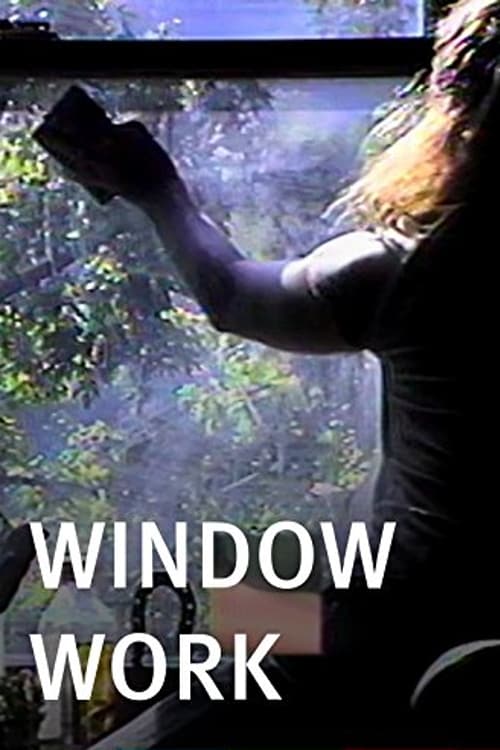
A woman drinks tea, washes a window, reads the paper: simple tasks that somehow suggest a kind of quiet mystery within and beyond the image. Sometimes one hears the rhythmic, pulsing symphony of crickets in a Baltimore summer night. Other times jangling toys dissolve into the roar of a jet overhead, or children tremble at the sound of thunder. These disparate sounds dislocate the space temporally and physically from the restrictions of reality. The small home-movie boxes within the larger screen are gestural forms of memory, clues to childhood, mnemonic devices that expand on the sense of immediacy in her “drama.” These miniature image-objects represent snippets of an even earlier media technology: film. In contrast to the real time video image, they feel fleeting, ephemeral, imprecise.

Window Work

2000Movie
The Last Happy Day
5.0

THE LAST HAPPY DAY is an experimental documentary portrait of Sandor (Alexander) Lenard, a Hungarian medical doctor and a distant cousin of filmmaker Lynne Sachs. In 1938 Lenard, a writer with a Jewish background, fled the Nazis to a safe haven in Rome. Shortly thereafter, the U.S. Army Graves Registration Service hired Lenard to reconstruct the bones, small and large, of dead American soldiers. Eventually he found himself in remotest Brazil where he embarked on the translation of “Winnie the Pooh” into Latin, an eccentric task that catapulted him to brief world-wide fame. Sachs’ essay film uses personal letters, abstracted war imagery, home movies, interviews and a children’s performance to create an intimate meditation on the destructive power of war.

The Last Happy Day

2009Movie
Investigation of a Flame
7.0

On May 17, 1968 nine Vietnam War protesters led by Daniel and Philip Berrigan, walked into a Catonsville, Maryland draft board office, grabbed hundreds of selective service records and burned them with homemade napalm. INVESTIGATION OF A FLAME is an intimate, experimental documentary portrait of the Catonsville Nine, this disparate band of resisters who chose to break the law in a defiant, poetic act of civil disobedience. How did the photos, trial publicity and news of the two year prison sentences help to galvanize a disillusioned American public? INVESTIGATION OF A FLAME explores this politically and religiously motivated performance of the 1960′s in the context of extremely different times, times in which critics of Middle East peace agreements, abortion and technology resort to violence of the most random and sanguine kind in order to access the public imagination.

Investigation of a Flame

2002Movie