FEEL IT.STREAM
Mady Christians

Mady Christians

Acting

Biography

From Wikipedia, the free encyclopedia Marguerita Maria "Mady" Christians (January 19, 1892 – October 28, 1951) was an Austrian actress and naturalized US citizen who had a successful acting career in theatre and film in the United States until she was blacklisted during the McCarthy period. She was born on January 19, 1892 to Rudolph Christians, a well-known German actor, and his wife, Bertha. Her family moved to Berlin when she was one year old, and to New York City in 1912, where her father became the Irving Place Theatre's general manager. Five years later she returned to Europe to study under Max Reinhardt. She appeared in a number of European films prior to the early 1930s. In 1929, she starred in the first full sound film made in Germany It's You I Have Loved. In 1933, she toured the United States in a play called Marching By and was offered a Broadway contract the following year that allowed her, like a number of other German artists, to seek refuge from the Nazi regime in the United States. On Broadway, Christians played Queen Gertrude in Hamlet and Lady Percy in Henry IV, Part I, staged by director Margaret Webster. Webster was part of a small but influential group of lesbian producers, directors, and actors in theater (a group that included Eva Le Gallienne and Cheryl Crawford). Webster and Christians became close friends: according to Webster biographer Milly S. Barranger, it is likely that they also were lovers. She also starred in Lillian Hellman's Watch on the Rhine. She originated the title role in the 1944 play I Remember Mama. Her last movie roles were in All My Sons, based on the play by Arthur Miller, and Letter from an Unknown Woman, both released in 1948. During World War II, Christians was involved in political work on behalf of refugees, rights for workers (especially in theater and film), and Russian War relief, political efforts that would bring her to the attention of the Federal Bureau of Investigation (FBI) and other anti-communist institutions and organizations. In addition to her political work, Christians also publicly criticized the House Committee on Un-American Activities in early 1941 and likened the Senate Internal Security Subcommittee's investigation of propaganda in US film to Nazi harassment of film and radio artists in the 1930s. In 1950, the FBI's internal security division began investigating Christians, who had been identified as a "concealed communist" by a confidential informant. When Christians' name appeared in Red Channels, the so-called bible of the broadcast blacklist, her career was effectively over.


Known For

The Philco Television Playhouse
6.6

The Philco Television Playhouse is an American anthology series that was broadcast live on NBC from 1948 to 1955. Produced by Fred Coe, the series was sponsored by Philco. It was one of the most respected dramatic shows of the Golden Age of Television, winning a 1954 Peabody Award and receiving eight Emmy nominations between 1951 and 1956.

The Philco Television Playhouse

1948
Letter from an Unknown Woman
7.8

A pianist about to flee from a duel receives a letter from a woman he cannot remember. As she tells the story of her lifelong love for him, he is forced to reinterpret his own past.

Letter from an Unknown Woman

1948
Ship Cafe
8.0

The singing stoker and the vamp.

Ship Cafe

1935
Heidi
6.8

Heidi is orphaned and her uncaring maternal Aunt Dete takes her to the mountains to live with her reclusive, grumpy paternal grandfather, Adolph Kramer. Heidi brings her grandfather back into mountain society through her sweet ways and sheer love. When Dete later returns and steals Heidi away to become the companion of a rich man's wheelchair-bound daughter, the grandfather is heartsick to discover his little girl missing and immediately sets out to get her back.

Heidi

1937
All My Sons
6.5

During WWII, industrialist Joe Keller commits a crime and frames his business partner Herbert Deever. Years later, his sin comes back to haunt him when his son plans to marry Deever's daughter.

All My Sons

1948
Come and Get It
6.8

An ambitious lumberjack abandons his saloon girl lover so that he can marry into wealth, but years later becomes infatuated with the woman's daughter.

Come and Get It

1936
Michael
6.3

A mature and visually elegant period romance that remains one of the earliest and most compassionate overtly gay-themed films in movie history. Based upon Herman Bang's 1902 novel, Dreyer's Michael refashions the classical Greek myth of Jupiter and Ganymede into a love triangle between an aging artist, Zoret, his protagonist Michael, and Princess Zamikoff, an aristocratic femme fatale as entranced by Michael’s youthful beauty as Zoret is.

Michael

1924
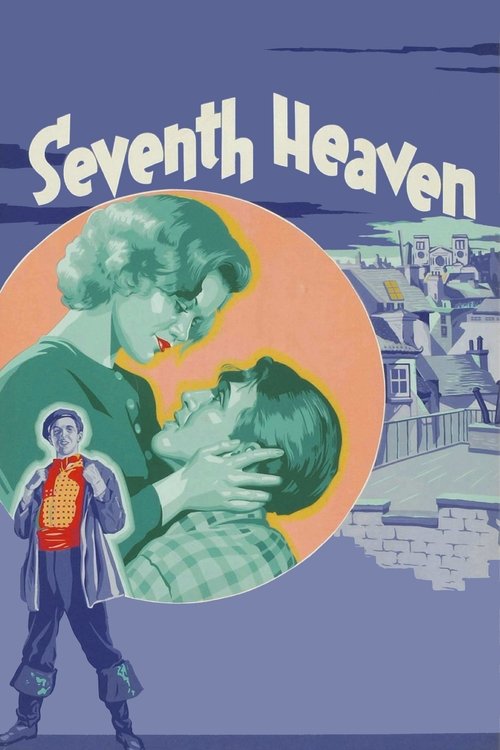
Seventh Heaven
6.4

A Parisian sewer worker longs for a rise in status and a beautiful wife. He rescues a girl from the police, lives with her in a barren flat on the seventh floor, and then marches away to war.

Seventh Heaven

1937
Tender Comrade
5.7

Jo Jones, a young defense plant worker whose husband is in the military during World War II, shares a house with three other women in the same situation.

Tender Comrade

1944
In the Slums of Berlin
4.9

It was not just the children who were treated badly by the wealthy Weimar republic. Robert Kramer is released from prison but struggles to adjust to civilian life. His father disowns him, his wife has left him for another man. There is no work. He eventually arrives in a shelter for the homeless, and seeks salvation through Emma, a prostitute.

In the Slums of Berlin

1925
The Woman I Love
7.0

In World War I France, a pilot falls in love with the wife of his friend and superior officer.

The Woman I Love

1937
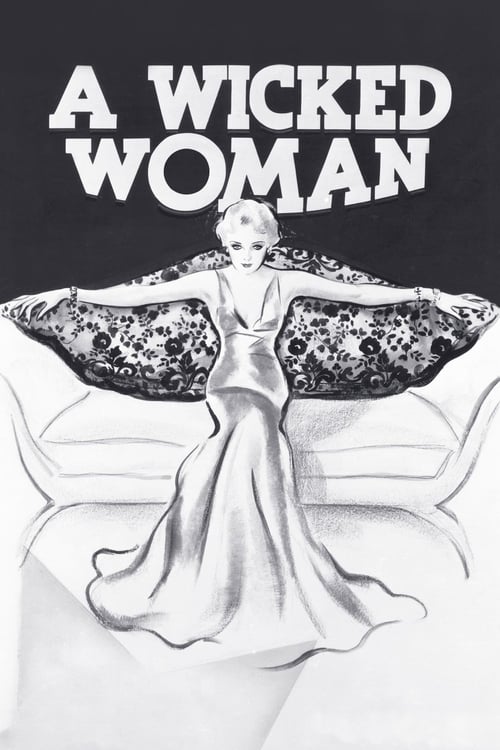
A Wicked Woman
5.0

A woman and her children escape severe poverty and abuse. She successfully betters her family's condition while living with the secret that she killed her abusive husband in order to protect her children from him.

A Wicked Woman

1934
A Glass of Water
8.0

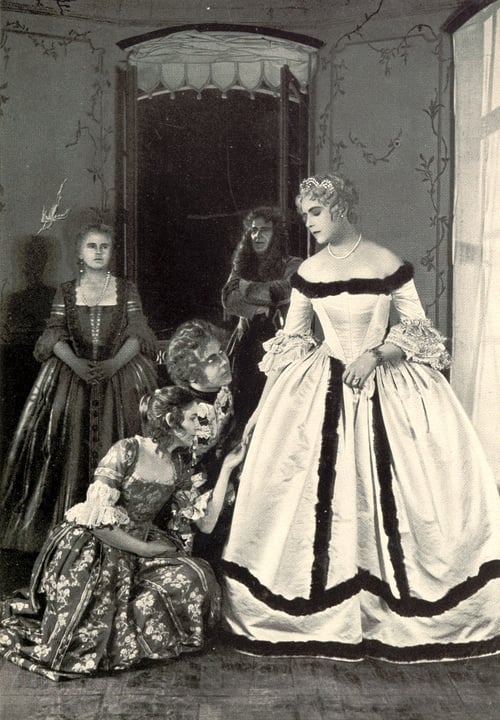
London at the time of the War of the Spanish Succession. Queen Anne's followers are divided into two factions: one side, led by Lord Bolingbroke, is pushing for peace talks and a quick reconciliation with France; the other side, led by the influential Duchess of Marlborough, is in favor of continuing the war. Queen Anne herself is still undecided, and so a game of intrigue unfolds at court between Bolingbroke and Marlborough, each trying to win the queen over to his side.

A Glass of Water

1923
The Finances of the Grand Duke
6.7

The likeable and carefree Grand Duke of Abacco is in dire straits. There is no money left to service the State's debt; the main creditor is looking forward to expropriating the entire Duchy. The marriage with Olga, Grand Duchess of Russia, would solve everything, but a crucial letter of hers about the engagement has been stolen. Besides, a bunch of revolutionaries and a dubious businessman have other plans regarding the Grand Duke. With the intrusion of adventurer Philipp Collins into the Grand Duke's affairs, a series of frantic chases, plots and counter-plots begins.

The Finances of the Grand Duke

1924
Manolescu, der Fürst der Diebe
7.5

No description available.

Manolescu, der Fürst der Diebe

1933
The Loves of Pharaoh
6.5

The Ethiopian King offers his daughter to a powerful Pharaoh to secure peace between the two countries.

The Loves of Pharaoh

1922
Address Unknown
6.5

When a German art dealer living in the US returns to his native country he finds himself attracted to Nazi propaganda.

Address Unknown

1944
The Lost Shoe
5.9

One of the first movies made about the fairy tale Cinderella. The film is part of the current German expressionism. Because of that the film ends up being darker than the fairy tale itself.

The Lost Shoe

1923
Escapade
8.0

A romantic comedy-drama-musical of mistaken identity, infidelity and farce, set in Vienna at the turn of the 20th century.

Escapade

1935
The Only Girl
6.2

A dashing marquis bends from his horse when he discovers a lost garter in the woods and falls. During his delirium he is serenaded by a little hairdresser. She is the person who lost the garter to begin with and has only come to get it back having borrowed it from her employer--the empress of France. The marquis mistakenly thinks he was nursed by the empress, herself, and decides to woo her.

The Only Girl

1933