Acting
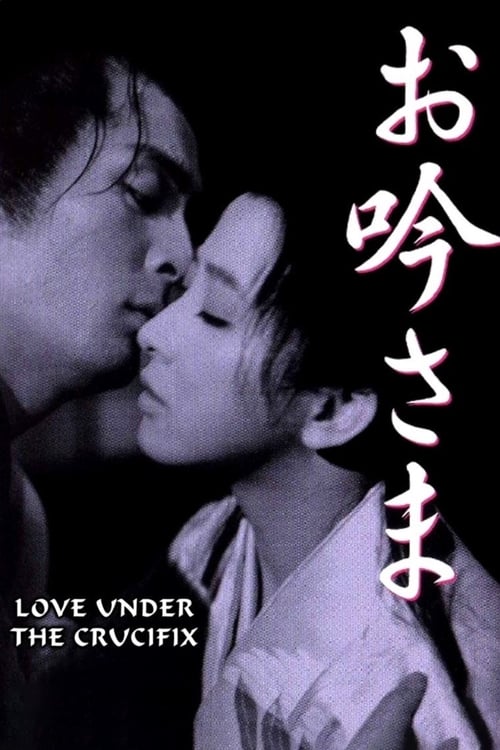
A tea master and his daughter Ogin are both Christians in feudal Japan. Ogin falls in love with a married feudal prince who shares her faith. When the Shogun bans Christianity, the situation worsens.
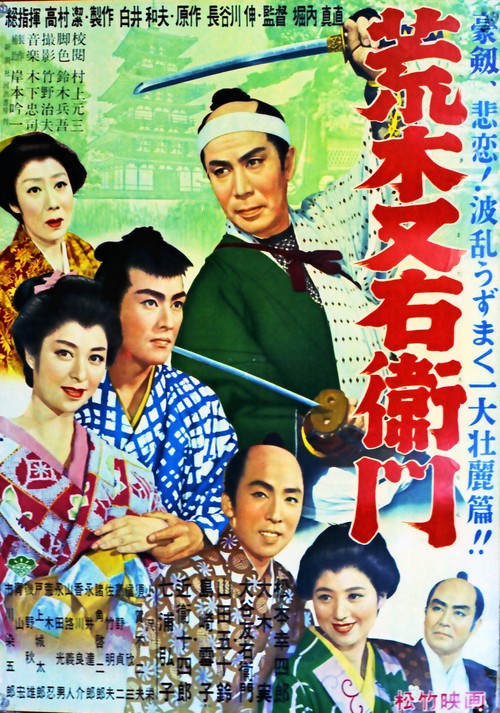
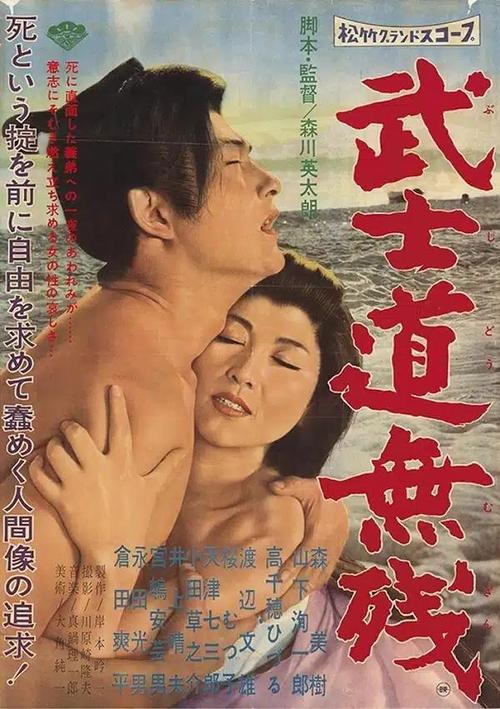
Watanabe Kazuma and Kawai Matagorō from the Bizen Okayama Ikeda clan were close friends, but they inevitably became enemies after Matagorō killed Kazuma's younger brother, Gentayū, and fled. Seeking assistance, Kazuma asked his brother-in-law, Araki Mataemon, for help, but Mataemon refused, saying that it was against the code for a brother to avenge another brother's death. On the other hand, the lord of the clan, Ikeda Tadao, ordered a search for Matagorō, who was found to be sheltered by the Hatamoto, including Andō Jiemon, in Edo. Tadao was furious but unable to act. Matagorō, in Edo, came to regret his birth as a samurai. He met and fell in love with Okō, a bathhouse maid. As the discord between the Hatamoto and the Ikeda clan deepened, Tadao died of illness. Seizing the opportunity to ease the conflict, the shogunate ordered the Ikeda clan to be succeeded by the young lord Katsugorō and to relocate to the Ikeda clan of Inshū Tottori. Meanwhile, Matagorō was exiled from Edo.
No description available.
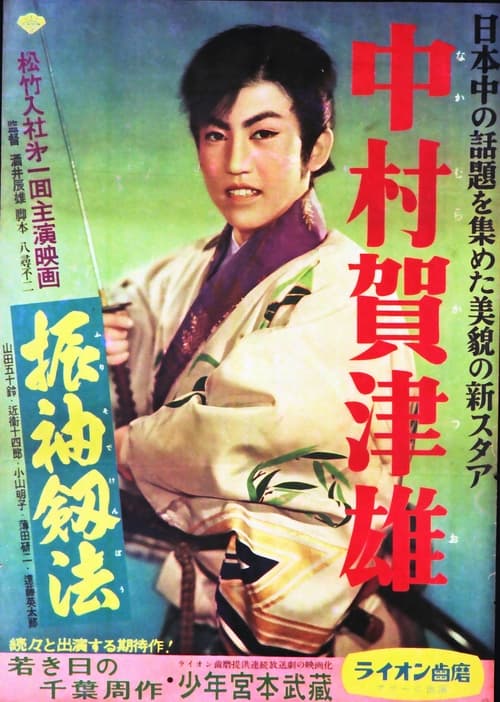
In Marugame Domain of Shikoku, a low-ranking foot soldier named Tagami Genbachi was envied for marrying Tsuji, the most beautiful woman in the domain. However, due to a personal grudge held by Horikawa Gentazaemon, the swordsmanship instructor, Genbachi met an untimely and bitter death through foul means within the precincts of the Hachiman Shrine. Due to the domain's oppressive treatment of those of low status, Tsuji, now with her infant son Botaro, was dispossessed of her home and exiled.
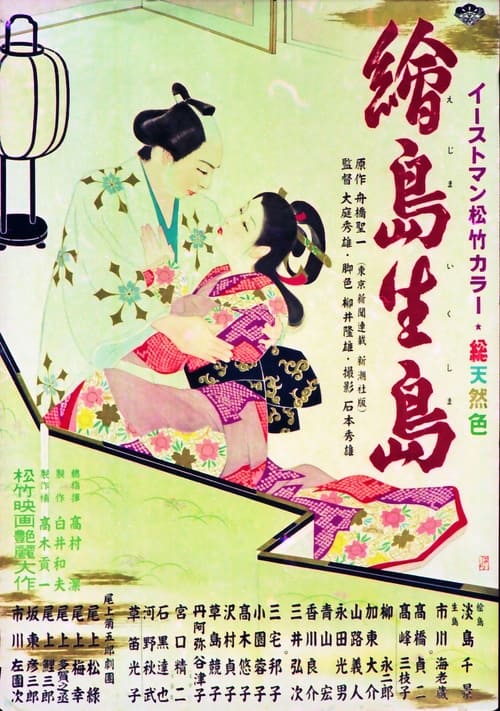
This period film is inspired by one of the most notorious scandals to have taken place in Edo-period Japan. The heroine, Ejima, was a lady of the Ooku, the harem of Edo Castle in which the Shogun’s mother, wife and concubines resided, forbidden from contact with any other man except in the presence of the Shogun. The institution played a key role in the Byzantine world of Japanese court politics during the Edo era. In 1714, Lady Ejima was sent to pay her respects at a Buddhist temple in the city, and chose to pay an unauthorised visit to the kabuki theatre – a violation of protocol that was to have tragic consequences.
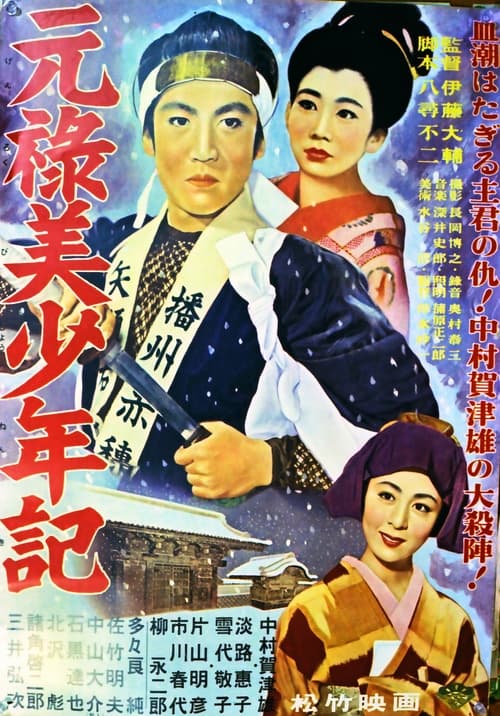
On February 4th of the 16th year of the Genroku era, Yatō Uemon no Shichi reminisces while waiting his turn for seppuku at the Mizuno residence. When news of his lord, Asano Naganori, attacking Kira Yoshinaka in the palace reached Akō, Uemon no Shichi was sixteen. The family elder, Ōishi Kuranosuke, determined to avenge, gathered allies, but Uemon no Shichi's father, Chōsuke, being sickly and considered too young, was not included. Chōsuke committed suicide.
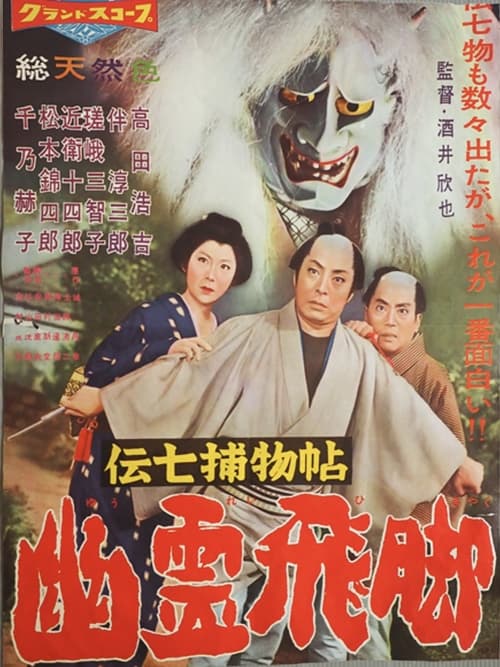
The eleventh episode of the Denshichi Torimonocho series. Around the time of Shogun Ienari, a murderer known as a ghost hikyaku appeared in Edo, raping and killing young girls one after another. One night, a notice was recieved that Oichi, the daughter of Wakasa Kanayu of the small construction group, would be taken away. The mansion was surrounded by ten and twenty layers of people including Denshichi, who was asked to guard the house, and Sesshinsai Ohba, the owner of the dojo. Four seconds later, a violent explosion suddenly occurred.
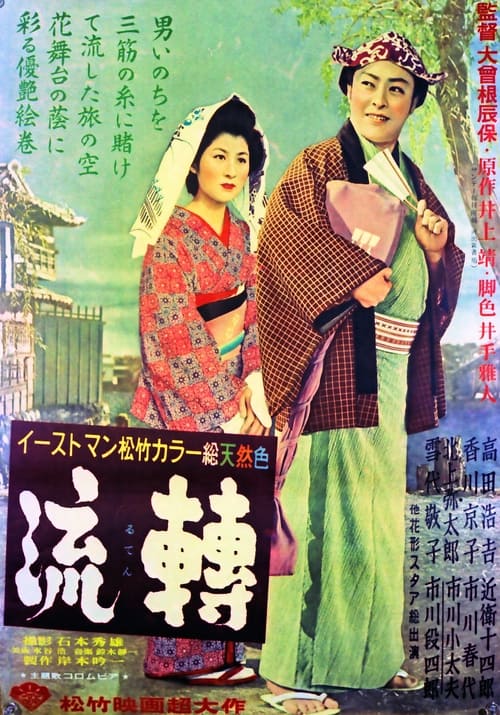
In the eleventh year of the Tenpō era, the Kawarazaki-za theater in Edo buzzed with excitement for a new production of "Kanjinchō" by Naritaya, featuring music by the master Kineya Rokusaburō. However, Naritaya's requests to change some of Rokusaburō's most painstakingly crafted parts of the composition angered his disciple, Shinjirō, leading to a conflict and Shinjirō's abandonment of the shamisen. One day, Shinjirō was captivated by the mysteriously beautiful dance of Oaki, a traveling performer's daughter, who seemed to be channeling her art into a form of revenge.
A 16-year-old boy is ordered to commit ritual suicide to follow his deceased lord into death and preserve the honor of his clan. His elder brother's wife, who has raised him as if he were her own child, asks her husband for permission to spend a single night with the young man and teach him the pleasures of the flesh, out of motherly mercy and desire. However, the following day, a newly issued official decree changes everything...
A lost film by Masahiro Makino
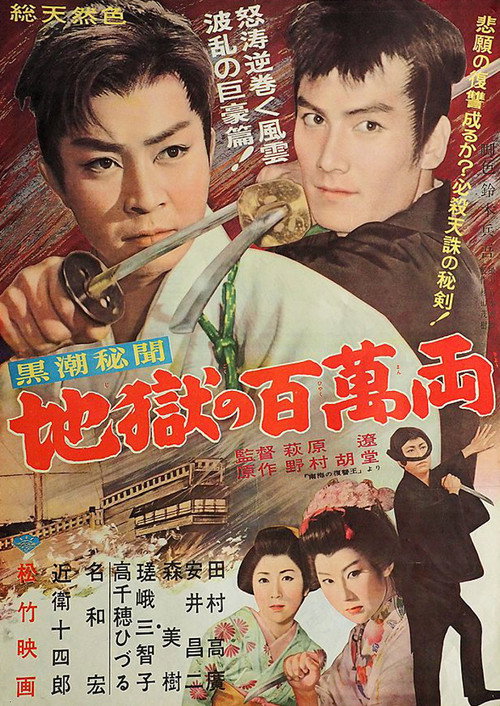
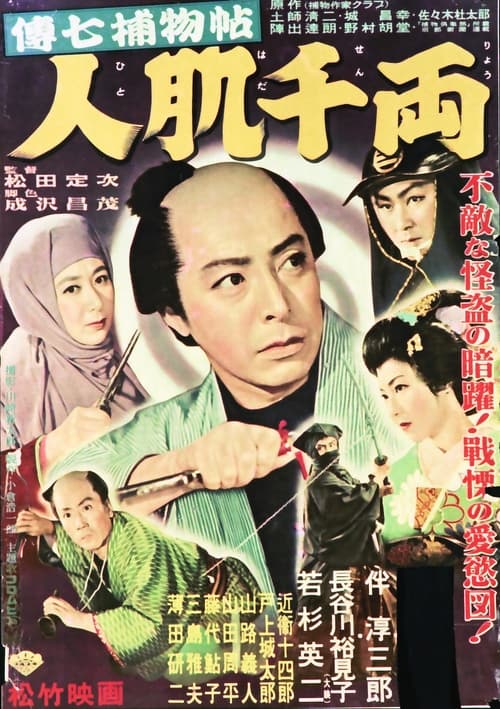
In the era of the twelfth Shogun, Tokugawa Ieyoshi, a notorious bandit known as "Shippu" (or "Swift Wind") emerged in Edo. Shippu would send a warning message called the "Thief's Summons" before striking, yet despite the magistrate's desperate search efforts, they couldn't find any leads. One day, a summons was shot into the residence of Ono Ryusai, who was leading a peaceful retirement life with his two concubines, O-Ran and O-Koshi. With the summons, various individuals including O-Ran's brother Itami Shigoshiro, the master of the Muso-ryu dojo, vigilante Mankichiro, rope expert Gohei, and Den'ichi from Kuromon Town were assigned to monitor the situation. However, while they were distracted by a neighboring fire, a chest containing a thousand ryo was stolen, and O-Koshi was killed.
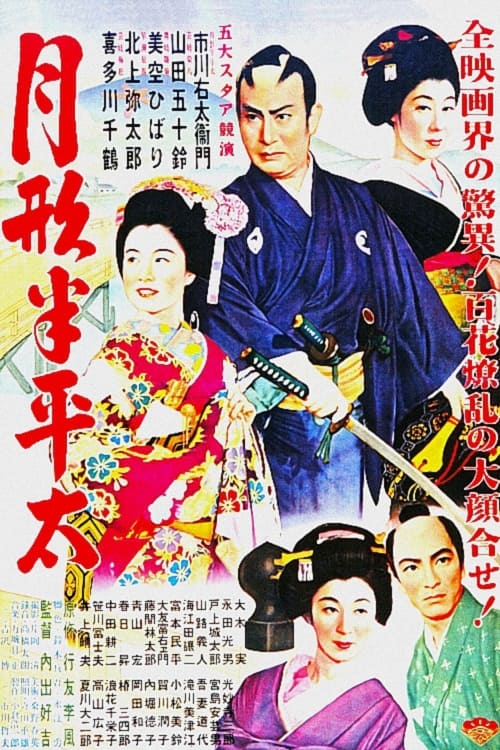
During the ultra-violent era of the downfall of the Tokugawa Shogunate one man rose above the rest with his ideas of how to overthrow the corrupt government and end the bloodshed between the Choshu and Satsuma clans which would ultimately lead to the alliance of these 2 clans and restoration of the emperor to full power. Based on the play that made Sawada Shojiro famous, this is the story of Tsukigata Hanpeita, a forward looking samurai from Choshu, who along with Katsura Kogoro and Sakamoto Ryoma of Tosa worked to bring their dream of a new era in Japan.
Japanese horror movie from 1937.
Japanese drama film.
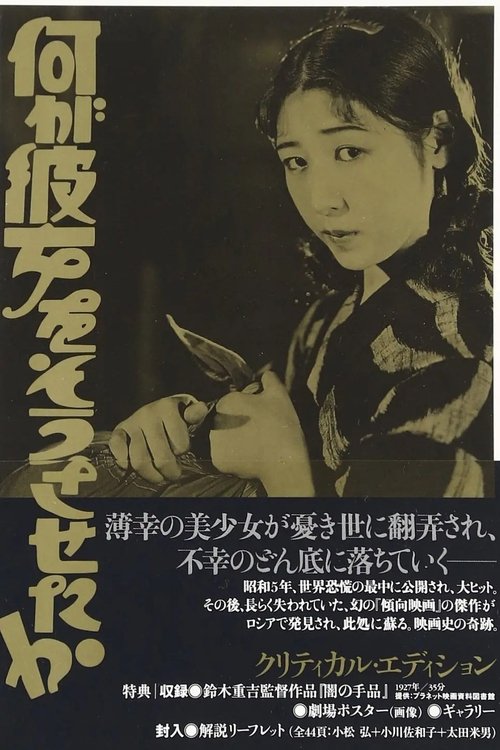
Sumiko's father sends her to live with her alcoholic uncle. He sells her to a circus, which is the start of a downward spiral in an unforgiving world.