Acting
Skid-row epic about a lawyer's decline.
The film depicts the troubles of Herr Verner (Karel Hasler), a middle-aged bachelor dentist who wants to marry.
No description available.
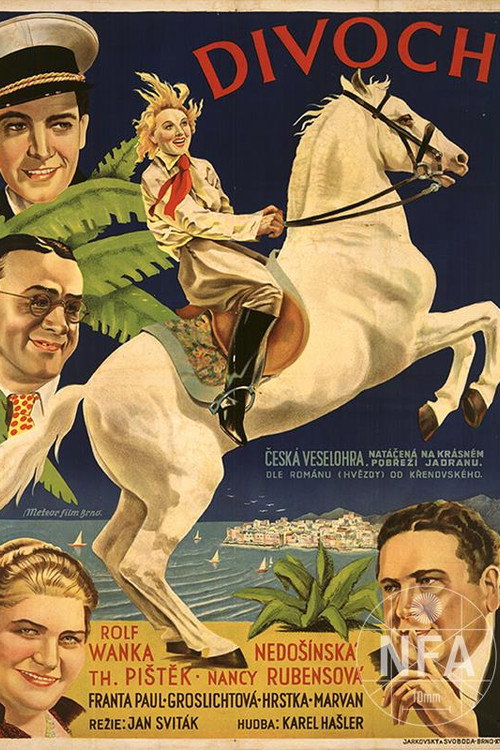
Mirko, bored with his extravagant life, decides to spend his vacation alone, far from the company of his Prague friends. He even makes a bet with a friend that he will go a month without any funds, luxuries, a car and...without a kiss.
A young farmer, Jan Aleš, is drafted from his native Pošumaví to join the army. Since he likes his new environment, he stays with the army as a long-term serviceman. He even successfully passes the exams for the military academy. There he becomes friends with his Slovak colleague Milan Jurčík. He studies diligently, but thanks to Milan he sometimes finds time to go out into the city. That is how he meets the factory owner's daughter, Zdenka, with whom he falls in love. However, her father is not very happy about the promising relationship.
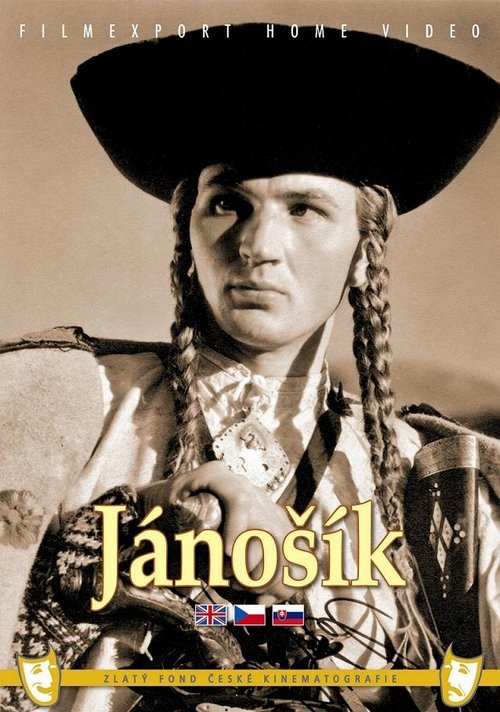
Jánošík has been topic of many Slovak and Polish legends, books and films. According to the legend, he robbed nobles and gave the loot to the poor. The legend were also known in neighboring Silesia, the Margraviate of Moravia and later spread to the Kingdom of Bohemia. The actual robber had little to do with the modern legend, whose content partly reflects the ubiquitous folk myths of a hero taking from the rich and giving to the poor. However, the legend was also shaped in important ways by the activists and writers in the 19th century when Jánošík became the key highwayman character in stories that spread in the north counties of the Kingdom of Hungary (present Slovakia) and among the local Gorals and Polish tourists in the Podhale region north of the Tatras.
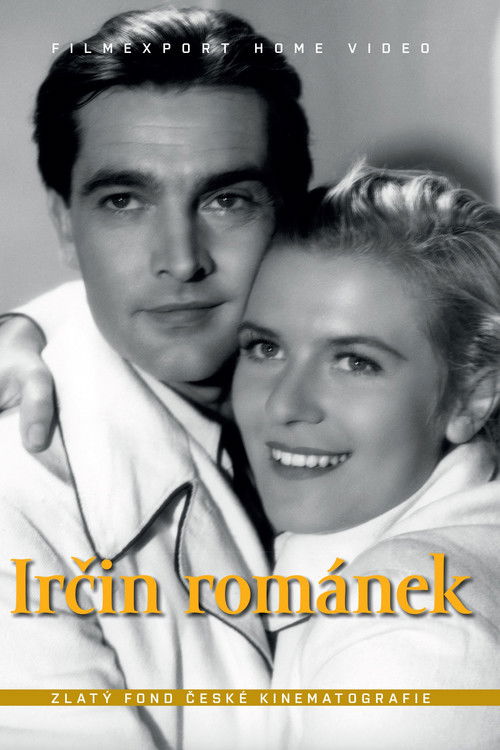
Irča Miňovská, the daughter of a car factory director, meets mechanic Lexa Hora by chance. They fall in love, but Irča's father does not want his daughter's unequal relationship and decides to send Irča to a boarding school so that she cannot see Lexa. Lexa leaves the plans for her new engine with her boyfriend Harry Peters at the factory, resigns, and leaves to forget about Irča. Director Miňovský would like to produce a new type of engine, but Lexa is nowhere to be found...
After her mother's death, Jana is forced to leave her native village because her house has been sold. She searches in vain for work in the surrounding area. A young farmer named Michael finds the exhausted girl in the woods and takes her to the farm he runs with his older brother, Petr. Jana soon recovers and stays on as the housekeeper. The carefree Michael seduces her, and she falls in love with him. Michael is called up for military service in Prague, where he gives himself over to a dissolute lifestyle.
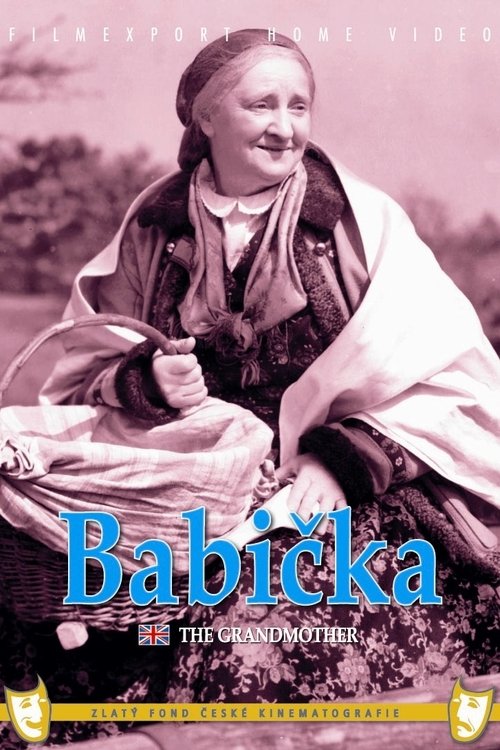
A highly romanticized autobiographical novel by a Czech 19th century writer, Bozena Nemcova. It's a classical, compulsory reading in Czech schools, about a wise, working-class woman, happier in her simplicity and good heart than the nobles whom she serves.
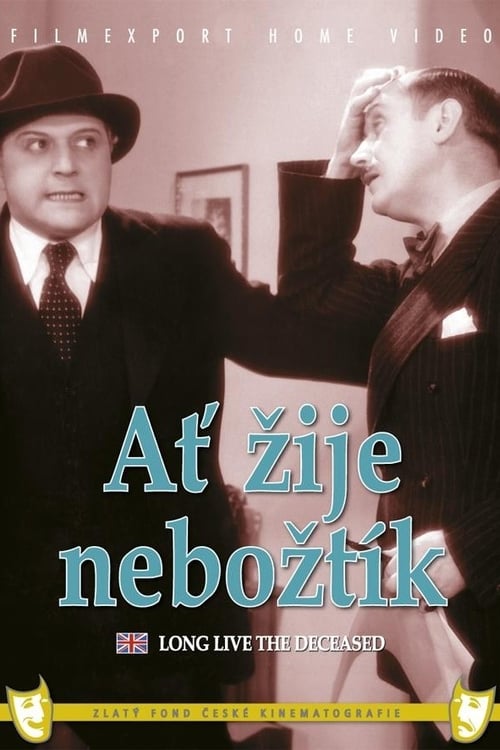
Wealthy and ill Petr Kornel (Karel Hasler) is not pleased with the carousing lifestyle of his nephew. He stops supporting him financially and demands that he change his name. Out of gratitude Kornel bequeaths a substantial sum of money to his nurse Alice (Adina Mandlová) with the condition that she marries. Petr Suk (Hugo Haas), as the nephew is now named, visits the doctor. In the waiting room his X-ray is mistakenly switched with one of another patient's. On the basis of this he presently learns that he is seriously ill and has only one day of life left to him.
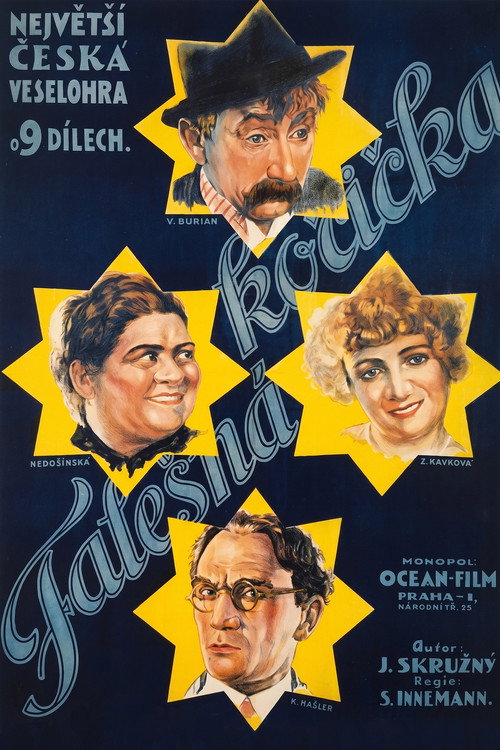
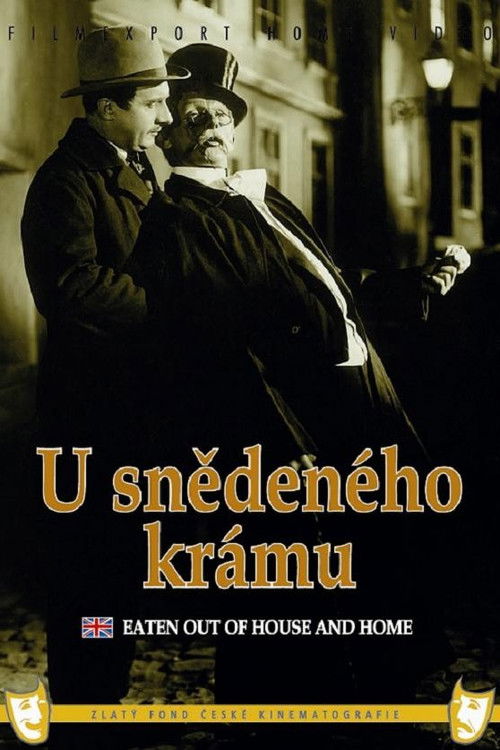
The gullible buyer Žemla Martin (Francis Smolik) finally opened his dream shop. After a while, you get a lot of friends. Especially the former captain Kyllijána (Vlasta Burian), who come to him to drink brandy debt and sit on a bag of peas, where he talks nonsense. Its debt is starting to grow nicely. Later dupe marry an evil Pavlina Šustrová (Ela Poznerová). It can also bring their calculating mother, widow Catherine Šustrová (Antonie Nedošínská). These two together with a bun Kyllijánem use, but outside him are friendly. Later, when Žemla catches his wife cheating when he has become the father of a foreign child, and when he discovers that the shop is broke and completely vyjedený, poisoning. A best friend Žemlův captain Kylliján happily drunk debt for plum deleted.
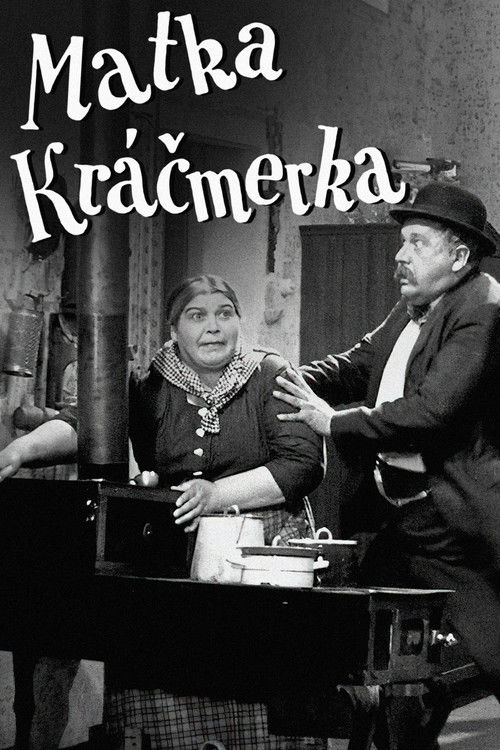
The Kráčmer couple work diligently in the vegetable garden. They are saving for a dowry for their only daughter, Betynce, who is in a serious relationship with the doctor Zdeborský. Inspired by a newspaper report, they decide to buy Kráčmer a lottery ticket. Kráčmerka brings it home crying because she feels like she has thrown away all her possessions. After a sleepless night, she goes to the store to return the ticket. However, it is too late, the draw has already been made...
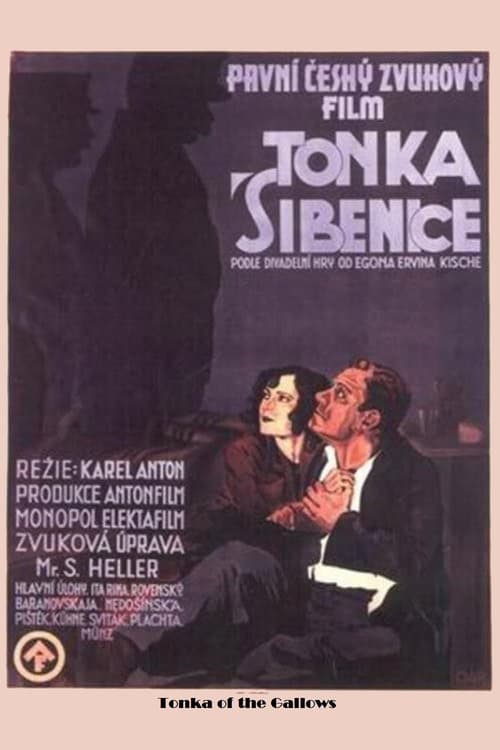
Melodramatic story of an innocent country girl (Ita Rina) who struggles to make a living in the city as a prostitute. As she provides last service to a murderer sentenced to death (Josef Rovenský), society condemns her and leads her to despair. This groundbreaking film directed by Karel Anton was made in 1930 as the first Czech feature movie with post-synchronised soundtrack, recorded in France. International star cast, sensitive adaptation of Egon Erwin Kisch’s short story and innovative combination of silent and sound film features make this movie an artwork of European significance.
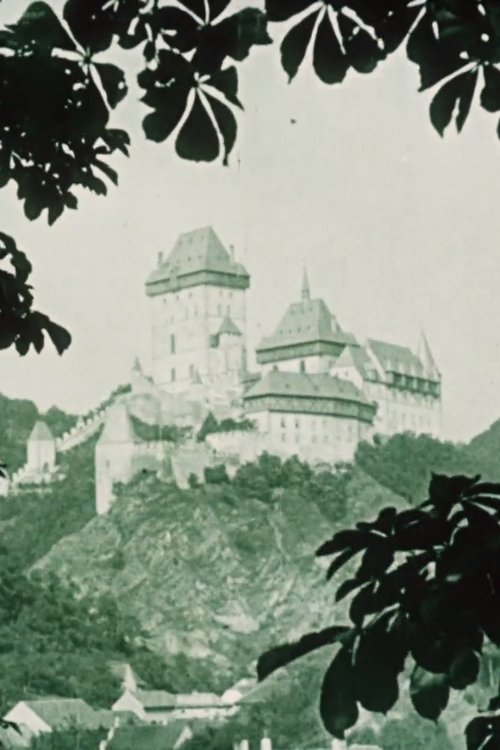
The film begins with shots of the castles of Bezděz, Točník and Karlštejn. In a restaurant at Karlštejn the guests remind Hašler that he is performing at the Varieté club. Hašler misses the train so he starts walking along the main road in the hope of getting a lift. In despair he forces a car to stop and makes the chauffeur to drive backwards to Prague. They stop at the wharf but, because he misses the steamboat , he uses a motorboat. The rest of the journey is spent on a tram. Hašler then quickly changes his clothes in his flat he reaches the Varieté club across the rooftops.