Paolo Brunatto
Directing
Biography
Paolo BRUNATTO (1935, Paris - 2010, Italy) was educated in Painting at the the Accademia di Belle Arti in Florence and studied Architecture in Gevena. Here, he met Ricardo Bofill. After graduating, Brunatto decided to pursue a career in film. In 1960 he made his first documentary, Notes sur l'émigration. Espagne 1960, together with Jacinto Grewe. He was considered to be one of the main exponents of experimental and underground Italian cinema.
Known For

Series of documentaries on italian underground cinema through the portrayal of some of the most representative authors - Alfredo Leonardi, Tonino De Bernardi, Romano Scavolini, Piero Bargellini, Gianfranco Baruchello, Alberto Grifi, Paolo Brunatto, Franco Brocani (and Mario Schifano), Paolo Gioli, Anna Lajolo and Guido Lombardi, Annabella Miscuglio, Massimo Bacigalupo - the cinema of the present confronts this movement so vital and courageous, which still remains an example for the new generations.
Splinters of Utopia

Documentary about the Italian cities Orte and Sabaudia.
Pasolini and the Form of the City
Film portrait on Sergio Citti, through his impassioned monologues counterpointed by the recollections of Bernardo Bertolucci, Antonio Rezza and Gionata Zarantonello.
Confessioni di un borgataro

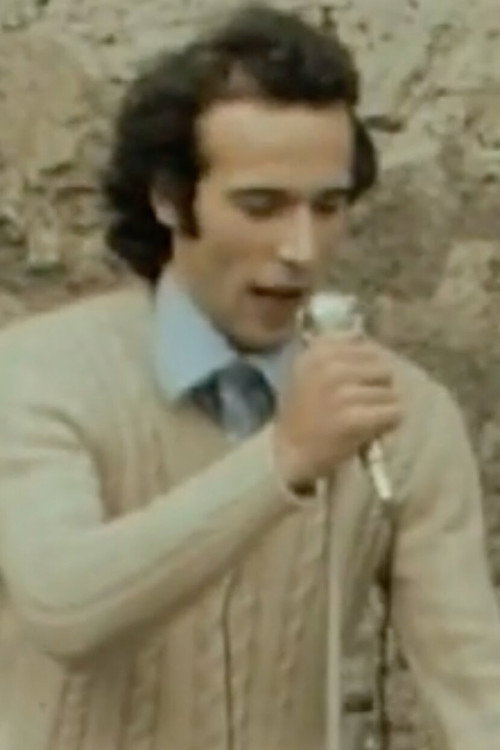
Short film by Paolo Brunatto with Roberto Benigni performing a fake political rally in Capalbio. Shot for the Italian television.
Il comizio

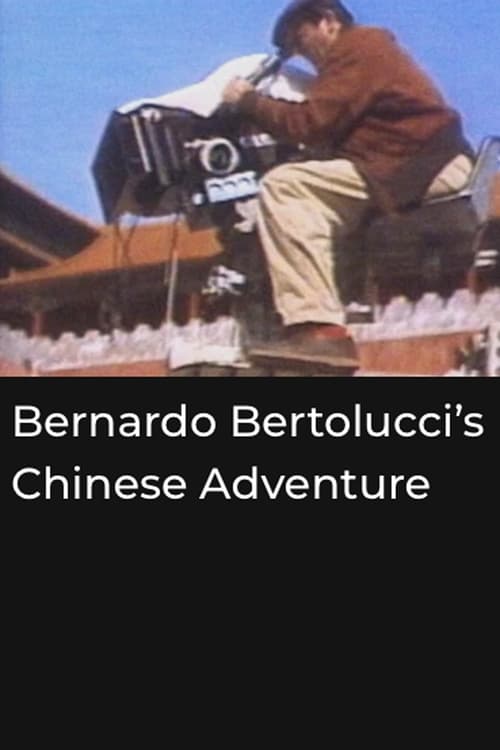
Documentary about the making of Italian film director Bernardo Bertolucci's The Last Emperor.
Bernardo Bertolucci's Chinese Adventure

In the distant future, a spaceship inhabited by a group of young descendants of a "subversive" minority who escaped the destruction of the Earth, recovers a capsule in which the hibernating body of a reactionary warmonger has been preserved, who after having caused war and death, it has abandoned the now unlivable Earth. The visual experimentation aimed at the liberation of the gaze is intertwined with psychedelic visions on the one hand and with the orgone theory of Reichian memory on the other.
Long Live The Orgonauts!

No description available.
Io e... Zanzotto e... il quartiere del Piave
No description available.
Tak!
No description available.
Duepersette - Dove va la poesia?
No description available.
In difesa di: Luigi Malerba e Orvieto

In 1966, Bene presented The Pink and the Black, his successful theatrical adaptation of Matthew Gregory Lewis’ lurid Gothic novel from 1796. Experimental filmmaker Paolo Brunatto filmed some of the play’s rehearsals in a Rome apartment (also frequented also by the Living Theatre). Bene's artistry is encapsulated in one sentence: “One cannot continue to prostitute the idea of theatre, which stands only for a magical, brutal link with reality."
Bis

Documentary focused behind the scenes of the making of the play 'io' by Antonio Rezza and Flavia Mastrella
Gli estremi non si toccano

A man receives a telegram that his father is dying, and travels with his wife to his hometown. They discover that the telegram is untrue, and set out to find who sent the message and why.
The Return
No description available.
Io e... Giacomo Devoto e... la Trinità Fiorentina

From Paolo Brunatto's series "Scheggie Di Utopia".
Ritratto di Gianfranco Baruchello
In this film, as in all my previous ones, there is a direct connection between inner urges and cinematic rendering. I tried to visualize my present aspiration to recover, through the various ways taught by one’s experience, the easiness, directness and ripeness proper to children’s relationships and affective life. This film is maybe a track of this path backwards. – A. L.
If the Unconscious Revolts

From Paolo Brunatto's series "Scheggie Di Utopia".
Ritratto di Piero Bargellini

A 1968 italian film by Paolo Brunatto.
Vieni, dolce morte (dell'ego)

Antonio Rezza and Flavia Mastrella are two artists that use their bodies like objects. Their works are exaltations of the object compared to the subject. The interpreter is more important than the author. The role of artistic expression is to represent what is not there. Cinema is an improper weapon because it is in the wrong hands. The solution would be - according to the two artists - for cinema as well as all art to be managed by those who have imagination and who are not down to earth.
I clandestini del cinema italiano
No description available.