FEEL IT.STREAM
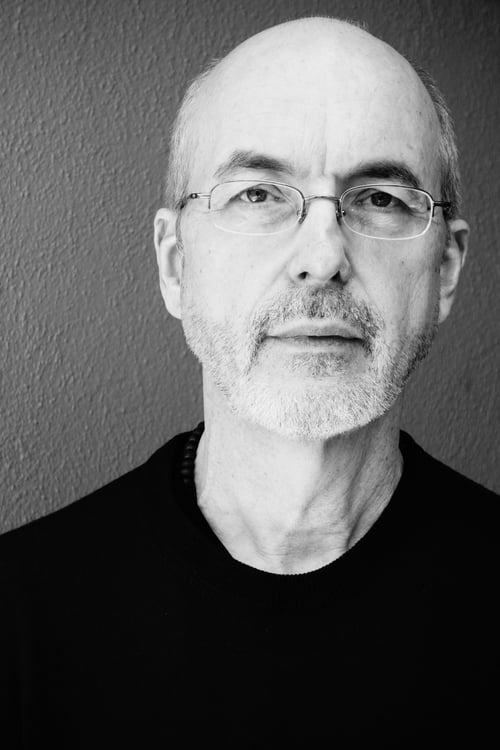
Bill Viola

Bill Viola

Directing

Biography

A pioneer in the medium of video art, Bill Viola's work explores the spiritual and perceptual side of human experience. Since 1970 he has created videotapes, architectural video installations, sound environments, electronic music performances and pieces for television. Works include Hatsu Yume (First Dream), The Passing, and installations Room for St. John of the Cross, The Messenger and The Quintet of the Astonished, recently shown at the National Gallery, London in "Encounters, New Art from Old". A 25-year survey exhibition of his work organized by The Whitney Museum of American Art recently traveled to 6 institutions in the USA and Europe. MacArthur Fellow.

Known For

What Is Cinema?
6.5

Using the words and ideas of great filmmakers, from archival interviews with Alfred Hitchcock and Robert Bresson to new interviews with Mike Leigh, David Lynch, and Jonas Mekas, Oscar-winning filmmaker Chuck Workman shows what these filmmakers and others do that can't be expressed in words - but only in cinema.

What Is Cinema?

2013
Bill Viola: The Road to St. Paul's
5.2

Gerald Fox’s film documents Bill Viola and his wife and close collaborator Kira Perov’s odyssey to create two permanent video installations for London’s St Paul’s Cathedral, Martyrs and Mary, the first art commissions of their kind to be installed in Britain’s most famous religious space.

Bill Viola: The Road to St. Paul's

2017
The Voyage
10.0

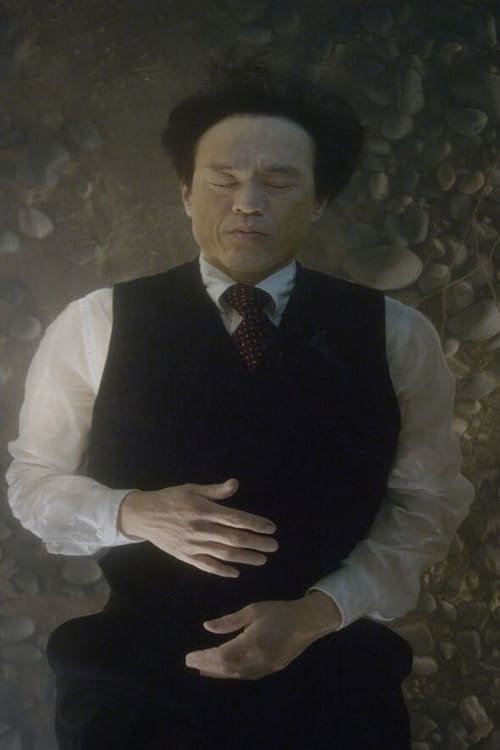
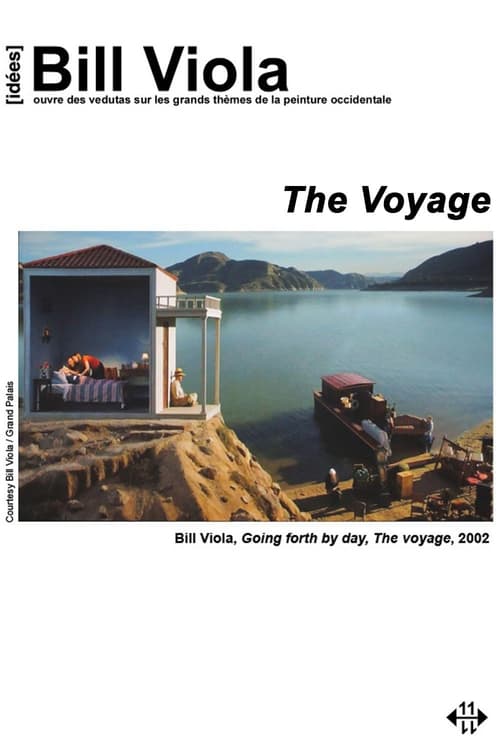
The fourth video in the five-part digital-image cycle project "Going Forth By Day" (2002), "The Voyage" features an elderly man who is dying, surrounded by his family, as a boat below filled with his possessions awaits him.

The Voyage

2002
Wagner: Tristan und Isolde
N/A

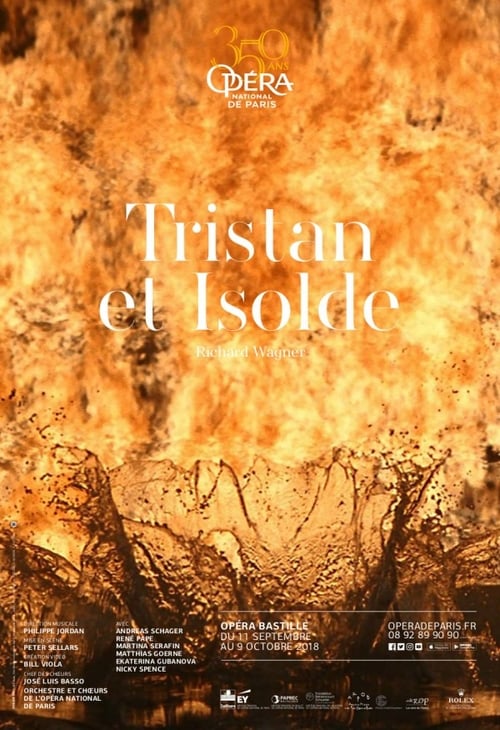
Motivated by the love that bound him to Mathilda Wesendonck, Richard Wagner’s composition of Tristan und Isolde goes far beyond any simple operatic gesture. Peter Sellars’ production pours oil onto this troubled sea of emotions in an almost dematerialised setting bared of all earthly contingencies whilst Bill Viola presents the lovers’ initiatory quest for nirvana in videos detached from the stage, suspended like altarpieces.

Wagner: Tristan und Isolde

2018
Trovoada
N/A

No description available.

Trovoada

1995
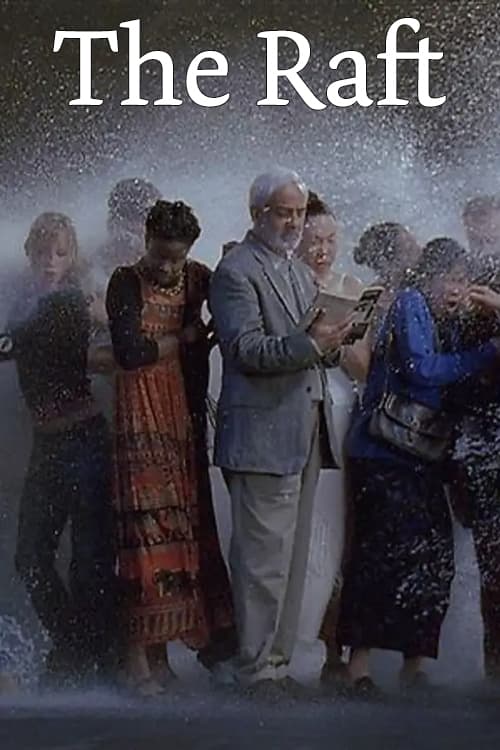
The Raft
N/A

A small crowd of people are gathered in wait when they are suddenly struck by a massive onslaught of water.

The Raft

2004
Going Forth By Day
N/A

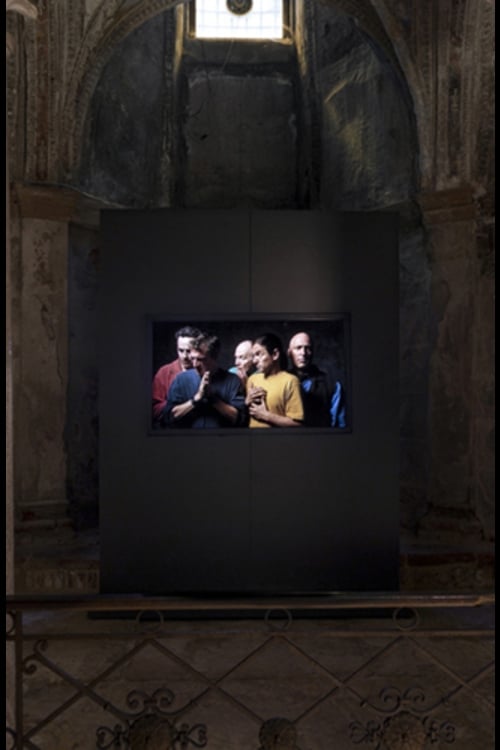
The film is a five-part projection-based installation, which addresses the complexity of human existence through the themes of individuality, society, death and rebirth. Each video is projected directly onto the wall of the exhibition space, just as paint from a fresco adheres to the surface of a plaster wall.

Going Forth By Day

2002
No image
6.9

Return is a methodical construction of the approach of an individual towards an unseen goal, which assumes metaphorical significance. Viola moves toward the camera/viewer, pausing every few steps to ring a bell, at which point he is momentarily thrust back to his starting place, and then advanced again. Finally reaching his destination, he is taken through all of the previous stages in a single instant and returned to the source of his journey.

Return

1975
No image
N/A

A man sinks down rapidly into the watery depths, but his inevitable and extended ascension's entire sequence, which was only a few seconds in real time, is slowed down into seven minutes of extreme duration, as if he is reaching Heaven.

Ascension

2000
Emergence
5.0

No description available.

Emergence

2003
The Dreamers
N/A

Seven vertically mounted screens show seven fully clothed submerged people of different ages, genders and ethnicities floating beneath the surface of a river or lake.

The Dreamers

2013
Déserts
6.0

Déserts was created to accompany a live performance of the work of avant-garde composer Edgard Varèse (1885-1965). The Ensemble Modern, a contemporary music group based in Frankfurt, commissioned Viola to create a visual score for Varèse's Déserts after discovering notes by the composer referring to an unrealized image component of his composition. The resulting film/videotape was produced with the European television stations ZDF/Arte. In October 1994 Viola's Déserts premiered in a live performance in Vienna with conductor Peter Eötvös and the Ensemble Modern.

Déserts

1994
No image
N/A

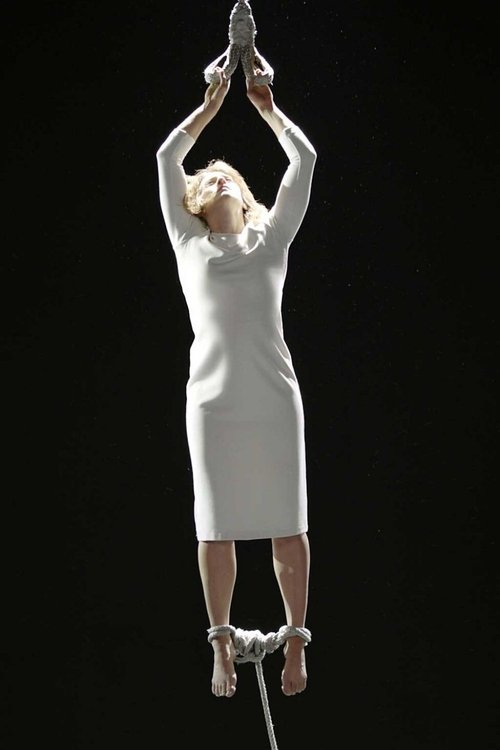
Moving through its five parts, the work describes a cycle of birth through to death, depicting both an eternal, universal Mary, and an earthly Mary representing human life on Earth.

Mary

2016
Information
6.0

Information is an exercise in technological reflexivity, an early investigation of the material presence of the electronic medium. From a technical mistake, in which a videotape recorder tried to record itself, Viola constructed a study of electronic anarchy — a disintegrating and self-interrupting signal that perpetually reiterates itself. He writes: "Information is the manifestation of an aberrant electronic nonsignal passing through the video switcher in a normal color TV studio, and being retrieved at various points along its path. The resulting electronic perturbations affected everything else in the studio. After this error was discovered and traced back, it became possible to sit at the switcher as if it were a musical instrument and learn to 'play' this nonsignal."

Information

1973
Guadalcanal Requiem
7.0

One of Paik’s most overtly political and poignant statements, Guadalcanal Requiem is a performance/documentary collage that confronts history, time, cultural memory and mythology on the site of one of World War II’s most devastating battles.

Guadalcanal Requiem

1977
I Do Not Know What It Is I Am Like
6.7

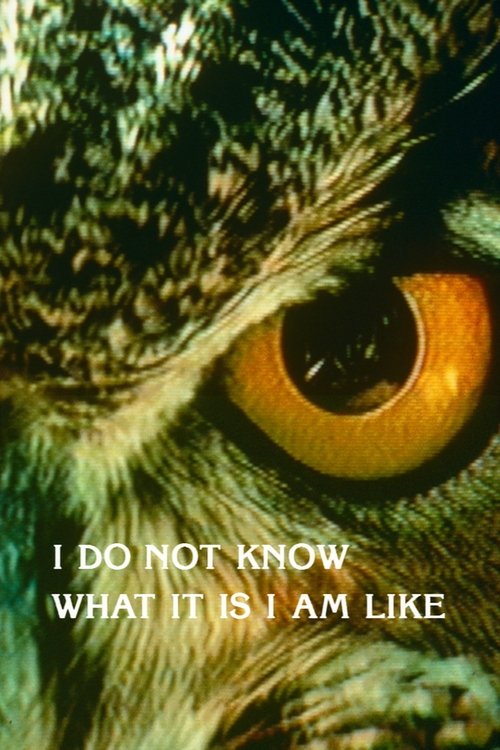
"I Do Not Know What It Is that I Am Like" juxtaposes images of animals, both wild and domestic, and natural environments with human activity as it takes place in an apartment, and during a fire walking ceremony in Fiji. Documentary-style footage is combined with staged events. Despite the piece's lack of a traditional narrative, it bears some relationship to nature works. The segment features material from "Il Corpo Scuro (The dark body)" - animals and natural environments are seen up close and at a distance.

I Do Not Know What It Is I Am Like

1986
Chott el-Djerid (A Portrait in Light and Heat)
6.3

Driven by a quest to capture a landscape reduced to flatness and sky, Viola travels to Chott El-Djerid. The film opens with images of snowy prairies and winter scenes, mirrored by warm, vibrating desert vistas. Through powerful telephoto lenses, shimmering mirages and warped forms emerge under extreme heat and light. These visuals evoke a space where dream and waking reality merge. Viola’s journey transcends documentation, transforming viewing into a reflective exploration of the limits of perception.

Chott el-Djerid (A Portrait in Light and Heat)

1979
The Reflecting Pool
5.3

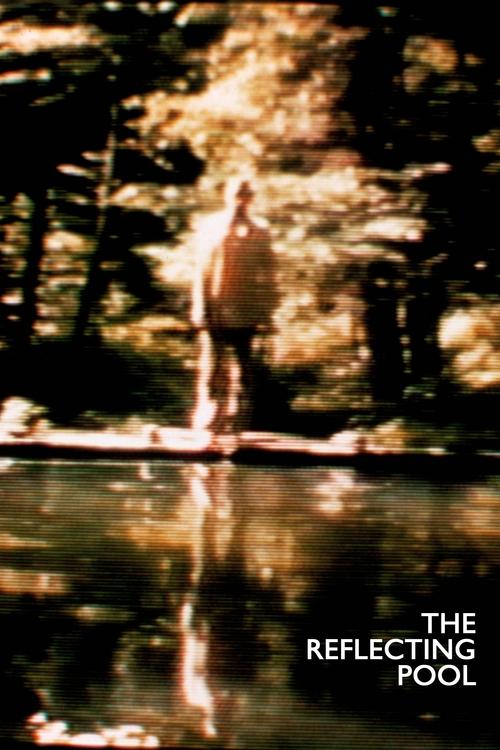
Viola's seminal piece, The Reflecting Pool, was made three decades ago on analogue video tape and yet could easily pass for a contemporary digital piece; in it, Viola emerges as central protagonist from a thick forest into a clearing filled by an artificial pool. As the noise of an aeroplane slowly passes and fades overhead, Viola approaches the edge of the pool, whereby he removes his shoes, squats down yelling and then prepares to make a powerful jump.

The Reflecting Pool

1979
Hatsu Yume (First Dream)
6.4

With a title referring to Japanese folklore, wherein things done on the first day of a new year are significant, the film - an ardent dream entirely shot in Japan - stands as a spiritual allegory equating light and dark with life and death.

Hatsu Yume (First Dream)

1981
The Tristan Project
N/A

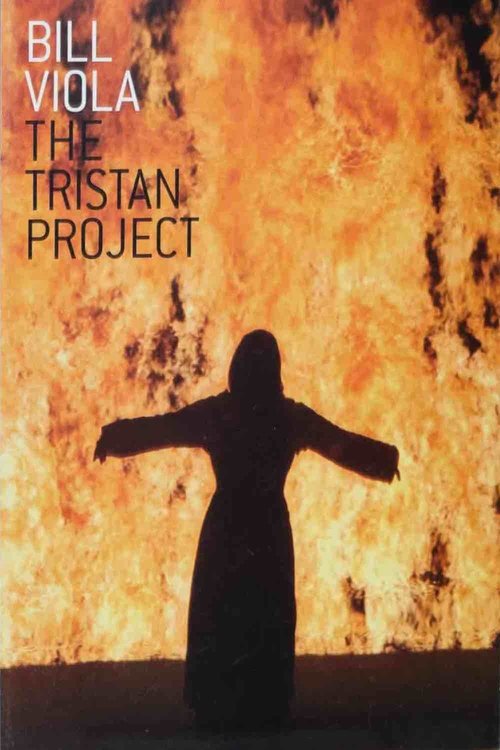
A four-hour plus video production inspired by Richard Wagner's oeuvre "Tristan und Isolde" and projected during the opera premiere in Paris, in partnership with Peter Sellars as artistic collaborator, and conductor Esa-Pekka Salonen.

The Tristan Project

2004