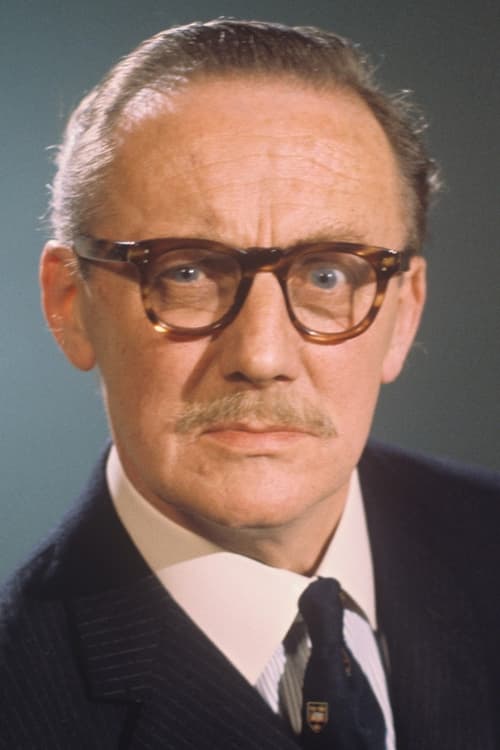
Colin Gordon
Acting
Biography
From Wikipedia, the free encyclopedia. Colin Gordon (27 April 1911 – 4 October 1972) was a British actor born in Ceylon (now Sri Lanka). He was educated at Marlborough College and Christ Church, Oxford. He made his first West End appearance in 1934 as the hind legs of a horse in a production of “Toad of Toad Hall”. From 1936 to 1939 he was a director with the Fred Melville Repertory Company at Brixton. He served in the army during WWII for six years. His performance in 1948 as Rupert Billings in “The Happiest Days of Your Life” won the Clarence Derwent award. Gordon had a long career in British cinema and television from the 1940s to the 1970s, often playing government officials. His films include The Pink Panther and Casino Royale although he is probably best known for his portrayal of Number Two in the ITC classic series The Prisoner. Along with Leo McKern, he was one of only two actors to play Number Two more than once. He first played the character in "The General" and later reprised his role in "A. B. and C.". In fact, the episodes were subsequently broadcast in reverse order: when "The General" was in production, "A. B. and C" had not yet been cast. Gordon was a regular in another ITC production, The Baron playing civil servant Templeton-Green opposite Steve Forrest. He also played the host and occasional narrator of the 1969 London Weekend Television series The Complete and Utter History of Britain, which arose from a pre-Monty Python collaboration between Michael Palin and Terry Jones; and was the Airport Commandant in the 1967 Doctor Who story The Faceless Ones. He was also in Bachelor Father and made a notable guest appearance in The Holiday episode of Steptoe and Son. Description above from the Wikipedia article Colin Gordon, licensed under CC-BY-SA, full list of contributors on Wikipedia.
Known For
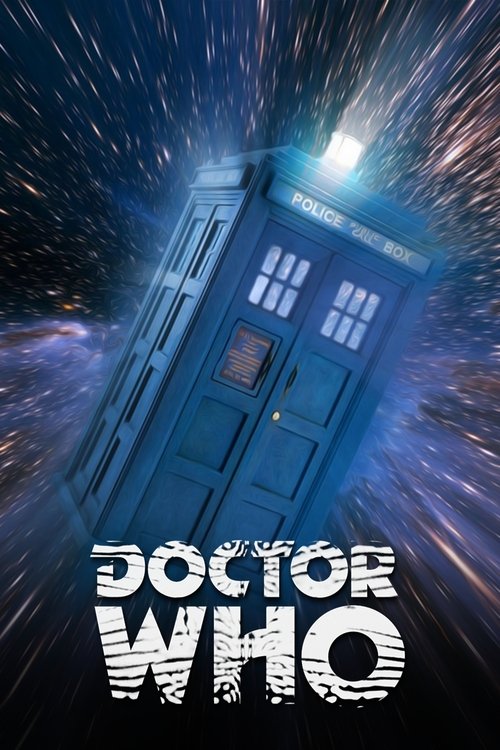
The adventures of The Doctor, a time-traveling humanoid alien known as a Time Lord. He explores the universe in his TARDIS, a sentient time-traveling spaceship. Its exterior appears as a blue British police box, which was a common sight in Britain in 1963 when the series first aired. Along with a succession of companions, The Doctor faces a variety of foes while working to save civilizations, help ordinary people, and right many wrongs.
Doctor Who
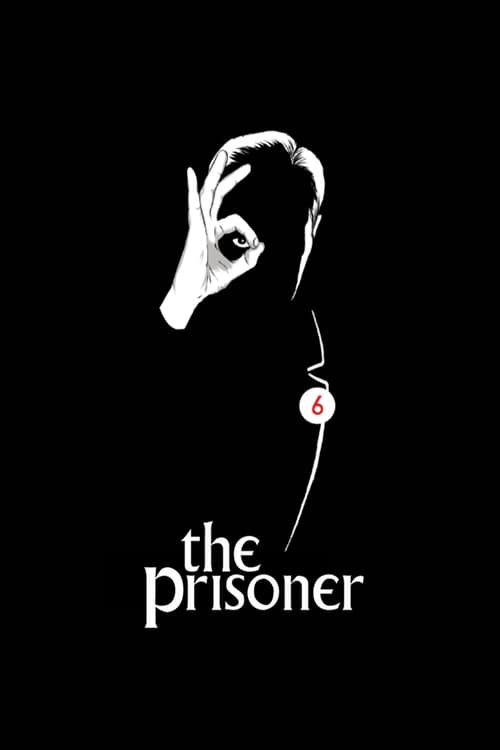
After resigning, a secret agent is abducted and taken to what looks like an idyllic village, but is really a bizarre Kafkaesque prison. His warders demand information. He gives them nothing, but only tries to escape.
The Prisoner
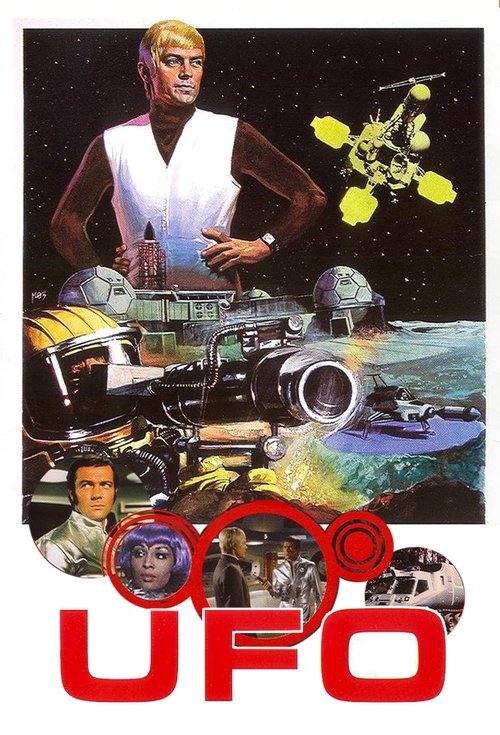
A secret, high-technology international agency called SHADO defends Earth from alien invaders.
UFO
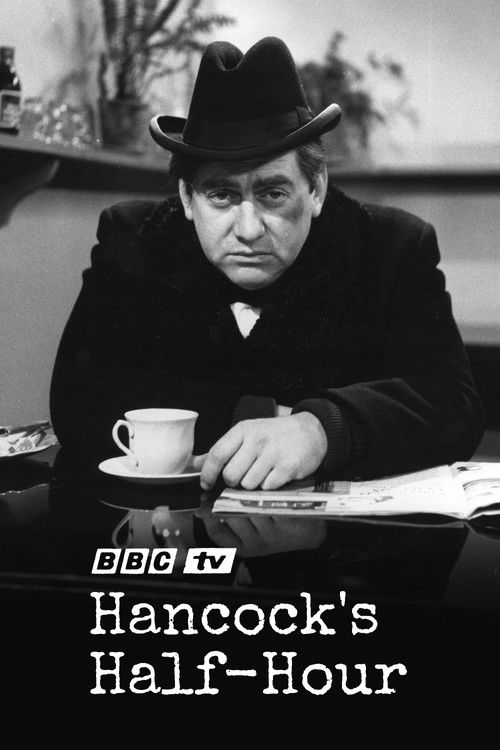
Hancock's Half Hour is a BBC television comedy series of the 1950s and 60s written by Ray Galton and Alan Simpson. The series starred Tony Hancock with Sid James. The final series, renamed simply Hancock, starred Hancock alone. Comedian Tony Hancock starred in the show, playing an exaggerated and much poorer version of his own character and lifestyle, Anthony Aloysius St John Hancock, a down-at-heel comedian living at the dilapidated 23 Railway Cuttings in East Cheam. The series was influential in the development of the situation comedy, with its move away from radio variety towards a focus on character development.
Hancock's Half Hour
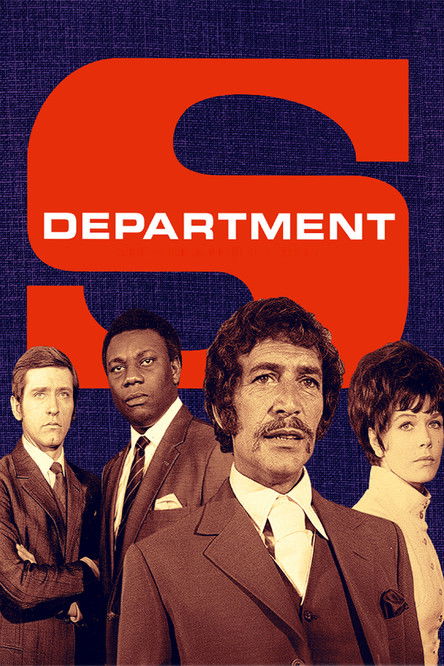
Department S is a United Kingdom spy-fi adventure series produced by ITC Entertainment. The series consists of 28 episodes which originally aired in 1969–1970. It starred Peter Wyngarde as author Jason King, Joel Fabiani as Stewart Sullivan, and Rosemary Nicols as computer expert Annabelle Hurst. The trio were agents for a fictional special department of Interpol. The head of Department S was Sir Curtis Seretse.
Department S
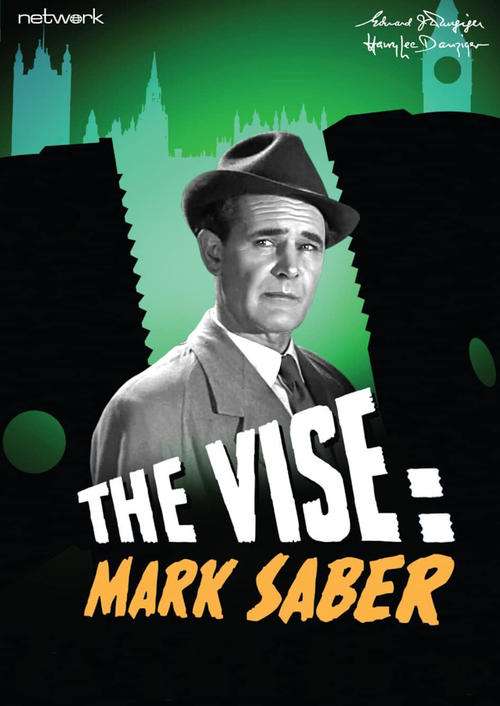
A half-hour 1950s detective television series that took different forms and titles during its run. From October 1951 to June 1954, ABC Mystery Theater stars Tom Conway as the titular character, a plainclothes English detective working with the NYPD Homicide Division. The Vise (seasons 1–4): Donald Gray portrays Saber as a one-armed private detective based in London. Broadcast on ABC from October 1954 to June 1957. Saber of London (seasons 5–7): Gray reprises his role in this final iteration, broadcast on NBC from September 1957 to May 1960.
Mark Saber
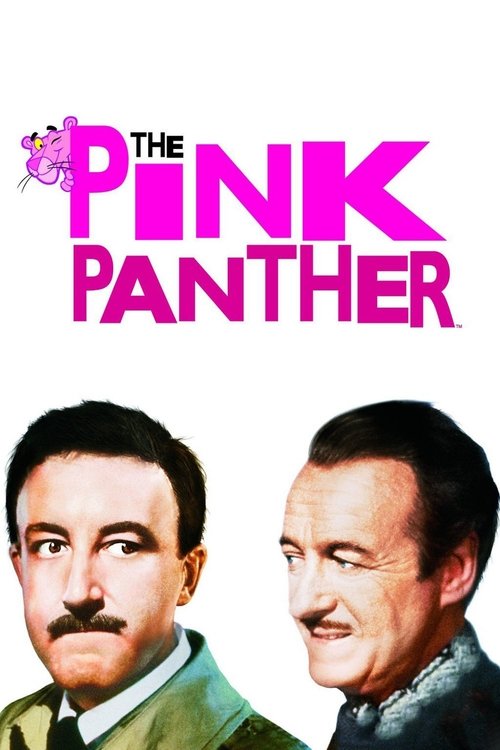
The trademark of The Phantom, a renowned jewel thief, is a glove left at the scene of the crime. Inspector Clouseau, an expert on The Phantom's exploits, feels sure that he knows where The Phantom will strike next and leaves Paris for the Tyrolean Alps, where the famous Lugashi jewel 'The Pink Panther' is going to be. However, he does not know who The Phantom really is, or for that matter who anyone else really is...
The Pink Panther
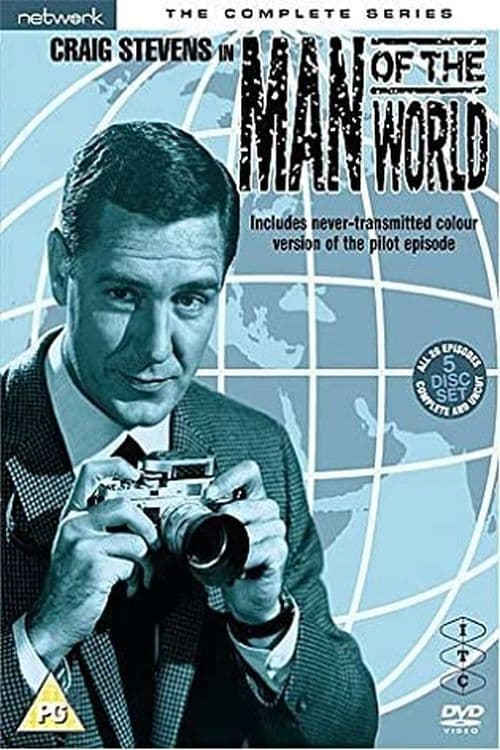
Michael Strait is a world-renowned photographer whose assignments lead him into investigating mysterious goings-on amongst the rich and glamorous and intrigue from far-flung places as Iraq, French Indochina, and Algiers.
Man of the World
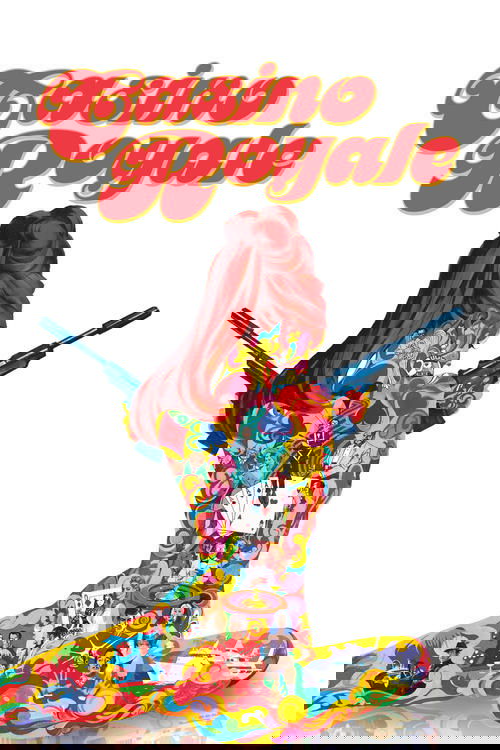
Sir James Bond is called back out of retirement to stop SMERSH. In order to trick SMERSH, James thinks up the ultimate plan - that every agent will be named 'James Bond'. One of the Bonds, whose real name is Evelyn Tremble is sent to take on Le Chiffre in a game of baccarat, but all the Bonds get more than they can handle.
Casino Royale
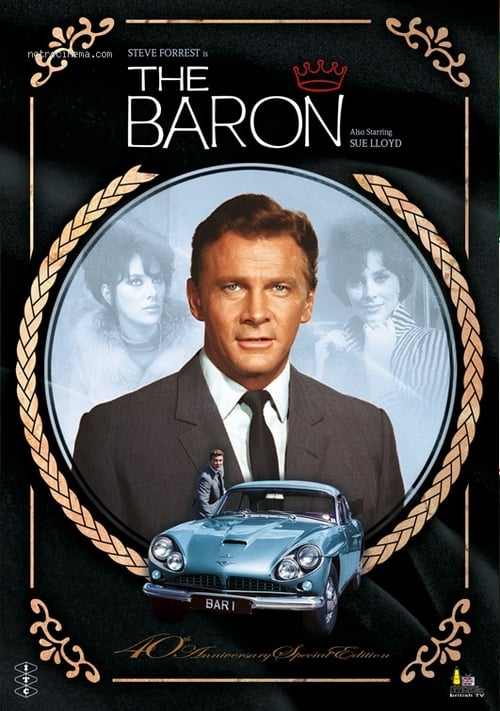
The Baron is a British television series, made in 1965/66 based on the book series by John Creasey, written under the pseudonym Anthony Morton, and produced by ITC Entertainment. It was the first ITC show without marionettes to be produced entirely in colour.
The Baron
Based on P.G. Wodehouse's Jeeves stories, The World of Wooster, broadcast on BBC One from 1965 to 1967, followed the farcical adventures of young upper-class twit Bertie Wooster and his invaluable manservant Jeeves. It starred Ian Carmichael as Wooster and Dennis Price as Jeeves. Wodehouse initially felt that Carmichael would be fine as Wooster, but later believed that Carmichael overacted; however, Wodehouse was satisfied enough with to later ask Carmichael to portray Bertie or Jeeves in a musical comedy. Carmichael declined, feeling too old to play Bertie again and that public perception prevented him from playing Jeeves. Wodehouse was far more positive about Price's Jeeves, stating that Price was the best Jeeves he had ever seen. Like many other series of the time, much of the episodes were wiped, leaving all but two now lost. In 2018, it was included at #51 in a list of the top 100 most wanted missing television programmes by TV archivist organisation Kaleidoscope.
The World of Wooster
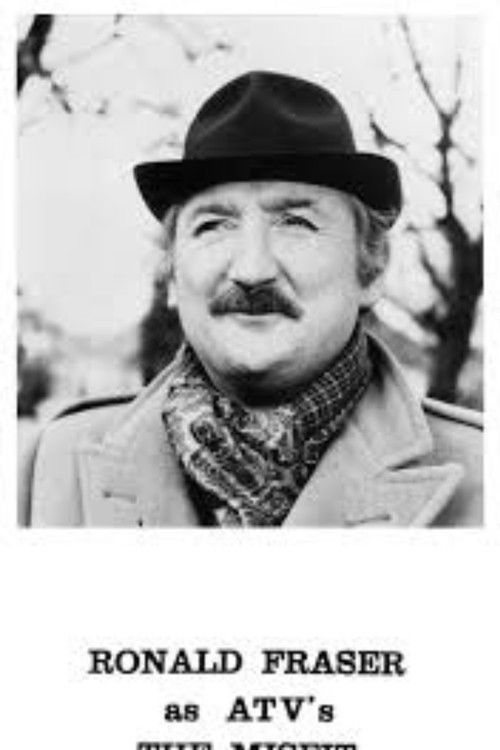
The Misfit is an ATV sitcom created by Roy Clarke, broadcast from 1970 to 1971 on ITV. Basil Allenby-Johnson returns from Colonial Malaya to an England just emerging from the swinging sixties, a home he no longer recognises.
The Misfit
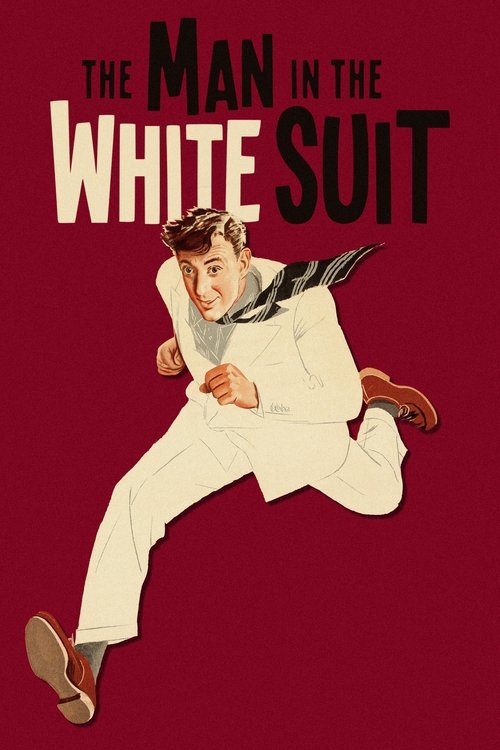
The unassuming, nebbishy inventor Sidney Stratton creates a miraculous fabric that will never be dirty or worn out. Clearly he can make a fortune selling clothes made of the material, but may cause a crisis in the process. After all, once someone buys one of his suits they won't ever have to fix them or buy another one, and the clothing industry will collapse overnight. Nevertheless, Sidney is determined to put his invention on the market, forcing the clothing factory bigwigs to resort to more desperate measures...
The Man in the White Suit
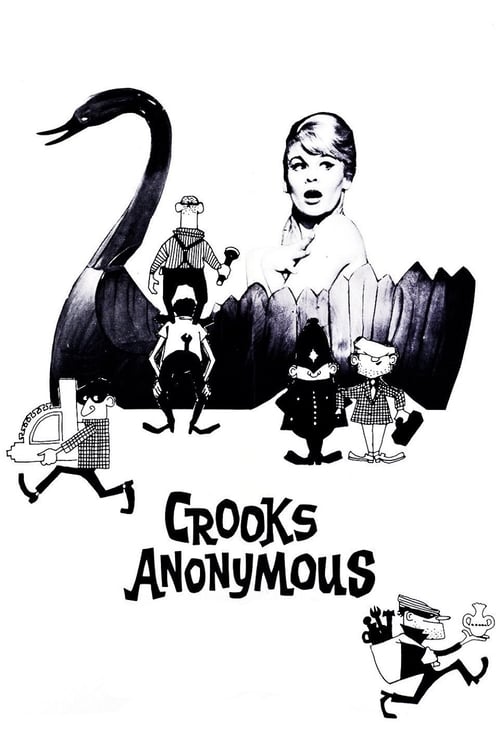
A former burglar trying to go straight joins a rehabilitation scheme using much the same methods as AA. Through the process, he takes work as a department store Santa, where the endless parade of goods and money, not to mention the pretty young shop hands have him like a moth to a flame in no time flat.
Crooks Anonymous
Oh, Brother! is a British situation comedy show on BBC television starring Derek Nimmo, which was broadcast between 1968 and 1970.
Oh, Brother!
Counterstrike is a British science fiction television series produced by the BBC in 1969. The series starred Jon Finch as an alien living on Earth as a human named Simon King. He was assigned to live there to prevent an alien invasion of the planet. The programme lasted for one series of ten episodes, but only nine episodes were actually transmitted. The screening of the sixth episode, "Out of Mind", was canceled on the day it was due to be shown due to a late schedule change, being replaced by a documentary on the Kray brothers who had been refused leave to appeal against their prison sentences on that same day. For reasons that will probably never be known, "Out of Mind" was never rescheduled; it was subsequently wiped from the BBC Archives and has never been screened – thus making it possibly one of the rarest pieces of British science fiction television. The first four episodes – "King's Gambit", "Joker's One", "On Ice" and "Nocturne" – still exist in the BBC Archives as 16mm Black & White Film telerecordings, while the remaining five transmitted instalments – "Monolith", "The Lemming Syndrome", "Backlash", "All That Glisters" and "The Mutant" – are listed as missing by the Lost Shows website.
Counterstrike
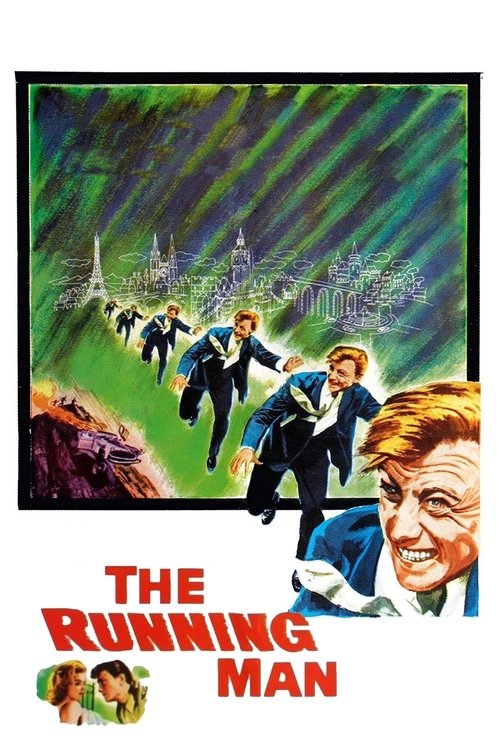
An Englishman with a grudge against an insurance company for a disallowed claim fakes his own death and escapes to Spain, but is soon pursued by an insurance investigator.
The Running Man
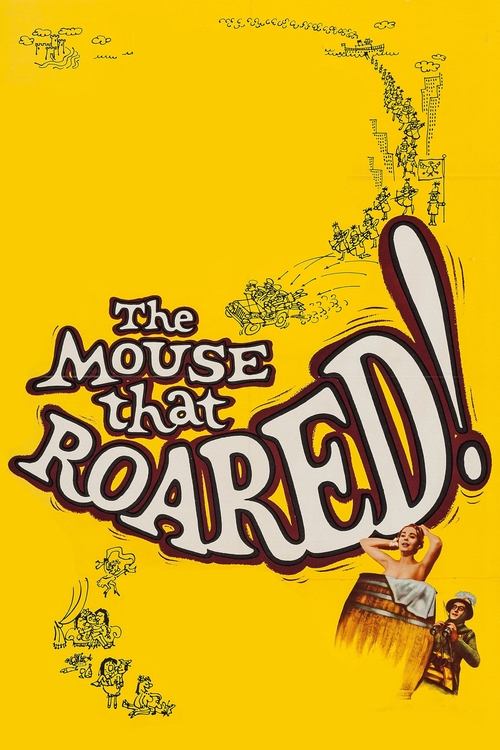
The Duchy of Grand Fenwick decides that the only way to get out of their economic woes is to declare war on the United States, lose and accept foreign aid. They send an invasion force (in chain mail, armed with bows and arrows) to New York and they arrive during a nuclear drill that has cleared the streets.
The Mouse That Roared
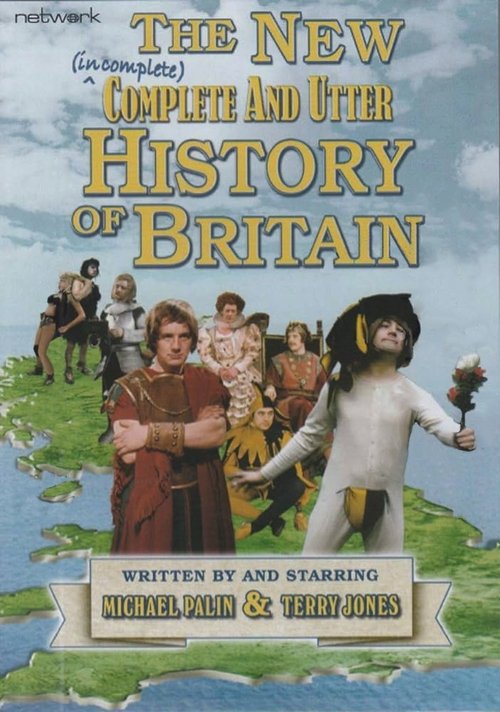
The Complete And Utter History Of Britain was a 1969 television comedy sketch show. It was created and written by Michael Palin and Terry Jones between the two series of Do Not Adjust Your Set. It was produced for and broadcast by London Weekend Television but was not shown in other ITV regions. The idea was to replay history as if television had been around at the time. Sketches included interviews with the vital characters in the dressing-room after the Battle of Hastings, Samuel Pepys presenting a TV chat-show and an estate agent trying to sell Stonehenge to a young couple looking for their first home. Seven programmes were written and produced, but LWT amalgamated the first two episodes into a single "stronger" episode, resulting in a six-part series. For many years the entire series was believed to have been wiped. However, copies of the first two episodes have now been found, as have the complete first two episodes as produced. As of June 2008, none are known to have been repeated on television or released on DVD. Terry Jones has expressed dissatisfaction with the show, complaining after a showing of surviving episodes that the pacing was off and the soundtrack all wrong.
The Complete and Utter History of Britain
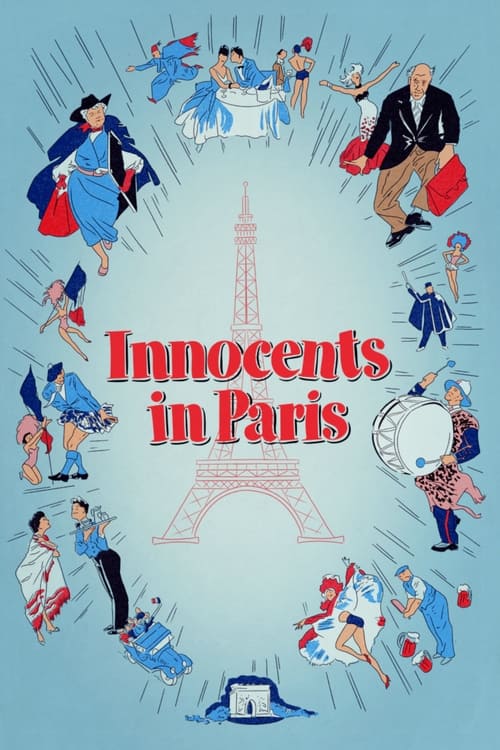
Romantic comedy about a group of Britons flying to Paris for the weekend.