Acting
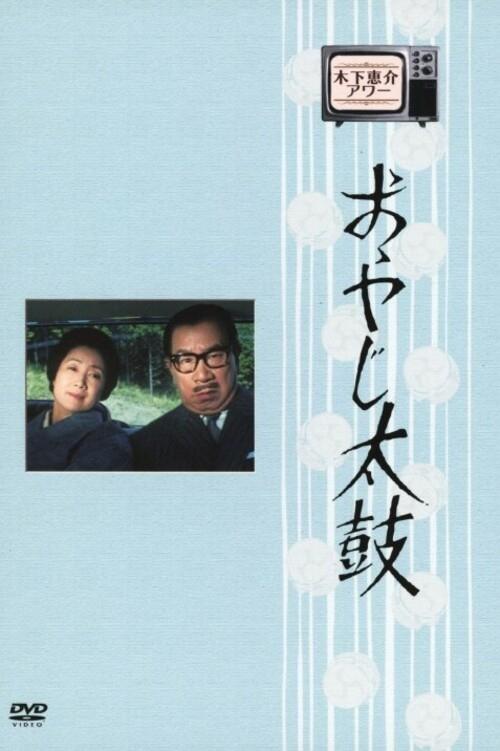
The Tsuru family is a family of nine, headed by Kamejiro. Kamejiro is the president of a construction company that has made a fortune in its first generation, but he is a one-man family. His wife, Aiko, is a typical good wife and wise mother type. Kamejiro gets angry and thunders down every week, and the children are afraid of him, calling him "Oyaji Daiko", but he also takes advantage of this.
With her family suffering from extreme poverty, Yuko, as the eldest daughter, is sold to a successful brothel in Kyoto. There she is assigned to serve Takamatsu, one of the brothel’s top customers. But while Takamatsu falls madly in love with Yuko, she finds herself attracted to a young priest named Kunugida. Torn by jealousy, Takamatsu hatches an evil plan to tear them apart.
A young journalist interviews an elderly woman about being forced into prostitution in Borneo at a brothel called Sandakan No. 8.
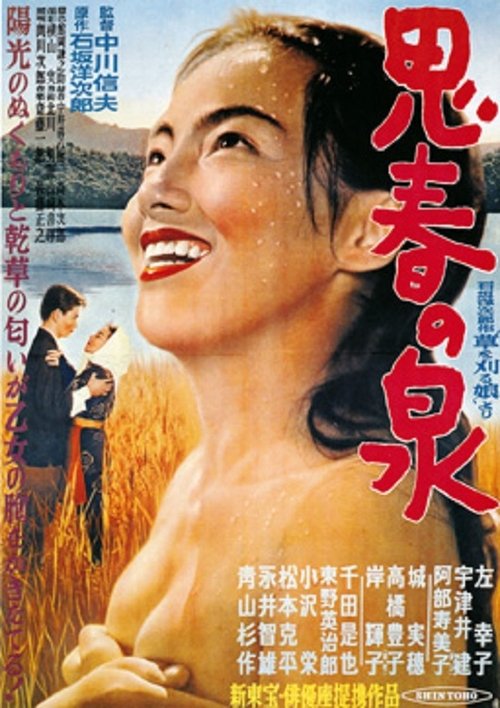
The long-awaited haymaking season has arrived on the island of Honshu. Work is in full swing in the fields, with young and old alike toiling away. For the young woman Moyoko and the young man Tokizo, it is more fun than work. Both are young, cheerful, excited by the shared anticipation of the harvest festival, and not yet aware that they are beginning to fall in love with each other. That is why the first timid hint of confession causes such turmoil in their souls and almost leads to a serious quarrel. Their quarrelsome aunts did the lovers a disservice...
A man is wrongfully accused of murder.
Shimada is a student of U College. When the college's baseball team wins the day, he and his friend Ito drug two girls they met at the game.
A young woman marries someone else, but cannot forget her first lover.
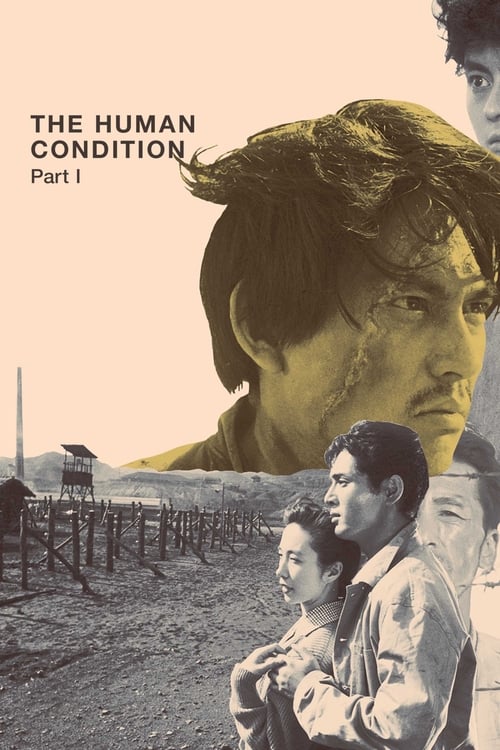
After handing in a report on the treatment of Chinese colonial labor, Kaji is offered the post of labour chief at a large mining operation in Manchuria, which also grants him exemption from military service. He accepts and moves with his newlywed wife Michiko, but when he tries to put his ideas of more humane treatment into practice, he finds himself at odds with scheming officials, cruel foremen, and the military police.
It's a story of the life of a man who advocated the necessity of sex education to children, which was unusual at the time, solely opposed to the amendment of the Peace Preservation Law, and was assassinated by a rightist prior to his opposition speech.
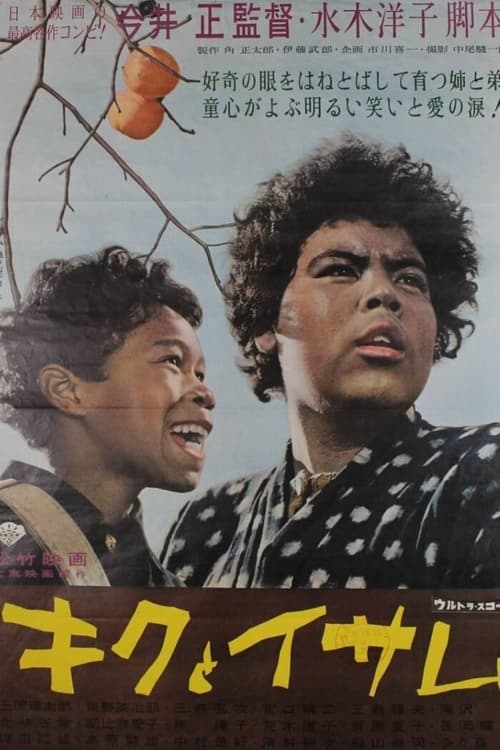
Kiku and her brother Isamu are social outcasts, children of a prostitute mother and black GI father, in postwar Japan.
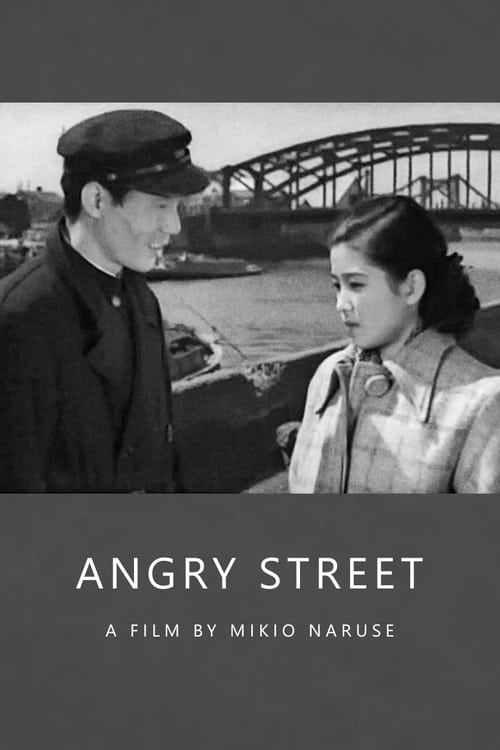
After their father dies, his children try to get by on a house boat.
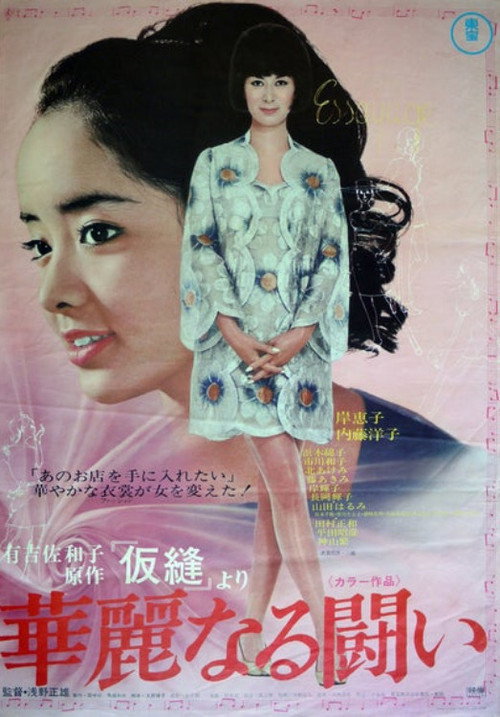
Drama about a young dress designer.
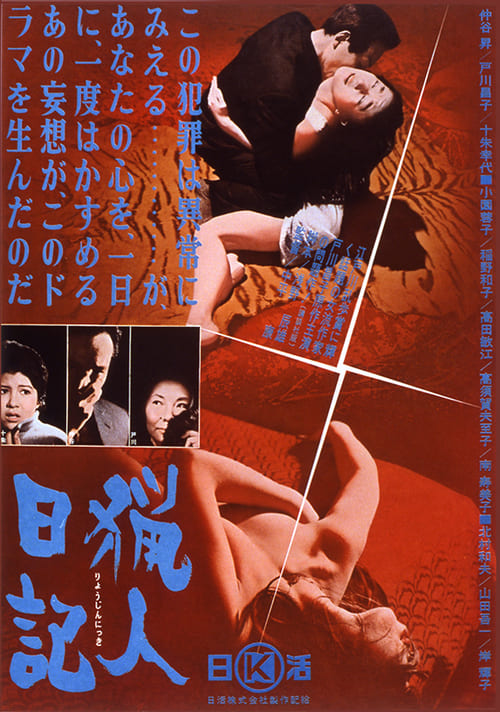
Leaving his wife in Osaka, Honda leads a double life in Tokyo – after spending the day as an elite businessman, he flirts around in the evenings. He even rents a secret apartment where he keeps record of his girl hunts in his diary, the ‘Hunter’s Diary’. One day, he finds an article in the newspaper – a murder of a young woman in his diary. A few days later, another woman from his diary is murdered. He soon finds himself in a labyrinth of fear, as women named in his diary are killed one after another...
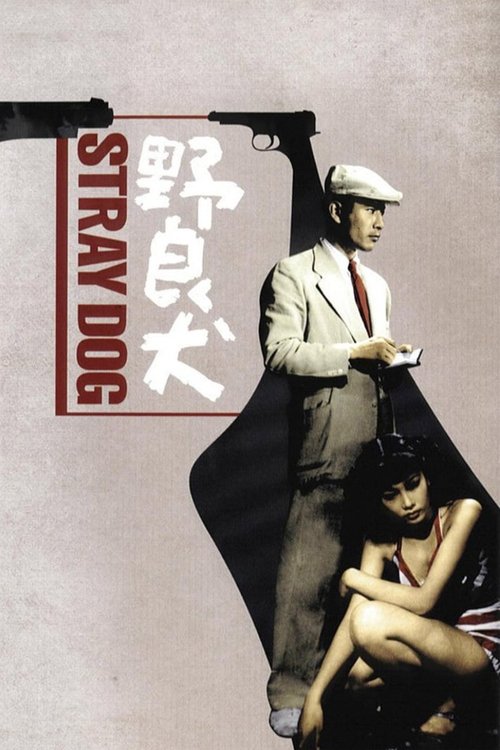
A bad day gets worse for young detective Murakami when a pickpocket steals his gun on a hot, crowded bus. Desperate to right the wrong, he goes undercover, scavenging Tokyo’s sweltering streets for the stray dog whose desperation has led him to a life of crime. With each step, cop and criminal’s lives become more intertwined and the investigation becomes an examination of Murakami’s own dark side.
One evening, at the Marine Tower observatory, cosmetics salesman Ichiro Iki is drawn into conversation with an unfamiliar young lady Akiko. She invites Ichiro back to a hotel where they make love but part without even exchanging names. A week later, they have a second chance encounter at the observatory. This time, Ichiro is the one who pursues her. Back at the hotel, Akiko begs Ichiro to give her sister – Kyoko, a bar hostess – absolute hell. Akiko resents her sister for lecturing on chastity, while wantonly indulging in promiscuous activity. Ichiro takes an interest in Kyoko and sets out towards her bar…
University students Sudo and Mori make money by picking up rich girls in dance clubs and conning them into giving them cash. Mori is the brains of the operation, and Sudo is the suave dancer who picks up the girls. Sudo becomes gradually involved with three different girls and is drawn into the gangster milieu, which he seems unable to resist even though he is responsible for his mother, grandmother, and sister Masako. In this world of bad boys and girls, Masako is the pillar of strength and moral virtue who finally enables Mori to straighten out.
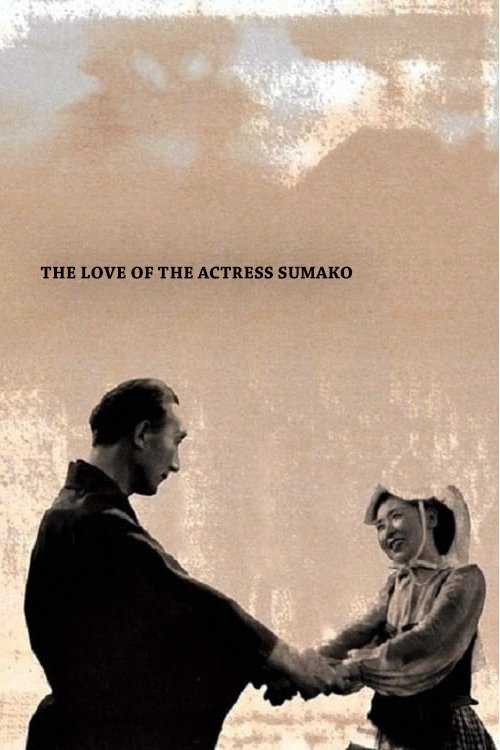
Stage director Shimamura, who is bringing western theatre to Japan, falls in love with outspoken actress Sumako Matsui, and leaves his family to be with her, while trying to keep his Art Theatre solvent.
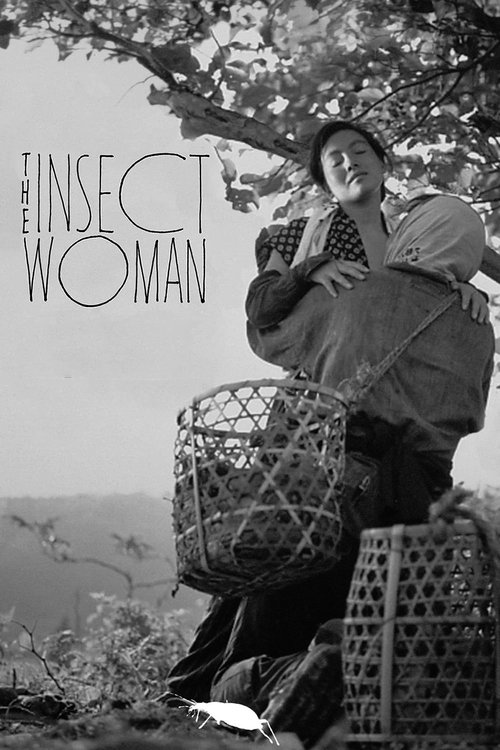
A woman, Tome, is born to a lower class family in Japan in 1918. The title refers to an insect, repeating its mistakes, as in an infinite circle. Imamura, with this metaphor, introduces the life of Tome, who keeps trying to change her poor life.
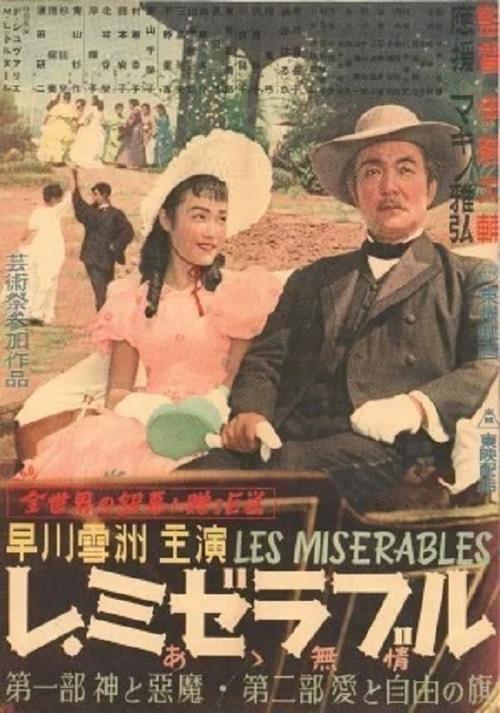
No description available.
This movie depicts poor yet kind and modest people, focusing on sibling love.