Acting
Der Staatsanwalt hat das Wort was an East German television series.
No description available.
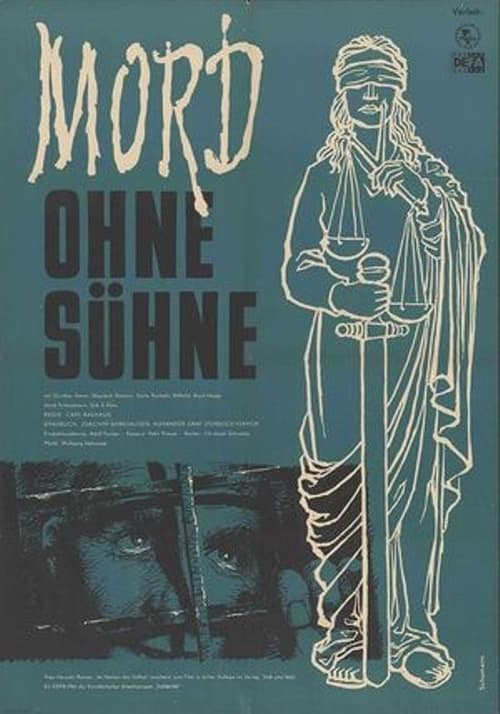
After Elmers, the head of the publishing house, is reported missing, his son-in-law Jürgen Brandt is targeted by the Hamburg criminal police. Inspector Graumann and his assistant Weber presume murder. The suspicion against editor-in-chief Brandt is confirmed by the fact that he is incriminated by the testimony of several witnesses. At a press conference, Brandt claims that the Elmers murder case was staged only to exonerate the innocently convicted family man, Parsetti. But to Brandt's horror, Elmer's body is actually found.
East German adaptation of Grimm‘s fairy tale "Rumpelstiltskin". A boastful miller pretends that his daughter Marie can spin straw into gold, and so she is locked into a room full of straw and ordered to spin it into gold by the next morning. A little man appears and offers his help in exchange for Marie's necklace. The greedy treasurer makes Marie spin twice more until the only thing she has left to give the little man is the promise of her first-born child…
Magdalena and Michael have loved each other since they were children. But when the Nazis come to power, Michael rebels against the regime and is sentenced to fifteen years in a concentration camp. Magdalena, meanwhile, goes underground with the help of a friend and later immigrates to the Soviet Union. Michael, who has joined the Red Army, discovers on the way to Moscow that Magdalena is staying there. But when his plane lands, she is already on her way back to Germany. Michael hopes that one day, he and Magdalena will be reunited.
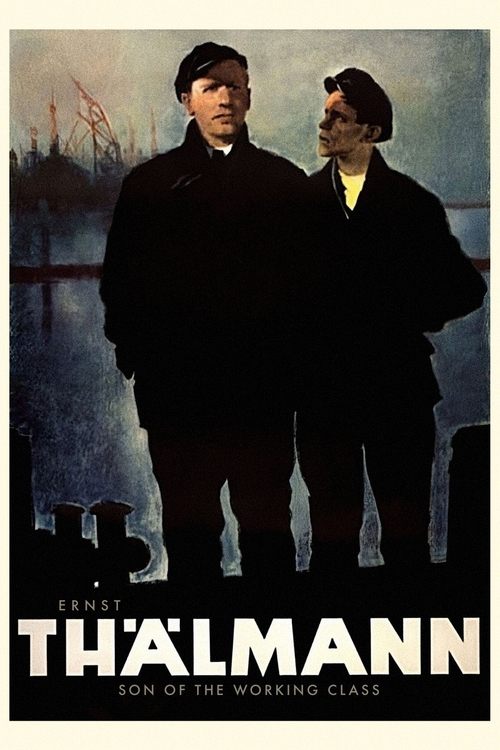
This film is the first of a two-part historical and biographical portrait of the communist politician and anti-fascist Ernst Thälmann. In early November 1918, Ernst Thälmann is an unwilling soldier serving on the western front. As the revolutionary movement at home is threatened by the betrayal of the Social Democrats and fissures in the working class, Thälmann calls on his fellow soldiers to put down their weapons and unite with the workers in the communist struggle at home. Thälmann’s qualms about which side he is fighting on continue, but when the local police attempt to prevent a shipment of provisions and supplies from reaching the people in Petrograd, he intervenes and the ship is unloaded. With this moment of clarity, Thälmann continues to follow his political convictions and joins the workers at the Hamburg uprising in October 1923.
Frieda and August Walkowiak celebrate their 30th wedding anniversary. However, the marriage has been in crisis for some time. August wants to spend his old age in peace, while Frieda has no intention of giving up her position as LPG chairman. The problems in the countryside are huge, collectivization is not progressing fast enough, even comrade Heinrich Rantsch is clinging to his individual farm. Frieda fights for progress, even in her private life, because not only her burden but also her higher position is a thorn in her husband's side. During the wedding anniversary celebrations, Frieda is called to the LPG. This is the cause of the family quarrel that has been in the air for a long time. August demands her resignation. In vain - and so he moves in with Rantsch. Their daughter Helga also leaves the house because of the tensions. Frieda collapses. When she is in hospital, August comes to his senses.
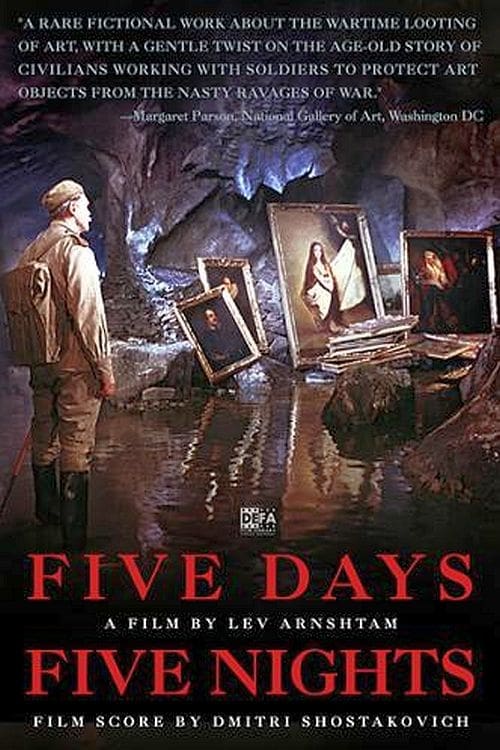
While Dresden is in ruins in the immediate aftermath of the Second World War, over two thousand paintings by artists including Rembrandt, Raphael, Rubens, Giorgione, and Vermeer have disappeared from the city’s Old Masters Picture Gallery. Red Army captain Leonov and his soldiers are ordered to recover the lost paintings.
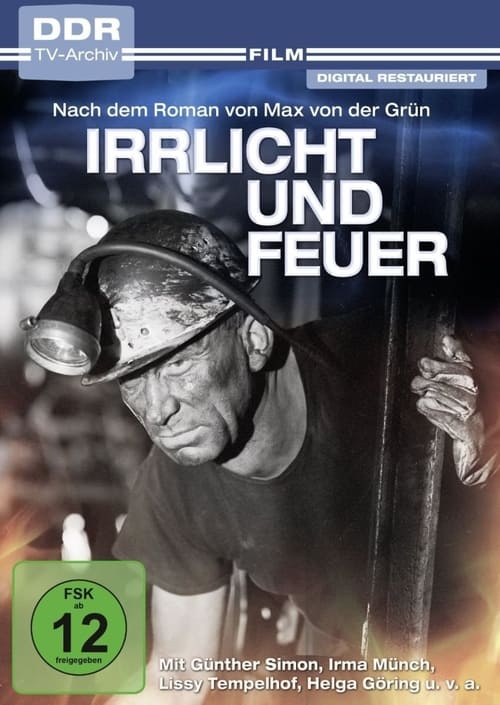
Jürgen Fohrmann works as a hauer underground. In the course of the coal crisis, his mine closes - he loses the work. In this mood, his wife's prosperity thinking gets on his nerves - his marriage threatens to break. The dismissed coal buddy applys, first becomes an auxiliary worker, but then receives a job in an automated operation of the electrical industry and believes to have socially risen through this "clean work". Fohrmann quickly realizes that wearing a "white coat" is only seemingly better than the arduous work in the pit and understands that he can no longer stay out of the work struggles of the buddies.
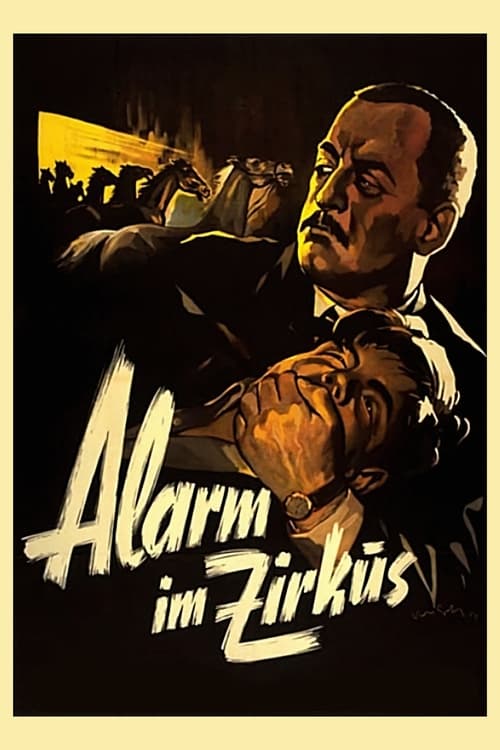
Two boys from West Berlin, Klaus and Max, live in poverty. They dream of a career in boxing and save every penny in order to buy boxing gloves for training. Nevertheless, they cannot seem to save enough and so they let themselves be hired by the bartender Klott for a twisted scheme. However, Klaus overhears one of Klott's conversations and learns that Klott intends for the boys to steal horses from the East Berlin Barlay Circus, where Klaus recently made some good friends. Indignant, he sets out to stop the robbery—and an adventurous action story results.
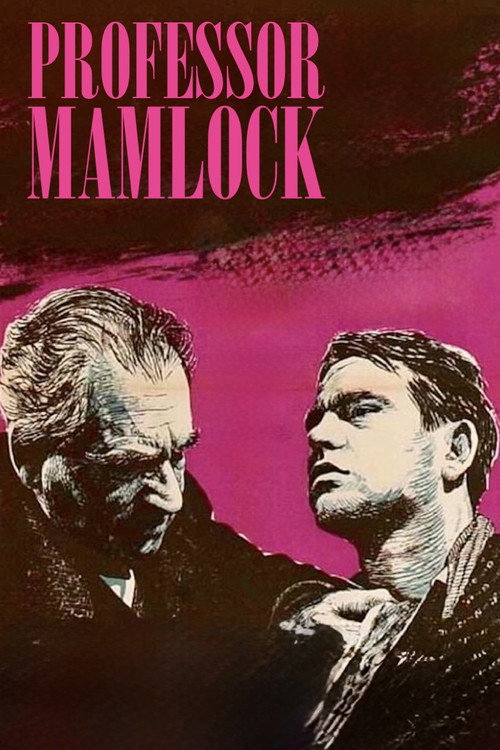
A Jewish chief of surgery in 1933 Germany remains blind to the rising Nazi threat, dismissing political dissent from his son and a patient, until his family faces increasing anti-Semitic persecution.
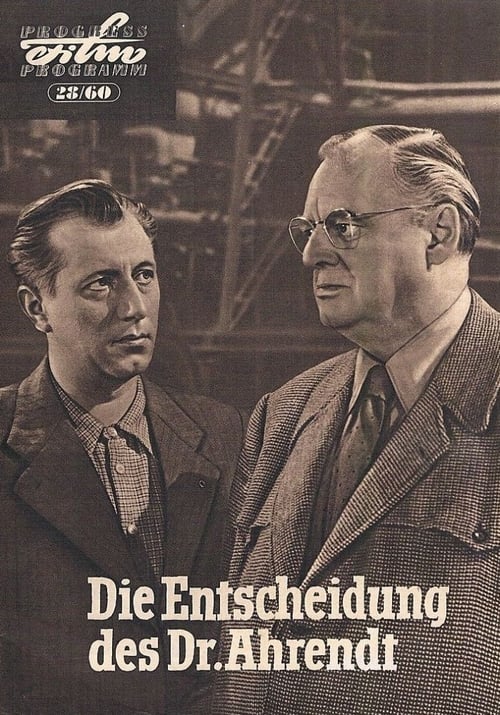
Was it an act of sabotage or willful negligence? The non-party engineer Heinz Solter is suddenly arrested and accused of approving a defective pipeline that caused a half million loss to his company. At first, the case seems clear-cut for the state prosecutor, but when he probes deeper, he discovers that Solter had acted against his better judgment due to the pressure from his career-driven and authoritarian boss.
Railway employee Fritz Marr is not regarded well by his superiors. It is the year 1920, and trains regularly pass the railway hub of Erfurt to the East to secretly transport weapons for the fight against the young Soviet Union. Marr knows about this and wants to mobilise other workers to stop these illegal deliveries. To muzzle him, Marr is relocated to a remote rail work construction site.
At the VII Party Congress of the SED, a delegate tells a reporter his life story: 18-year-old returning soldier Georg Lendau ends up in a small village in 1945. He is starving and sick. Mayor Kallam helps. Later, they meet again; Kallam is now the director of a heavy engineering company. He gives Georg, who is a lathe operator, work. But Kallam has more plans for him and wants to send him to university. Georg refuses. An extra shift, which he only did so that he could buy his future wife wedding shoes, brings him into conflict with backward colleagues - and the realization that you first have to work better if you want to live better. He followed this insight with action, becoming a master craftsman, comrade and student.
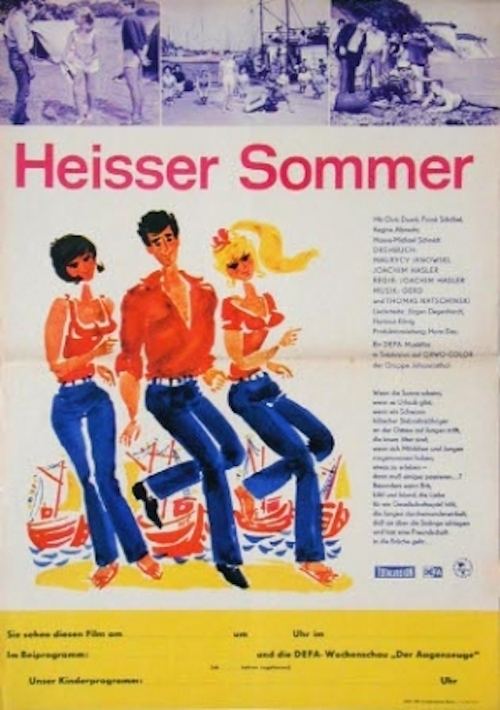
In this East German teen musical, a group of girls are planning to take their summer vacation together on the Baltic coast. When a loud and obnoxious group of boys intrudes on their holiday, the girls are horrified to learn that the boys have the same vacations plans as them. The two groups quarrel with each other and compete over a number of things, but gradually an attraction starts to form.
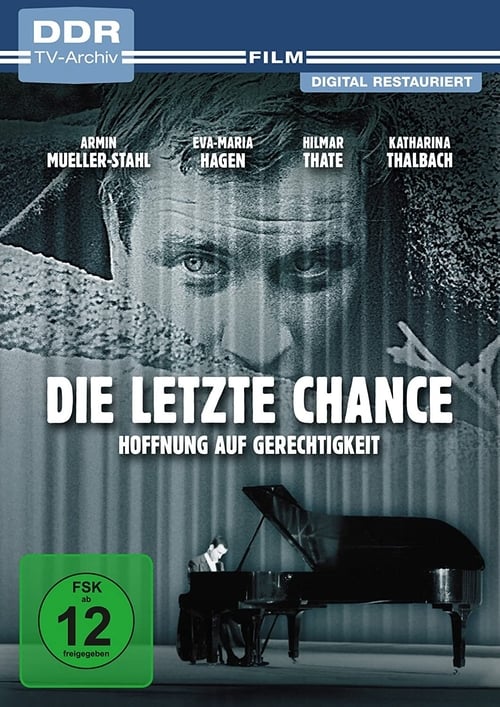
It is a fateful moment: during one of his concerts, Jewish pianist Klaus Seiser discovers Gestapo officer Dr. Becker in the audience. He had imprisoned and harassed the young Seiser in 1943 because of a leaflet. Although the musician had managed to escape from prison at the time, he was caught at the Swiss border and Becker had him sent to Dachau concentration camp. Now, years after the end of the Nazi regime, Seiser denounces the Gestapo man and hopes for justice.
This film continues the story of radio operator Ludwig Bartuschek from “The Sailor’s Song”. Near the end of the Weimar Republic, Bartuschek (Erwin Geschonneck) is working as a mechanic in the Sperber airplane plant. Director Dehringer offers him the opportunity to train as an airplane constructor if he is willing to give up his communist beliefs under oath. Bartuschek will not allow himself to be bought and instead joins the underground resistance movement.
Based on an authentic case from the 1920s. The head country constable Heinz Lippert arrests the Polish farm worker Jakubowski on suspicion of murdering a child - his adopted son. Although he has insufficient evidence, public prosecutor Becker takes the case to court. Jakubowski is sentenced to death, the "Polish murderer" fits in with the propaganda of the time. Lippert, encouraged by the communist editor Hartmann, tries to prevent the sentence from being carried out and even investigates the real perpetrator. In vain, the death sentence was carried out prematurely. After the Nazis seized power, the public prosecutor, now an SS leader, had the men who had uncovered the true facts arrested. Lippert joins the underground resistance.
Film by Frank Vogel.
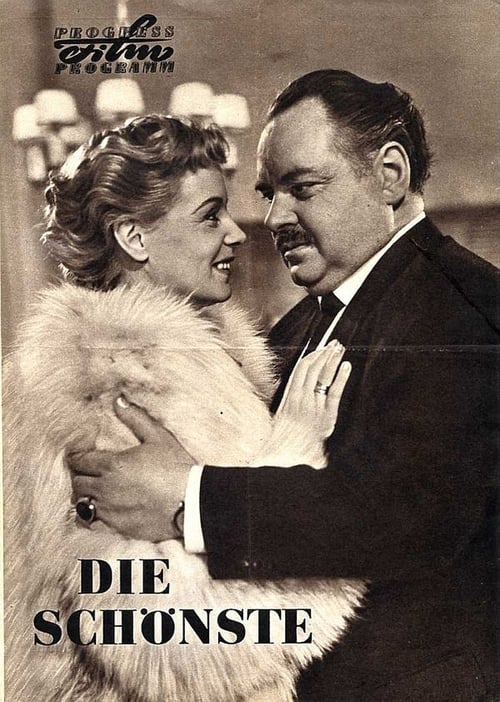
13-year old Thomas Berndorf, the son of the rich business man Alexander Berndorf, becomes friends with Hannes Wille, whose father works as foreman. They get to know each because Hannes sometimes is allowed to polish Berndorf′s Mercedes 300. They make a bet whose mother is the most beautiful. Hannes assumes that Mrs. Berndorf is only admired for her expensive jewellery. Thus, he suggests that Thomas should steal a collier from his mother. Out of solidarity, he also robs a golden brooch from his mother. At home at the Berndorfs, a severe crisis threatens Thomas′s parents′ "marriage of convenience", and financial hardships are following on the theft.