Annelie Thorndike
Directing
Biography
Annelie Thorndike was born on April 17, 1925 in Klützow, Germany. She was a director and writer, known for Unternehmen Teutonenschwert (1958), Die alte neue Welt (1977) and Die Sieben vom Rhein (1954). She was married to Andrew Thorndike. She died on December 26, 2012 in Wolgast, Mecklenburg-Vorpommern, Germany.
Known For

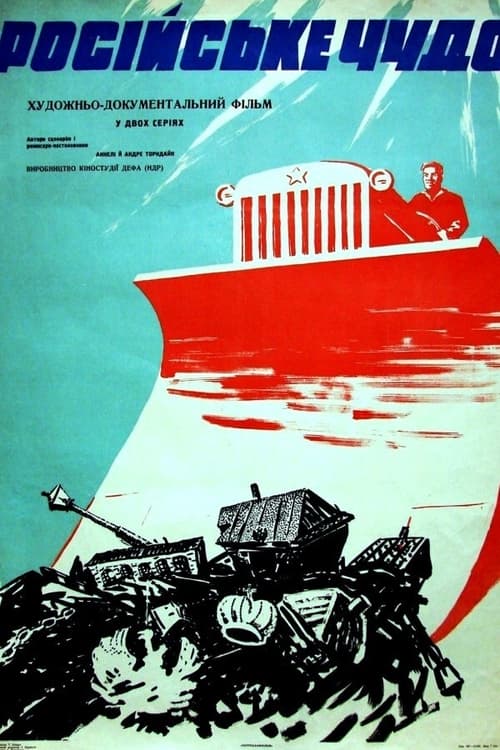
A two-part East German documentary tracing Russia’s transformation from the Tsarist Empire to the Soviet Union, from the 1917 October Revolution to the achievements of the space program. Directed by Andrew Thorndike and Annelie Thorndike, the film assembles extensive archival footage to chart political upheaval, ideological consolidation, and technological ambition in twentieth-century Russia. Produced by DEFA and first broadcast on East German television in 1963.
The Russian Miracle

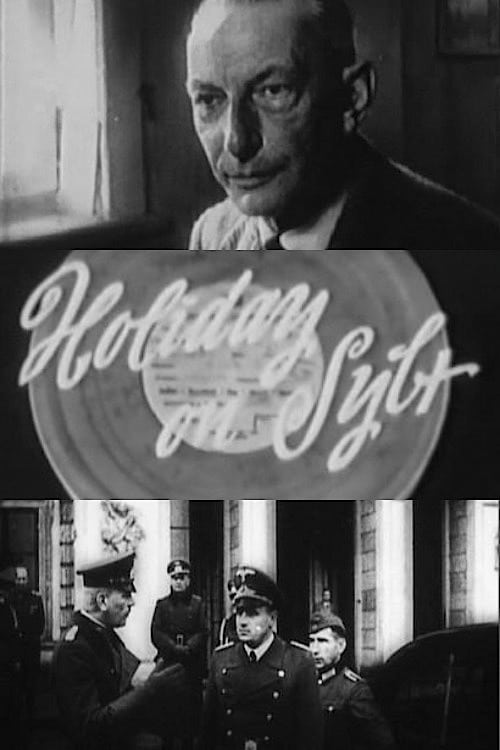
The East German documentary uncovers the postwar career of Heinz Reinefarth, the former SS general responsible for atrocities during the Warsaw Uprising who became mayor of Westerland on the island of Sylt. Combining archival footage with contemporary interviews, the film indicts West Germany for allowing former Nazi officials to return to public office.
Vacation in Sylt
Die Konzessionen des Mister Urquhart (The Concessions of Mr. Urquhart) (1961) is an East German documentary directed by Andrew Thorndike, Annelie Thorndike, and Joachim Hadaschik. Produced by DEFA, the film explores political and economic themes through the lens of Mr. Urquhart’s dealings, likely examining Western economic policies and their global impact. First broadcast on October 15, 1961, on DFF 1, the documentary continues the Thorndikes’ tradition of politically engaged filmmaking.
The Concessions of Mr. Urquhart
Wladimir Iljitsch Uljanow Lenin (1970) is an East German documentary directed by Annelie and Andrew Thorndike. The film explores the life and legacy of Vladimir Ilyich Lenin, the leader of the Bolshevik Revolution and the founding head of government in Soviet Russia. Through a blend of archival footage and scenes from feature films, it examines Lenin’s revolutionary impact on Russian and global history. Produced by DEFA, the documentary offers an East German perspective on Lenin’s contributions to socialist ideology and statecraft, reflecting on his lasting influence on Soviet politics. The film was released in East Germany on April 17, 1970.
Wladimir Iljitsch Uljanow Lenin

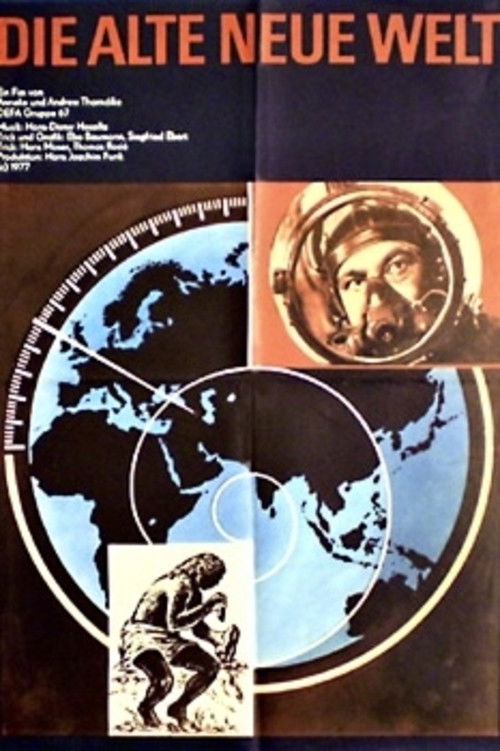
Die alte neue Welt (The Old New World) (1977) is an East German documentary directed by Annelie and Andrew Thorndike. The film explores the evolution of human history over millions of years, tracing the development of societal formations from primitive society to socialism and communism. Through a blend of archival footage, original graphics, and animation, it contextualizes the progress of human civilization within the broader timeline of Earth's history. The documentary argues that only in socialism or communism can a foundation for a dignified human life truly exist. The film features a musical score by Hans-Dieter Hosalla, performed by the Staatskapelle Berlin.
The Old New World
Alle Ideen beginnen als Traum (All Ideas Begin as a Dream) (1987) is an East German documentary directed by Annelie Thorndike. The film follows Professor Dr. Heiner Vollstädt and his groundbreaking research at the Central Institute for Earth Physics in Potsdam, where he has spent years working on the production of synthetic diamonds for industrial applications in the GDR. Through a combination of observational footage and narration, the documentary highlights the dedication of East German scientists and the intersection of scientific discovery with economic development.
All Ideas Begin as a Dream
Hier deutsche Volkspolizei (1972) is an East German documentary directed by Andrew Thorndike and Peter Vatter. Commissioned by the Ministry of the Interior of the GDR, the film provides an in-depth look at the operations of the Deutsche Volkspolizei (People's Police). It showcases various aspects of their daily work, from patrolling and traffic control to community engagement, emphasizing their role in maintaining public order and safety within East Germany. Produced by the DEFA Studio, the documentary reflects the state's interest in documenting the work of its institutions and presenting them as integral to the well-being of society.
Hier deutsche Volkspolizei

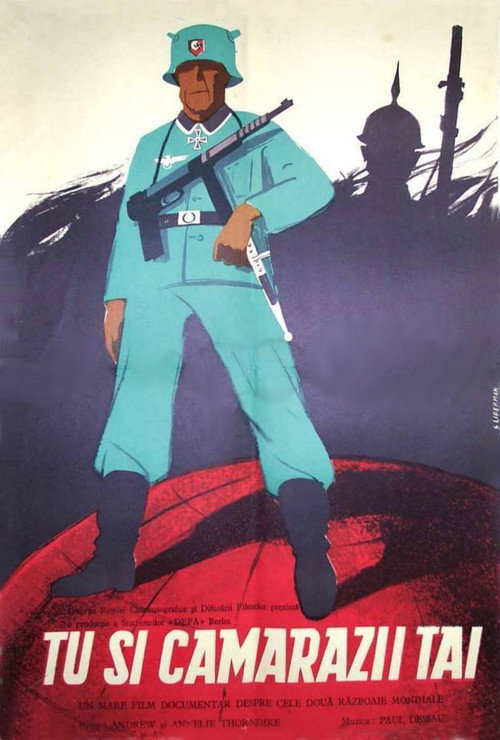
An East German documentary that uses archival footage to trace a direct line from Imperial Germany through the Weimar Republic and the Third Reich to the Federal Republic of West Germany in the 1950s. Intended as a critique of continuity in German politics, the film was banned in West Germany for many years.
You and Many a Comrade

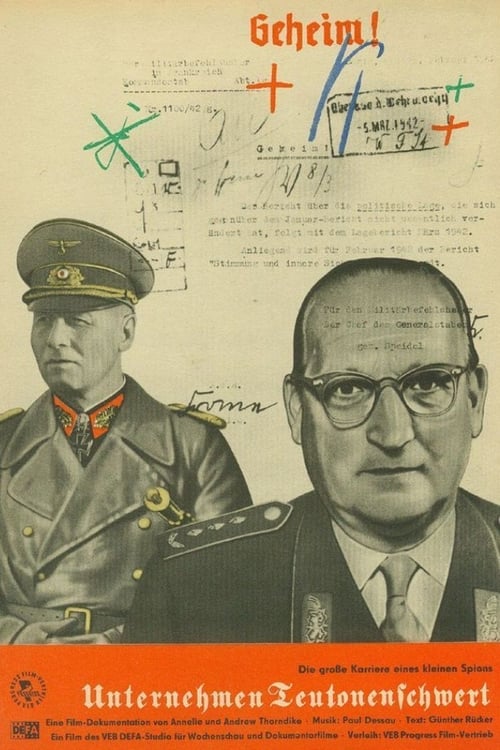
An East German documentary by Andrew and Annelie Thorndike investigating NATO General Hans Speidel’s alleged role in the 1934 assassination of Yugoslav King Alexander I and French Foreign Minister Louis Barthou. Drawing on archival footage and documents, it scrutinizes Speidel’s past and postwar career, provoking controversy and a ban in West Germany. The film won First Prize at the 1958 Karlovy Vary International Film Festival and the Heinrich Greif Prize in East Germany.
Operation Teutonic Sword

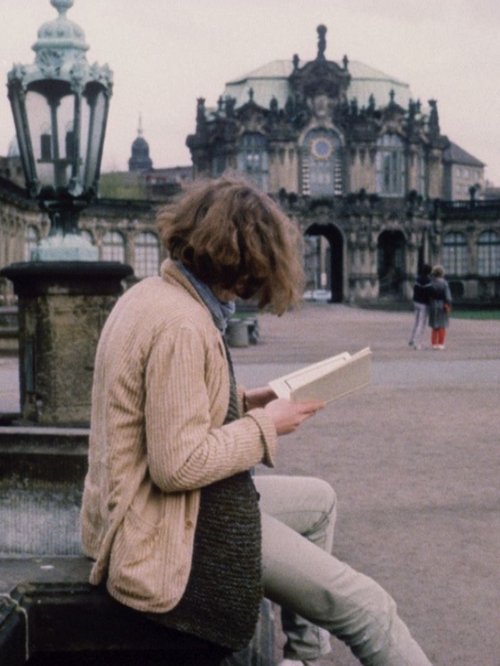
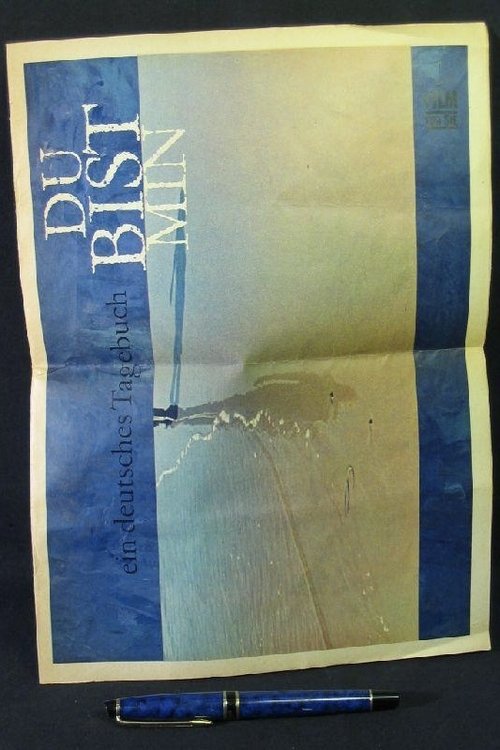
Diary of a German Woman (also known as You are Mine - A German Diary) is the most personal of the Thorndikes’ projects. Based on Annelie’s diary entries, her story was to be the starting point for a kind of all-German ‘Heimatfilm’ that praises the utopian power of the GDR and sharply condemns Federal German wrongs, but finds transcendent beauty on both sides of the wall. Over the course of production, however, the visionary dimension of the project was progressively trimmed down, though it’s still tangible everywhere in the compromised final version. The intensity of its pathos is both oppressive and enchanting; some historical simplifications and ideological twists and bends may be hair-raising, but they still achieve the desired effect.
Diary of a German Woman
Der Fall Harzmann und andere (The Harzmann Case and Others) (1957) is a 31-minute East German documentary directed by Andrew and Annelie Thorndike. Produced by DEFA, the film explores notable legal and judicial cases, likely examining political or social injustices within post-war Germany. Through documentary storytelling, it sheds light on the broader implications of these cases in the context of East German society. Released on August 14, 1957, the film continues the Thorndikes’ tradition of politically engaged documentary filmmaking.
The Harzmann Case and Others
Die Novemberrevolution 1918 (The November Revolution 1918) (1956) is a short East German documentary directed by Andrew and Annelie Thorndike. Produced by DEFA, the 6-minute film explores the pivotal events of the November Revolution, which led to the abdication of Kaiser Wilhelm II and the establishment of the Weimar Republic. Using historical footage, it examines the socio-political upheavals in Germany at the end of World War I, offering a concise yet impactful portrayal of this transformative period in German history.
The November Revolution 1918
Die Prüfung (The Examination) (1952) is an East German documentary directed by Andrew Thorndike. Running at approximately 35 minutes, the film focuses on the reconstruction of schools in rural East Germany and the implementation of democratic educational reforms. It highlights the educational experiences of children in towns like Ducherow and Dessau, along with the significance of the "Day of the Teacher" in the GDR. Produced by the DEFA Studio für Wochenschau und Dokumentarfilme, the film underscores the importance of education and the teaching profession in shaping the new socialist state.
The Examination
Mein ganzes Leben lang (My Whole Life Long) (1971) is an East German documentary directed by Annelie and Andrew Thorndike. The film chronicles the life of Hermann Dünow, who reflects on his personal experiences and memories. Through interviews and archival footage, the documentary explores themes of memory, identity, and the passage of time, offering a window into individual history within the broader context of German society. The film provides an intimate portrait of Dünow’s life, capturing the complexities of personal narrative against the backdrop of mid-20th-century Germany.
My Whole Life Long

Dresden old and new, in between photo documents from 1945/46, the time of resurrection, enriched by very personal commentaries by woman director Annelie Thorndike. Music for solo trumpet, composed by Reiner Bredemeyer and played by Ludwig Guettler, is set to this film.
Departure
Film report on the VII District Children's and Youth Spartakiade in Quedlinburg, combined with a presentation of sports education in the GDR in kindergarten, at school and in the company sports communities (without speaker and commentary).
Start

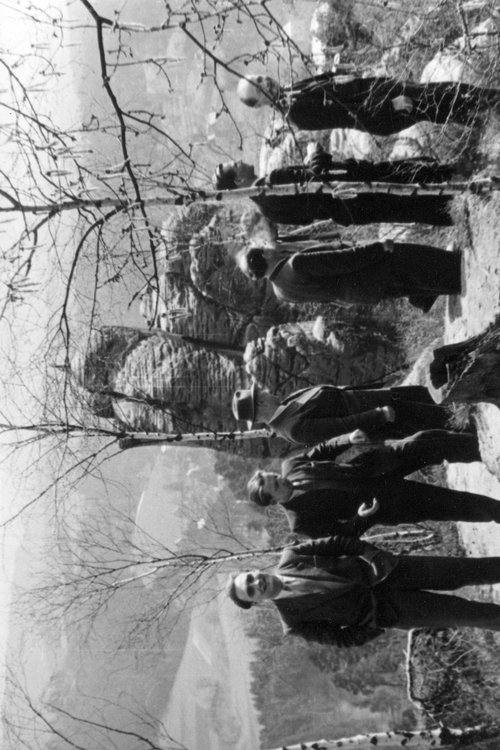
Die Sieben vom Rhein (The Seven from the Rhine) (1954) is an East German documentary directed by Andrew and Annelie Thorndike. The 76-minute film follows seven West German workers from the Ruhr region as they visit a steel factory in Riesa, East Germany, as part of the "Germans at the Same Table" campaign. Through their experiences, the documentary promotes unity and understanding between workers from both sides of the divided Germany. Produced by DEFA Studio für Dokumentarfilme, the film is recognized for its strong political messaging and masterful storytelling.