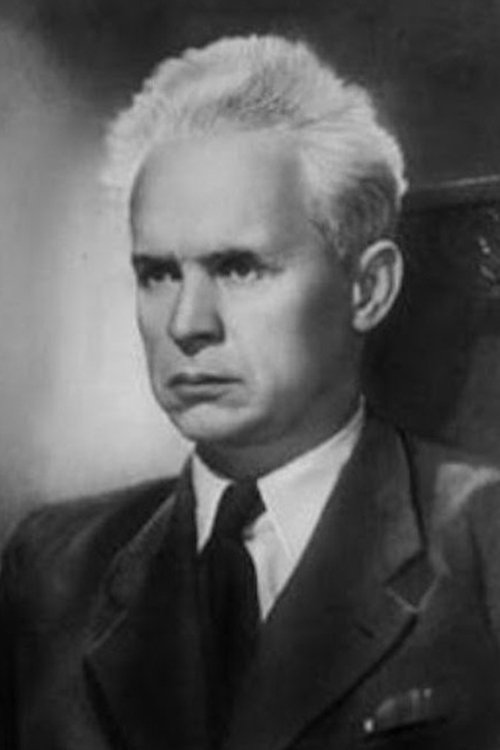
Oleksandr Dovzhenko
Directing
Biography
Oleksandr Petrovych Dovzhenko was a Ukrainian Soviet screenwriter, film producer and director. He is often cited as one of the most important early Soviet filmmakers, alongside Sergei Eisenstein, Dziga Vertov, and Vsevolod Pudovkin, as well as being a pioneer of Soviet montage theory. Although Oleksandr Dovzhenko's parents were uneducated, his semi-literate grandfather encouraged him to study, leading him to become a teacher at the age of 19. Dovzhenko turned to film in 1926 when he landed in Odesa. His ambitious drive led to the production of his second-ever screenplay, Vasya the Reformer (which he also co-directed). He gained greater success with Zvenyhora in 1928 which established him as a major filmmaker of his era. His following "Ukraine Trilogy" (Zvenyhora, Arsenal, and Earth), although underappreciated by some contemporary Soviet critics (who found some of its realism counter-revolutionary), is his most well-known work in the West. For his film Shchors, Dovzhenko was awarded the Stalin Prize (1941); eight years later, in 1949, he was awarded another Stalin Prize for his film Michurin. After spending several years writing, co-writing and producing films at Mosfilm Studios in Moscow, he turned to writing novels. Over a 20-year career, Dovzhenko personally directed only 7 films. He was a mentor to the young Ukrainian Soviet filmmakers Larysa Shepitko and Sergei Parajanov. Dovzhenko died of a heart attack on November 25, 1956 in his dacha in Peredelkino. His wife, Yulia Solntseva, continued his legacy by producing films of her own and completing projects Dovzhenko was not able to create. The Dovzhenko Film Studios in Kyiv were named after him in his honour following his death.
Known For
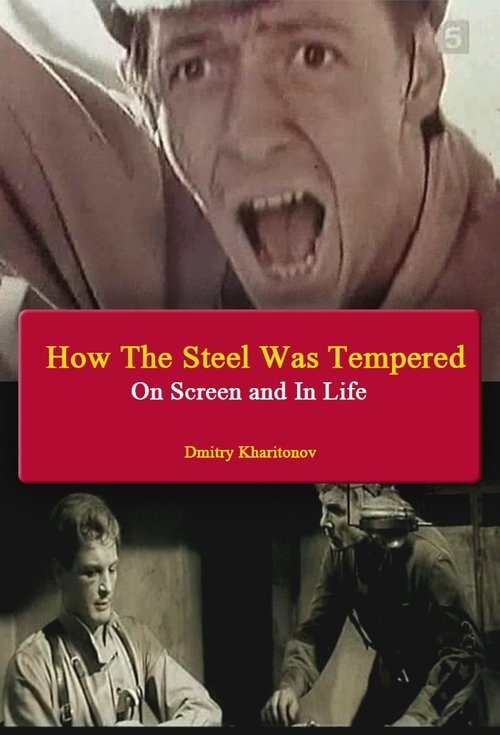
How the film was made, how the events described in the film actually happened, about Nikolai Ostrovsky and much more.
How The Steel Was Tempered - On Screen and In Life

A soldier returns to Kyiv after surviving a train crash and encounters clashes between nationalists and collectivists. The story of the suppression of the Bolshevik uprising at the Arsenal factory in Kyiv by the Central Council troops.
Arsenal
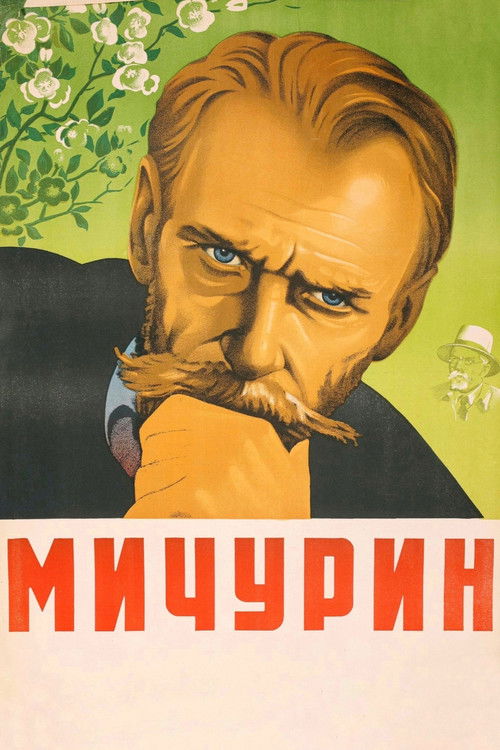
About the life of the Russian biologist Ivan Michurin. 1912 year. Having rejected American offers to work abroad, Michurin continues his research in the Russian Empire, despite the fact that his ideas are not perceived by the tsarist government, the church and idealistic science. Michurin is supported by prominent scientists of the country and he continues to work hard. After the October Revolution, a small Michurin garden in the city of Kozlov (the biologist's homeland) becomes a large state nursery.
Michurin
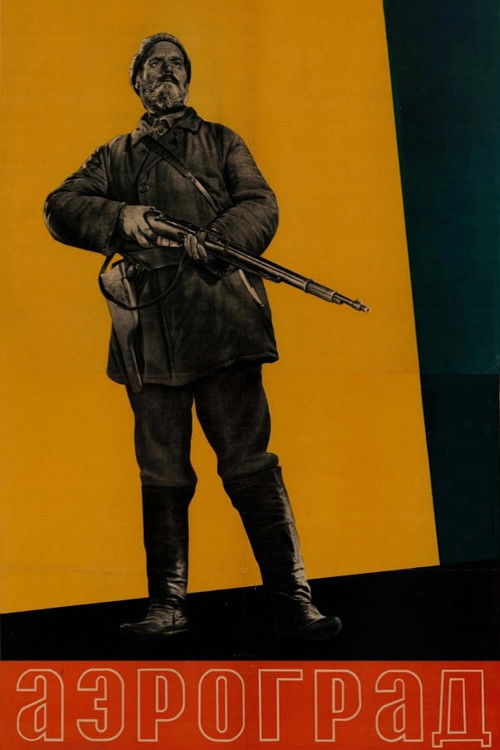
A Russian outpost in Eastern Siberia comes under threat of attack by the Japanese. Aerograd is a new town with a strategically located airfield of vital interest to the government. Work on the new outpost is complicated when tensions develop between workers and a religious sect. Relations between the two countries are further strained in the days before World War II, dating back to the Russo-Japanese War of 1905.
Aerograd

Romm pulls out all the stops in its selection of documentary material to draw the viewer not only into absolute horror about fascism and nazism in the 1920s–1940s Europe, but also to a firm conviction that nothing of the sort should be allowed to happen again anywhere in the world.
Triumph Over Violence

A young farmer Ivan and his lazy father Stepan try to help with the construction of the Dniprohes, but he learns that strength is not enough for a worker and joins the Communist party.
Ivan
No description available.
Our Cinema
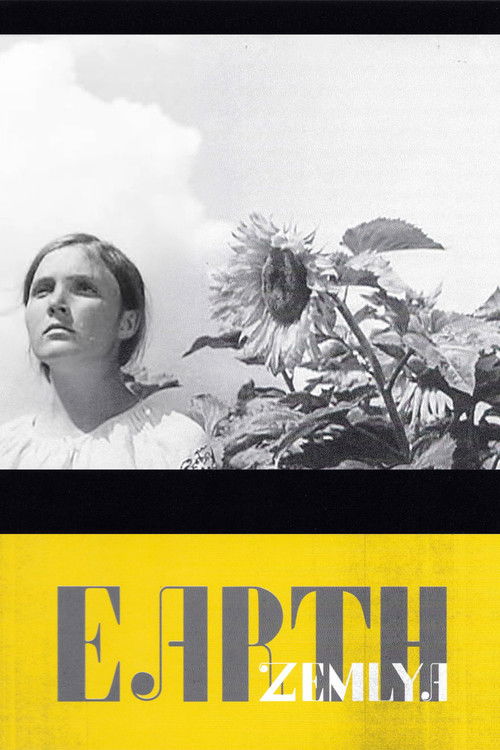
The film tells about the creation of the first collective farm communes and class enmity. Vasyl, a member of the Komsomol, with the help of a local party organization, gets a tractor and plows private boundaries "on kulak fields." However, this enthusiasm will cost him dearly.
Earth
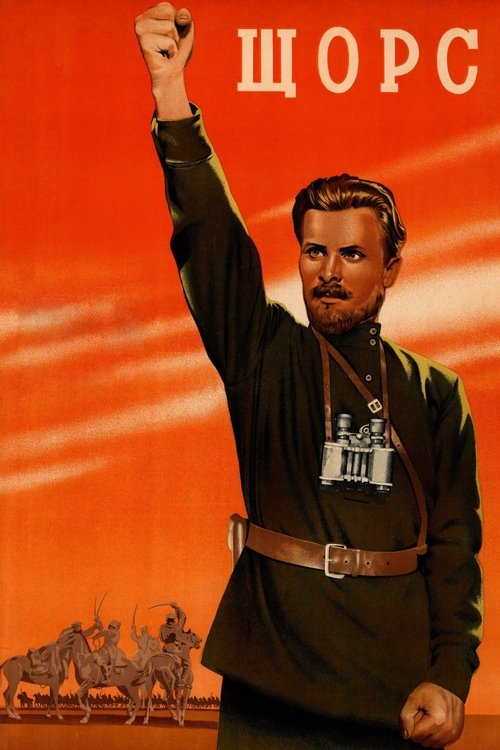
Cheered up by the revolutionary zeal, courage and energy of their leader, Nikolai Alexandrovitch Shchors, in 1919 the peasants and workers' groups gathered in the civil war- devastated Ukraine, to defeat the foreign conquerors and enemies of the revolution. However, it does not take long until a new danger threatens: this time the Polish Pans enter Ukraine, and General Dragomirov marches to Kiev. Shchors, however, gathers the revolutionary forces of the country and brings them to a victorious counter-attack.
Shchors
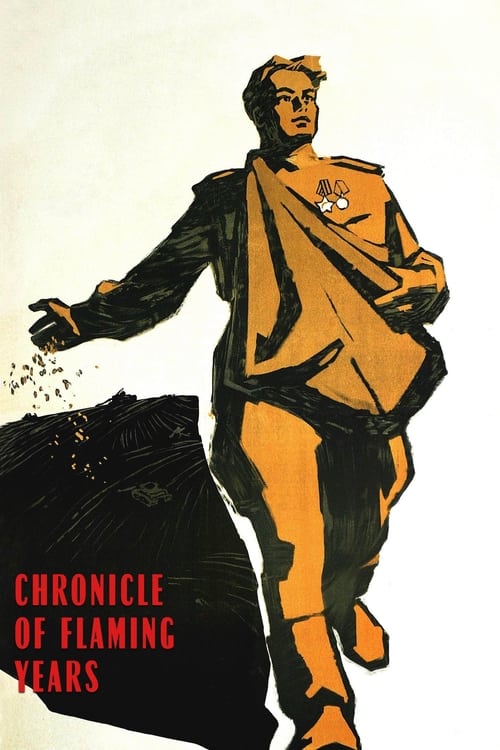
Once again, director Yulia Solnsteva directs a movie that her late husband Alexandre Dovchenko scripted but did not live long enough to shoot. In this wartime drama, the emphasis is on the heroics of both the civilians and the soldiers during times of severe stress in World War II. At the core of the action is one man in particular, whose sacrifices and heroics speak for a much larger group.
Chronicle of Flaming Years
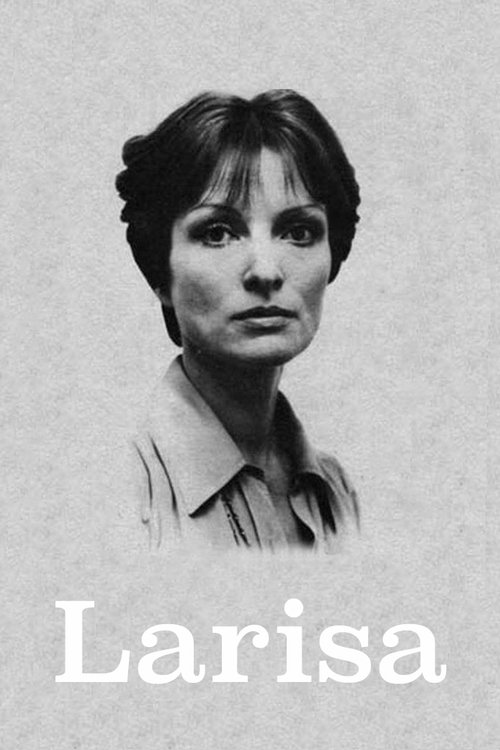
Elem Klimov's tribute to his late wife, director Larisa Shepitko, killed in a car accident a year earlier. Features excerpts from all of her films, and archival audio of her discussing life and art.
Larisa
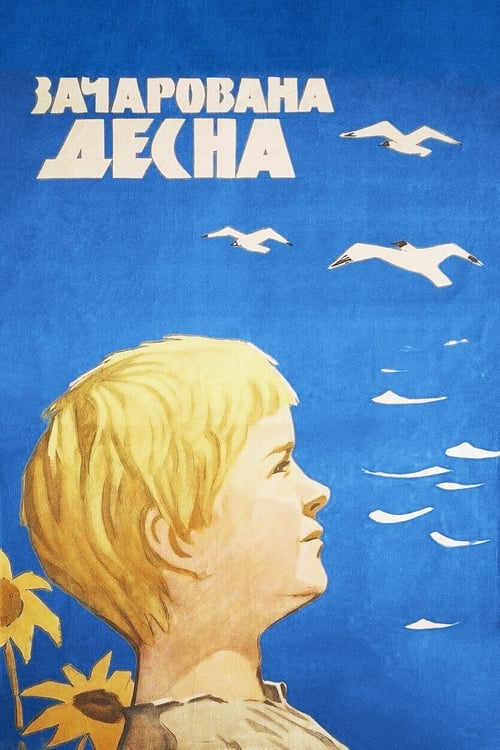
Based on the novel of the same name by Oleksandr Dovzhenko. About the childhood of the famous Ukrainian film director Oleksandr Dovzhenko, who was born on the ancient lands of Chernihiv, along the banks the Desna. The film consists of two parts. The first is the world shown through the impressions of the six-year-old Sashko. The second is the recollections and reasoning of Sashko, now an elderly colonel who liberates his native village during the war.
The Enchanted Desna
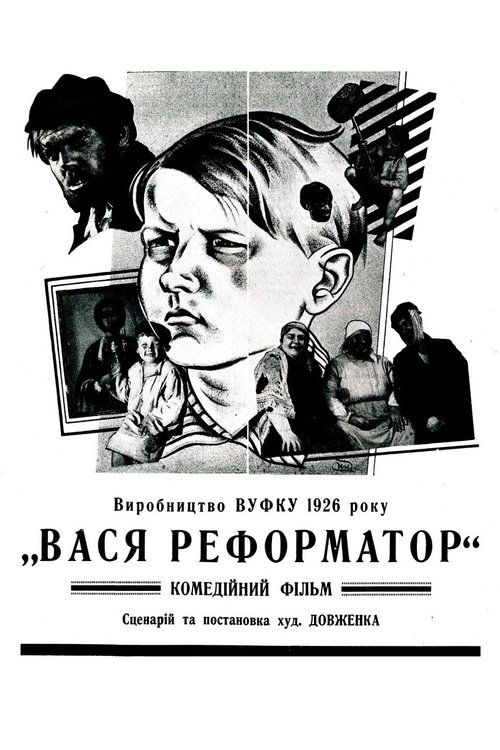
Lost film directed by Oleksandr Dovzhenko (his first film) and Favst Lopatynskyi. It is a satire of the NEP period. Vasia, the son of a factory’s worker, is attracted by the romance of adventures. And he goes to look for them. He saves a drowning drunkard who tries to beat him. Vasia escapes from him in a vehicle parked on the shore. However, the vehicle belongs to a superintendent who, when he does not find it, stages its theft. Meanwhile, Vasia exposes priests in the church. As a result, the church is turned into a cinema, and the priest becomes a cinema technician. And finally, Vasia’s last deed is catching a criminal at home and denouncing him to the militia.
Vasya, the Reformer
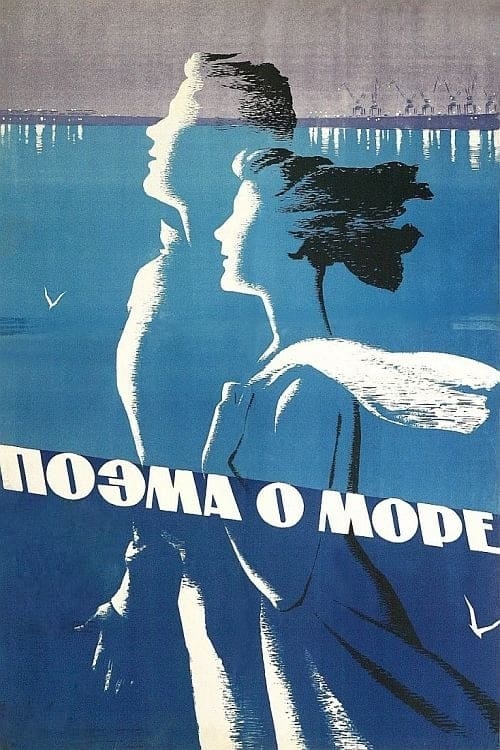
A Soviet dam project means that many old Ukrainian villages will end up under water. There are conflicts between the dam engineers and villagers who don't want to move.
Poem of the Sea

The momentous film stars Mykola Nademskyi as the grandfather of Tymish, whom he alerts to the secret treasure buried in the mountains of Zvenygora – a treasure that rightfully belongs to his homeland. The film wonderfully blends both lyricism and politics and uses its central construct to build a montage praising Ukrainian industrialization, attacking the bourgeoisie, celebrating the beauty of the Ukrainian steppe and retelling ancient folklore. Sergei Eisenstein said of the film, "As the lights went on, we felt that we had just witnessed a memorable event in the development of the cinema".
Zvenyhora
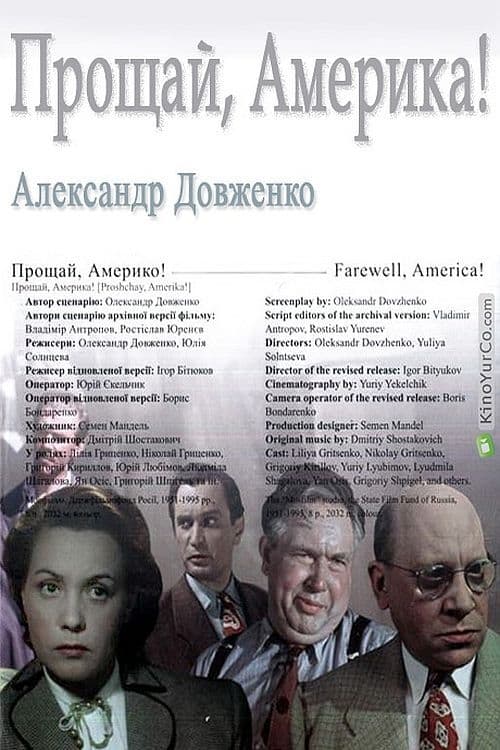
An unfinished film by Oleksandr Dovzhenko, the film is a political lampoon based on the book entitled The Truth about US Diplomats, written in 1949 by the American writer Annabel Bukar. It exposes the underhanded actions of US Embassy personnel in Moscow at the onset of the Cold War. Dovzhenko managed to shoot only a half of the film, mainly the scenes that take place in the American Embassy.
Farewell, America!
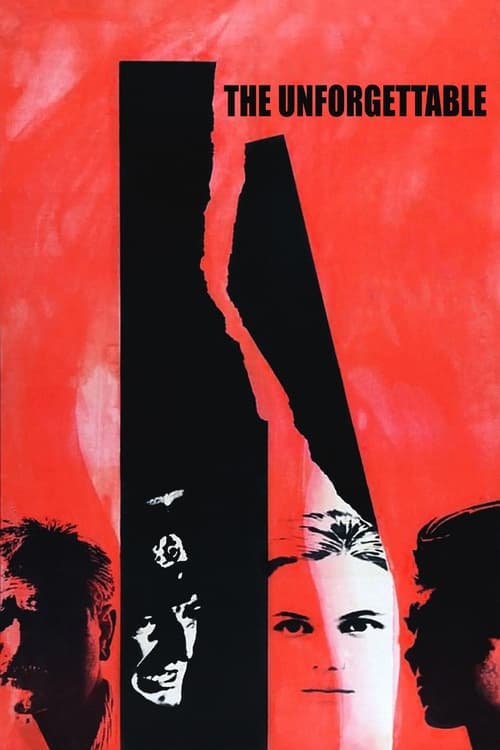
About hardships of the first years of War, which fell to the lot of ordinary people in Ukraine, who got under the yoke of fascist occupation, and heroic struggle against the invaders. A young Russian woman asks a Red Army soldier to spend the night with her in the wake of the Nazi invasion. Fearing she may soon perish, the woman hopes for one night of romance before what could be a horrible demise.
The Unforgettable
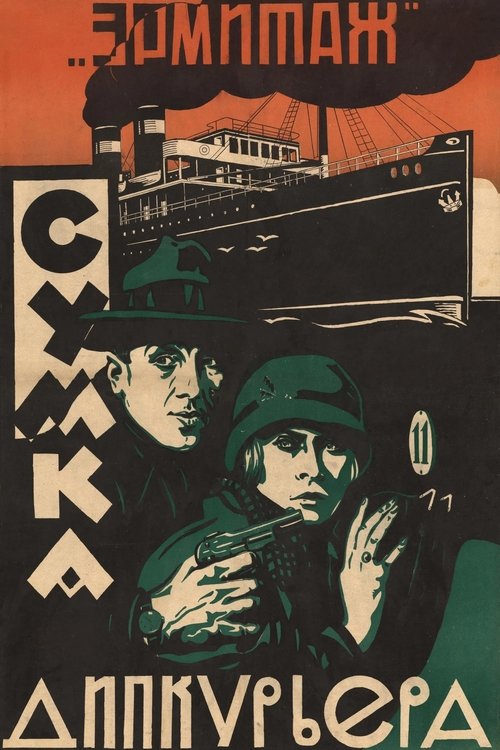
The Soviet embassy in England sends two couriers with diplomatic mail to Leningrad. The inspector of security police, White, and a group of policemen attack the Soviet diplomatic couriers at night. The documents get to an English trackman, who gives them to his son, a sailor in Portsmouth.
The Diplomatic Pouch

Jean, the hairdresser, is flabbergasted: what is that baby his girlfriend Lisa has put in his arms out of the blue? The fruit of love? Out of the question. From that moment on, the reluctant father has but one thought in his head: he must get rid of the cumbersome 'article'. And, take his word for it, all the ways are good.
Love's Berries
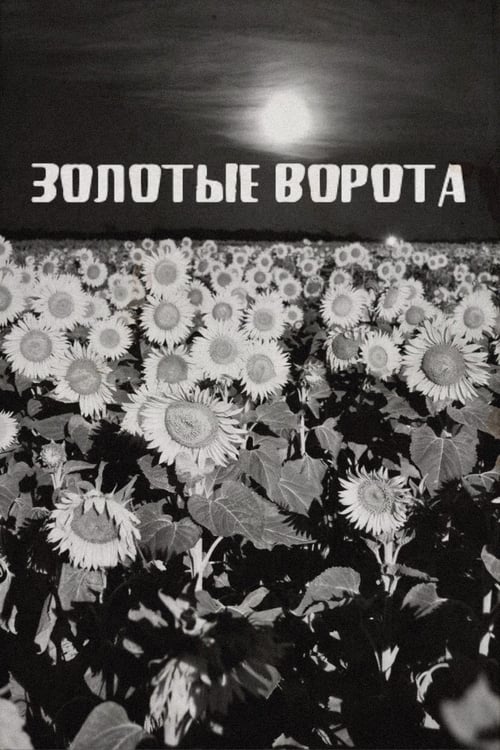
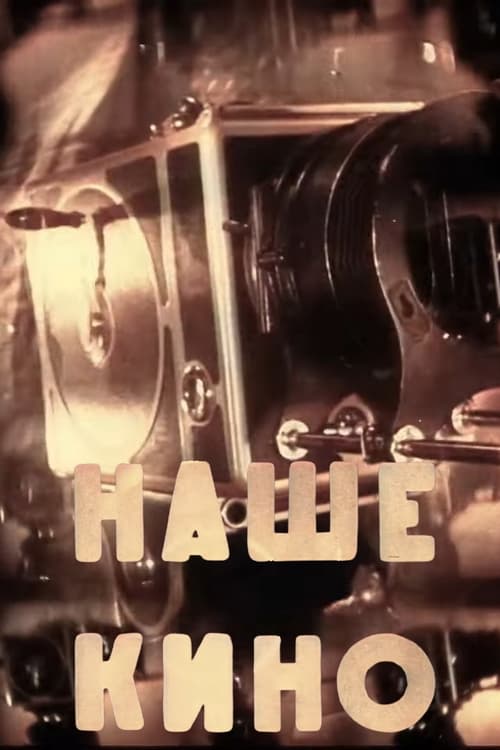
The film-remembrance of the creative fate of the Ukrainian Soviet film director Alexander Dovzhenko, shot on his diaries. It has his statements about his work, about the role of the artist in society, his plans and sources of inspiration, his artistic style and the peculiarities of his worldview. Used excerpts from his films and documentary footage taken during the director's life, as well as filmed fragments of the unfinished scripts " The Death of the Gods” and “Tsar”.