Ulrike Koch
Writing
Biography
Ulrike Koch was born in Birkenfeld/Nahe, Germany. She studied sinology, Japanology and ethnology at the University of Zurich as well as Chinese literature and philosophy at Beijing University/China. Her journalistic activities include writing articles and film reviews for various publications, e.g., Neue Zürcher Zeitung, Weltwoche, Positif (Paris), as well as project consulting and lecturing on China, Tibet and Buddhism. Before directing her own films she worked as casting director for The Last Emperor and Little Buddha, both by Bernardo Bertolucci; and as assistant director for Johanna d'Arc of Mongolia by Ulrike Ottinger and Urga by Nikita Mikhalkov. She lives and works as an independent filmmaker in Zollikon near Zurich.
Known For

After the death of Lama Dorje, Tibetan Buddhist monks find three children — one American and two Nepalese — who may be the rebirth of their great teacher.
Little Buddha

A farmer and his wife live in a rural part of Inner Mongolia with their three children. Chinese population control policies prevent them from having any more. The farmer sets out for the nearest town to obtain birth control. He comes upon a Russian truck driver who has ended up in a lake. The farmer takes the man back to his farm, and after initially being appalled, the Russian becomes enchanted with the peaceful life of the countryside and decides to stay. But his presence presages big changes for the peasants.
Close to Eden
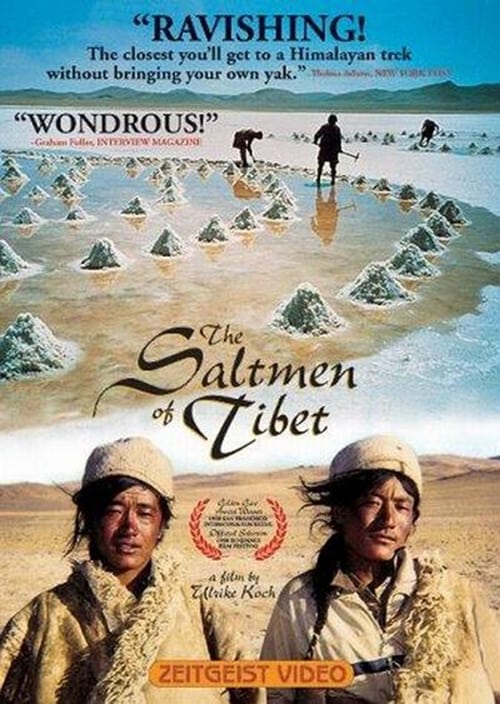
Four men from a nomadic Tibetan tribe undertake their annual, ritualistic pilgrimage to a sacred salt lake. Salt gathered in this traditional fashion will be sold to provide the economic livelihood of the tribe for the coming year. The journey, necessary for the group's survival, also incorporates a number of rituals necessary for their culture to survive in the modern world.
The Saltmen of Tibet
On the shores of the Gulf of Finland, the ancient Finno-Ugric peoples originated a singing tradition of mysterious power called the Regilaul. These songs are the roots of Estonia’s renowned singing culture. Based on the continuous repetition of eight-syllable verses, they produce a haunting sound able to connect the fleeting present with the eternal circle of life. Against the stunning setting of modern Estonia, this film explores how Regi songs still fire the imagination today, weaving together people and nature through song.
Regilaul - Songs of the Ancient Sea
Shots, scenery and traditions of some Tuareg (plural of Targi) tribes, the Berber pre-Arab native camel-mounted nomads of the Sahara and bordering Sahel region. Their favorite pastime are stories, mixing truth, dreams, legends and poetic liberty, mainly told by the elderly and professional "griot", in tents or by the campfire, often accompanied on the single-string imzhad bow instrument. The central concept is "asshak", their ancient honor code, which stands for virtue, Allah's will and respect for life.