Acting
Prison break. A murderer seeks refuge inside a barn.
Gerhard Lamprecht sketches a cross-section of Germany's new post-war society, with its winners, social climbers, and losers, represented by the social microcosm of an apartment building. The gossip-mad Frau Mierig from the rear building gives the newly-arrived Frau Kaminski, the janitor's wife, a lively initiation into the tenants and their peculiarities.
Propaganda film telling the story of a German bomber crew taking part in the invasion of Poland and attacks on British shipping.
The stories' setup: a bunch of passive weaklings being dominated by two strong and ambitious women who fight for the same man.
A foreman’s son and his noble friend, who have voluntarily arrived from Berlin to help out with the harvest, switch their billeting coupons while on the journey, so as to play a trick on the estate owner, who is related to one of them. The wrong boy is asked to sit at the estate owner’s table, while the real relative is pushed off on the servants. And so begins a game of confusion with amusing results.
No description available.
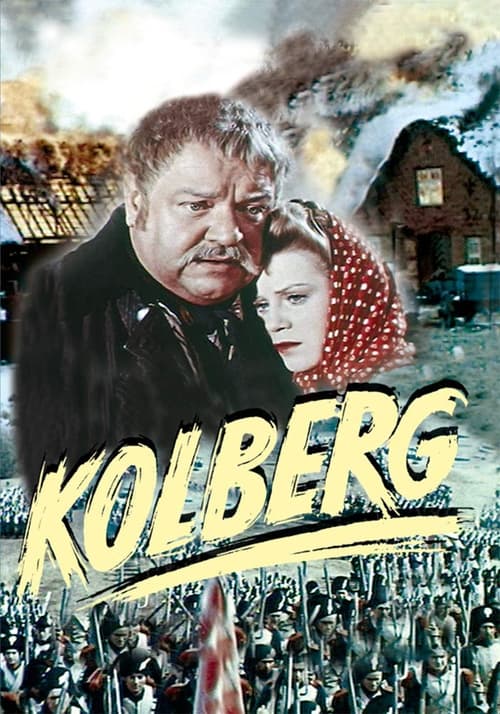
During Napoleon's victorious campaign in Germany, the city of Kolberg gets isolated from the retreating Prussian forces. The population of Kolberg refuses to capitulate and organizes the resistance against the French army, which immediately submits the city to massive bombardments.
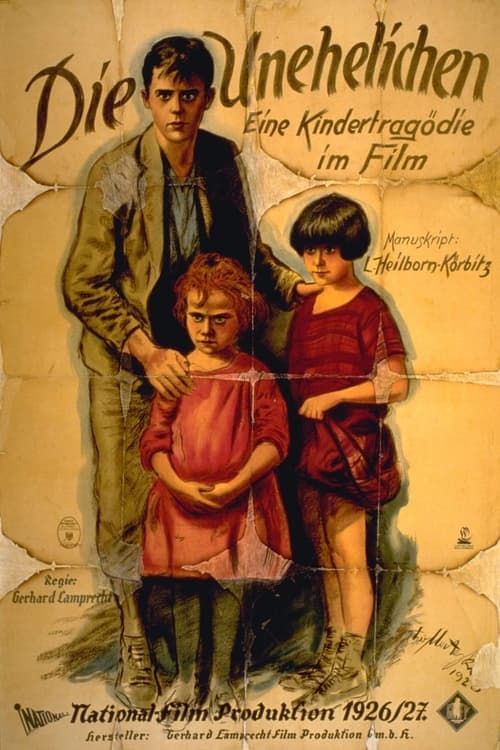
If watching a fellow facing indifference/rejection in the slums of Berlin didn't convey enough pathos, Gerhard Lamprecht gathered much of the same crew from Die Verrufenen and turned his attention to the city's population of unwanted children for the heart-tugging Die Unehelichen, released the following year. The trio of foster children at the center of Die Verrufenen are survivors who use their own resourcefulness to get by when the kids' guardians and the system itself let them down.
Dr. Blum, a Jewish manufacturer, is falsely accused of a murder. Even when the real killer’s identity becomes evident, the state prosecutor refuses to accept Blum’s innocence.
A love story between officer von Warp coming from a wealthy family and salesgirl Therese. When the social rules of the time would force the officer to resign from service in order to marry Therese the situation becomes tense.
The young opera singer Carla is in love with the talented young composer Michele, who wants to make it big with classical music and writes his first opera, "The Return of Odysseus," for Carla. But Carla is more successful than he is and gets a gig at La Scala in Milan. Through her connections, she manages to find a publisher for Michele's opera. But when Michele learns what the publisher really thinks of his work, he leaves and abandons Carla. A year later, Carla finds Michele again. He has since become a sought-after composer, but is embittered because he is only successful with pop songs. His new revue "Dream Music," a reworking of his opera, is about to premiere. Carla then arranges for Michele's original opera to premiere in Budapest with her in the lead role.
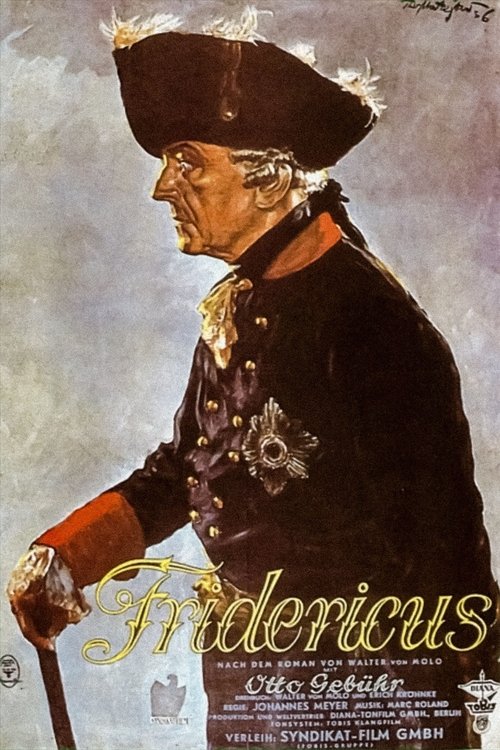
In 18th century Europe, King Friedrich II of Prussia leads his army through the seven-years-war with neighboring states, and after numerous near defeats, eventually brings a victorious army back to Berlin.
A 19th-century London cabaret singer is deported to prison in Australia. Her crime? Taking the blame when her lover bounces checks.
Spanning the years between the Bolshevik Revolution and 1930, this Negri vehicle focuses on an exiled Russian noblewoman who has lost track of her daughter and of a young officer she pined for.Until she finds them both again and together.
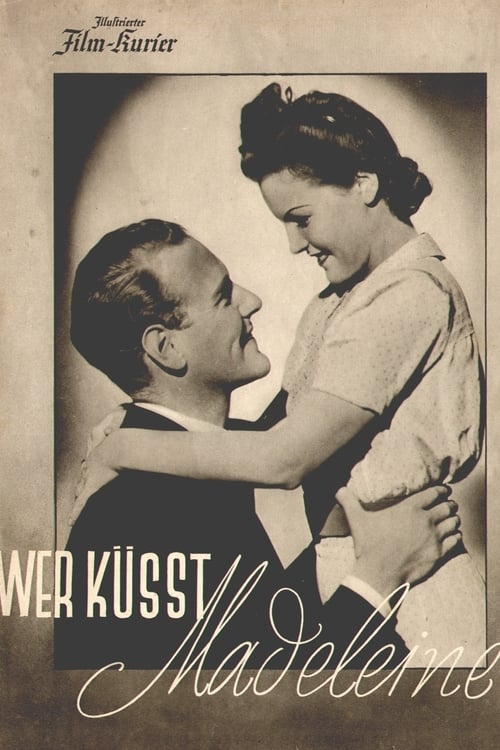
Pierre Pasqual has just about everything his heart desires: in his career as a commercial pilot, he is well known and successful; he has wealth and a beautiful wife. The only thing is, that because of his career, Pierre is frequently away and the thought constantly tortures him, that his wife is up to something when he’s not home. “Who’s kissing Madeleine?” is the question Pierre must have answered.
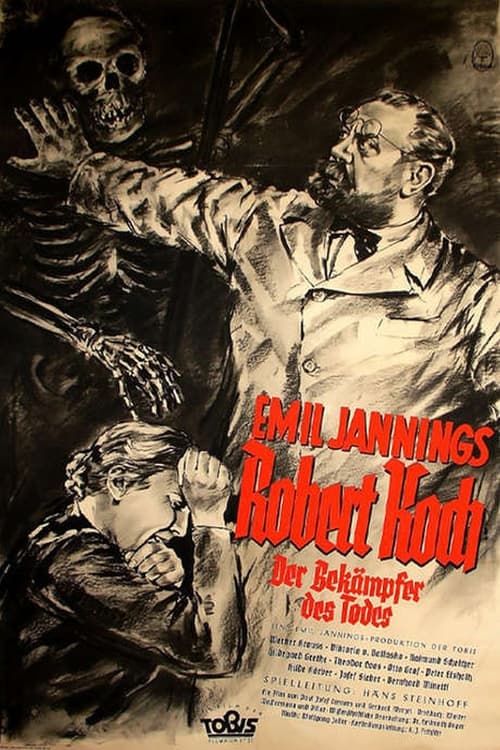
Country Dr. Robert Koch is desperate: a tuberculosis epidemic is decimating the children in his district and no one is able to do anything about it. Every fourth child is already sick and the parents must helplessly watch as their young ones die. Now Koch is undertaking to find the cause of the tuberculosis --- something he has already been working on for years --- which has been causing this plague of illness. His work is made more difficult by envy; for example, that of his teacher, who was wounded defending his honor. But his greatest obstacle is the famous Berliner scientist and Reichstag deputy, Privy Councilor Rudolf Virchow: He is extraordinarily skeptical of Koch's theory, that the cause for tuberculosis is a bacteria.
An adaptation of the Gerhart Hauptmann play of the same name. A young farmer's daughter is used and abused by the men in her life.
The daughter of a reclusive couple in the St. Moritz mountains tends to her brother, disabled from the Great War, though a handsome young architect who has just arrived waits for her attentions.
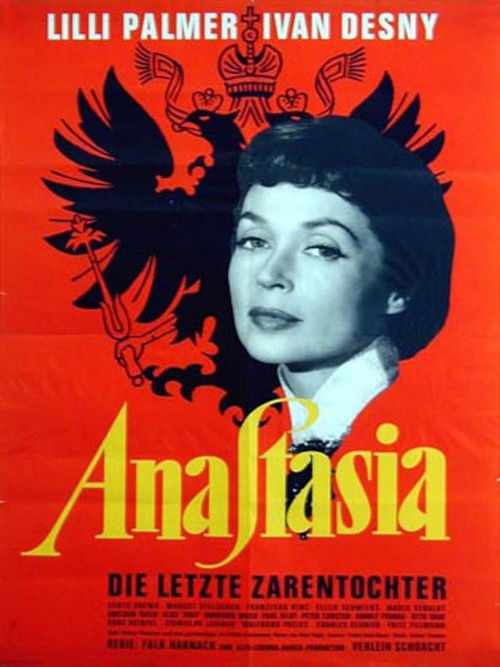
In 1920, an unknown 24-year-old woman was fished out of Berlin's Landwehr kanal after a suicide attempt. Since she has no papers and no answers to any questions, they soon assign them to the insane asylum Dallendorf. A co-patient believes she recognizes the Czar's daughter Anastasia Romanowa - who apparently was the only one who survived the murder of the tsar's family in 1918.