Directing
Television series Golden Sixties examines new insights into Czech and Slovak cinema of the 1960s and the role of the Czechoslovak New Wave. Each episode focuses on a different filmmaker.
No description available.
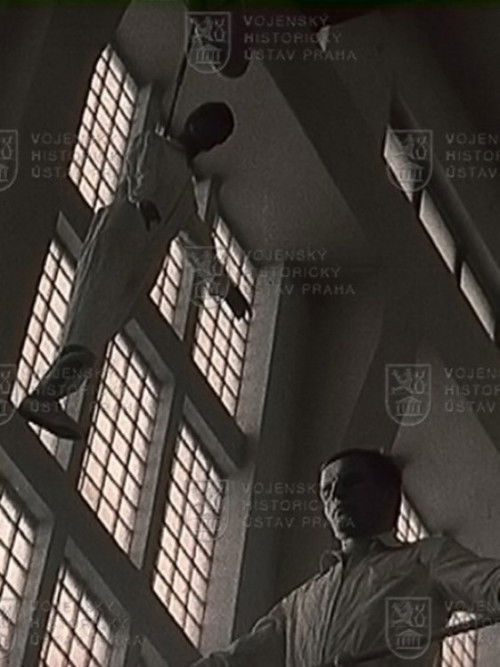
The primary aim of this short movie was celebration of Moscow’s underground. It was produced by Czechoslovak Army Film, so there were hopings for some kind of propagandistic film. But the director Balada made dark ballad showing crowds of sorrowful people going on the stairs of underground labyrinth seconded by orthodox chorales. The movie was banned shortly after the invasion of soviet army to Czechoslovakia in august ’68.
It was autumn 1939, shortly after the attack on Poland by the German army. The military component of the Slovak State are allies of the Nazis, and with them came on Polish territory. They're alongside the mighty army of Hitler's occupation force. In the decimated Polish town the Commander of the Slovak company Major Valenta issues orders that all residents surrender weapons if they own any. Insubordination will be punishable by death. Shortly after, the charming young Polish lady Žofie reports Valenta about: Professor Klosowski, who is Professor of Botany at the local high school, said to be hiding out at home in the library of the gun. Valenta reluctantly executes search warrant and weapon is found, but it is immediately clear that the old Professor became the victim of misunderstandings or possible fraud. To his surprise, he soon discovers that Sophie has a close relationship with Klosowski. But just before he fathoms the mystery, the occupation machinery executes havoc.
An artistic documentary based on a report of the same name from Ladislav Mňaček's book Where Dirt Roads End. A psychological reflection on the feelings of an individual who operates like a modern, fully automated control room of a large hydroelectric power plant. His subjective ideas intertwine with the environment of the workplace, accompanied by the music of J. S. Bach.
The television film based on the novel of the same name by Ladislav Mňaček draws on the period of World War II and the Slovak National Uprising. The film's story is composed of two intertwining time lines. In the images of the present that frame the entire narrative, the young partisan Voloďa - a hero with autobiographical features - recovers from a serious injury. In feverish reminiscences and in conversations with his nurse Eliška, he recapitulates the eventful events of his time in the partisan group in the village of Ploština, which the partisans abandoned under the pressure of events and left to the mercy of the German commando. Voloďa is haunted by visions of the burning Ploština, remorse and responsibility for the tragedy. In feverish reminiscences, he relives the meetings of the partisan detachment with the German commando. Memories of the mysterious Jewish girl Marta, a partisan liaison with whom Pavol had a passionate love affair, also return to him.
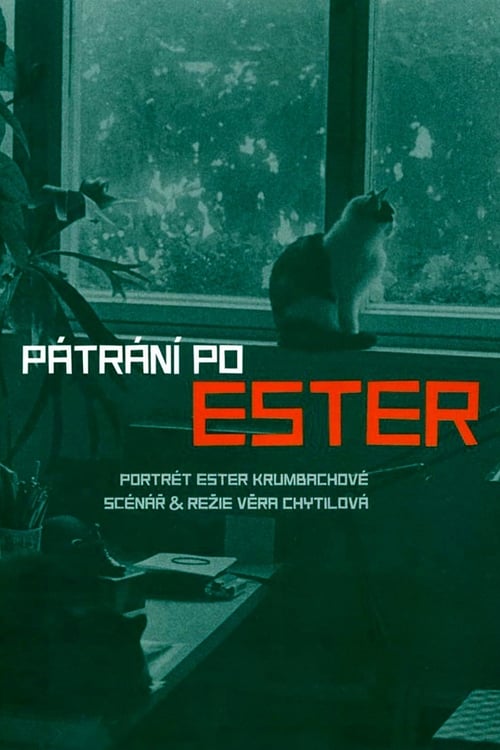
Ester Krumbachová - a costume designer, screenwriter, director; one of the boldest personalities of the Czech New Wave. She worked in theatre, she was a writer and an illustrator. She co-created films such as O slavnosti a hostech (1966), Sedmikrásky (1966), Vsichni dobrí rodáci (1969), Pension pro svobodné pány (1968), Valerie a týden divu (1970), Slamený klobouk (1972) and many others. In the 1960s, she was a 'pivot' of the art scene in Prague, attracting artists who were on the threshold of their career, just setting out to find their own form of self-realization. Those who underwent her tutelage remember her forever. Director Vera Chytilová talks to those who knew Ester Krumbachová, who worked with her, befriended her, loved her. She sets off on a search that is to end by answering the question: Who was Ester?
Set in a bleak, filth-ridden provincial hospital, a disillusioned doctor begins to find the philosophical ramblings of a mental patient more stimulating than the company of "sane" society. As their relationship deepens amidst the grimy and decaying wards, the doctor's own mental health is called into question by his suspicious colleagues.
A poetic melodramatic documentary inspired by the death of Jan Palach. The footage from the funeral is accompanied by the words of Maxim Gorky's Old Woman Izergil (On the Flaming Danek's Heart), sung by Kühn's mixed choir, solos by Milada Sýkorová and Jiří Němeček. The apotheosis of a leader who sacrificed himself to save his people, warning of the cowardice of the crowd.
Magdaléna, pure-hearted and guided by emotion, attracts Zápotočný, a callous egoist and abuser. Their turbulent relationship, set against a backdrop of social hardship, forces Magdaléna to confront the limits of compassion and the price of innocence when faced with brutal selfishness.
A king was dying. An old man told his sons that only the water of life would save him.