Acting
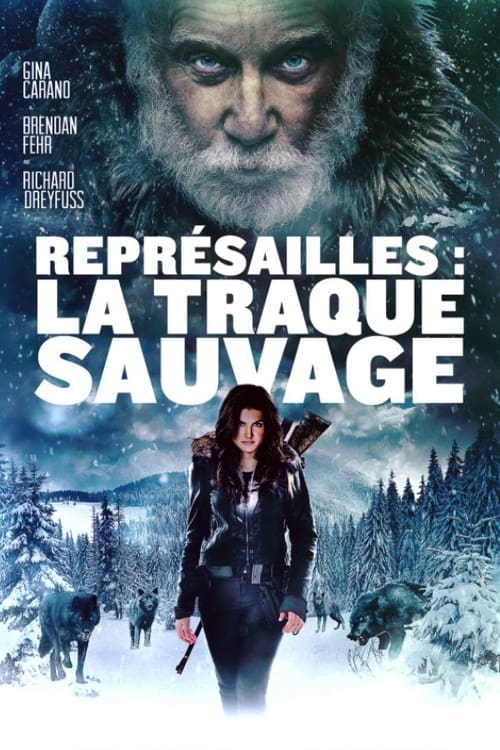
Ex-military specialist Clair Hamilton returns home from her tour in the Middle East due to her father's passing and to claim her inheritance. Her son is then kidnapped and held for ransom by a gang led by a mysterious figure known only as “Father”.
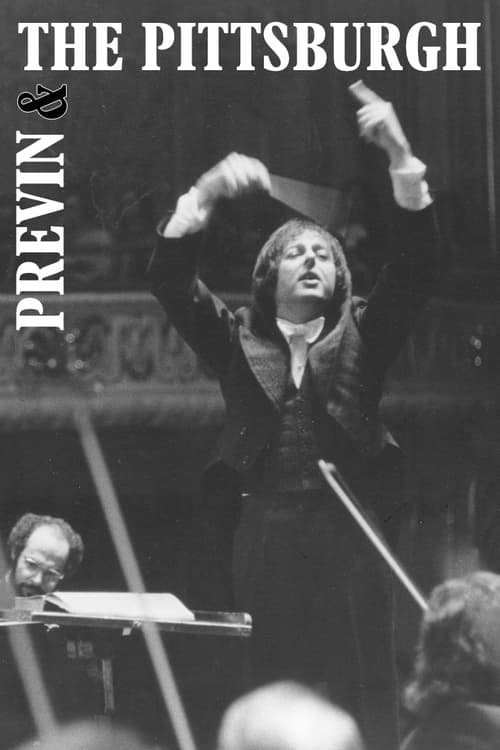
Renowned composer, conductor, and pianist Andre Previn welcomes one or more musical guests for conversation and performance, either accompanied by Mr. Previn on piano or in concert with the Pittsburgh Symphony Orchestra. Produced by WQED and syndicated nationally on PBS, the series was notable among musical performance programs for its deft camera work and editing. The episode The Music That Made the Movies was nominated for an Emmy for Outstanding Music Direction.
Dame Janet Baker, in one of her greatest roles, leads a cast of some of Britain’s finest interpeters of baroque opera and their performance under the baton of Sir Charles Mackerras is one of the highest musical excellence. John Copley’s acclaimed English National Opera production was restaged in studio, skilfully using all the technical advantages offered, to create this top quality recording. The opera was first performed in 1724 at the Haymarket Theatre in London using castrati singers in the heroes’ roles. This production follows modern practice in using women in these parts. Dame Janet’s virtuoso role as Julius Caesar has been heralded as a masterful recreation of the music which Handel wrote for the finest singers of his time.
A line up of star performers celebrate the very best of Edward Elgar's music in the 150th anniversary year of his birth.
A feat that fully matches its title, an alphabetical trawl through both the history of British music and Russell's own likes and dislikes, the latter summed up by a scene in which he takes a phone call and listens for a bit before concluding that 'it's either an obscene call or the beginning of Michael Tippett's Fourth Symphony.' Gleefully exploiting an already contrived format, Russell uses alphabetical coincidence as an excuse to throw wildly disparate material together: Elgar is fused with Elton John, Holst with Heavy Metal and Punk with Purcell.
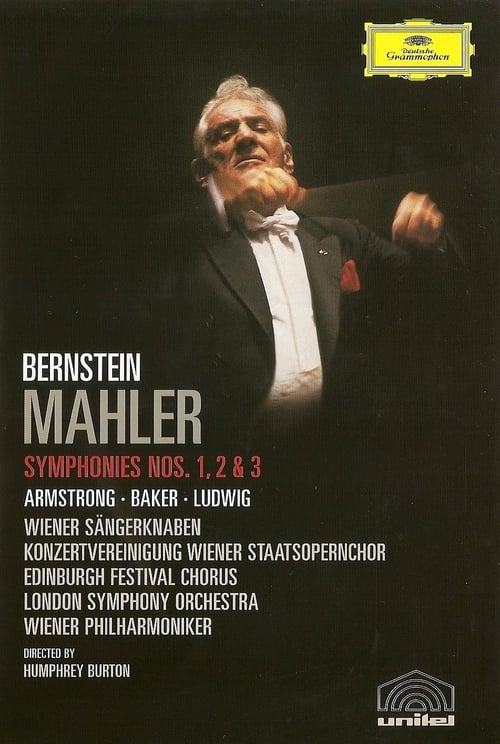
Directed by Sir Humphrey Burton, this 90-minute powerhouse features Sheila Armstrong (soprano), Janet Baker (mezzo-soprano), the Edinburgh Festival Chorus and the London Symphony Orchestra conducted by Bernstein at Ely Cathedral in 1973.
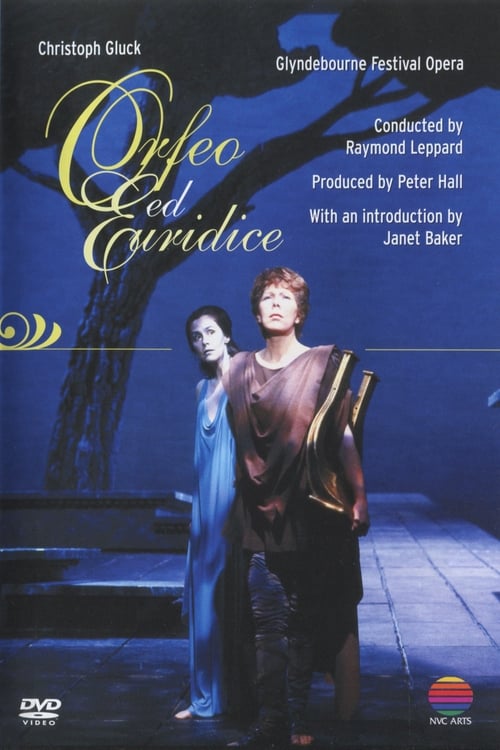
Live recording of a stage performance at the Glyndebourne Theatre, 24 August 1973, directed by Sir Peter Hall.
Made for TV movie version of the famous opera.
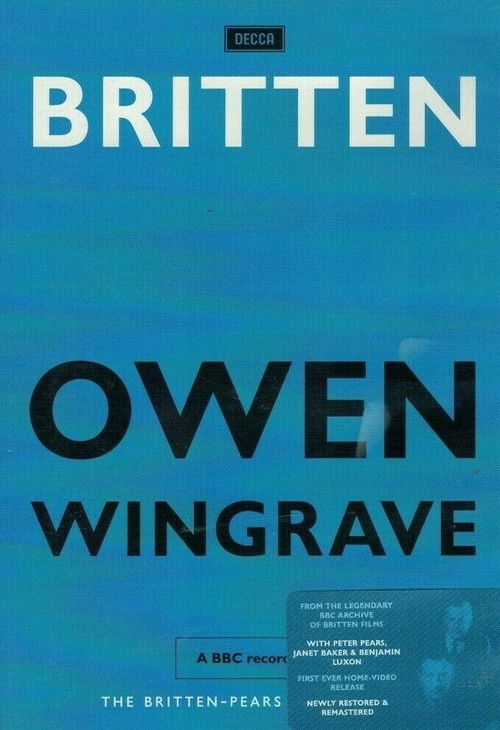
A family conflict ensues after Owen, the youngest of the proud military family Wingrave, expected to continue the family tradition and become a soldier, rejects violence and war and proclaims himself a pacifist.
Beginning with the First Symphony, Bernstein reveals Mahler's position at the hinge of modernism, while emphasizing his emotional extremism. The uplifting Second "Resurrection" Symphony, with which Bernstein had an especially long and close association, is recorded here in a historic performance from 1973, set in the Romanesque splendor of Ely Cathedral. In the Third, Bernstein encompasses the symphony's spiritual panorama like no other conductor, with the Vienna Philharmonic players alive to every nuance.
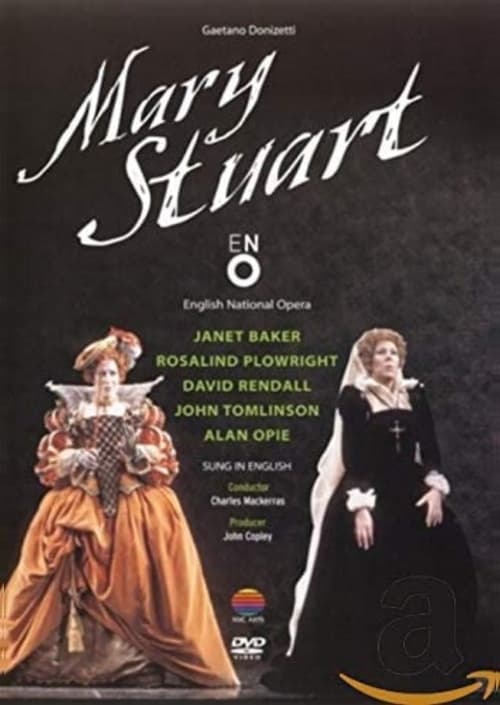
David Rendall, John Tomlinson, Janet Baker, Peter Butler, Rosalind Plowright, Angela Bostock, Glenn McKeown, Giuseppe Bardari, Tom Hammond, Alan Opie, Leigh Maurice
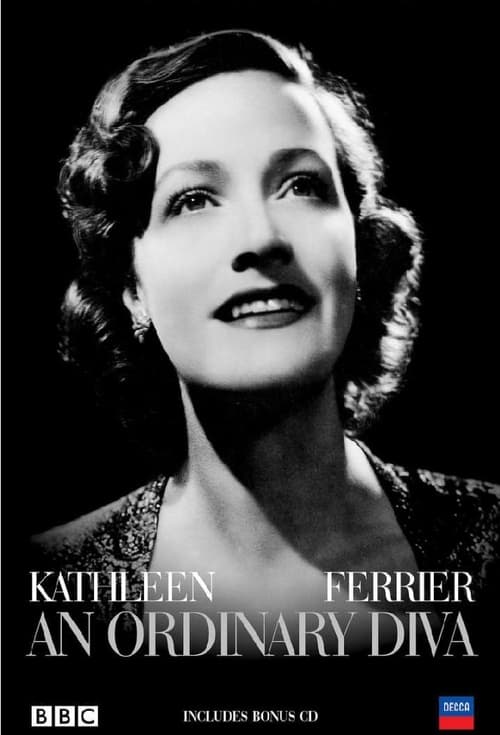
A portrait of the great British contralto who, despite little formal musical training, rose from humble origins to become an internationally acclaimed artist before her tragic early death in 1953. With contributions from Dame Janet Baker , Ian Jack, Sir George Christie and Lady Evelyn Barbirolli.
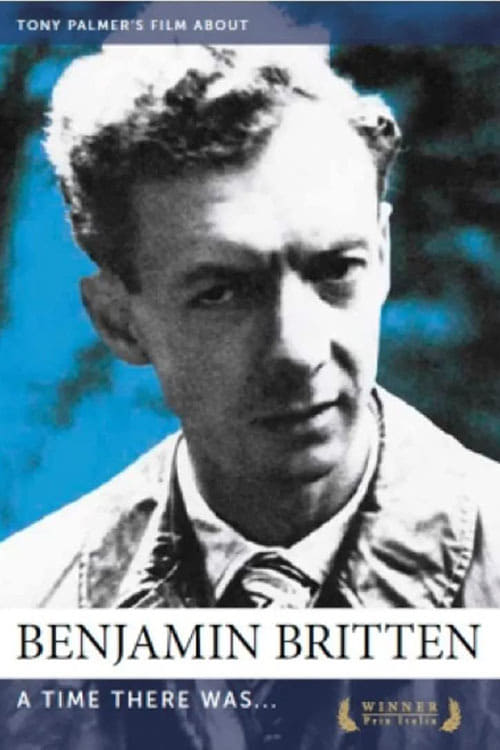
A portrait of one of England's greatest composers. Winner of the Prix Italia.
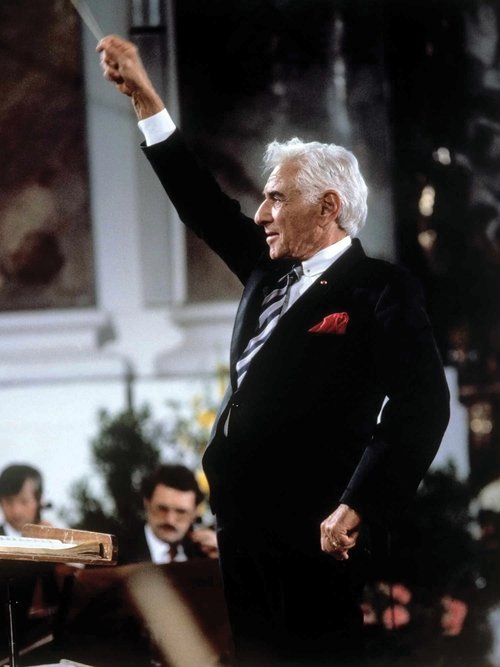
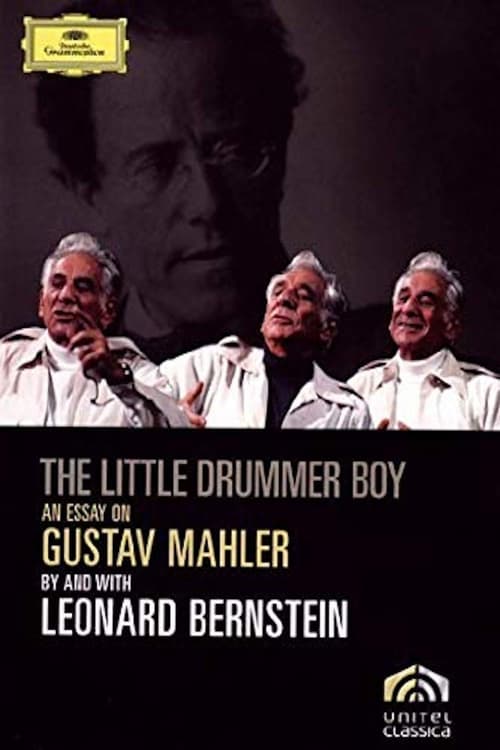
This television essay from 1985 was written by Leonard Bernstein to commemorate the 125th anniversary of Gustav Mahler's birth. Recorded in Israel, Vienna and later in London, it is punctuated by biographical interludes and illustrated by musical examples drawn from the cycle of Mahler's works recorded by Bernstein. Bernstein talks, plays and conducts various orchestras (Israel Philharmonic Orchestra, London Philharmonic Orchestra, Wiener Philharmoniker) and soloists (Janet Baker, Christa Ludwig, Edith Mathis, Lucia Popp, Walton Groenroos) in performances spanning 17 years. Leonard Bernstein also examines the roots of Gustav Mahler's inspiration. The programme also features music from the nine symphonies, 'The Song of the Earth' and the 'Wunderhorn Cycle'.
A tribute to Jacqueline du Pré to mark the thirtieth anniversary of her death thirty years ago, on 19 October 1987. The film contains archive footage shot during Jacqueline du Pré’s lifetime which captures some glorious and professionally filmed live performances. It also remembers both her personality and her music through the memories and tributes of her closest friends and colleagues.
Mary Marquis introduces a concert recorded in the Queen's Hall, Edinburgh in 1981 with Dame Janet Baker. She performs Mendelssohn's concert aria Infelice and Handel's dramatic solo cantata Lucrezia with the Scottish Chamber Orchestra.
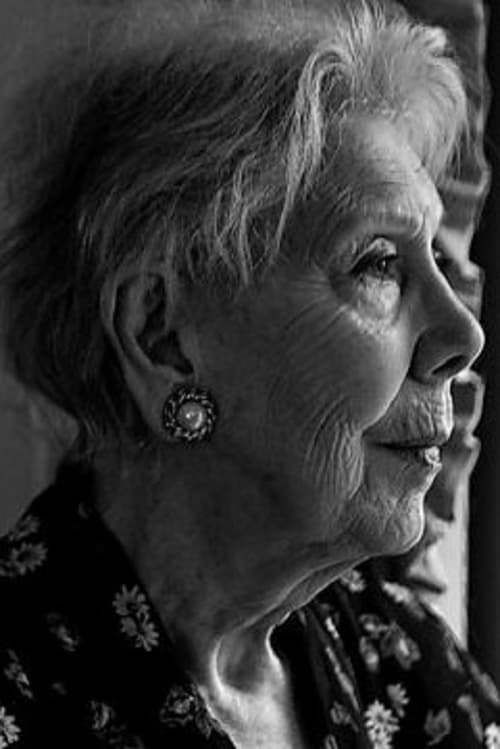
In her first documentary for more than 35 years, the great British classical singer Dame Janet Baker talks more openly and emotionally than ever before about her career and her life today. With excerpts of her greatest stage roles (as Dido, Mary Stuart, Julius Caesar and Orpheus), as well as of her appearances in the concert hall and recording studio (works by Handel, Berlioz, Schubert, Elgar, Britten and Mahler), she looks back at the excitements and pitfalls of public performance.