Acting
Malhação is a Brazilian television series for the teenage audience. The soap started in 1995, and was set in a fictional Gym Club called Malhação on Barra da Tijuca, Rio de Janeiro. Through the years the location varied slightly. Although the name of the soap remains the same, it is now set in the Múltipla Escolha High School.
Helena is a sweet, honest, sensitive and a warrior woman who faces the premature pregnancy of her daughter Joyce, who in turn is abandoned by her boyfriend, the irresponsible Caio. The biggest problem is the girl's father, Assunção, Helena's ex-husband, who does not accept the situation. Lonely and alone, Helena awakens a passion for the endocrinologist Carlos Alberto, and has her feelings matched. But Carlos is committed to the possessive Paula. The girl's parents, Zuleika and Rômulo, anxiously await their daughter's wedding with Carlos, who will save the family from financial decay. But Carlos is the type of man that women don't really forget. Even married to Paula and in love with Helena, he is still harassed by ex-wife Sheyla, who is not satisfied with having lost him and dreams of a rapprochement.
Fátima Accioly is a young, callous woman who wants to be rich and successful at any price. After selling her family's house in the country, she heads to Rio and gets to know dress man César who is unscrupulous himself. Meanwhile, her mother Raquel stays behind without home and money, but finally tries to find her daughter in the big city. Both women come in contact with the rich Roitman family which changes their lives forever.
Marina is raised by her father on an island after her mother's death. As a teenager, she moves to Rio de Janeiro to study and live with her godparents, where she ends up falling in love with Marcelo.
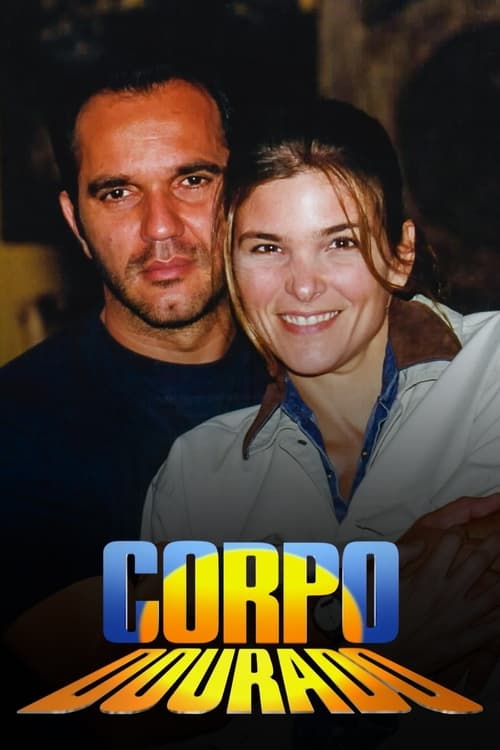
The series surrounds the damaged relationship between a saxophonist and a woman who falls in love for a former boyfriend, whom she had left to marry him.
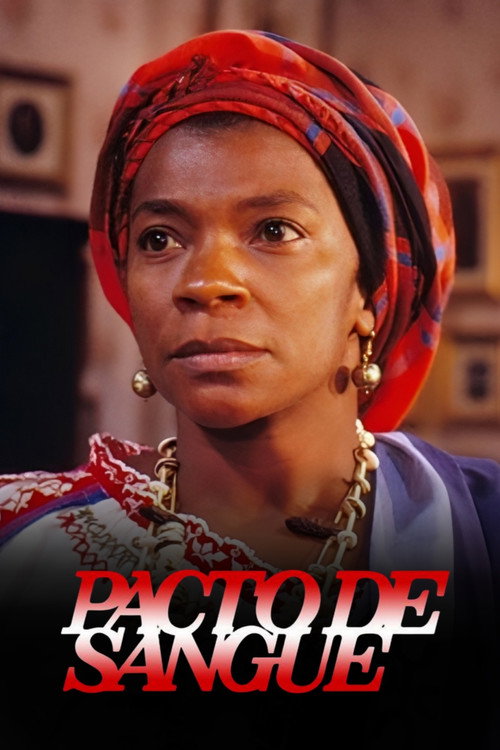
A traffic accident causes four women's destinies to intertwine. In the series, the four enter a pact of revenge against the men who hit them and caused them to suffer. Auxiliadora struggled to help her husband Alcebíades prosper, but when he leaves her for a younger woman, is thrown out of the house. The shy Tatiana was engaged to Fortunato, who failed to show up at their wedding. The Babalu hurricane caught mechanic Raí in bed with another woman. Abigail, a preppy psychologist who is struggling in a failing marriage, decides superficially to continue it but revolts against her husband, Gustavo, who humiliates her in public at a congress. Gustavo has custody of Ângela, a girl who longs to know her true father, Bruno. Her mother died in the childbirth, traumatizing him.
In Rome, Armando confesses to Father Guido Bellini that he is being hunted by a criminal organization led by a young man with paranormal powers. Some time later, Guido discovers that Armando has died and, feeling guilty for not having tried to prevent the man's murder, decides to leave the priesthood and return to Brazil. In the city of São Paulo, Guido dedicates himself to the study of paranormal phenomena in order to combat the organization led by César Zapata and his son Fred, the powerful young man to whom Armando referred. To confront the Zapatas, Guido relies on the help of Alef, also a paranormal young man who does not yet have full control of his powers. Alongside his fight against the criminal organization, Guido has a romance with Débora, Alef's mother. His main opponent, César, also likes Débora and does everything to separate her from Guido. He wages a veritable war against the former priest, using Fred's evil powers.
Isaura was born in 1835, in the farm of Commender Almeida. She is the daughter of the slave Juliana and the tenant of the farm, Miguel. Juliana dies right after the birth, because she denied going to bed with the Commender. He whips her to death in revenge. So, Isaura is raised and educated by Gertrudes, wife of the Commender, who always wanted to have a daughter. In spite of her excellent education and the white skin, Isaura, as a daughter of a slave,will always be treated as a slave.
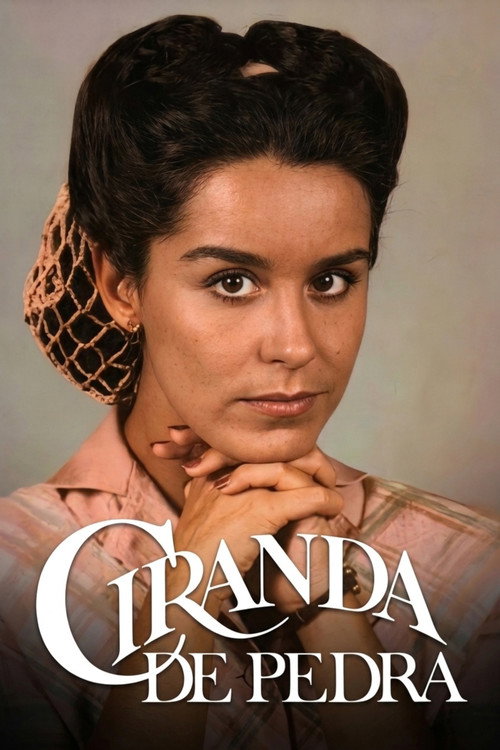
No description available.
The plot takes place in 1880, in the city of Rio de Janeiro, following the lives of three strong and determined women. Aurélia, Maria da Glória and Mila are great friends who attend etiquette classes together, but life doesn't take long to put them in completely different directions.
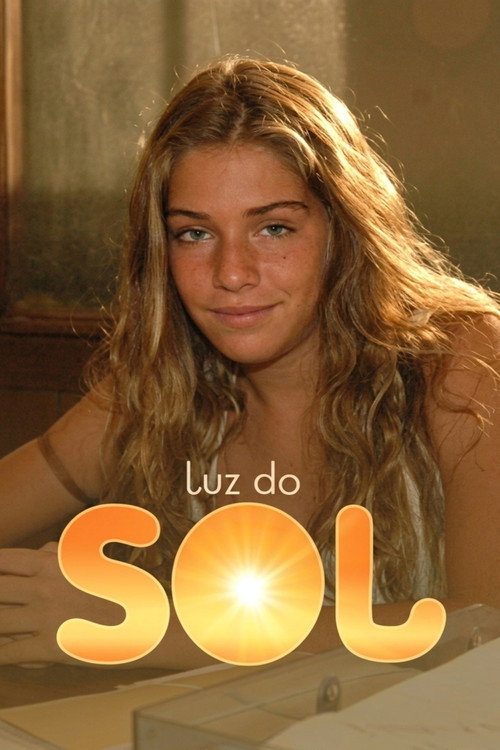
At her birthday party, a little girl disappears and her family is left desperate. Years later, their hope returns in the form of a seaside young woman.
Farmer Selena is a strong-willed young woman who won't rest until she uncovers a secret kept by her mother Camila: the identity of her father.
Set in 1940s São Paulo, the story follows Laura, a modern woman devoted to the arts who is oppressed by her husband, Natércio Prado—a wealthy man with traditional views. Amidst marital turmoil, Laura suffers a severe trauma and is even committed to an asylum by her husband. The couple separates, and the family is torn apart: Laura keeps her youngest daughter, Virgínia, while Natércio retains custody of the other daughters, Otávia and Bruna. Frail and penniless, Laura moves into the Vila Mariana home of her neurologist, Daniel. He is in love with his patient and believes her condition is physical rather than mental. Laura hides the fact that Virgínia is actually Daniel's daughter. The youngest daughter eventually returns to live with her father, where she faces hostility and harshness from the housekeeper, Frau Herta.
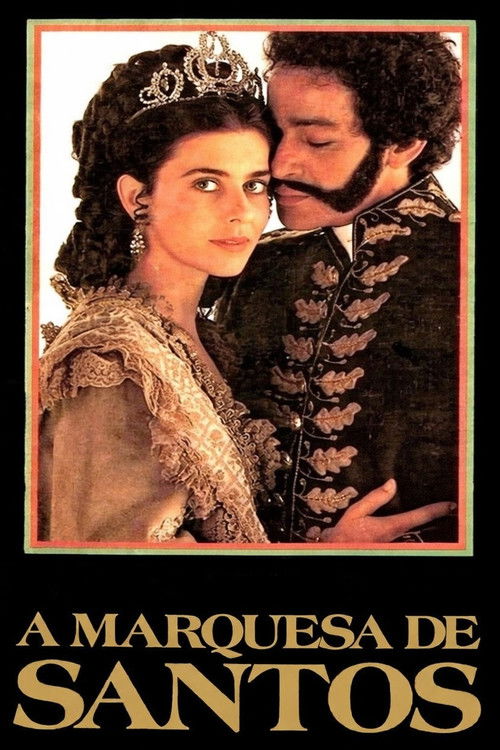
The story of Domitila de Castro Canto e Melo, the Marquise of Santos, the most famous of the mistresses of Dom Pedro I, Emperor of Brazil.
Salome returns to Sao Paulo from Paris to scandalize a conservative society and her own family with desire to be free. She meets Duda, who is already involved romantically with Salome's mother, Santa
Antônio is on his deathbed after helping a Black man escape his own father's plantation. Before dying, Antônio asks his father, Judge Queiroz Antunes, to raise the young enslaved boy, Bento, as his own son.
Cabral is a 60 year old playwright who's married to Glorinha, an actress who's 20 years younger than him. They've been together for half of her live, and now they're getting bored...
After her divorce, Malu faces challenges in supporting her daughter and reinventing herself, grappling with loneliness, work, and the search for a new place in the world.
The central theme of the soap opera is the struggle for political control in the interior of Bahia between the two most powerful *coronéis* (landowning bosses) of the cocoa region: Sinhô Badaró and Horácio da Silveira. Virgílio, an ambitious lawyer, is summoned to the town by Colonel Horácio but ends up becoming involved with Ester, the colonel's wife. Captain João Magalhães is a card sharp who poses as a military engineer, successfully deceiving the entire town. He falls in love with Sinhô Badaró's daughter, Donana. By the end of the story, he reveals that he had only gotten close to the Badarós out of opportunism. After numerous clashes with Sinhô Badaró, Colonel Horácio secures political power in the town of Ferradas, with the acknowledgment of the local population.
It tells the story of Chiquinha Gonzaga, a revolutionary musician who marked the history of music in Brazil, and challenged the social standards of her time. Chiquinha was raised very comfortably and had an excellent education provided by his father, Jose Basileu, who expected his daughter to be a lady of the imperial court. But after listening to songs played in a black yard and influenced by friends, such as composer Joaquim Callado, Chiquinha begins to make compositions mixing polka and lundu. By imposition of her father, Chiquinha is forced to marry Jacinto, with whom she has three children. However, Jacinto forbids her to play, and she decides to separate from her husband, going against social standards. Chiquinha, then, fights for his freedom to play and will live with the great love of his youth, João Batista de Carvalho Jr., with whom he has a daughter, Alice.