Acting
No description available.
The film is a metaphor for the Cold War. It depicts two neighbouring nations: peace loving Fortuna and the not so peaceful land of the Steel City.
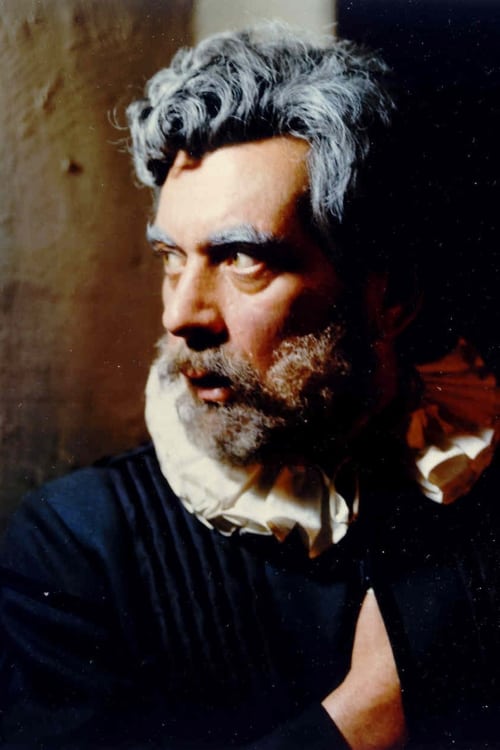
Series about the life of Renaissance anatomist, scholar and politic Johannes Jessenius. Already legendary series today, was produced by Czechoslovak Television Bratislava, directed by Slovak director Miroslav Luther in the first half of 80's in Barrandov Studios in Prague. The story and screenplay of the series wrote Czech writer Vladimír Körner. Five-episodes epic historical narration is a biographical story of distinguished Renaissance scholar, anatomist and politic of Slovak origin, Johannes Jessenius (Ján Jesenský, 1566–1621). It displays his life from the first studies and successes. In 1594 he became professor of surgery and anatomy on Wittenberg University, which he had attended years before. From that moment, his life went through social and personal wins and losses, to the sad end on the Prague Old Town Square gallows, among 27 noblemen, knights and burgenses, after lose Bohemian Revolt in 1621. His destiny was coupled with key events of Czech history in the break of 16th and 17th century, when Renaissance and European humanism slowly fade out.
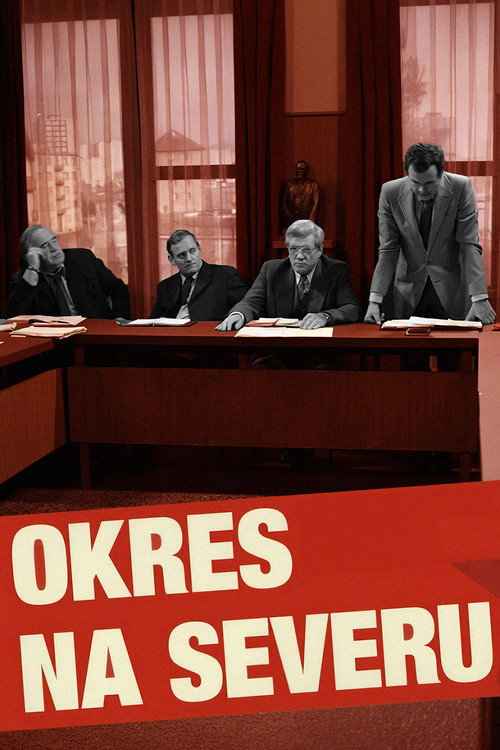
Okres na severu is a Czechoslovak/Czech TV series filmed by Evžen Sokolovský in 1981.
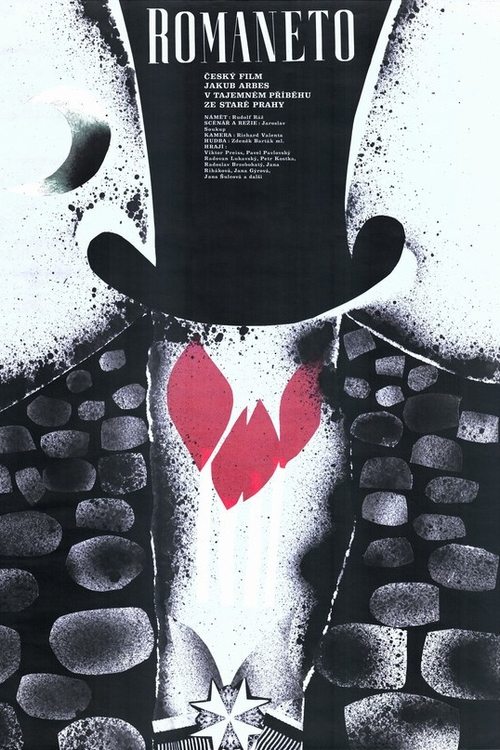
A frightening atmosphere, full of chilling dampness and darkness, follows the fate of a desperate searcher who tries in vain to unravel the supposed secret of the altarpiece...
The common denominator of the five stories, preceded by a brief prologue by Artem Benki, is the setting of a giant open-pit mine in the Podkrušnohoří region in northwestern Bohemia and its surroundings, including the dominant feature of the landscape, the ruined Jezeří Castle.
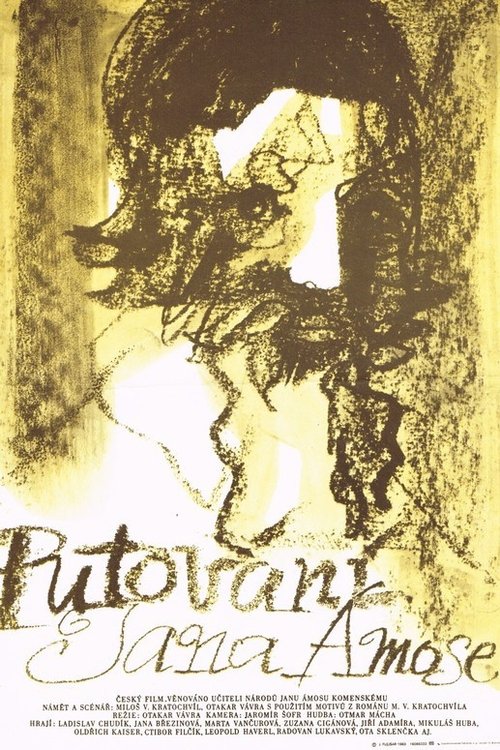
The distressing fate of the Czech great Jan Amos Komenský, forced to leave his homeland after the White Mountain disaster. It depicts his encounters with various European personalities of the 17th century - the Queen of Sweden, artists and scientists. It emphasises the hero's nobility, but also his inner resilience, which allowed him to overcome many personal and professional tragedies. The parable of The Labyrinth of the World and the Paradise of the Heart becomes part of the story. However, Comenius's concept is sculpturally lifeless and, in particular, the religious dimension is "erased" from it. The simplistic biography therefore does not avoid schoolboyish dryness.
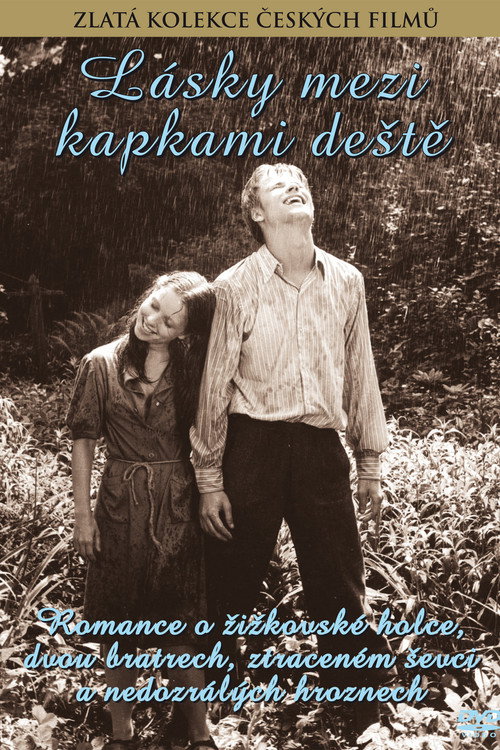
Set in Prague during the years leading up to World War II, this family saga tells the story of a cobbler named Vincenc Bursik (Vladimir Mensik), who uproots his clan from the country to the city, only to suffer the loss of his wife and the failure of his shoe business within months. When his daughter moves away to go live with a wealthy businessman as his mistress, Vincenc is left to take care of his two sons, who spend their days in a secret garden vying for the affections of a teenage girl.
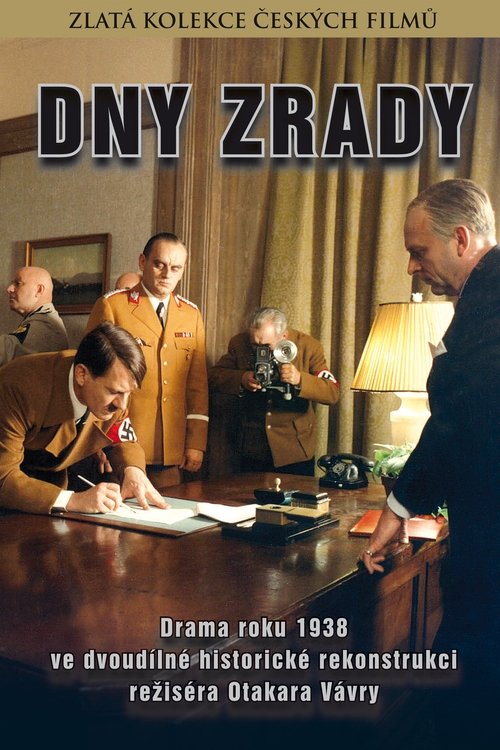
This feature film based on the events of 1938 is a chronicle of the futile efforts of the Czechoslovak president Edvard Benes (Jirí Pleskot), politicians and ordinary citizens, to save the independence and the territorial integrity of the state from the advance of Hitler's Germany. On the 29th of March 1938 the leader of the Sudeten Germans Henlein (Werner Ehrlicher) has a meeting with Hitler (Gunnar Möller). Hitler orders him to intensify pressure on the Czechoslovak government. On the 24th of April in Carlsbad, the Sudetendeutsche Partei (Sudeten German Party) decides upon eight demands that are unacceptable to the Czechoslovak President, since they would ultimately lead to the break-up of the Republic. Benes still shows a certain willingness to negotiate, and Henlein resents this. The Germans are determined to make further negotiations impossible through incidents and violence.
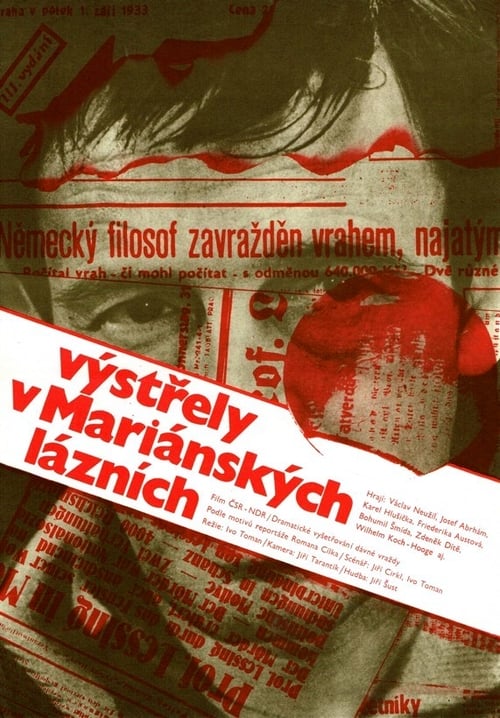
In May 1945, a woman in Marienbad reports a murder - committed in 1933 against the German emigrant Professor Lessing. She also names the murderer. Against the wishes of his superior, who does not feel responsible for this case - it was a fascist femicide - Inspector Šedý picks up the trail and arrests the murderer, the German Eckert. Eckert was a fugitive at the trial in 1933, and now the evidence is no longer available. Nevertheless, Šedý does everything he can to convict him. He finds witnesses who support him - anti-fascists, but also former collaborators who want to clear themselves. Reconstructing the case at the crime scene, Šedý is able to prove that Eckert was at least an accessory. He is convicted. After his release from prison, Eckert goes to West Germany, where he demands compensation from his former clients.
At the beginning was the Slovak television series Lekár umierajúceho czasu (Doctor of Dying Time), dedicated to the Rudolphine-era scientist Jan Jesenius. He ended up on the scaffold along with other gentlemen after losing the anti-Habsburg uprising. When director Miloslav Luther conceived the idea of making an abridged version of the footage for cinema, he had to not only rebuild the storyline but also dub it into Czech. However, the result was only an illustrative puzzle, describing the various stages of the hero's turbulent life.
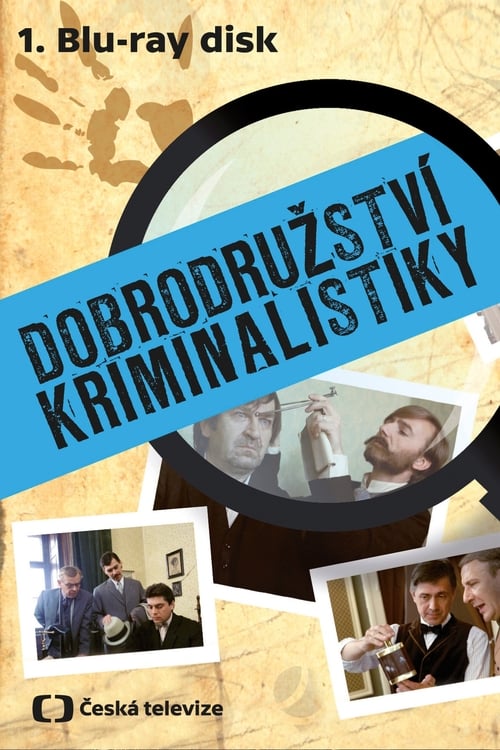
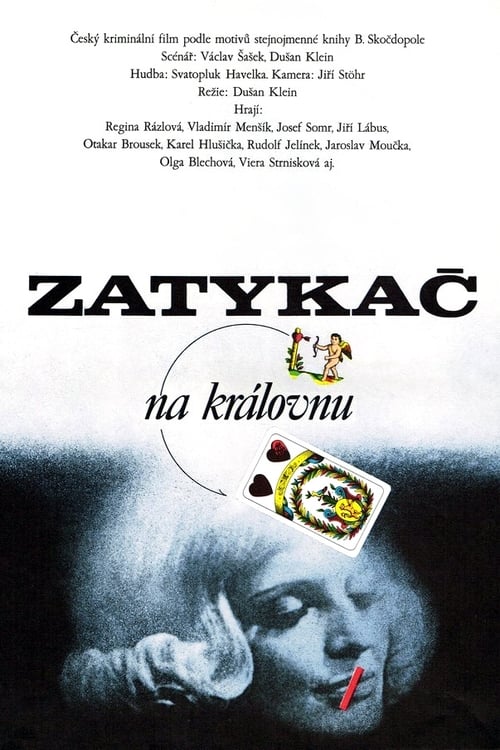
Captain Záruba investigates after an anonymous tip flags the seemingly extravagant lifestyle of Chemotex technician Dagmar Králová. Summoned to discuss the matter, Králová’s quarrel with engineer Vaněček, who secretly runs a suburban bootleg alcohol factory, triggers panic among the illicit network led by hotelier Černý. When Králová is found dead near the site of a murdered hitchhiker, autopsy reveals a different killer, launching parallel murder investigations. Forensic teams uncover the clandestine distillery, and gradually piece together motives and perpetrators behind both deaths.
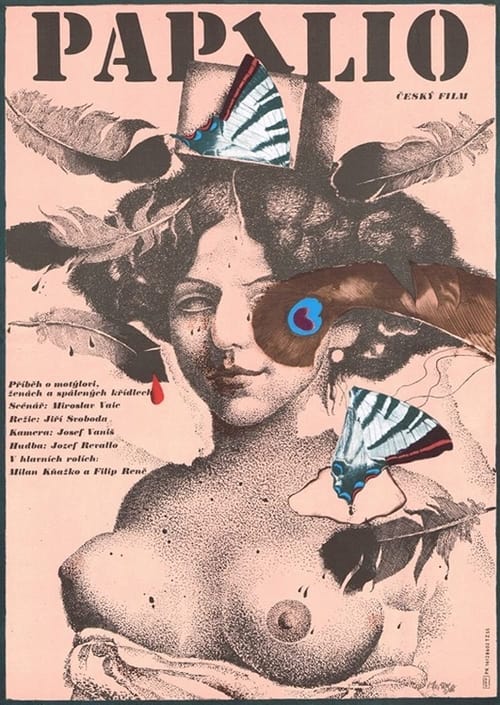
František Cepl is a young man from a simple family. He graduated from a real school and was going to study technology. When the occupation came, he had to work as a factory assistant. There he meets an older man named Telec, whom everyone knows as Hrabě. He impresses František with his ostentatious disdain for work and his shameless flirtation with women. František, whom the Count calls Papilio (butterfly butterfly), is filled with youthful ideals, while the Count, on the other hand, is an extract of the crudest individualism. He has worked his way up from a student at a business academy and a theatre actor to a member of a pre-war gallery. He blackmails, steals, drinks, abuses women and, in a way, Papilio himself.
Getting out of prison doesn't mean being free. After the bloody suppression of the Prague Revolution in 1848, one of its participants, the writer František Vinický, spent eight years in prison. Returning to Prague in 1857, he tries to make contact with his former friends. The main one is his former comrade-in-arms Antoš. Of course, the man's steps also lead him to his former love Ida, who has been married to the councillor Mayer for several years. Vinicky is followed at practically every turn by the secret police, who will not allow him to get a decent job, let alone publish his new book. Police Councillor Berger makes it clear to the writer that a lot could be arranged if Vinicky would commit to cooperating...
The theatre director encounters the disinterest and irresponsibility of the acting troupe, whose members are scheming and looking for side income. The tired and sick artist wants to finish his work at any cost.
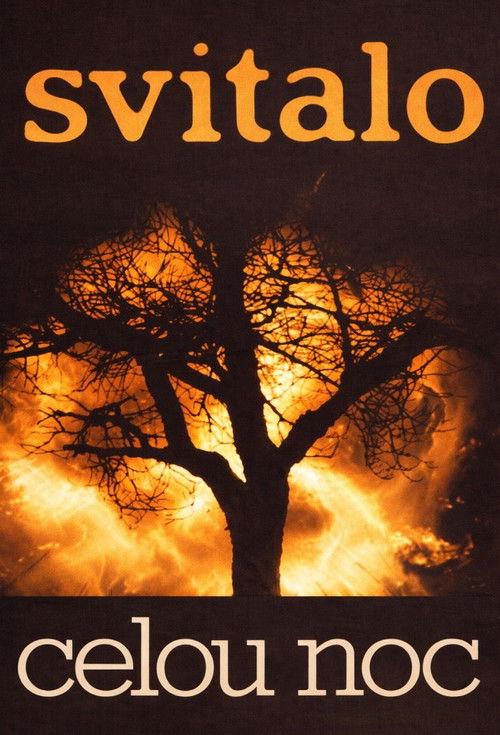
The Czech film Svítalo All Night was made to commemorate the 35th anniversary of the liberation of Czechoslovakia by the Soviet Army and is dedicated to all those who fought and gave their lives in Prague in the May Uprising of 1945. Behind the historical events, the creators see mainly their simple, unassuming participants. Thus, we are presented with a number of apt portraits, whether it is the central hero Dr. Soukup and nurse Daniela on the side of the fighting Czechs, or a captain and a simple private in a Red Army unit coming to the aid of the fighting Prague, or an old, war-weary German major, who only realises the senselessness of the war at the sight of a fanatical, cynical lieutenant for whom Nazi ideology represents the meaning of life.
ComiBaran, a protestant blacksmith arrives in the little village of Lakotice to kill Sekal, a cruel Nazi collaborator.
Josef Laufer portrays Egon Erwin Kisch in two daring journalistic adventures: in “Zuřivý reportér,” Kisch goes undercover in a poverty lodging house, uncovers a tattoo’s dark backstory and deciphers a secret telegram hinting at war via the legend of the black rose; in “Lovci senzací,” he pursues sensational leads and exposes hidden truths, proving why he was rightly called “the raging reporter.”