Directing
X arrives in a small town and witnesses a violent act; Z takes the job of a dead manager and discovers that he had a notebook written in code and a map; H is hired to go down a river and investigate a series of mysterious monoliths built on the shore.
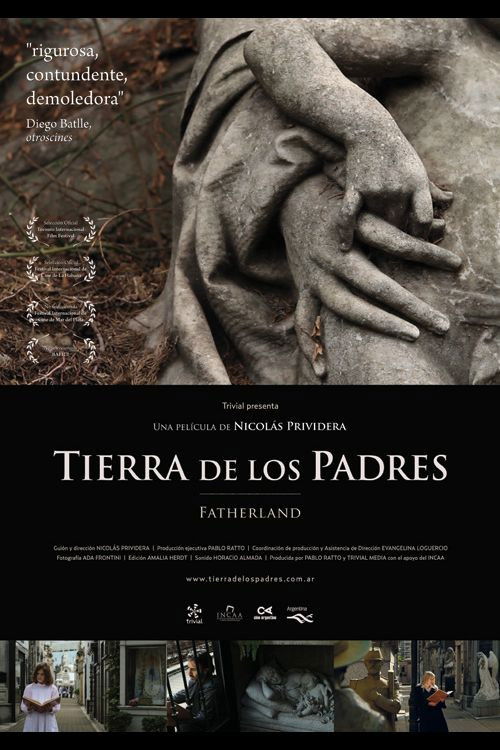
Fatherland brings a rigorous structural approach to a site of monuments that is also a place of movement, criss-crossed daily by tourists and locals. The grounds are laid out like city blocks, with wide avenues branching onto laneways filled with elaborate mausoleums. The film does not attempt to tour the cemetery as one would on foot, however, but rather moves chronologically through the history enshrined there. A series of individuals are framed in static compositions as they read aloud excerpts from the writings of noteworthy Argentines interred within. (Some license has been taken, as the final resting places of certain figures represented - such as journalist Rodolfo Walsh, who was among the "disappeared" - remain unknown. The result is both poetic and political.) Beginning in the early 1800s, this history comprises civil war, battles with the country's native population, the conflict between the city and the provinces, and years of military dictatorship.
The tale of a family during the 20 th century, built from archive footage. Through an imaginary dialogue between two characters a plot begins to weave that finally reveals who they are—a father and a daughter, and the peculiar history that binds them.
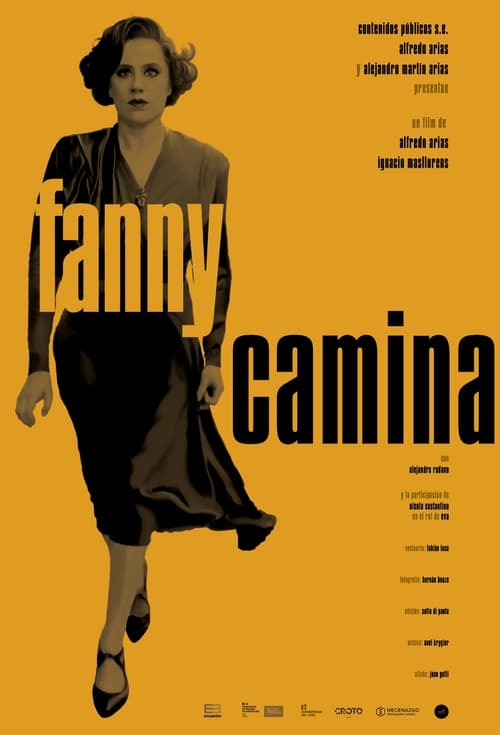
From her encounter with Eva Perón to the death of the icon, from her fascination with the Peronist cause to the persecution she will suffer after the Liberating Revolution, film star Fanny Navarro remembers her life walking today in the streets of Buenos Aires.
Shura finds out that her husband has escaped the mental institution he was in and no one knows where he is. Her days become plagued with paranoia and the presence of the man that follows her. Or is it just her imagination?
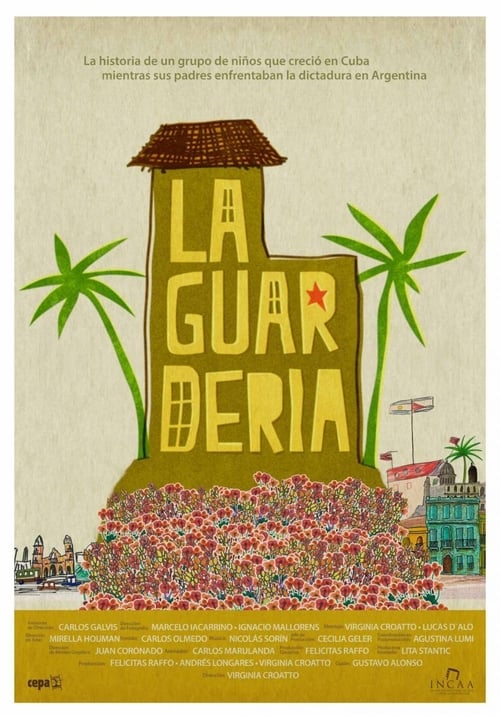
There was a time in Argentina, not so long ago, when the army wasn't only one, official, but many and made up by civilians. In those times of courageous youths determined to fight to the death for that cause upheld around Peronism as wll as some left-wing postulates, revolutionary Cubas was a beacon of hope in the world scheme -a Montonero nation. "A House in Cuba" seeks to recover the curious adventure of a couple of Montonero parents and their small children, who were lovingly sent into exile in order for their parents to take up arms.
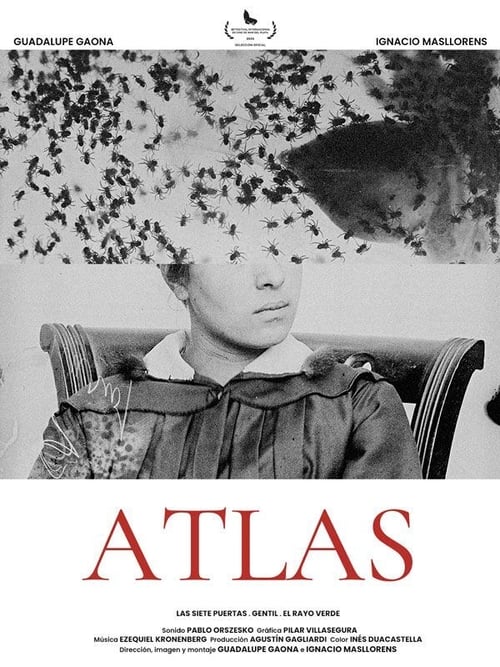
A brief record of the insects and arachnids that visited my house during a very hot summer in Buenos Aires.
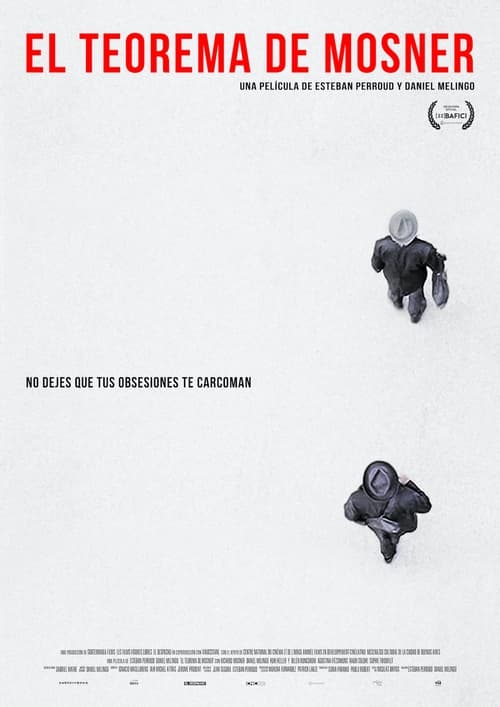
A mirror game between reality and fiction about the creative blocking of a troubled artist. Ricardo Mosner exists, but his character transcends the documentary world. We also see musician Daniel Melingo, the film’s director and co-star, transformed into a ghostly vagabond in the city. The camera captures these specters’ roaming like images of a digital canvas. There is wine, loneliness, parties and sunrises of bourgeois bohemians. The film encrypts its indomitable value in exposing how you can paint an audiovisual picture under the influence of this century’s events and variations. In the end, the film is an act of combining brushes and colors with precision in order to depict a happy reunion in exile.
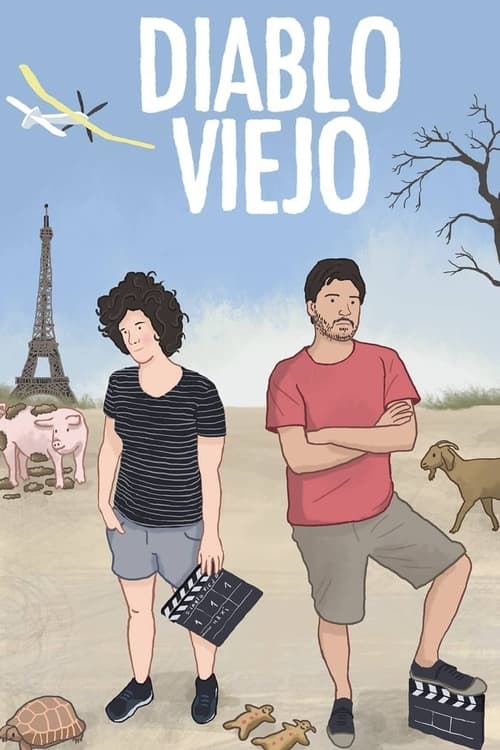
"Diablo Viejo" was going to be a family road trip movie, but the production stops when the co-directors' 9 year relationship comes to an end. After the separation both put together their own version of the story with the pieces of a broken relationship and a frustrated documentary.
No description available.
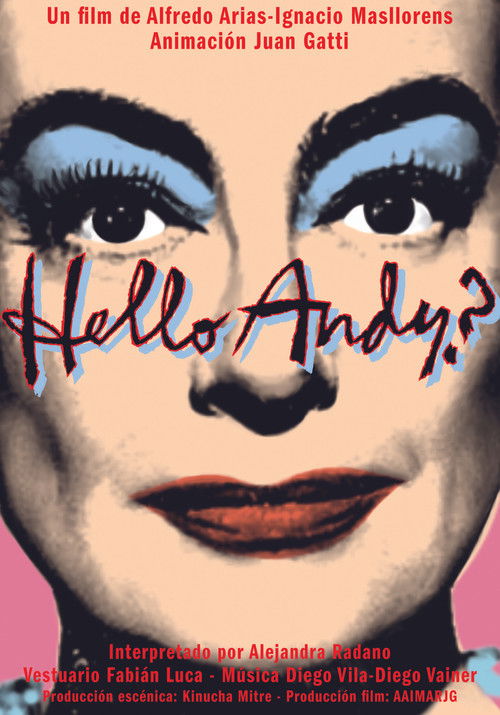
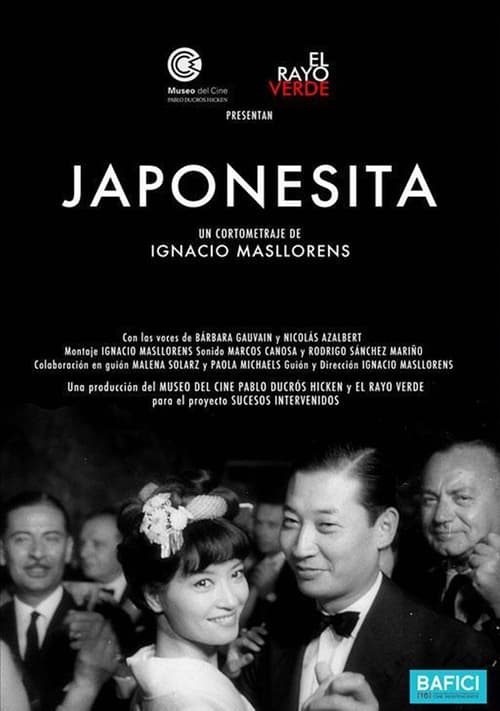
Joan Crawford is a Hollywood legend. She star of bright and somber melodramas. She reigned on the screens for several decades, but every kingdom has her sunset. At that twilight moment, and as if trying to escape that crossroads, Joan decides to call the notable American artist, the greatest exponent of Pop Art: Andy Warhol. Her intention is to replace her muse, Elizabeth Taylor, in the serigraphs that the artist will present at the Ferus Gallery in Los Angeles. This intrusion will give rise to a telephone conversation where the queen of melodrama will confirm that the world has changed and that her cinematographic life in black and white is already part of an implacable past.
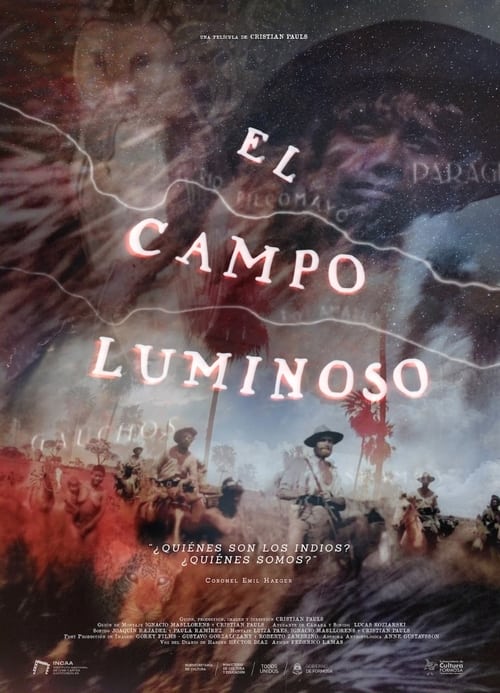
The film retraces the journey of Gustav Emil Haeger's Swedish expedition (1920). Using the route defined by "Following the Indian Trails of the Pilcomayo River," the film made by the Swedish contingent in Formosa at the time, the film contrasts that past with the present-day journey.
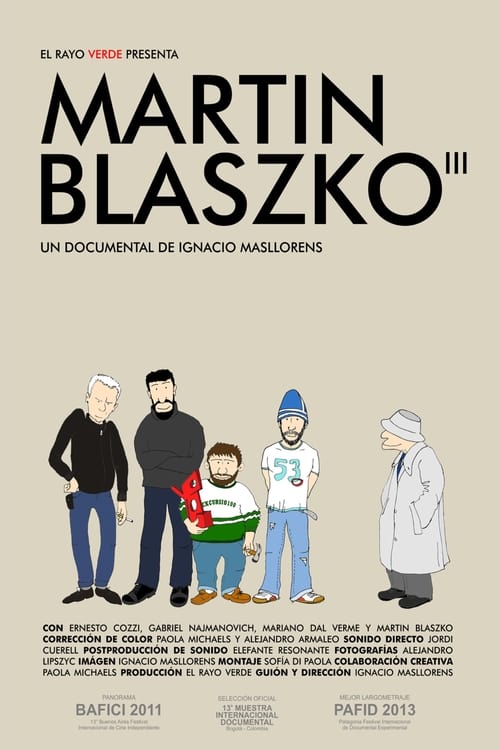
Martin Blaszko is considered one of the most important artists of geometric abstraction in Latin America. This documentary, which ends a trilogy, follows the setup of what ended up being his last art show, through only twenty sequences.
The protagonist of Dog Lady is a woman (Llinás) who lives on the outskirts of Buenos Aires with a pack of dogs, in a house like so many other humble shacks in the urban sprawl of the city.
A monolith is the excuse for a journey to an obsession full of charms and, like every dream, also some disappointment.
The second installment of the adventures of the Corsini Commando takes us this time to the Pampas plain, where Corsini grew up and forged a vision of the world that would accompany him throughout his life. The result of this excursion is an erratic wandering through the landscapes of the Homeland, its paradoxes and its ghosts: A land dreamed of by a newly arrived foreigner who imagined for himself a gaucho destiny that would never become completely real. Now then: is that not, in the end, the destiny of all things?
What do Eva Perón, Víctor Grippo, an American tourist and the Catamaran poet Arturo Basanta have in common? That all of them once passed through the Traslasierra valley and were also victims of the tuber that has obsessed with the inhabitants of Villa Dolores: the solanum tuberosum, better known as the potato.
In 1973 Hugo Santiago made Les Autres, his second feature film. The film was produced in Paris by a team composed mostly of Argentines, and written together with Jorge Luis Borges and Adolfo Bioy Casares. Even so, the film ends up representing France in the official competition at the Cannes festival in 1974. That premiere is a great scandal in which political reasons and film criticism are confused. In this brief introduction, Hugo gives us some clues to better understand his most unknown work, and suggests that after the controversy unleashed in Cannes his career changed forever.
On 9 July – Argentina’s Independence Day – Llinás sets off in Buenos Aires with his regular cameraman Agustín Mendilaharzu to re-record ‘Corsini interpreta a Blomberg y Maciel’, an album made in 1929 by lyricist Hector Pedro Blomberg and composer Enrique Maciel, as an ode to Juan Manuel de Rosas, leader of the Argentine Confederation.