Directing
The documentary delves into the images that shaped the political myth of Jair Bolsonaro, from his earliest YouTube videos to the end of his term in office. Over a series of sleepless nights, a narrator drifts through Bolsonaro’s livestreams, selfies, and speeches, searching for the logic of a form of power forged through and by images. By confronting this visual regime with Brazil’s official iconography, the film explores how power is understood, repeated, and asserted through images, at a time when politics increasingly unfolds on screens.
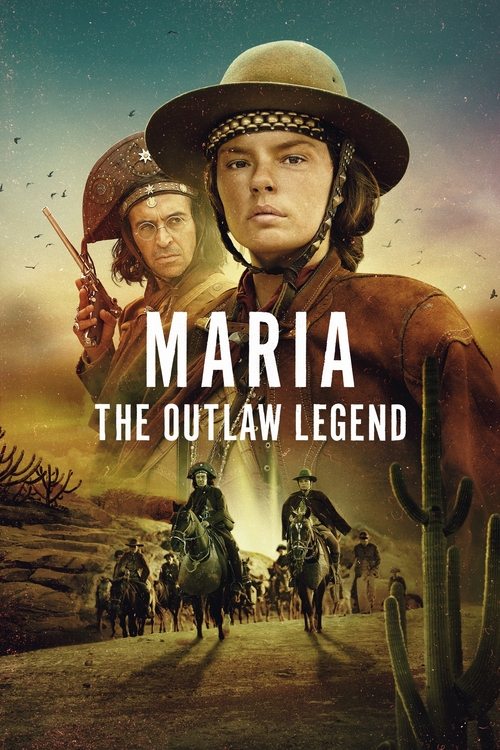
Maria de Déa, Lampião's companion and first woman in the Cangaço, is a fearless young woman who dares to have a voice in a group of outlaws. In a life of escapes and armed disputes, Maria faces a pregnancy and is subdued to the harshest law of the Cangaço: handing over her baby to be raised by someone else. She begins to live between life in the group and the hopeless desire to raise her daughter.
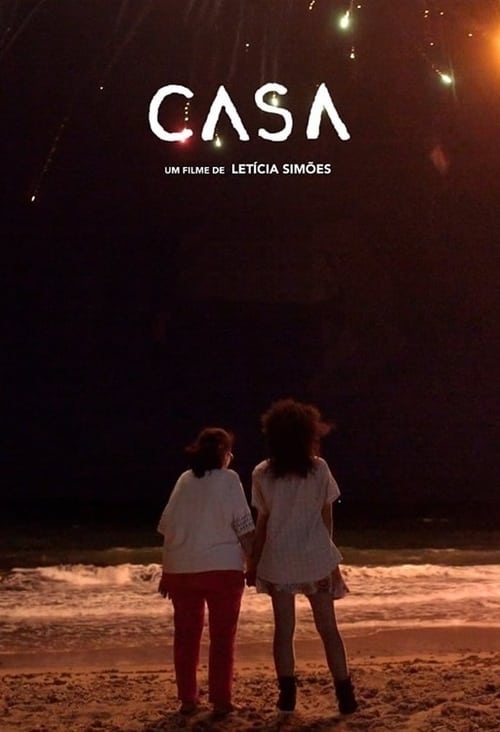
The return of an absent daughter to the city where she was born -absent for fear of a crisis from her bipolar mother- is the trigger for a family reunion.
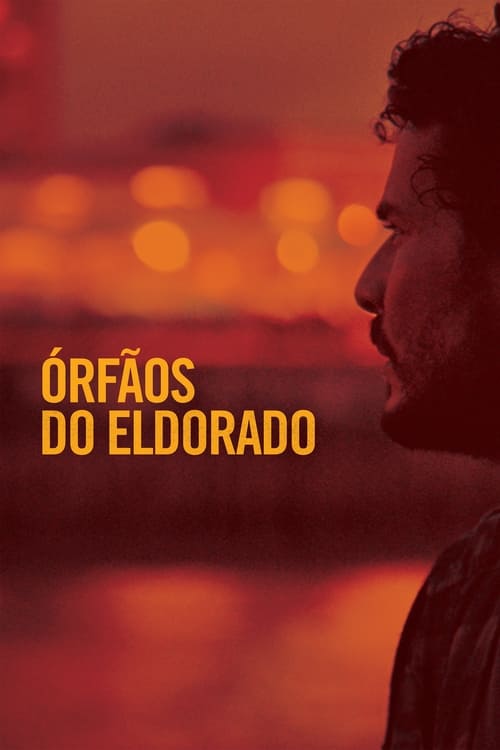
A man returns to his hometown and resumes a dangerous old affair...
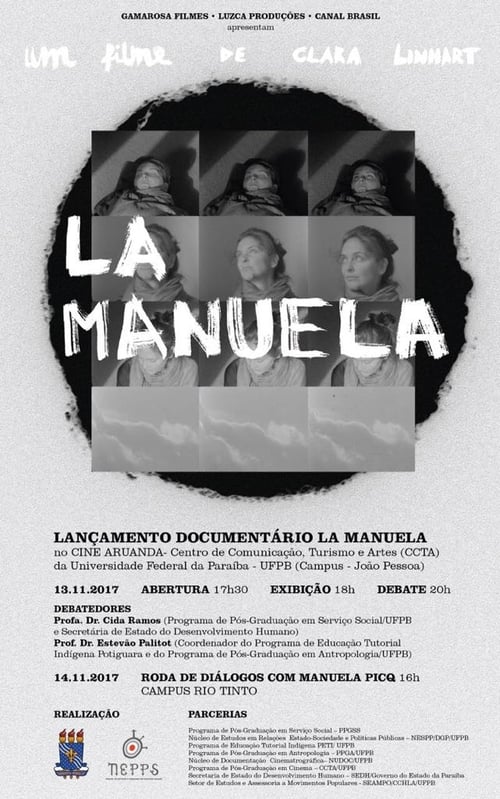
LA MANUELA is a movie about exile and self-reinvention. In august 2015, Manuela Lavinas Picq, a french-brazilian journalist and university professor, was arrested at a demonstration in Quito, Ecuador. That same night, her work visa was revoked and she was taken into custody. Manuela was forced to leave Ecuador, where she had lived for the last decade, losing her home, work and lover. This film tells the trajectory of an activist who defends the causes of indigenous peoples with a lot of identity.
No description available.
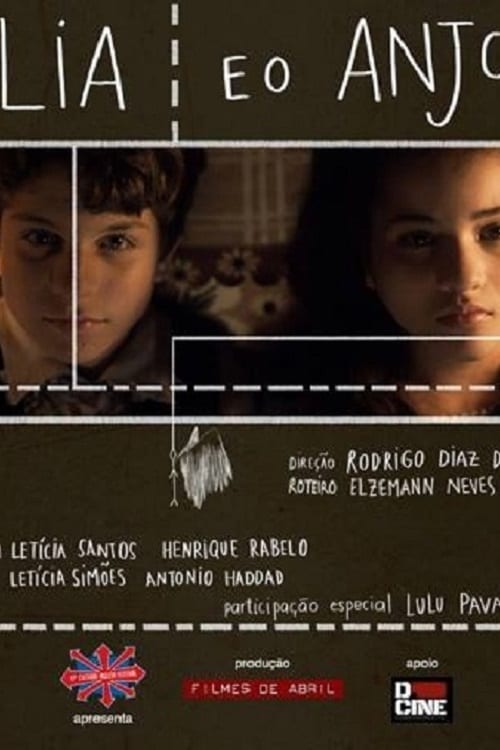
Based in the poem 'The Angel' by William Blake, the film is about the innocence of the childhood and how to grow up losing it and leaving some dreams back. The film has a magic atmosphere, that way we can dive into Lia's world and share her feelings through the fantastic realism.
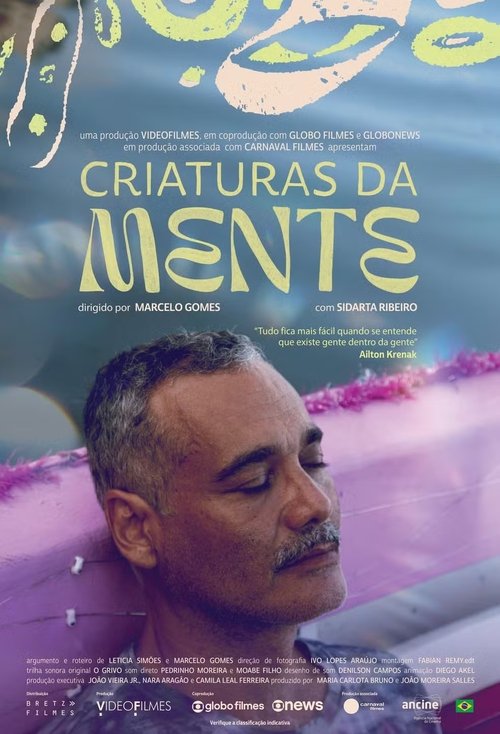
Sidarta Ribeiro, a Brazilian neuroscientist, explores how dreams and other forms of access to the unconscious can transform human experience. In his research, he proposes combining the ancestral knowledge of indigenous peoples and people of African origin in Brazil with scientific knowledge, as well as a scientific reevaluation of experiences with hallucinogens.
At an old manor house in northern Portugal, Ana helps her friend, Emília, the elderly housekeeper who is determined to continue to keep the unoccupied house in order for the owners who are never there. As the seasons turn, Mónica, Ana's daughter, challenges her mother's choices and the three generations of women search to understand where they belong in a world that is rapidly fading, where the cycle of life is renovated only through inevitable endings.
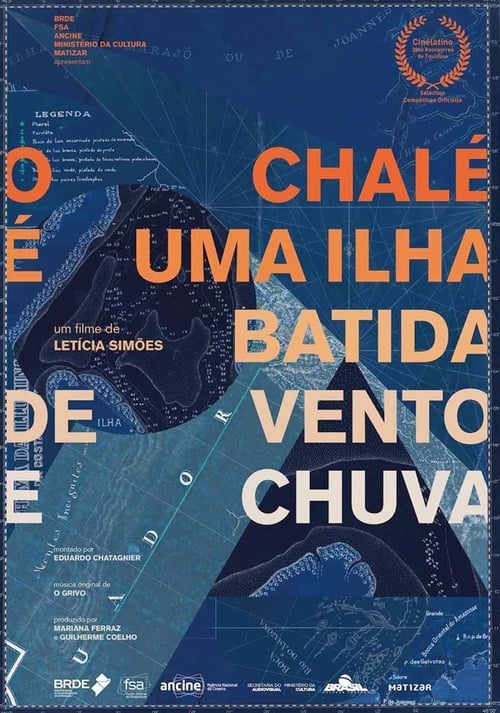
In a not-too-distant future, after centuries of uprisings that divided the old Brazil into new and idiosyncratic nations, a filmmaker travels through the northern and northeastern regions in search of answers for her (and our) historical moment. In this multifaceted and unconventional animated utopian documentary, the boundaries between memory and imagination, the past and the future, blur reality and fiction to question the very concept of a nation and its potential for reinvention.
A presentation of the writer, musician and artist Rodrigo de Souza Leão. The film uses unreleased archive material, video clips with Rodrigo’s music and video art material based on the unpublished poems written by the author. At 23, Rodrigo was diagnosed with schizophrenia and created all of his work indoors. The film also features the participation of interviewees who actually met the artist, like the poet Leonardo Gandolfi, the writer Suzana Vargas and the artist Julia Debasse.
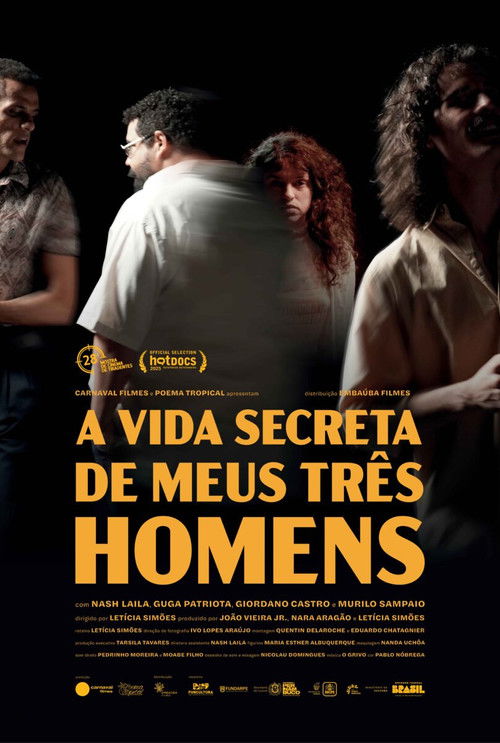
Three men from the past cross into the present to reveal the invisible marks of Brazilian history. Between memory, fantasy, and poetry, The Secret Life of My Three Men proposes a reckoning with the violence that shaped us and the possibility of another future.
Documentary about the brazilian poetess Ana Cristina Cesar, icon of the Mimeógrafo Generation and "Poesia Marginal", books like A Teus Pés, her aspirations, her life e her creative proccess. Artists, friends and researches remembers the poetess.
After having shared a common experience in Cuba, twelve filmmakers say goodbye to return to their countries and make a pact: to make a collective film that answers the questions: what does it mean to plagiarize images and how to do it in the distance? The mechanism is unusual: a director makes a short and sends it to the next director, who in turn makes his own short for the purpose of plagiarizing the one he received. And so the chain of plagiarism continues until it reaches the last one. Each one interprets in their own way what it means to plagiarize the received film. The first link in the chain is James Benning, one of the world's most patient filmmakers. His extensive plans are replicated in the following fragments. Disobedience moves the exercise away from literality and an exploration of the texture of the images begins. In its repetitive mechanism, we can see that cinema is, in addition to record of reality, an art of images and sound. (Santiago González Cragnolino)