
Ilias Giannakakis
Directing
Biography
Producer, screenwriter and director of documentaries and feature films. He has implemented more than 150 documentaries and 2 feature films, as director and screenwriter. In several cases he has been also the producer himself. He has been awarded many times for his documentaries and his feature films in international and Greek festivals. Many of his documentaries have been shown in special screenings in Greece and abroad and have been successfully distributed in the theaters and in television. Since 2000, and for more than 10 years, he had been a regular director in the famous TV documentary program Paraskinio for the Hellenic Broadcasting Corporation ERT. He is specialised in the cultural (arts and literature), historical and athletic genre. In 2002 until 2003 he was advisor and reporter in a radio program for Era Spor, with the title "Mythomania", interviewing important personalities from the sports in Greece. After a long and deep research on the history and the social dimension of the athletics, he published a big essay in 2005, with the title "The Romance of the Football". In 2009 he made as director and screenwriter a documentary series for the greek broadcasting company SKAI TV, under the title "For ever Champions", on the history of football and basketball in Greece, and in 2014 a documentary series for the Hellenic Broadcasting Corporation ERT, with the title "In the Fever of the World Cup", about the history of the World Cup. He has implemented over 30 documentaries on Theater and Drama, he himself being the director, the camera operator and the producer at the same time and following his subject for the whole period of the theatrical process, from the first day of the rehearsals until the premiere. History wise, he has studied a lot the period of the Second World War in Greece and the Civil War and he has made several documentaries on these matters. Apart from his main occupation as director and producer, he has also organised retrospectives and special screenings in Cinemas and Cultural Centers. Furthermore, he had been writing articles on the history of Cinema for more than 15 years. He has created and he keeps expanding a huge collection of old archive films, documentaries, feature films from all the ages of the Cinema, TV programs and interviews as well as magazines and newspapers with historical and cultural value.
Known For
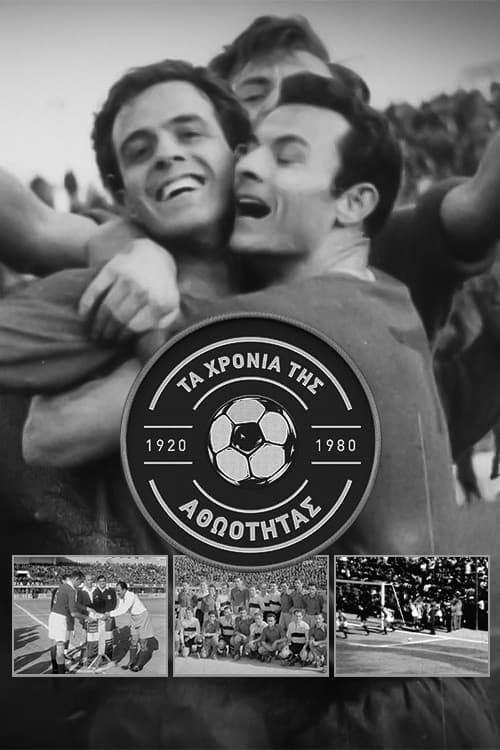
“Years of innocence” signifies the return to the sports memories that have been the balm of the souls of our grandparents, our fathers and those younger people who have heard the narratives or studied the photographs of the great idols of older times. We return to the age of football, when figures of the sport emerged from a completely different setting compared to that of recent years. In this day and age, now that the era of “prosperity” has lapsed into decline, looking at those figures who excelled in conditions of extreme poverty, hunger, terror and the weight of History, offers the most exciting model for today's young people. Through football, we focus on a Greece, true but not ideal, that inspired us, that was lost and which we wish to restore in order to inspire us again, in the midst of such a gloomy juncture.
Years of innocence
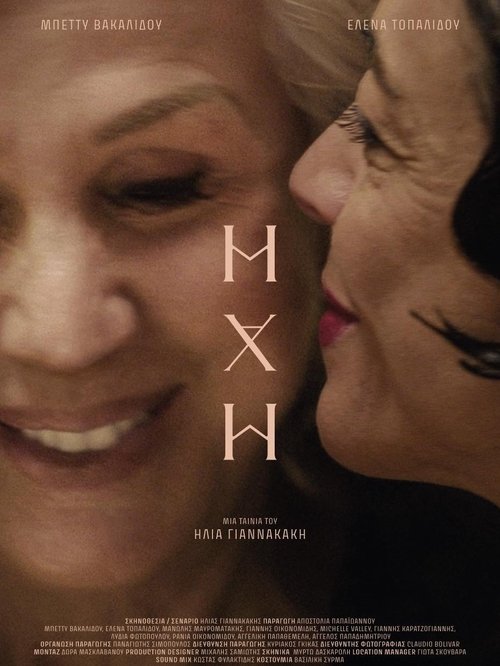
Mahi, an 80-years old woman, is a former military officer who underwent gender reassignment and became a singer. 50 years later, she returns from Germany to Greece to reconnect with her daughter in order to rebuild their relationship.
Mahi
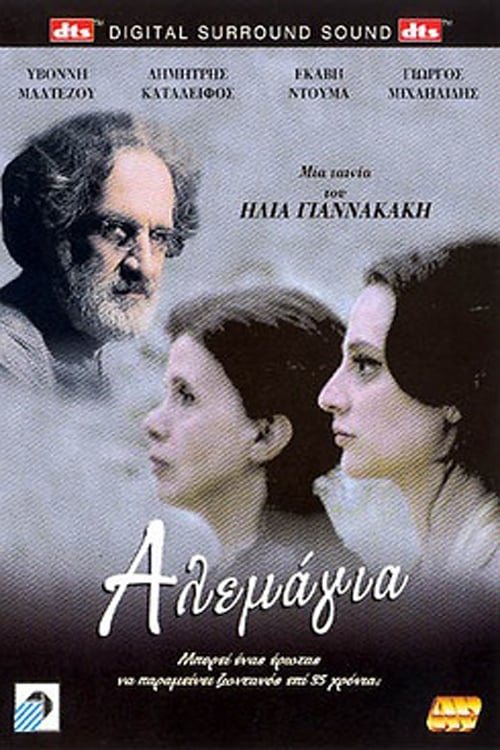
In the Greek community of Ethiopia in the 1960s, a rich Greek disrupts the relationship between his well-bred daughter and a young man. Three decades later they meet again.
Alemaya
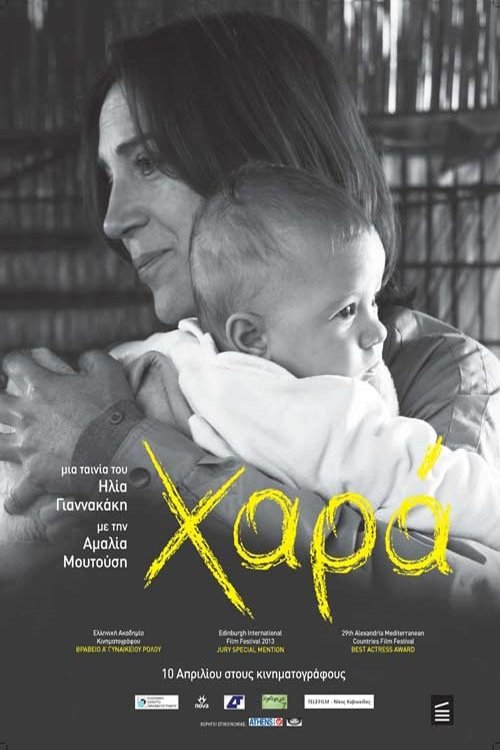
Hara leaves the maternity hospital with a baby in her arms. She spends her days caring for her newborn baby. Daily images of affection, familiarity, devotion and acquaintance with the baby in the rhythm of a lullaby. However, the repeated emergency news about the abduction of a baby from the maternity hospital comes to violently bring us back to reality.
Joy

Kalavryta. December 1943. Devastation; the entire male population over the age of 14 executed; every house in town torched down. In retribution, said the Germans, for the killing of 80 Wehrmacht soldiers by partisans.
Kalavryta: People and Shadows
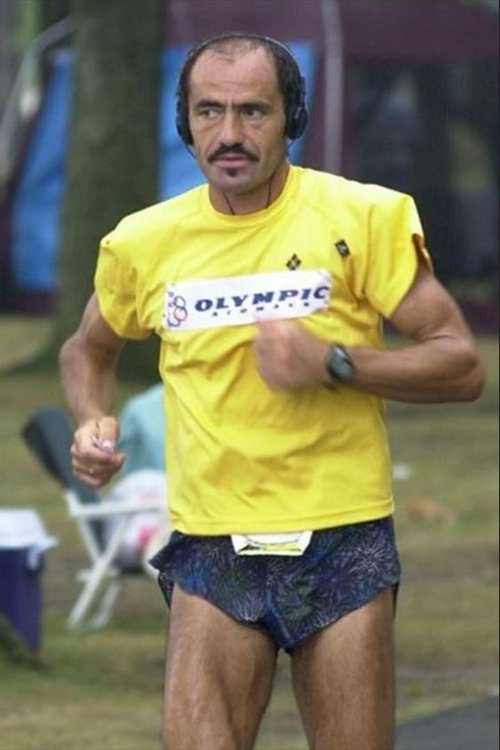
No description available.
Yannis Kouros - Forever Running
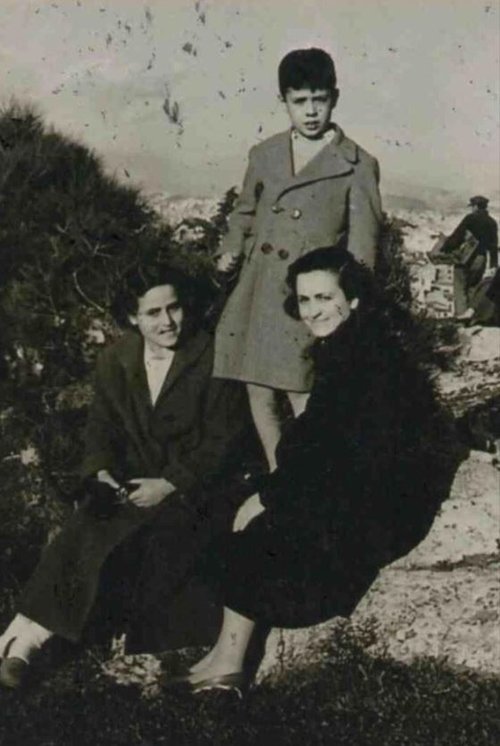
From the onset of the civil war, from 1946 and up until 1955, court-martials had sent thousands of young people from the ranks of EAM, ELAS, and KKE before a firing squad. Until a three-to-two judgment verdict was allowed, human networks, mainly of women, operated in a touching way, trying in the most unlikely ways to influence military judges, give courage to the condemned and take care of the prisoners' children.
A Belated "Thank you"
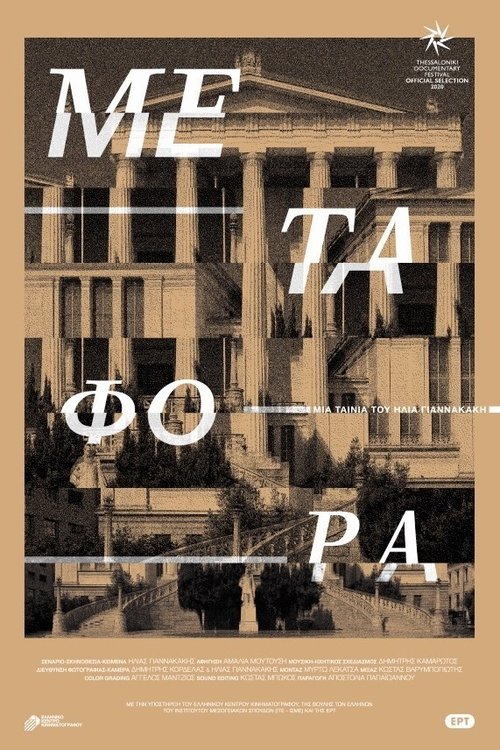
The psyche of Athens through the transfer, the relocation of the National Library. The dominant old building of the National Library in the centre of Athens, with its neoclassical style pillars, tries to remind us of the Golden Age of Pericles and the sages of ancient Greece. But few of the residents seem to be interested in it. The preparations for the transfer of the books, ‘victims’ of looting and wear, have begun. In a city that looks like a battlefield we witness both the transfer and the city, which in its unrest remains exciting. And also, we get to hear the voice of the National Library, connecting the past with the present, wondering about the future.
Transfer
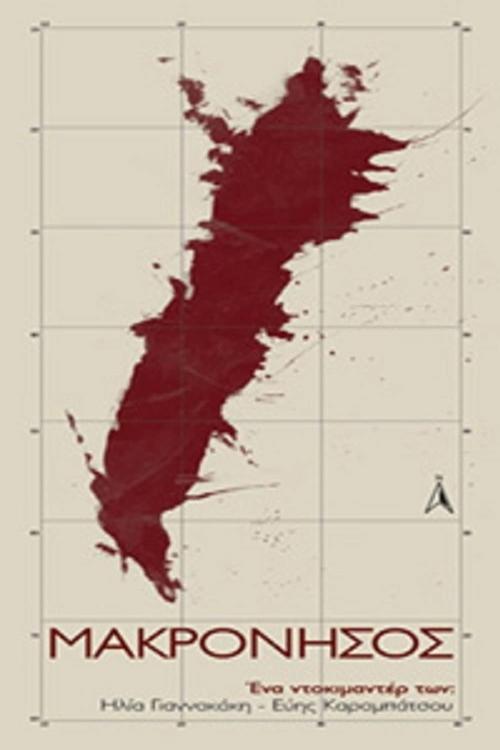
In 1947, in the early days of the Greek civil war, a camp was set up on Makronisos for the rehabilitation of political prisoners, communists and leftist EAMites, so that they would ‘recover’ and join the ranks of the National Republican Greek League. The Makronisos camp was, in effect, a choice of the British, at the outset of the Cold War, as an experimental action against similar situations around the world. Makronissos has been etched on the collective unconscious of the Greeks for the unthinkable violence and the atrocious methods of reform used against the prisoners. Its legend and the stories accompanying one of the most heated affairs in modern Greek history are still alive today.
Makronisos

The Last Daughter
La ultima hija

Costas Manoussakis traced a short but impressive trajectory in Greek cinema and, after making only three films, withdrew into isolation. It was never made clear whether this was a decision to which he had been led due to events or whether this was a peculiar form of self-exiled chosen by a true aesthete. What is certain is that during the sixties, his films, Betrayal and especially Fear, caused quite a stir. Part of the official selection at both the Cannes and Berlin film festivals, the films were box office hits in Greece and were screened in many countries all over the world. At the same time the critics unanimously proclaimed Manoussakis a great talent and a film stylist whose potential went far beyond the narrow limits of Greek cinema. But after 1966, when Fear was screened, Manoussakis never made a film again. At the age of 33 he was a retiree. The documentary looks at the case of Costas Manoussakis in its entirety.