Zemira Alajbegović Pečovnik
Writing
Known For
It reconstructs the lively bustle of the Ljubljana subculture scene in the 80s, and it was made by two insiders. With minute and swift editing of the picture and sound, the makers compiled a number of documents and video shots made between 1982 and 1988.
The Old and the New
Video work tells a story of an art collector as remembered by herself in her old age, and as narrated by her friend, a psychoanalyst. Through this narrative the authors deal with the spirit of avant-garde art in the first half of the 20th century. By layering black and white and color images and sounds the work creates a deep and lively emotional space.
The Sand Collectors

Based upon a novel by Lela B. Njatin, an extremely fragmented piece of narrative. The film retains all characteristics of the original text, introducing the fragmentary structure both in the video image and music score. The heroine experiences only fragments of events, she gets involved in meetings which start but never end, she has wishes which are outlined, but never consumed. In the video film, all these fleeting and intolerable moments, transvestism and changes of identities are indicated with layering of visual levels and mixing of different sounds: narrations in off, dialogues, noises, radio broadcast. The delusive and ungraspable images fluctuate between reality and dreams.
Intolerance
A compilation of the Borghesia video clips (So Young, The Wild Bunch, He, Too Much Tension, Cindy, A.R., ZMR), issued in 1985 as the first video cassette by the FV Label. These are short, almost 'film-like' stories focused primarily on the iconography of the body in urban surroundings. One of the clips presents a pioneer use of computer graphics.
Borghesia: So Young
A 2003 Slovenian language documentary written and directed by Zemira Alajbegović Pečovnik, starring Laibach.
Laibach: The Platform
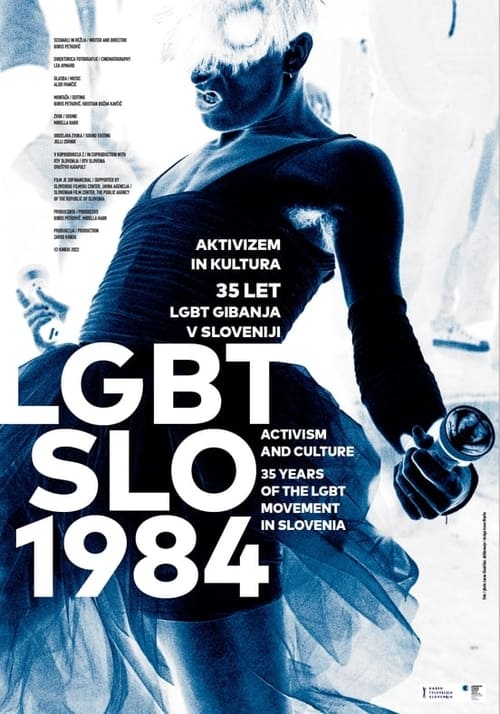
It began in 1984 and it still goes on today. 35 years of the LGBT movement in Slovenia through the prism of activism and culture.
LGBT_SLO_1984

The video starts with a graphic sign from which emerge images, and this procedure points to the fact that any documentary is but an artefact. The narrator searches through documents and reconstructs the life of Lela: in the Middle Ages she was accused of witchcraft; in the 20th century she finds herself in the midst of war, in the future she will leave the planet. Lela's individual destiny is being inscribed into the fate of humanity by means of layering the image; only television shots of the war in former Yugoslavia are presented 'in one layer', clean. The television image has become the only document, the war - the only certainty. Autobus discloses two images of the electronic picture: the one that creates reality, and the other that creates artefacts.
The Bus

A wonderful example of a TV documentary that transcends the limitations of the TV screen. “Slices of Time” tells the story of two women born during the First World War who saw the Austro-Hungarian Monarchy collapse and a new state form: Yugoslavia. The two grandmothers of the author Zemira Alajbegović Pečovnik lived in different cultural and religious spheres – one in predominantly Muslim Bosnia, the other in Christian-influenced Slovenia – and yet were connected through their children and grandchildren. Global and personal history, childhood, love and wars intertwine.