Directing
Only twenty-five years ago, the first evidence of self-medicating behaviour among animals was reported among chimpanzees. On the basis of this pioneering research, led by the American Michael Huffman, a new science was founded: "zoopharmacognosy", or the study of animal pharmacopeia. Animals are apparently able to treat themselves actively, to detect natural substances that can provide a remedy for health problems, or to prevent them. The primatologist Michael Huffman explains how he discovered that chimpanzees can heal their diseases with medicinal plants from their environment. The scientist then comments on other very surprising examples: Birds that disinfect their nests by filling them with aromatic plants with repellent properties, a rodent that covers its coat with toxic sap as a poisonous defence against predators and elephants that place mud plasters on their injuries. Some therapeutic behaviours may even be transmitted socially among certain species.
No description available.
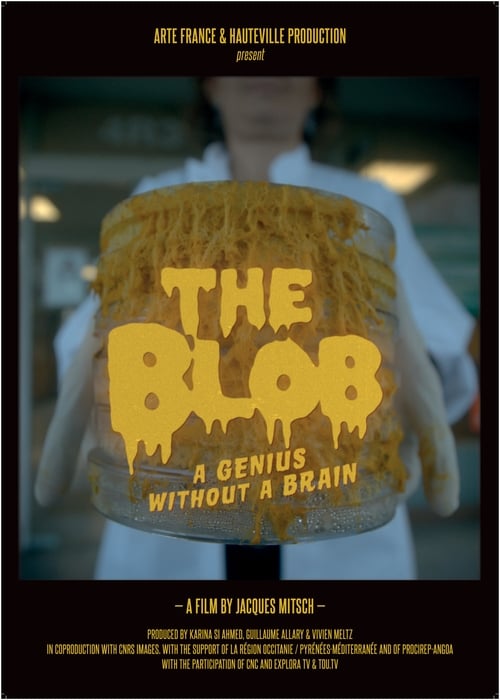
This documentary outlines the unique properties and latest studies of "Physarum Polycephalum", also known as Blob.
Neurobiology has shown in the recent years that contrary to the traditional boundaries between animal and plants, plants can feel, move and even think. Over the recent years, a small but growing group of researchers from Austria, Germany, Italy, UK, Japan, South Africa and the USA, has developed a new scientific field of research: the neurobiology of plants. Their discoveries question the traditional boundaries set between the animal and the vegetable kingdom: plants are capable to develop the cognitive process claimed by humans and animals. If plants can move, and feel... Could they possibly think ? In a creative and captivating scientific investigation style, through spectacular specialist photography and CGI, and re-creating scientific experiments, this documentary is bound to change your own perception of plants.
A musical journey in the footsteps of conductor Michel Brun, an atypical character, an atheist, who nevertheless plays sacred music, and who devotes his life to Johann Sebastian Bach. With the musicians of the Ensemble Baroque de Toulouse.
For how long have we been laughing? Are human beings the only ones to laugh? In the past, scientists tended to neglect such questions of laughter, leaving them to the philosophers. Jacques Mitsch's A NATURAL HISTORY OF LAUGHTER explores recent scientific attempts to explicate this most elusive of human faculties, undertaken by scientists who see it as a means of approaching some of the larger mysteries of neurology and human behavior.
Portrait of Hermann Heinzel.
Why is music vital to our brain? Through an international scientific and neurological investigation, this film will unveil the mystery of music’s multiple powers in our lives. Learning, growing up, loving, overcoming amnesia, anxiety and pain, and much more…at every stage of our lives, how does music play a decisive role in our development?
Pïerre Victor Bouvier, explorer, landed in Oubalski, Eastern Siberia in search of a frozen woolly mammoth.