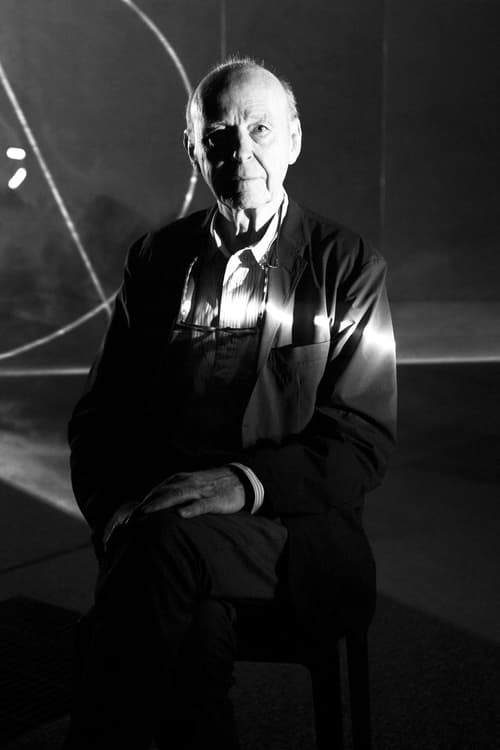
Anthony McCall
Directing
Known For

No description available.
Coupla White Faggots Sitting Around Talking
This key work of the late 1970s, now digitally restored, is a unique attempt to combine contemporary debates around formalism, feminism and psychoanalysis in film. Implicitly engaged in a critical dialogue with filmmakers like Yvonne Rainer and Jean-Luc Godard, as well as the theorists of 'Screen' magazine, Sigmund Freud's Dora is a milestone in the evolution of structuralist film strategies into broader questions of representation.
Sigmund Freud's Dora
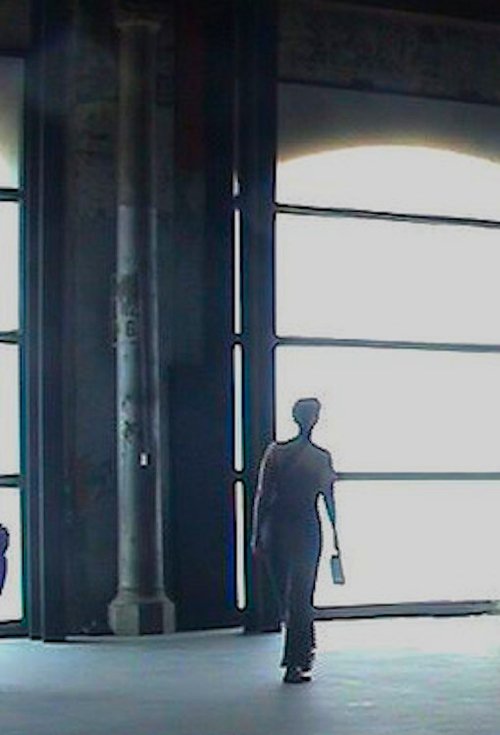
This experimental "film" consists of an empty room with a bare lightbulb, and windows covered with a translucent material, for a duration of 24 hours. It is not necessary for visitors to stay for the entire duration - they can come and go as they please. Created by Anthony McCall, it is based on the architectural framing of time and light. It came at the end of a series of works in which McCall was stripping back cinema to its absolute minimum - light, time, and human experience/perception.
Long Film for Ambient Light
Home movies shot on Super 8mm by W+B Hein over 10 years.
Home Movies 1971-81
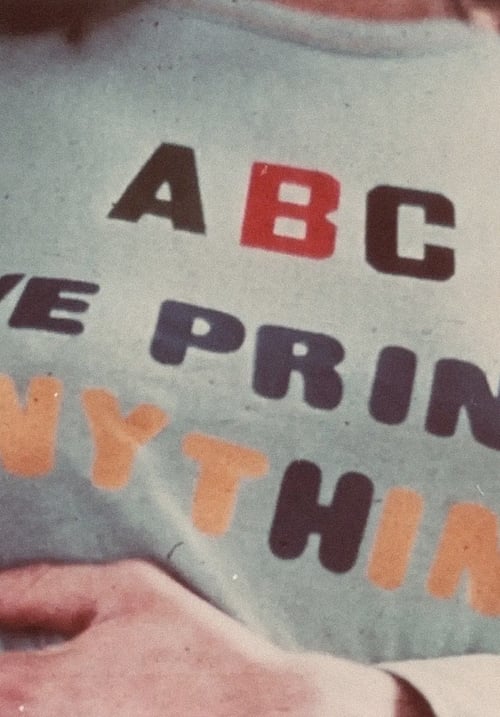
Video documentation of performance of the work hosted by De Appel, Amsterdam, in 1977 and filmed by Miguel-Ángel Cárdenas. In ABC - We print anything - In the cards (1977) Schneemann documented dreams, advice and conversations relating to her shifting relationships. She collated 315 numbered cards, containing both text and photographic imagery, which she photographed from her domestic life. Schneemann (the ‘C’ in ABC) analyses her complex set of experiences separating from ‘A’ (artist Anthony McCall) while drawing closer to ‘B’ (publisher Bruce McPherson). The cards capture the dynamic, paradoxical, humorous and contrary aspects of relationships, forming an intimate yet measured set of information.
ABC - We Print Anything - In the Cards
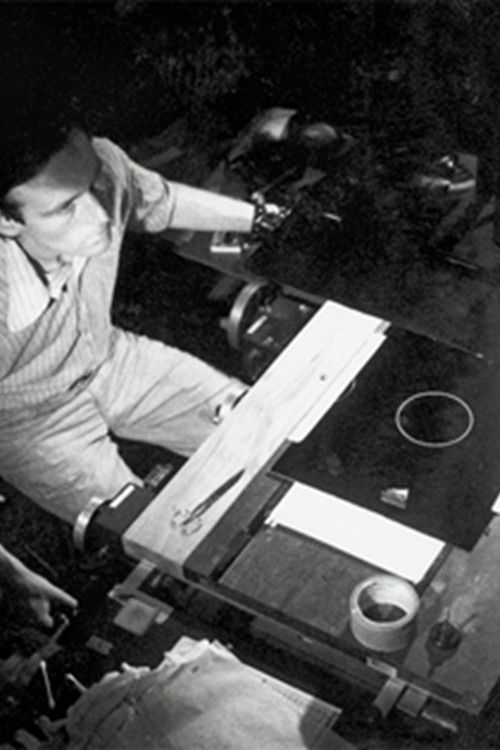
“Cone of Variable Volume was a conical form, which expanded and contracted in volume, like a lung. The rhythmic movement is imperceptible at first, and progressively accelerates in speed.”
Cone of Variable Volume
A flat blade of light rotating from a fixed central axis.
Conical Solid

For Landscape for Fire, Anthony McCall and members of the British artist collaborative Exit followed McCall’s pre-determined score to torch containers of flammable material across a field. McCall describes it: "Over a three-year period, I did a number of these sculptural performances in landscape. Fire was the medium. The performances were based on a square grid defined by 36 small fires (6 x 6). The pieces, which usually took place at dusk, had a systematic, slowly changing structure." The work brought the grid — a conceptual focus for many artists in the 1970s and after — into a natural landscape, merging it with the vagaries of outdoor space and fire.
Landscape for Fire

A single projection in which the “split” is created by interrupting the throw of light with a wall-sized mirror. The plane of light is reflected back onto itself, creating a shifting volumetric cone, which exists seamlessly both in real space and as a reflected object. (Sean Kelly)
Split Second (Mirror)

Landscape for White Squares features individuals emerging out of a dense fog, carrying large, square, white sheets.
Landscape for White Squares
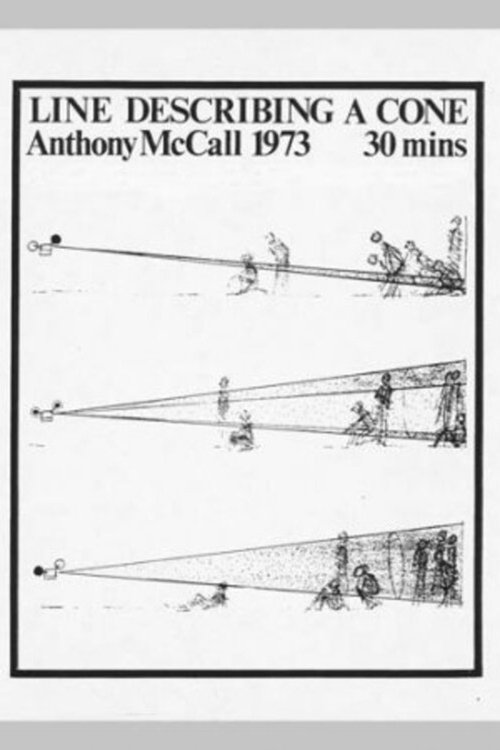
LINE DESCRIBING A CONE is what I term a solid light film. It deals with the projected light beam itself, rather than treating the light beam as a mere carrier of coded information, which is decoded when it strikes the flat surface (the screen). It is projected in the normal way, on a 16mm film projector. Though inevitably there will be a wall that limits the length of the beam, a screen is not necessary. The viewer watches the film, by standing with his, or her, back towards what would normally be the screen, and looking along the beam towards the projector itself. The film begins as a coherent line of light, like a laser beam, and develops through the 30 minute duration, into a complete, hollow cone of light. Line Describing a Cone deals with one of the irreducible, necessary conditions of film: projected light. It deals with this phenomenon directly, independent of any other consideration. It is the first film to exist solely in real, three-dimensional, space.
Line Describing a Cone
A digital re-make and reinterpretation of McCall’s landmark 1973 thirty-minute film installation Line Describing a Cone.
Line Describing a Cone 2.0

In Raised Voices, there are two competing and intersecting forms within the horizontal projection; an incomplete ellipse that varies in its diameter, and a straight diagonal line that splinters in two as it turns through 180 degrees. The forms develop according to a precise durational structure, shifting at a pace that can sometimes be indiscernible, yet presenting itself continuously within the conical field of light.
Raised Voices
A single fifteen minute quarter of a triangular edge of light through 90 degrees, along one wall, becomes four distinct architectural interventions through the intervention of the projector.
Four projected movements

The first in the new Solid Light film series. Like Four Projected Movements almost thirty years earlier, the installation is projected against a wall; the piece was constructed from back waves that pass imperceptibly through one another to create a mutable series of interior spaces.
Doubling Back
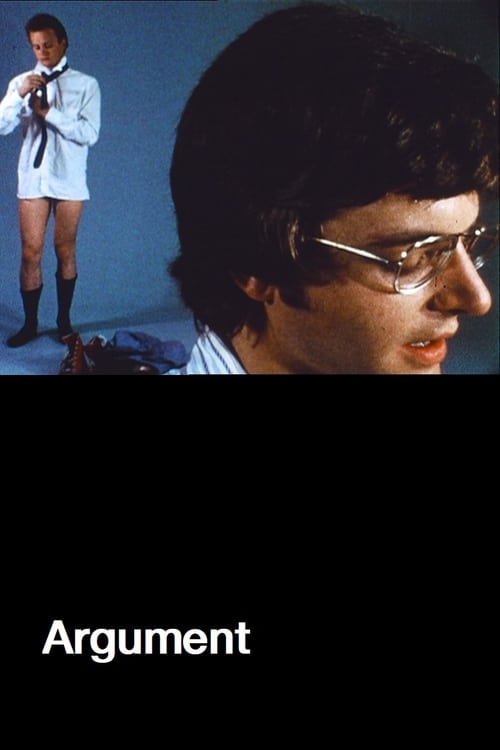
Three male voices dissect one edition of The New York Times through a series of locked-off shots, revealing the prejudice and latent content of news and advertisements, reading images as texts and presenting text as an image.
Argument
McCall’s digital animation presents a slowly shifting beam of “solid light” whose physical properties become outlined within the haze-filled space of the gallery and are further enhanced through viewer interaction. Exploring light across space and time, this immersive presentation complements CAM’s concurrent exhibition Place is the Space through the encounter between projection and architecture.
You and I, Horizontal

Evolving beams are projected in two directions at once.
Face to Face IV
Split Second consists of two separate points of light projected at different heights. The two projections – one elliptical, one flat – meet and combine to form a single slowly changing line-drawing. The projections expand to reveal a flat blade and an elliptical cone, which combine in space to create a complex field of rotating, interpenetrating planes.