Directing
A monthly series of highly personal documentary films in which individuals are given a platform to discuss issues close to their heart.
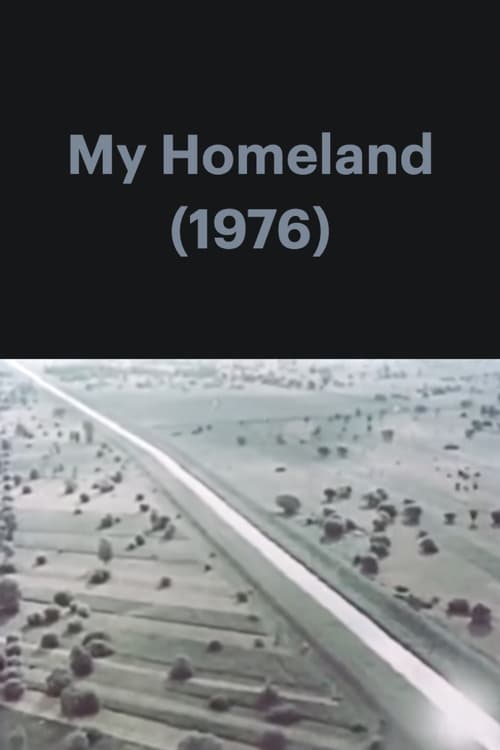
Perhaps this is Robert Vas' most personal film; a portrait of his country - Hungary - as seen through the eyes of an exile. Robert Vas escaped from his homeland after the brutal crushing of the 1956 Hungarian Uprising by the Russians and he was never able to return. He portrays his country through the writings of Hungary's national poets and illustrates the film with images of the Revolution and of the society it would become in the years immediately following 1956. The film was transmitted on the 20th anniversary of the crushing of the uprising.
Charts a journey through various `memory' productions such as murals, monuments, TV histories, commemorations etc, and in so doing questions the role that historical memory plays in our society.
An interview with American director, Anthony Mann. This documentary was first seen as episode 8 of the BBC TV series "The Movies." (A 17-minute excerpt from this show appears on the Criterion Collection's release of "The Furies.")
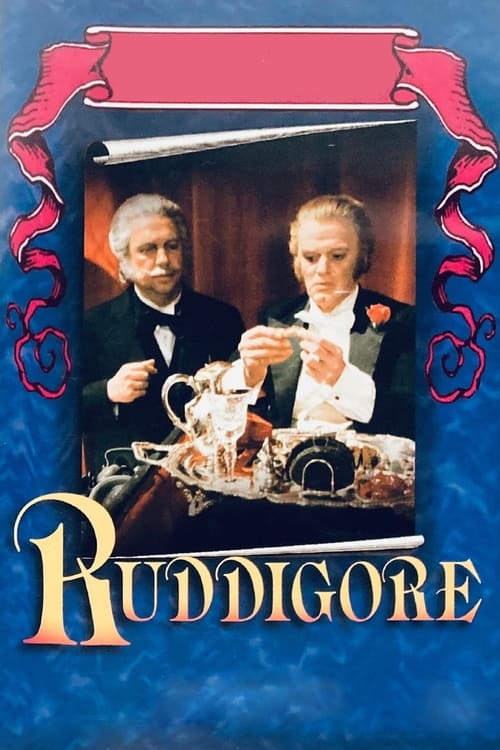
The Baronet of Ruddigore, Sir Despard Murgatroyd, has inherited a family curse which forces him to commit a crime every day — or die in agony. He hates the curse, doing his heinous misdeeds as early as possible and good works for the rest of the day to compensate!
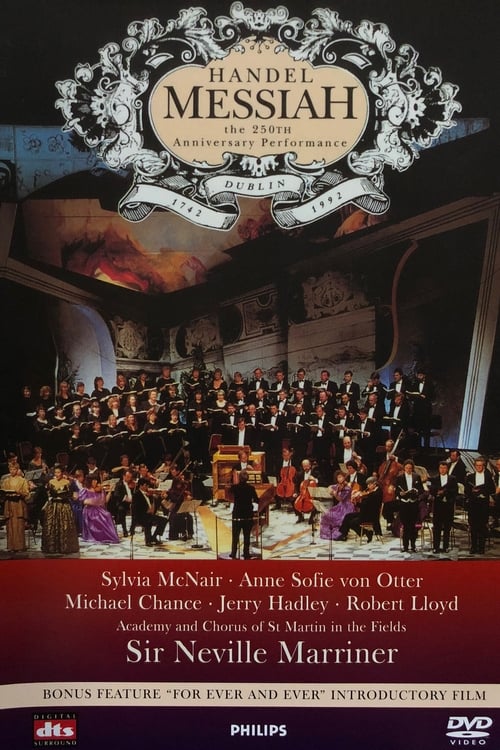
Sir Neville Marriner conducts this 250th Anniversary performance. Soloists include Sylvia McNair, Anne Sofie Van Otter. The performance is supported by an informative background film "For Ever and Ever", explaining the circumstances behind the composition and the work's early impact, featuring contributions from the popular Handel scholar Professor H.C. Robbins Land and from Sir Neville Marriner himself. Recorded in 1992, this performance of Handel's awesome "Messiah" took place on the 250th anniversary of the initial rendition of the piece. Recorded at the Point Theatre in Dublin, Ireland, this is an especially poignant rendition as it takes place in the city where it was originally performed in 1742.
The Threepenny Opera proclaims itself "an opera for beggars," and it was in fact an attempt both to satirize traditional opera and operetta and to create a new kind of musical theater based on the theories of two young German artists, composer Kurt Weill and poet-playwright Bert Brecht. The show opens with a mock-Baroque overture, a nod to Threepenny's source, The Beggar's Opera, a brilliantly successful parody of Handel's operas written by John Gay in 1728. In a brief prologue following the overture, a shabby figure comes onstage with a barrel organ and launches into a song chronicling the crimes of the notorious bandit and womanizer Macheath, "Mack the Knife." The setting is a fair in Soho (London), just before Queen Victoria's coronation. In this production, Weill champion HK Gruber led the Ensemble Modern in a performance of Weill's complete original score, the first time it had been heard in Germany in many years. This production was broadcast on German television (3sat).
BBC documentary about the rise of the New German Cinema and several of its most important figures.
No description available.
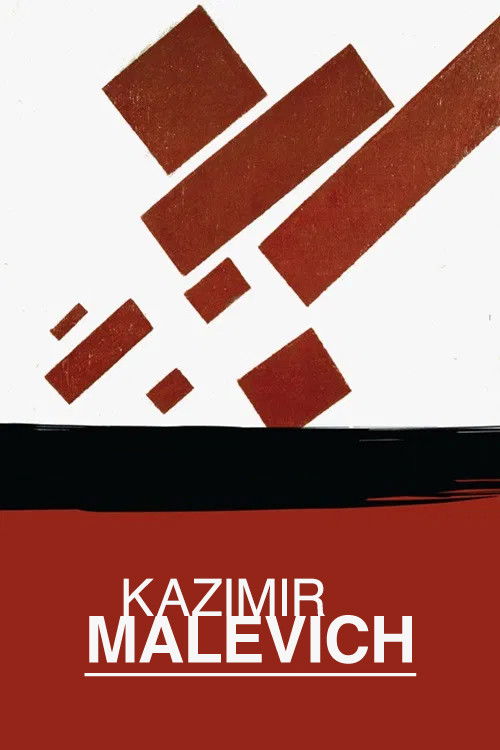
In 1915 the Russian artist Malevich declared a Black Square on a White Background an icon of his times and thus founded a new form of art, liberated from objects – Suprematism. Supported by the Bolsheviks at first, his ‘formalistic’ art was soon considered counterrevolutionary. 50 years later, in 1989, the first comprehensive Malevich retrospective outside Russia was held in Amsterdam’s Stedelijk Museum. It is here that Barrie Gavin outlines the artist’s creative phases and his life story. In doing so, he discovers the most diverse ‘isms’ of the 20th century and one of the most significant pioneers of abstract art.
Made for BBC Television in 1967, this 20-minute documentary features a rare interview with the director and a unique demonstration of his lighting techniques.
Film of Morton Feldman's short opera (libretto by Samuel Beckett).
Composer H.K. Gruber collaborates with director Barrie Gavin on a commissioned short film to commemorate the 200th anniversary of the death of Mozart. Gods create Man, Music and Mozart.
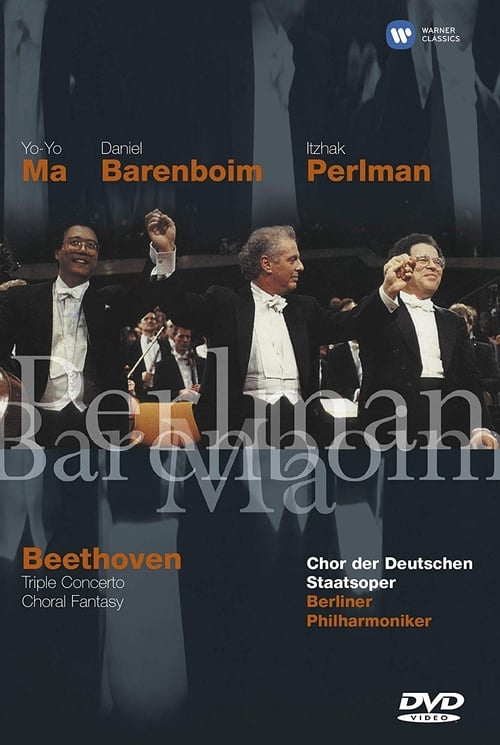
Daniel Barenboim conducts the Berliner Philharmoniker in performances of Beethoven's 'Triple Concerto' and 'Choral Fantasy'. Itzhak Perlman and Yo-Yo Ma are joined by Carola Höhn, Katherina Kammerloher, Andrea Bönig and Endrick Wottrich, amongst others.
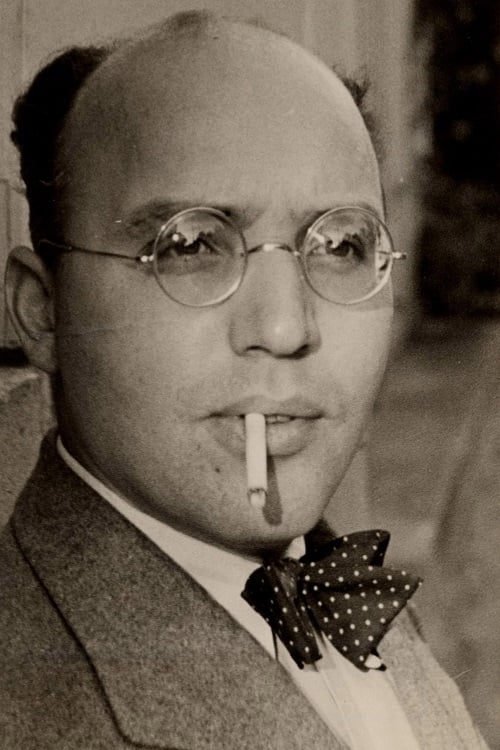
The story of Kurt Weill 's relationship with the American popular theatre. During his years in exile on Broadway, the composer of Mack the Knife and The Alabama Song, who personified decadent Berlin, found a new life in New York, creating such standards as September Song and Speak Low. Director Barrie Gavin describes the film as "the history of an artist ... struggling to write music which could have real meaning for the society he had just joined." Weill is remembered by the conductor Maurice Abravanel and the actor Burgess Meredith and there are extracts from several of his works.
The music is not Beethoven's most familiar, but it is absolutely charming. The concerto is appealing in its melodic material and the intricate interactions among the soloists and orchestra. The Choral Fantasy features a long piano solo that Beethoven wrote for himself, plus a choral melody that sounds like a preliminary sketch for the last movement of his Ninth Symphony. Both works pose unusual balance challenges, to which Barenboim and the recording engineers rise impressively.
This BBC Bristol documentary, Narrated by Bert Lloyd looks at the Gaelic music of the Outer Hebrides. It won the Silver Harp award. Directed by Barrie Gavin.
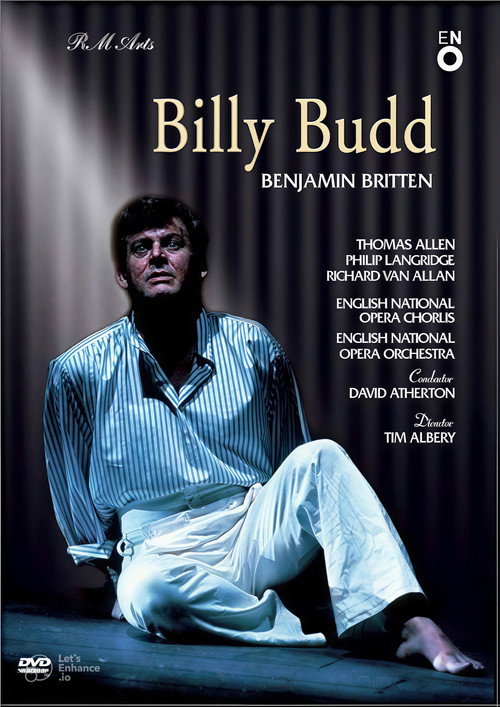
An opera by Benjamin Britten, on a libretto by E.M. Forster and Eric Crozier, adapted from the story by Herman Melville. Billy Budd is a young sailor aboard a British man-o'-war, persecuted by his master-at-arms, Claggart. Accused of mutiny, Budd accidently strikes Claggart dead, leaving Captain Vere with no choice but to hang him.
In 1906 the young Bela Bartok set out to discover the forgotten music of his people. He found a vast treasure of folk music all over Eastern Europe, and he called his discovery 'a miraculous circumstance'. In this film the late A. L. Lloyd retraces Bartok's journeys through Hungary and Romania to rediscover that treasure of native music.