Gustav Opočenský
Acting
Biography
Gustav Opočenský was the son of Bohemian poet and journalist Gustav Roger of Opočenský (1881-1949). Originally, he began to study law, but after closing Nazi colleges in 1939 he headed for the theater, close to art, thanks to his father. He did not undergo any professional training, but after the war he gained his first permanent engagement in the Realistic Theater in Prague (1945-1946). Due to his unbridled inheritance, his father in the mid-1950s came into conflict with the Communist power, he had to go to the theater in Cologne from Pardubice and eventually in 1956 he banned the ban on artistic activity. Then he worked as a miner, later a worker in Stalin's races in Záluží near Most, but at the beginning of the following decade he managed to return to the theater. Subsequent banning of activity silenced Opočenský for twelve years, he reappeared in the film MARATÓN (1968). We can also remind him of his comedic role as an old Nazi in the movie ZÍTRA VSTANU AND I WILL BE TEA (1977). Gustav Opočensky's wife was actress Eva Strupplová (* 1926). Bohemian and artistic family genes also accompany the lives of their two sons, the artist and musician Petr Opočenský (* 1950) and sculptor Pavel Opočensky (* 1954).
Known For

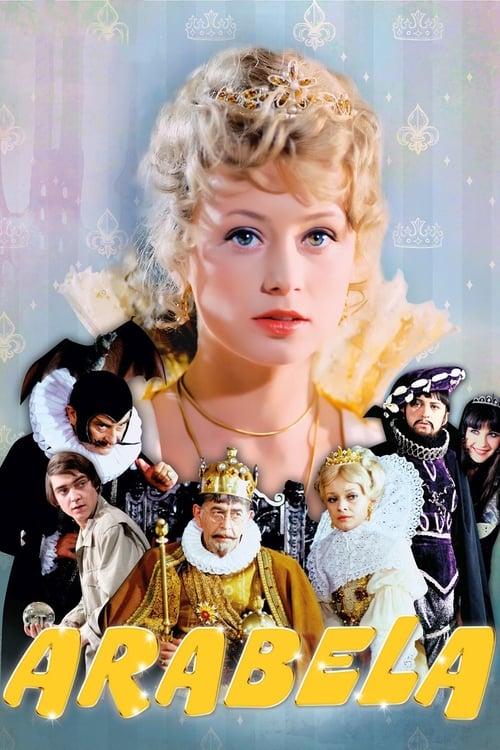
Arabela was a children's television series produced in Czechoslovakia which aired from 1979 to 1981. The series has 13 episodes and is in the Czech language.
Arabela

No description available.
Dobrodružství kriminalistiky

No description available.
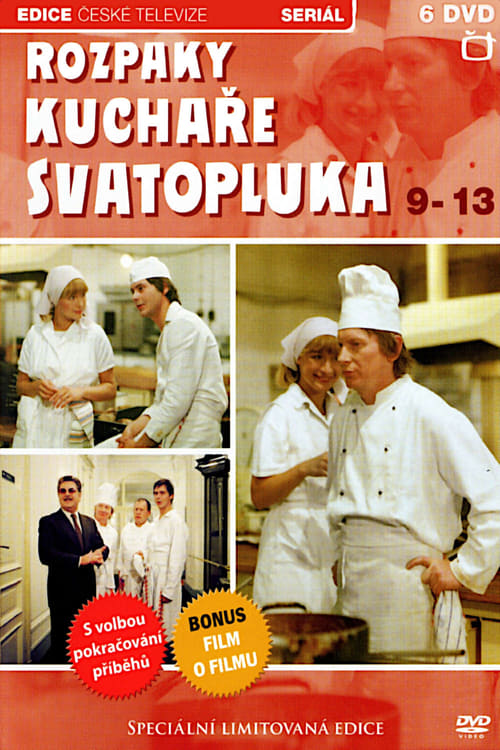
Rozpaky kuchaře Svatopluka

The second part of the revolutionary Hussite trilogy takes place in the years 1419-1420.
Jan Žižka

Former Nazi Klaus Abard survives to the 1990s by taking anti-ageing pills. He plans to use a time travel trip to return to Germany in 1944 and present Hitler with a hydrogen bomb, so that he can win the war. Unfortunately the pilot, woman-chasing Karel Bures, dies on the morning of the trip and his earnest twin brother Jan impersonates him, without knowing about the plot.
Tomorrow I'll Wake Up and Scald Myself with Tea

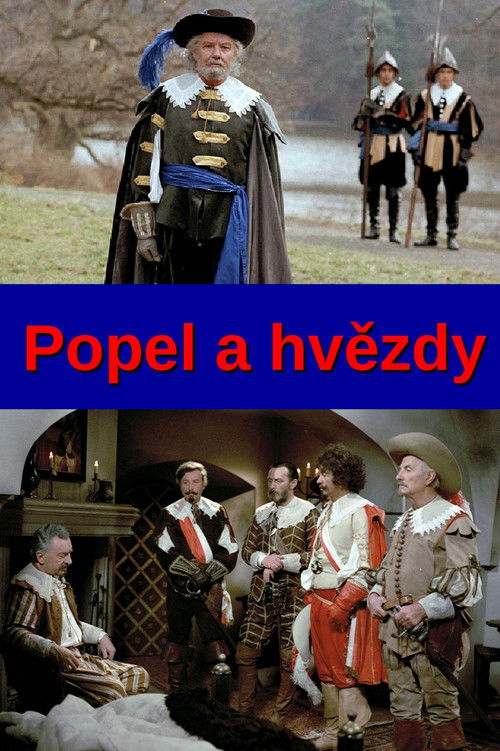
No description available.
Popel a hvězdy

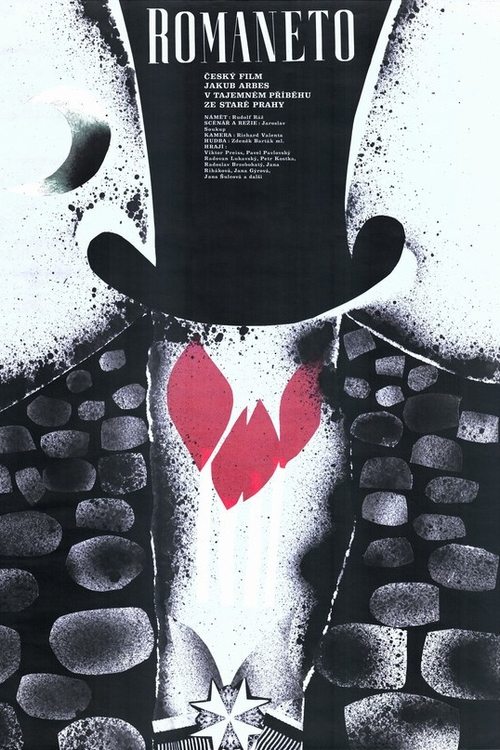
A frightening atmosphere, full of chilling dampness and darkness, follows the fate of a desperate searcher who tries in vain to unravel the supposed secret of the altarpiece...
Romaneto
Otakar Vávra dedicated his latest film to events accompanying the devastation of the first World War. It takes place in representative centers of power, in the courts of Vienna, Berlin and Moscow. In parallel, it develops the fate of the Czech archivist, who will take part in the Serbian anti-Austrian branch.
Evropa tančila valčík
At the beginning was the Slovak television series Lekár umierajúceho czasu (Doctor of Dying Time), dedicated to the Rudolphine-era scientist Jan Jesenius. He ended up on the scaffold along with other gentlemen after losing the anti-Habsburg uprising. When director Miloslav Luther conceived the idea of making an abridged version of the footage for cinema, he had to not only rebuild the storyline but also dub it into Czech. However, the result was only an illustrative puzzle, describing the various stages of the hero's turbulent life.
Svědek umírajícího času

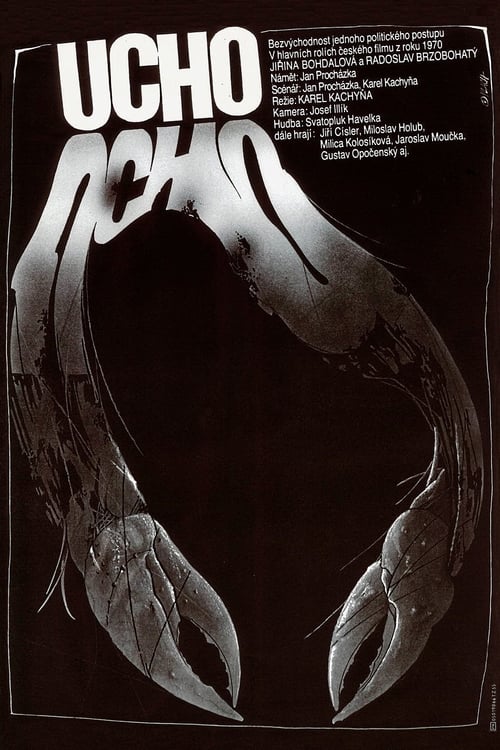
Government bureaucrat Ludvik becomes suspicious after several colleagues disappear and he overhears something strange at a cocktail party. Returning home with his wife, Anna, he finds their house under surveillance and spends a fraught night worrying about his possible arrest in the morning. Marital difficulties come to light as Ludvik and his wife attempt to act normal in front of the cameras while dredging up their problems out of sight.
The Ear

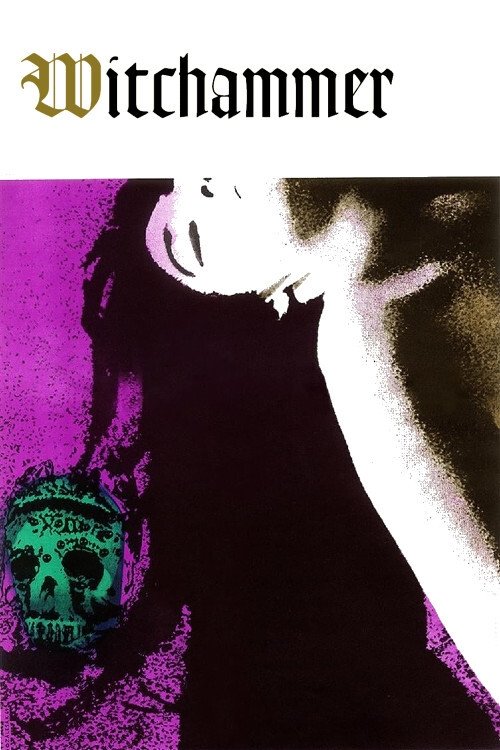
In the 1600s, an overzealous clergy hauls innocent women in front of tribunals, forces them to confess to imaginary witchery, and engages in brutal torture and persecution of their subjects.
Witchhammer

After the battle of Sudoměř the Hussite teaching spreads through the whole country and people start leaving their homes to help build the fortification of Tábor. Prague citizens request help against the army of Zikmund. The Hussite army with Jan Žižka in the lead make their way towards Prague. They fortify themselves on the mountain Vítkov and engage in a bloody battle with Zikmund’s huge army.
Against All

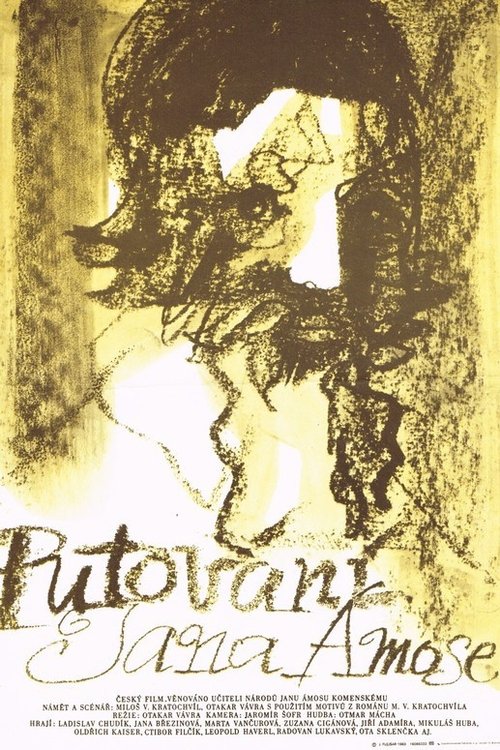
The distressing fate of the Czech great Jan Amos Komenský, forced to leave his homeland after the White Mountain disaster. It depicts his encounters with various European personalities of the 17th century - the Queen of Sweden, artists and scientists. It emphasises the hero's nobility, but also his inner resilience, which allowed him to overcome many personal and professional tragedies. The parable of The Labyrinth of the World and the Paradise of the Heart becomes part of the story. However, Comenius's concept is sculpturally lifeless and, in particular, the religious dimension is "erased" from it. The simplistic biography therefore does not avoid schoolboyish dryness.
Putování Jana Amose

Princess Julia doesn't want to marry an old prince Hubert so she runs away from home. She meets two old magicians and join the circus, where she meets lovely Franta Kuldan and evil devil performer.
On a Wayward Princess

It is 5 May 1945 and the uprising against the hated German occupiers has broken out in Prague. The Czech guards open the gate of the Pankrác prison to allow the prisoners to escape en masse. Many of them are shot dead by the German guards but young Ruda (Jaromír Hanzlík) manages to run away. He is taken care of by one of the Prague fighters, concierge Kytka. Kytka hides him in the flat of the house's owner where only the young maid Karla (Jana Brejchová) is left, ordering her to take care of Ruda.
Marathon

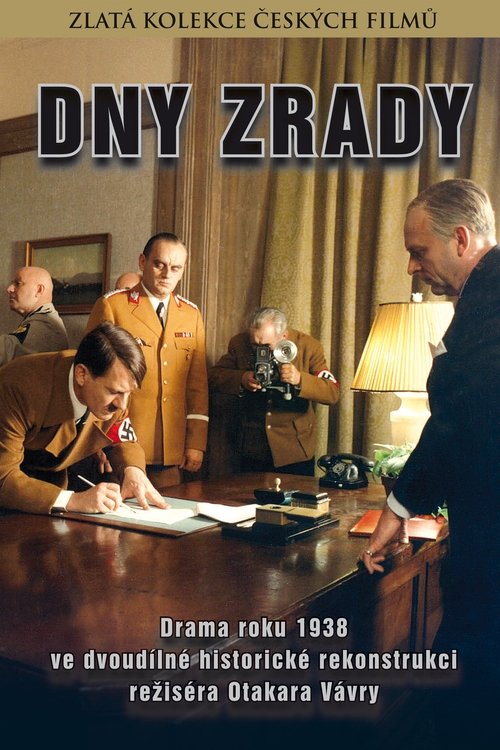
This feature film based on the events of 1938 is a chronicle of the futile efforts of the Czechoslovak president Edvard Benes (Jirí Pleskot), politicians and ordinary citizens, to save the independence and the territorial integrity of the state from the advance of Hitler's Germany. On the 29th of March 1938 the leader of the Sudeten Germans Henlein (Werner Ehrlicher) has a meeting with Hitler (Gunnar Möller). Hitler orders him to intensify pressure on the Czechoslovak government. On the 24th of April in Carlsbad, the Sudetendeutsche Partei (Sudeten German Party) decides upon eight demands that are unacceptable to the Czechoslovak President, since they would ultimately lead to the break-up of the Republic. Benes still shows a certain willingness to negotiate, and Henlein resents this. The Germans are determined to make further negotiations impossible through incidents and violence.
Days of Betrayal

The first part of the "Hussite Revolutionary Trilogy", completed with Jan Žižka (1955) and Proti všem (Against All Odds, 1957). The film captures the period from May 1412 to the summer of 1415, a turbulent time in the Czech Kingdom, during which there were protests in Prague against the sale of "omnipotent indulgences" whose sale throughout the kingdom was announced by Pope John XXIII. The ideological leader of this movement is the preacher Master Jan Hus, whose words, calling for the elimination of church abuses, are listened to in the Bethlehem Chapel by thousands of ordinary Praguers, Czech lords and Queen Sophie, wife of the Czech King Wenceslas IV.
Jan Hus
Getting out of prison doesn't mean being free. After the bloody suppression of the Prague Revolution in 1848, one of its participants, the writer František Vinický, spent eight years in prison. Returning to Prague in 1857, he tries to make contact with his former friends. The main one is his former comrade-in-arms Antoš. Of course, the man's steps also lead him to his former love Ida, who has been married to the councillor Mayer for several years. Vinicky is followed at practically every turn by the secret police, who will not allow him to get a decent job, let alone publish his new book. Police Councillor Berger makes it clear to the writer that a lot could be arranged if Vinicky would commit to cooperating...
Záchvěv strachu

Summer 1968: The crisis is reaching its peak. The director of the Prague taxi service, Mudroch, rejects the drivers' absurd demands for a pay increase. The taxi drivers decide to go on strike and seek support against Murdoch from trade unionists and enemies of the regime. The director is convinced that honest communists like him cannot be defeated. However, hateful vandals damage the brakes in his car...
Za volantem nepřítel

Ondrej lives on a farm outside a small town with his family. One day a group of men arrive at the family's house and the harmonious life they've led so far changes drastically for the worse.