Paul Haesaerts
Directing
Known For
1950 Belgian short documentary by Paul Haesaerts
From Renoir to Picasso
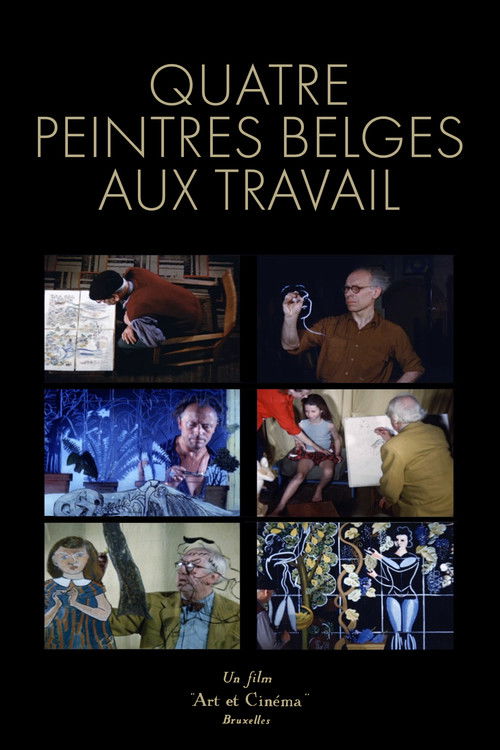
Belgian art historian and filmmaker Paul Haesaerts (1901–1974) made a significant contribution to the promotion of modern Flemish art. In the late 1940s, he started experimenting with the medium of film to practice a new form of lens-based art criticism. The understudied documentary "Quatre peintres belges au travail" (1952) presents Belgian artists Edgar Tytgat, Albert Dasnoy, Jean Brusselmans and Paul Delvaux at work in their studio. On a large sheet of glass placed in front of the camera, they each paint one of the seasons that also represent a stage in a person’s life. A close reading of this Kodachrome color film sheds light on the context of mid-century art reproductions, mass media and post-war Flemish culture. It also examines in what way this film operates as Haesaerts’s concept of cinéma critique, while raising questions as to the way Haesaerts attempted to reconcile the spatial art of painting with the temporal medium of film.
Four Belgian Painters at Work

This surreal abstract film falls into three sections, or movements, the first taking place on the ground, the second in the air and the third again on the ground. In the first movement various motifs or themes are introduced, which are again picked up and developed in the third movement. Six spheres, evolved in the first movement, become the sole subject matter–or “dancers”–of the second movement, which consists of a simple type of ballet using the floor-plan choreography or traditional ballet as a basis of interest.
Rubens
No description available.
Onder het zwarte masker
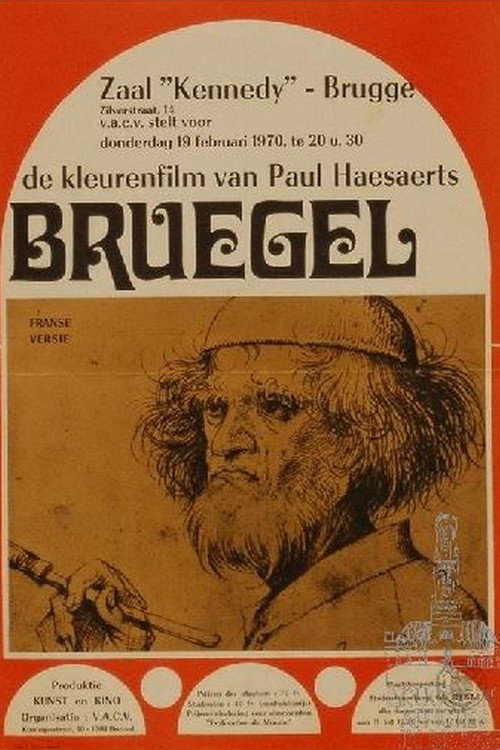
In this documentary, we become acquainted with the Virgilian Bruegel of the vast landscapes and the sarcastic Bruegel of popular moral tales. We see the Bruegel of the peasants and the Bruegel of the humanists, Bruegel the earthy and Bruegel the thinker, the Bruegel of everyday life and the Bruegel who ventures into the boldest flights of imagination and fantasy. The Flemish version is narrated by Ludo Bekkers en Julien Schoenaerts and the French version by Daniel Gelin and Philippe Noiret
Bruegel
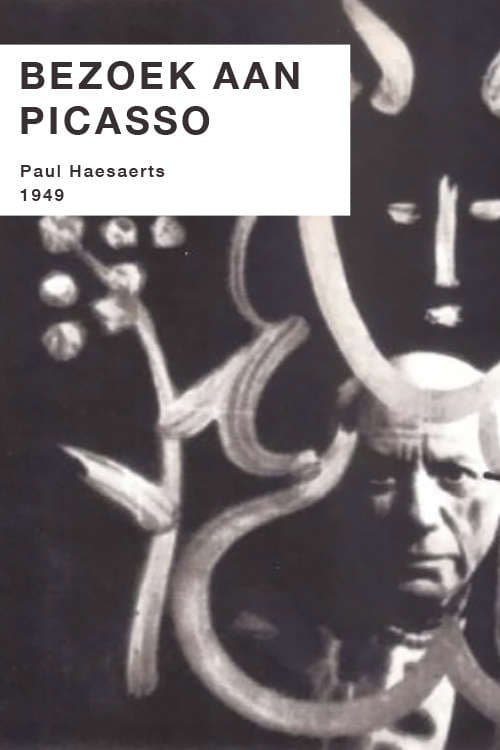
In this short 20 minute black and white Belgian documentary, the director, Paul Haesaerts, visualised Pablo Picasso’s flow of imagination when the Spanish painter drew on large glass plates in front of the camera – like a live show of a greatest artist in performing a few masterstrokes that outlines a dove, bull, flower, man or woman and whatnot. (This technique of filming his painting from the other side of the glass plates precedes The Mystery of Picasso (1956), another famous documentary film on Picasso). (via http://www.kubrickians.com/2012/07/08/visite-picasso-1949-paul-haesaert/)
A Visit to Picasso
A family film, a short summer film, made to record the joy of being together. But what a family! Léon Spilliaert, Paul Delvaux, Edgar Tytgat and his wife Maria, Luc and Paul Haessaerts. A garden, some seats and a camera that films the group of friends. They talk (given all the jollity, laughter and gestures seen it is a shame that it is a silent film). A period document only a few minutes long, a witness that puts names to faces, a reminder of a sunny afternoon. Emotion that loses itself in the moment.
Meeting of Artists
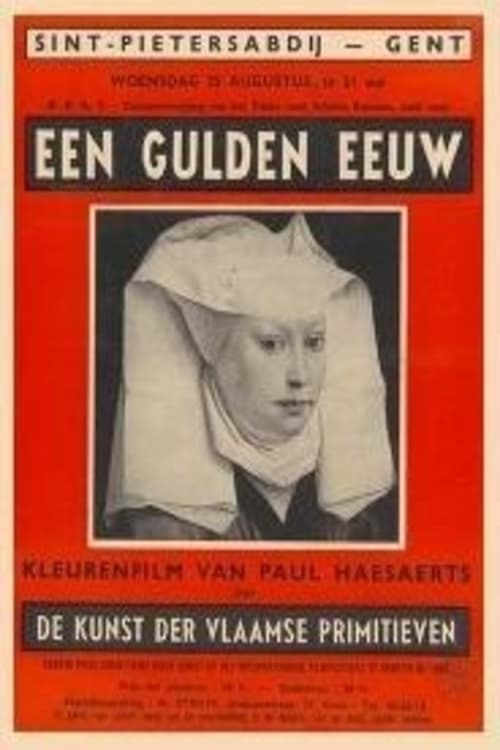
Following the success of Rubens and his series of short art films, Paul Hasaerts embarked on a project exploring the Flemish Primitives. With this film, he set out to offer a sweeping overview of fifteenth-century Flemish painting, showcasing masterpieces by Van Eyck, Van der Weyden, Bouts, Van der Goes, Memling, Quinten Metsys, and Brueghel, capturing both their artistic brilliance and historical significance.