Carlos Prieto
Costume & Make-Up
Known For

No description available.
Carnaval

After the funeral of her father Arnaldo, who committed suicide, Engraçadinha confesses to the priest the motives. On the engagement party of her cousin Sílvio with Letícia, Engraçadinha seduces him in the library, and later she ends her engagement with Zózimo and lies to Letícia, telling that she is pregnant. Letícia decides to tell Arnaldo what happened, and he says that the child can not be born. He exposes dirty secrets to Engraçadinha, and a tragedy is announced.
Engraçadinha

Biography of a Brazilian dancer who lived on an island and practiced nudism when it was forbidden by law.
Luz Del Fuego
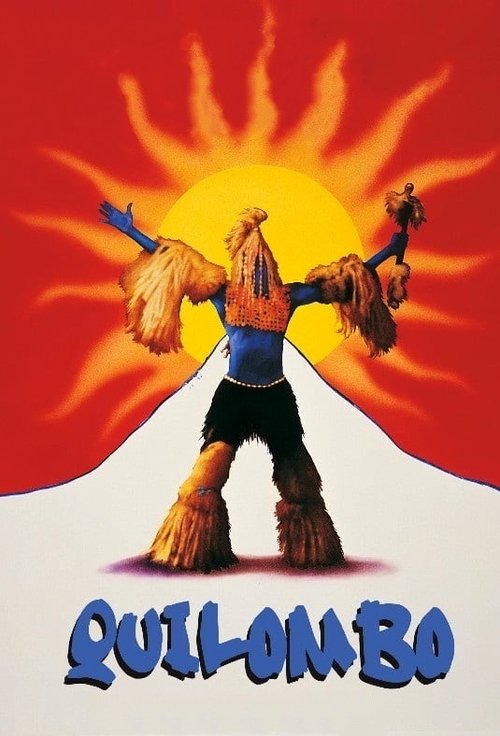
Quilombo dos Palmares was a real-life democratic society, created in Brazil in the 17th century. This incredibly elaborate (and surprisingly little-known) film traces the origins of Quilombo, which began as a community of freed slaves. The colony becomes a safe harbor for other outcasts of the world, including Indians and Jews. Ganga Zumba (Toni Tornado) becomes president of Quilombo, the first freely elected leader in the Western Hemisphere. Naturally, the ruling Portuguese want to subjugate Zumba and his followers, but the Quilombians are ready for their would-be oppressors. The end of this Brave New World is not pleasant, but the followers of Zumba and his ideals take to the hills, where they honor his memory to this day. Writer/director Carlos Diegues takes every available opportunity to compare the rise and fall of Quilombo with the state of affairs in modern-day Brazil.
Quilombo

No description available.
Tritones, más allá de ningún sitio

Middle-class girl gets involved with a jealous drug dealer, who wants to kill all of her previous boyfriends.
Beijo na Boca

Toquinho is a young man living in Marechal Hermes, a poor neighborhood in Rio de Janeiro, together with his widow mother and a younger sister. Although he is poor, he is also ambitious, and wants to change his life. He spends all his time on the beach, at Arpoador, Ipanema, where he dreams to become a famous surfer. Besides, he usually finds Patricia there, a rich and liberated young woman, whom he likes a lot. To impress Patricia and satisfy some of her wishes, he lets himself be seduced by André, a gay guy who, in return for his sexual favors, promises him a trip to Hawaii for a surf championship.
Nos Embalos de Ipanema
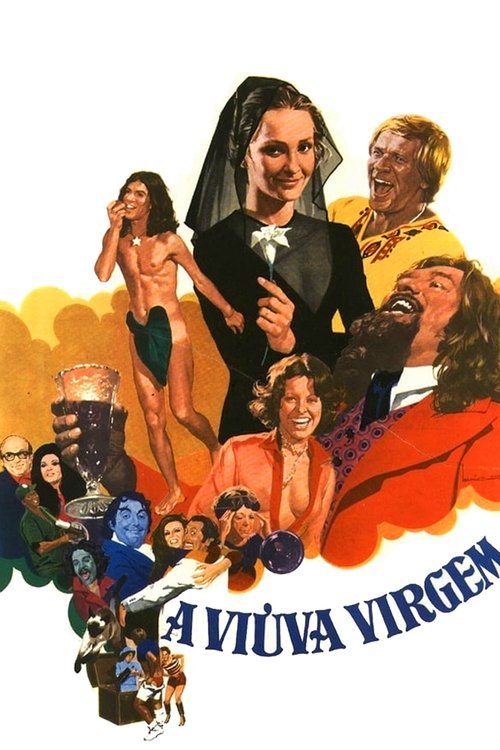
In Minas Gerais, the powerful "colonel" Alexandrão gets married with the young and virgin Cristina and promotes a huge wedding party in his farm. He eats and drinks a lot along the day, but in his "first night" with the bride, he dies before consummating his marriage. The marital status of Cristina becomes very unusual, being a virgin widow. Her doctor advises her to travel to Rio de Janeiro to rest, and she moves with her aunt to an inherited apartment in Leme. Once in Rio de Janeiro, the rascal Constantino, who is aware of her wealth, courts her and borrows money, clothes and a Mercedes Benz from his friends, pretending he is businessman man. His friends release "stocks" in a parallel stock market, based and supported in the expectation of the possible marriage of Constantino with Cristina. However, the ghost of Coronel Alexandrão appears for her whenever she intends to have sex with Constantino.
A Viúva Virgem

When her husband dies, Elisa asks Guerreiro if she can join his gang of bank robbers. She soon gains notoriety in the press with the nickname Lili Carabina, but is relentlessly pursued by an honest police officer.
Lili Carabina

Symbolic film from the Underground Movement of Brazilian Cinema (Cinema Marginal) about a woman, three men and some apes. In the director's own words: “a fable where realism and logic have no place, and in which sex is a translation of all the tortures, circumstances and violent actions.”
Gamal, O Delírio do Sexo

Rio's criminal underworld is run by an unexpected boss: a femme Queen with a taste for power and violence. But heavy lies the crown: what Queen can trust her subjects, however fabulous? When she sets up a stoolie to take the fall for her boy, a plot against Her Majesty arises!
The Devil Queen

The routine of a group of brazilian teenagers living in Brasília, Brazil's capital. Their aspirations, dreams and illusions presented in a context of a country that was on the final years of a dictatorship back in the 1980s.
The Dream's Not Over

A mirror bought in an auction changes the life of an executive and his wife. They become sexually aroused under the influence of the strange object, which belonged to a bordello in the past. Soon the friends who come to pay a visit also become affected by it.
Mirror of Flesh
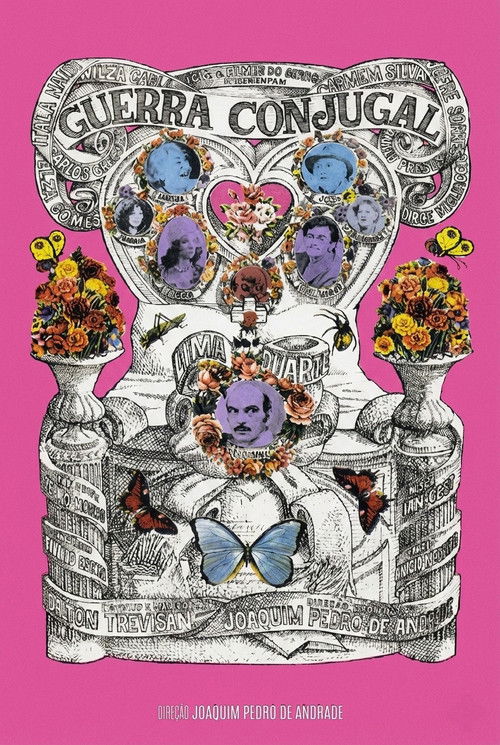
Many stories revolving around a poor couple who, in spite of hating each other, still live together under the same roof.
Conjugal Warfare

During the military dictatorship, a political militant takes his son out of the boarding school, and puts him temporarily in a friend's luxury and empty apartment in Copacabana beach. The son knows very little about his father, and the latter cannot really explain his activities to his son, fearing for his security. So the young man stands alone in the huge apartment, waiting for the infrequent meetings with his father, without really knowing what's going on.
Happier Than Ever

The romanced story of Xica da Silva, a slave that used her "feminine atributes" in order to get power.
Xica
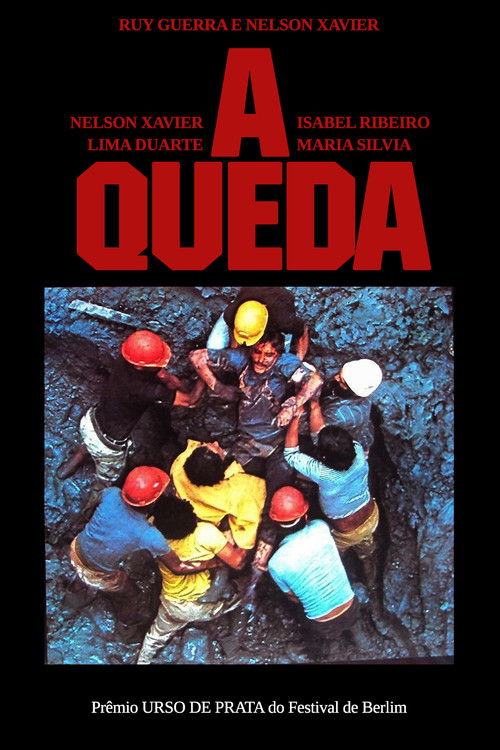
An accident at a construction site, resulting in one death, sets one worker off on a struggle for justice that exposes the mechanisms of exploitation and the class relations of a country that had undergone one decade of fast-paced ‘conservative modernisation’ at the hands of the military. As a sort of sequel to the classic The Guns (1964), following the fate of those characters as they move from enforcers of exploitation to exploited, it offers more than a snapshot of the period: the correspondent time lapses in fiction and reality capture the passage of a chunk of Brazilian history between the two films, and, therefore, also the transformations in cinematographic approaches to the social and political between the two moments. Equally daring in content and form, and in the originality of the adequacy of one to the other, it won the Silver Bear at Berlin.
The Fall

"Seven women on motorcycles, through Via Dutra, go to the Baixada Fluminense, a microcosm of Brazil. Diving into the memory and questioning the behavior imposed on women, they seek to rescue the strength of the feminine. The new woman, born in the Brazilian land, incorporates the Amazons and Santa Guerreira. At his side, the new man, more loose and creative. Closing the cycle, the initial road is resumed. " (HBH / QC)
Feminino Plural
No description available.
Marília e Marina

The life and work of Zezé Motta.